DPDP Compliance for Healthcare Organisations | Complete Guide for Hospitals And Clinics
Learn how hospitals, clinics, telemedicine platforms, and healthcare providers can achieve DPDP compliance. Discover consent management, audit logging, patient rights, and compliance best practices.
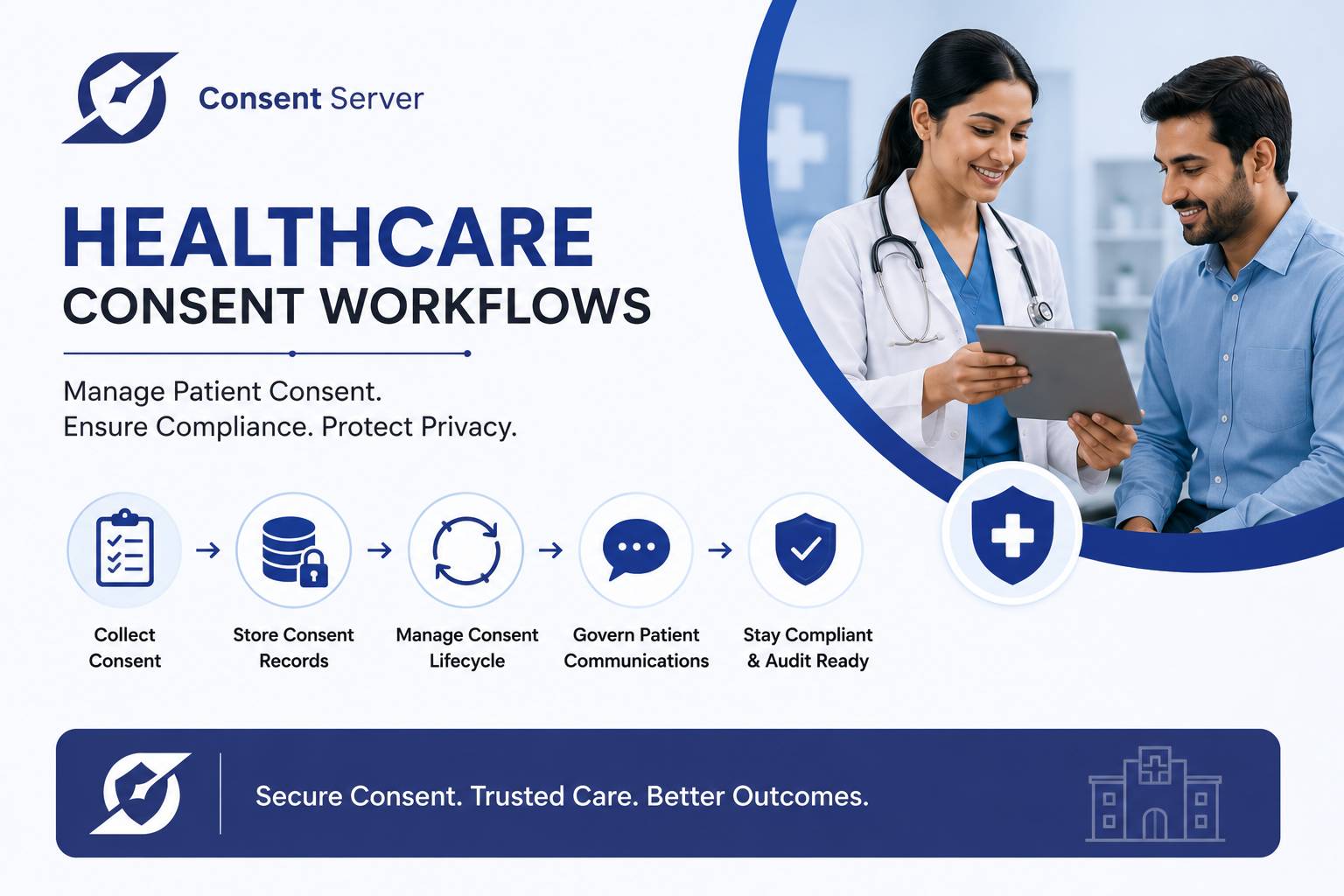
DPDP Compliance for Healthcare Organisations: A Complete Guide for Hospitals, Clinics & Healthcare Providers
Introduction
Healthcare organisations handle some of the most sensitive personal data, including patient records, medical histories, diagnostic reports, prescriptions, insurance information, and contact details. With the introduction of the Digital Personal Data Protection (DPDP) Act, 2023, healthcare providers across India must ensure that patient data is collected, processed, stored, and protected responsibly.
Whether you operate a hospital, clinic, diagnostic center, telemedicine platform, health-tech startup, or healthcare network, DPDP compliance is no longer optional—it is a critical requirement for protecting patient privacy and maintaining trust.
In this guide, we'll explain why DPDP compliance is important for healthcare organisations, the key requirements, common challenges, and how healthcare providers can simplify compliance using Consent Server.
Why DPDP Compliance Matters for Healthcare Organisations
Healthcare institutions process highly sensitive personal information every day.
This may include:
- Patient names and contact details
- Medical history
- Lab reports
- Prescriptions
- Insurance information
- Diagnostic records
- Health monitoring data
- Telemedicine consultations
A data breach involving healthcare information can have serious consequences for both patients and healthcare providers.
Under the DPDP Act, organisations that fail to protect personal data or comply with legal obligations may face penalties of up to ₹250 Crore.
What Is Personal Data in Healthcare?
Under the DPDP Act, personal data refers to any information that can identify an individual.
In healthcare, examples include:
- Patient registration forms
- Appointment records
- Aadhaar details
- Mobile numbers
- Email addresses
- Medical records
- Insurance claim information
- Digital health IDs
Since healthcare organisations process large volumes of personal data, compliance should be a top priority.
Key DPDP Requirements for Healthcare Organisations
1. Obtain Valid Patient Consent
Before collecting or processing personal data, healthcare organisations should obtain clear and informed consent wherever applicable.
Patients should understand:
- What data is being collected
- Why it is being collected
- How it will be used
- Whether it will be shared with third parties
Consent should be documented and maintained for audit purposes.
Example:
A hospital collecting patient information for treatment, follow-up communications, or health awareness campaigns should maintain proper consent records.
2. Maintain Consent Records
One of the biggest compliance challenges is proving that consent was obtained.
Healthcare organisations should maintain:
- Consent history
- Consent timestamps
- Consent withdrawal records
- Consent updates
Audit-ready records can help demonstrate compliance during investigations or audits.
3. Protect Patient Data
The DPDP Act requires organisations to implement reasonable security safeguards.
Healthcare providers should:
- Encrypt patient records
- Use role-based access controls
- Maintain audit logs
- Secure databases and servers
- Monitor unauthorized access attempts
- Regularly review security controls
Patient privacy should remain a core operational priority.
4. Respect Data Principal Rights
Patients are considered Data Principals under the DPDP Act.
Healthcare organisations should support rights such as:
1. Right to Access
Patients can request information about their personal data.
2. Right to Correction
Patients can request correction of inaccurate information.
3. Right to Erasure
Patients may request deletion of personal data where applicable.
4. Right to Withdraw Consent
Patients should be able to withdraw consent easily.
5. Right to Grievance Redressal
Organisations should provide a mechanism for handling privacy-related complaints.
5. Maintain Audit-Ready Documentation
Healthcare organisations should maintain:
- Consent records
- Access logs
- Data processing records
- Security incident reports
- Privacy policies
- User request history
Documentation plays a crucial role in demonstrating compliance.
Common DPDP Compliance Challenges in Healthcare
Many healthcare organisations face challenges such as:
Paper-Based Consent Collection
Manual consent forms are difficult to manage and track.
Multiple Data Sources
Patient data often exists across:
- Hospital Management Systems
- Diagnostic software
- Telemedicine platforms
- Insurance systems
- Third-party applications
Lack of Audit Trails
Without centralized logging, proving compliance becomes difficult.
Consent Withdrawal Management
Tracking patient consent updates manually can become complex.
Benefits of DPDP Compliance for Healthcare Providers
Compliance is not only about avoiding penalties.
Healthcare organisations that implement strong privacy practices benefit from:
Increased Patient Trust
Patients are more likely to share information when they know it is protected.
Better Data Governance
Improved visibility and control over patient information.
Reduced Legal Risks
Compliance helps minimize regulatory and legal exposure.
Improved Operational Efficiency
Structured data management reduces administrative burden.
Stronger Reputation
Privacy-conscious healthcare providers stand out in a competitive market.
How Consent Server Helps Healthcare Organisations
Managing DPDP compliance manually can be challenging, especially for organisations handling large volumes of patient data.
Consent Server is a complete DPDP Compliance Platform designed to simplify compliance for healthcare organisations.
Key Benefits for Healthcare Providers
- Patient Consent Management
- Secure Consent Record Storage
- Audit-Ready Logs
- User Rights Management
- Grievance Management
- Compliance Reporting
- Consent Lifecycle Tracking
- Role-Based Access Control
- Secure On-Premise Deployment
- Real-Time Compliance Monitoring
Whether you run a clinic, hospital, diagnostic centre, or health-tech platform, Consent Server helps you maintain compliance while focusing on patient care.
Why Healthcare Organisations Choose Consent Server
Healthcare providers need a solution that is secure, scalable, and easy to manage.
Consent Server offers:
- Built for DPDP Compliance
- Easy Implementation
- Audit-Ready Records
- Secure Data Handling
- Dedicated Support
- Scalable Architecture
- User-Friendly Dashboard
- Continuous Compliance Monitoring
With Consent Server, healthcare organisations can simplify privacy management while ensuring patient trust and regulatory readiness.
Conclusion
The DPDP Act 2023 has made data privacy a critical responsibility for healthcare organisations. From managing patient consent to protecting sensitive medical records and supporting patient rights, compliance requires a structured approach.
Organisations that proactively implement privacy controls and maintain audit-ready records will be better prepared for the future of healthcare data governance.
Consent Server helps healthcare providers achieve DPDP compliance through secure consent management, audit logging, user rights management, and compliance monitoring—all from a single platform.