
Consent capture
Use structured collection moments to make choices clearer and easier to review later.
This page focuses on how Consent Server supports DPDP readiness: consent evidence, withdrawal handling, internal access controls, audit history, reporting, and defensible operational records. It is designed for teams that need to prove how consent was collected, what purpose it covered, when it changed, who accessed related records, and how requests were handled across business systems. With centralized records, role-based workflows, and reviewable activity history, organizations can move from scattered spreadsheets and manual follow-ups to a clearer compliance operating model.
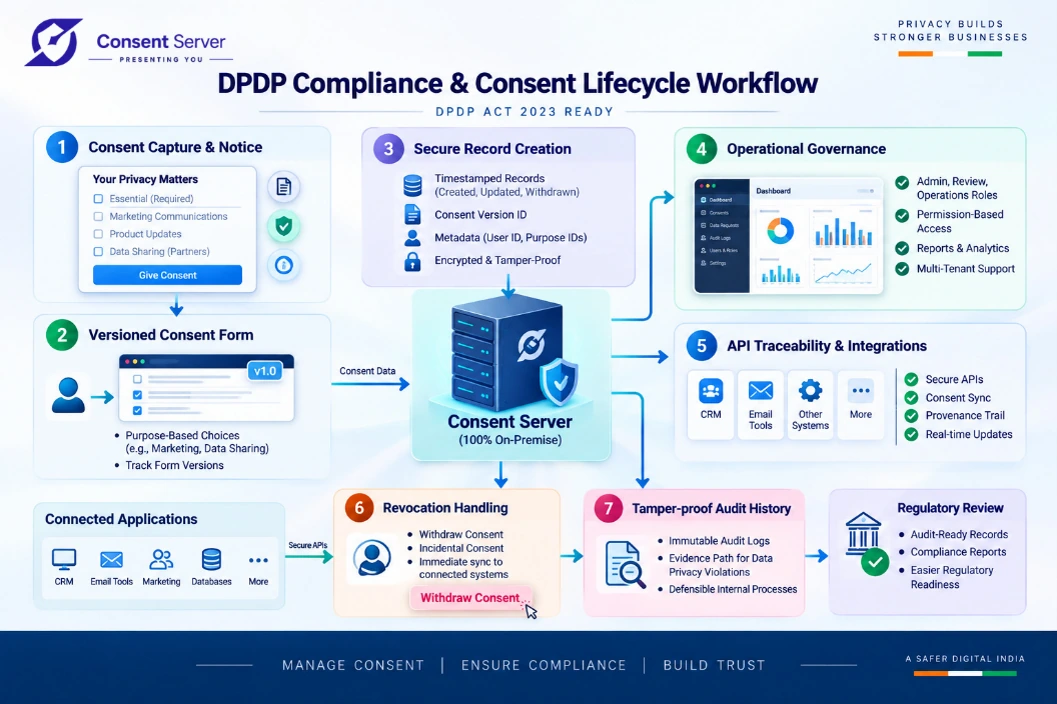
Focus on defensibility, accountability, and controlled workflows for teams preparing DPDP compliance operations.
Use structured collection moments to make choices clearer and easier to review later.
Model what a user agreed to in a way that helps teams manage intent and follow-up.
Maintain evidence of when a consent decision was created, updated, or withdrawn.
Support operational follow-through when preferences change or consent needs to be withdrawn.
Keep activity trails attached to the workflow so reviews stay faster and more grounded.
Reduce risk with role-based visibility and admin controls that suit cross-functional teams.
This section maps governance capabilities to buyer concerns around evidence, accountability, and operational control.
Understand which collection experience supported each record and preference decision.
Track internal actions and history over time for stronger accountability.
Separate admin, compliance, operations, and reviewer access with more precision.
Keep reviewable evidence inside one searchable system rather than disconnected files.
Connect external systems while keeping operational provenance easier to understand.
Support privacy operations with controls that help teams document and defend decisions more confidently.
These are the risk and planning scenarios that often shape compliance research before a team evaluates software in detail.
Early-stage teams need simple processes for notices, consent capture, vendor oversight, and recordkeeping before scale makes the gaps expensive.
Commerce teams need governed consent across sign-up flows, marketing journeys, support touchpoints, and preference changes.
When incidents happen, searchable records and clear audit history help teams investigate faster and explain what happened with more confidence.
Most teams focus on clear notices, valid consent, withdrawal handling, access control, processor governance, and defensible internal processes.
Teams preparing for a DPDP compliance audit typically need a documented checklist covering consent evidence, access logs, retention policies, and grievance handling before reviewers ask for it.
Organizations comparing a DPDP compliance tool, DPDP compliance services, or an external DPDP consultant usually look for consent evidence, audit trails, and on-premise deployment options before deciding.
A short FAQ makes the page useful for buyers who need to understand what the product supports and where legal review still belongs.
Review how Consent Server supports consent capture, record visibility, revocation handling, audit history, reporting, and controlled internal access.