


What is DPDP Act

DPDP Act 2023 and Enterprise Consent

The Digital Personal Data Protection Act, 2023 regulates the processing of digital personal data in India and creates rights, duties, safeguards, and accountability expectations for organizations handling personal data.

This guide explains DPDP concepts, consent requirements, Data Principal rights, penalty exposure, implementation timelines, and how operational consent records support compliance readiness.

This page is an educational guide, not legal advice. Confirm applicability, deadlines, and obligations with your legal or compliance advisor.
DPDP Introduction Hero

Main objectives

A quick view of why the Act matters for privacy, security, and accountable data processing.

  • Protecting individuals' data rights.
  • Making personal data processing lawful, transparent, and consent-driven wherever applicable.
  • Establishing accountability and security obligations for organizations handling personal data.
  • Creating a regulatory framework aligned with modern global privacy standards.
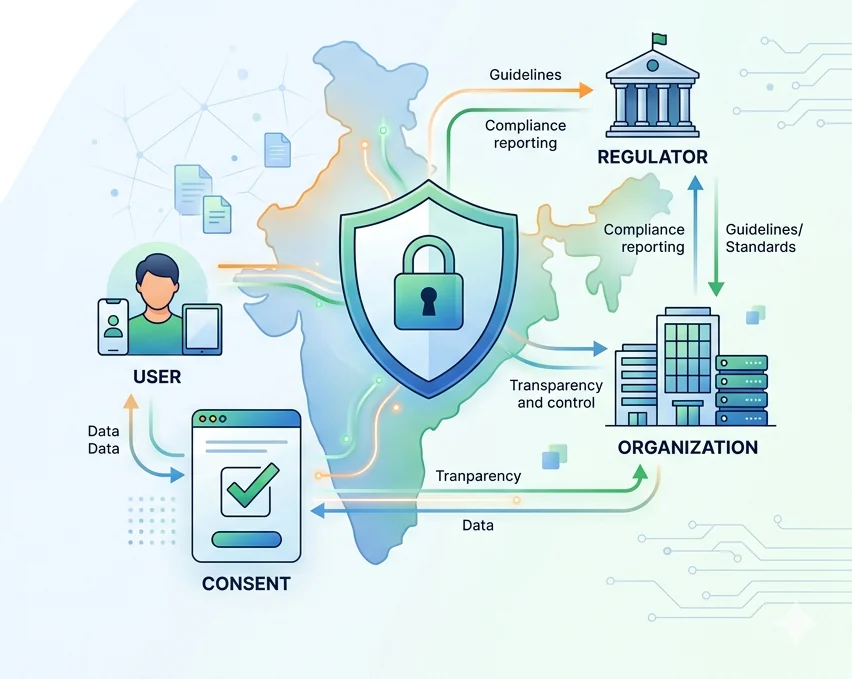
Protecting data rights under DPDP
Main Provisions in Act

Core provisions businesses should understand

A concise operating summary for product, legal, compliance, and technology teams.

(A) Consent

Consent should be free, specific, informed, unambiguous, and connected to a clear purpose. Users should be able to refuse or withdraw consent through an accessible process.

(B) Rights of Individuals

Data Principals can access information, request correction or erasure, withdraw consent, raise grievances, nominate another person, and receive breach-related information where applicable.

(C) Duties of Data Fiduciaries

Organizations must protect personal data, maintain accuracy, respond to rights requests, report personal data breaches as required, and delete data when the purpose is fulfilled or consent is withdrawn unless lawful retention applies.

(D) Children's Data

Verifiable parental or guardian consent is required for children where applicable. Behavioral monitoring, tracking, and targeted advertising directed at children are restricted under the Act.

(E) Regulatory Body and Penalties

The Data Protection Board of India can handle complaints, monitor compliance, and impose penalties for violations.

DPDP Act and Rules timeline

The DPDP framework is moving through phased implementation. These dates help teams plan notices, consent workflows, records, security safeguards, and rights handling.

11 Aug 2023

DPDP Act received Presidential assent

The Digital Personal Data Protection Act, 2023 became India's core law for digital personal data protection.

13 Nov 2025

DPDP Rules, 2025 notified

The official rules introduced the implementation framework, including notices, consent managers, rights handling, security safeguards, and Board processes.

13 Nov 2026

Consent Manager rule commencement

Rule 4 is scheduled to come into force one year after publication of the 2025 Rules.

13 May 2027

Core operational rules mature

Rules 3, 5 to 16, 22, and 23 are scheduled to come into force eighteen months after publication.

What is personal data?

Personal data is information that can identify an individual, either directly or when combined with other information.

Identity Information

NamePhotoAadhaar numberPAN numberPassport numberVoter ID

Contact Information

Mobile numberEmail addressAddressCustomer IDUser ID

Technical Information

IP addressDevice IDCookies IDSession IDMAC addressBrowser fingerprint

Behavioural Information

App usage logsBrowsing historyClick patternsSearch historyAd interaction

Financial Information

Bank account detailsTransaction historyCredit or debit card informationSalary details

Sensitive Context

Health recordsMedical historyBiometric dataLocationGuardian details
If your app, website, CRM, or internal system stores personal data, your organization should assess whether it acts as a Data Fiduciary, Data Processor, or both in different workflows.

User rights and grievance workflows

User-facing workflows should make rights requests discoverable, traceable, and operationally manageable.

  • Access information about personal data and processing activities.
  • Request correction or deletion of personal data.
  • Withdraw consent where processing is based on consent.
  • Use a grievance redressal mechanism.
  • Nominate another person to exercise rights in the event of death or incapacity.
  • Receive relevant breach notifications where personal data is compromised, leaked, or accessed unlawfully.
User rights and grievance workflow under DPDP

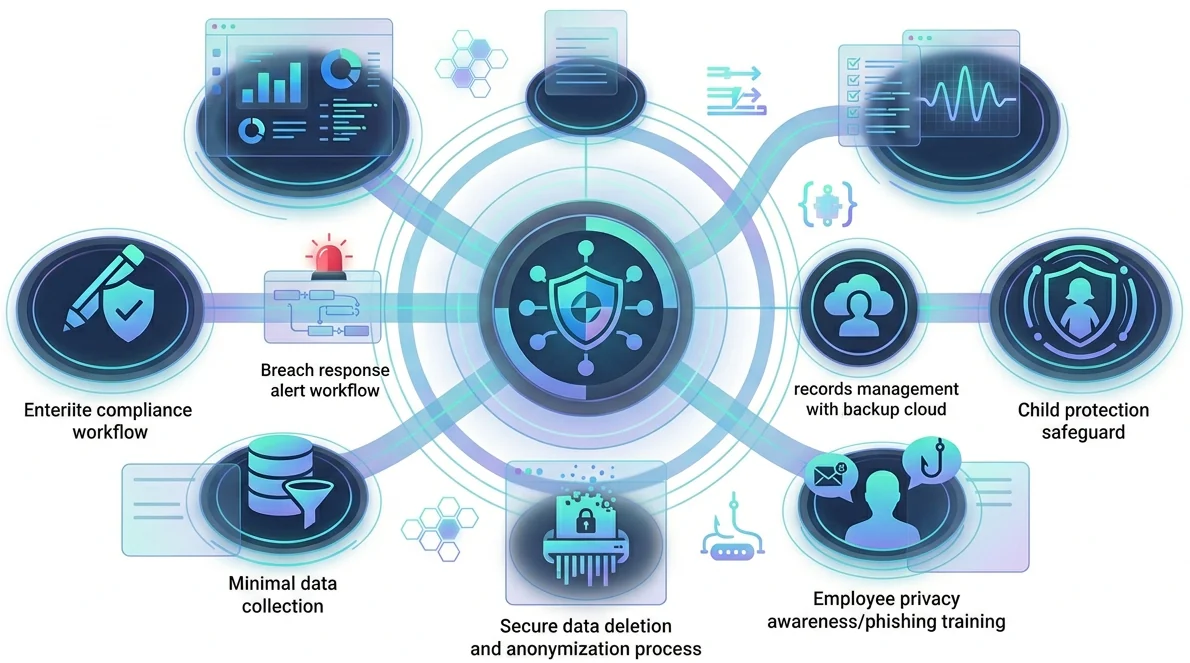
Responsibilities of a Data Fiduciary

Data Fiduciary controls should connect policy, technology, employee behavior, vendor management, and evidence.

  • Collect only necessary personal data for a defined purpose.
  • Use encryption and access controls to protect data.
  • Conduct periodic security checks and fix identified gaps.
  • Educate employees on privacy, phishing risks, and secure handling of data.
  • Maintain records, backups, and breach response processes.
  • Delete or anonymize data when retention is no longer required.
  • Apply additional safeguards for children's data.
Responsibilities of a Data Fiduciary under DPDP

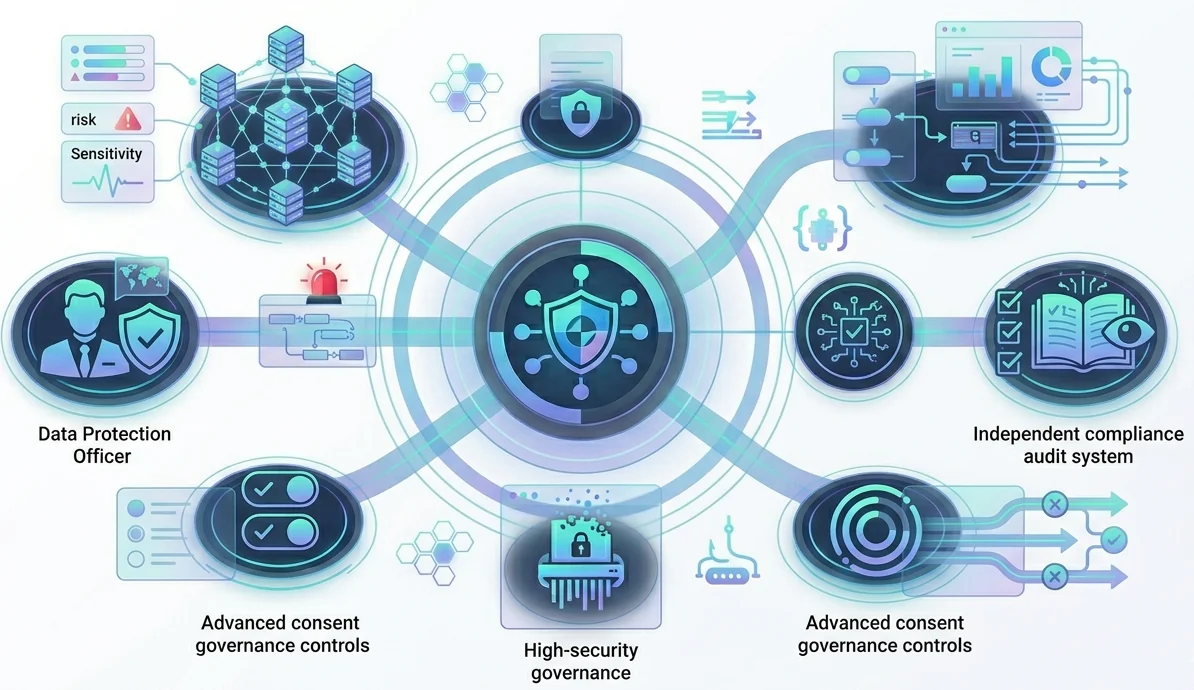
Significant Data Fiduciary obligations

Larger or higher-risk organizations may be notified as Significant Data Fiduciaries and may need stronger governance, reporting, audit, and accountability controls.

  • May be notified based on volume, sensitivity, risk, public order, or similar factors.
  • May need a Data Protection Officer or accountable privacy contact.
  • May need periodic Data Protection Impact Assessments.
  • May need independent audits and additional compliance controls.
  • Should maintain stronger consent controls for large-scale or high-risk processing.
Significant Data Fiduciary obligations under DPDP

If you do not follow the DPDP Act

Non-compliance creates more than financial exposure. It also creates procurement, trust, operational, and audit friction.

DPDP Act Penalty Exposure

Certain violations may attract penalties up to ₹250 crore depending on the nature and severity of non-compliance.

Legal and Regulatory Action

Organizations may face proceedings, notices, investigations, or corrective directions from competent authorities.

Trust and Reputation Loss

Data misuse, weak consent controls, and privacy complaints can damage customer trust and brand credibility.

Operational Disruption

Compliance gaps can slow audits, partnerships, customer onboarding, procurement, and enterprise sales cycles.

How to become DPDP compliant

Organizations should implement a structured and demonstrable compliance mechanism covering data mapping, consent, security, user rights, vendor controls, and audit evidence.

  1. 1.Data identification and classification
  2. 2.Purpose mapping and consent notice design
  3. 3.Consent capture, withdrawal, and recordkeeping
  4. 4.Secure storage, access control, and encryption
  5. 5.Risk assessment and mitigation
  6. 6.Policy framework and consent
  7. 7.Employee awareness and training
  8. 8.Third-party and processor compliance management
  9. 9.Data breach response mechanism
  10. 10.Compliance audits and monitoring
  11. 11.Data Principal rights management
Risk Snapshot

Where consent operations usually break

What is the problem?

  • No reliable proof of user consent.
  • Personal data stored in Excel, CRM, or disconnected systems without lifecycle tracking.
  • No immutable audit trail for consent changes.
  • High compliance risk during audits, complaints, or breach events.

What is the risk?

  • Legal penalties from lakhs to crores depending on violation.
  • Customer complaints and regulatory scrutiny.
  • Brand damage and loss of enterprise trust.

What is the solution?

Consent Server provides an Enterprise Consent Platform for collecting, managing, auditing, and proving consent across business systems.

DPDP Compliance Software: Consent Server

Consent Server helps teams operationalize privacy consent with purpose-based consent, lifecycle automation, audit evidence, and deployment control.

Purpose-based consent collection

Consent form customization and versioning

Tamper-resistant consent records

Immutable audit logs and compliance tracking

Data retention policy automation

Role-based access control (RBAC)

API security and webhook support

Multi-language consent notices

SIEM integration readiness

Encryption key management support

Geo-redundant backup planning

On-premise deployment architecture

FAQ

DPDP compliance questions

Practical answers for teams researching DPDP compliance software, consent management, and audit readiness.

The Digital Personal Data Protection Act, 2023 is India's legal framework for processing digital personal data and protecting Data Principal rights.
Next step

Turn DPDP guidance into consent operations

Review how Consent Server supports consent capture, withdrawal handling, audit records, reporting, and controlled deployment for privacy teams.

Contact UsBook a free demo