DPDPA Myths And Facts: What Indian Businesses Should Know
Discover common DPDPA myths and facts about consent, privacy policies, Data Principal rights and DPDP compliance. Learn how Consent Server can help.
DPDPA: Myths & Facts Every Indian Business Should Know
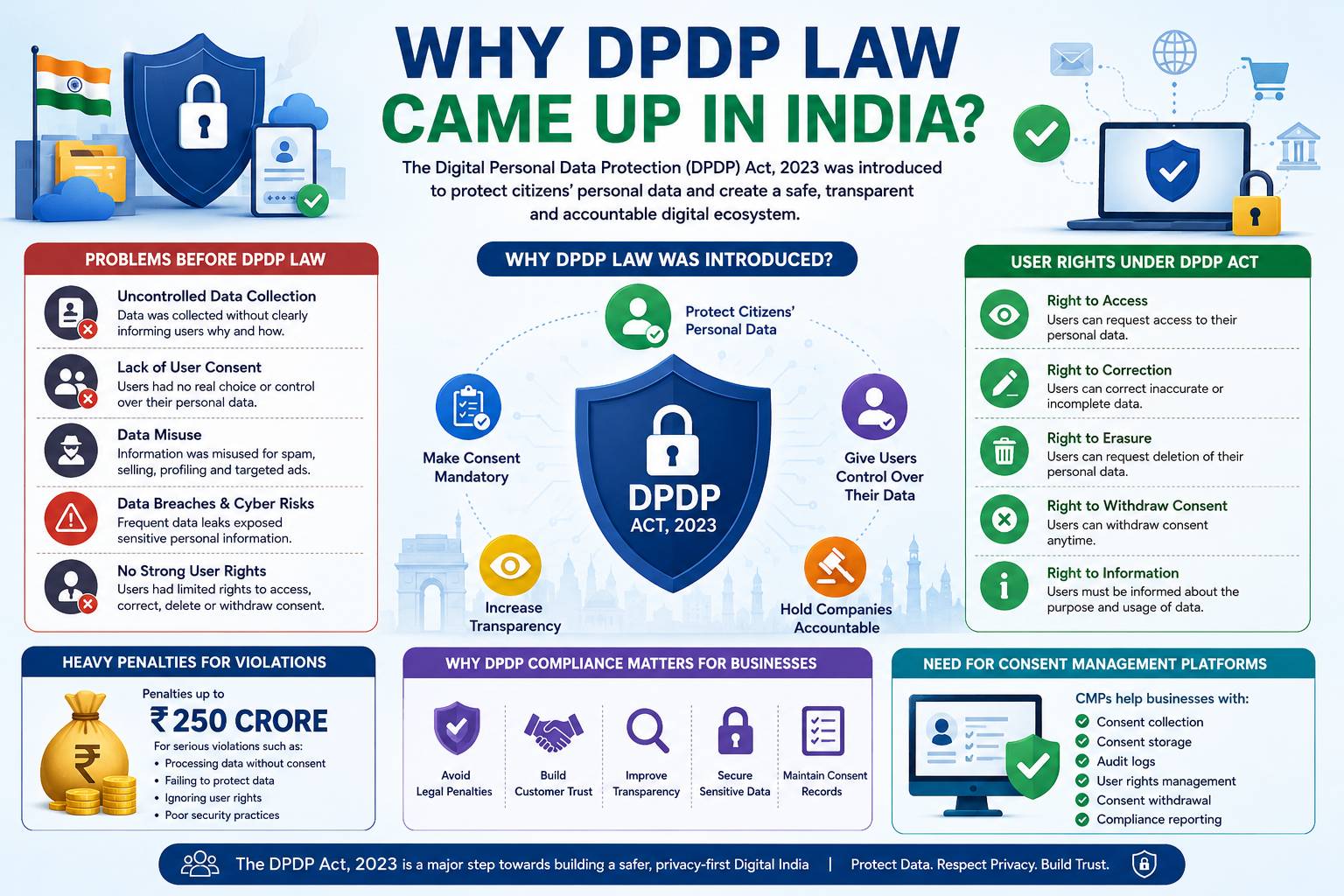
The Digital Personal Data Protection Act, 2023 (DPDP Act) has changed how organisations in India need to think about personal data. However, as businesses prepare for DPDP compliance, several misconceptions are creating confusion.
Some businesses believe that adding a consent checkbox is enough. Others assume that every use of personal data requires consent or that installing a privacy plugin automatically makes them compliant.
Here are some important DPDPA myths and facts businesses should understand.
Myth 1: A Consent Checkbox Makes a Business DPDP Compliant
Fact: A checkbox alone does not establish complete DPDP compliance.
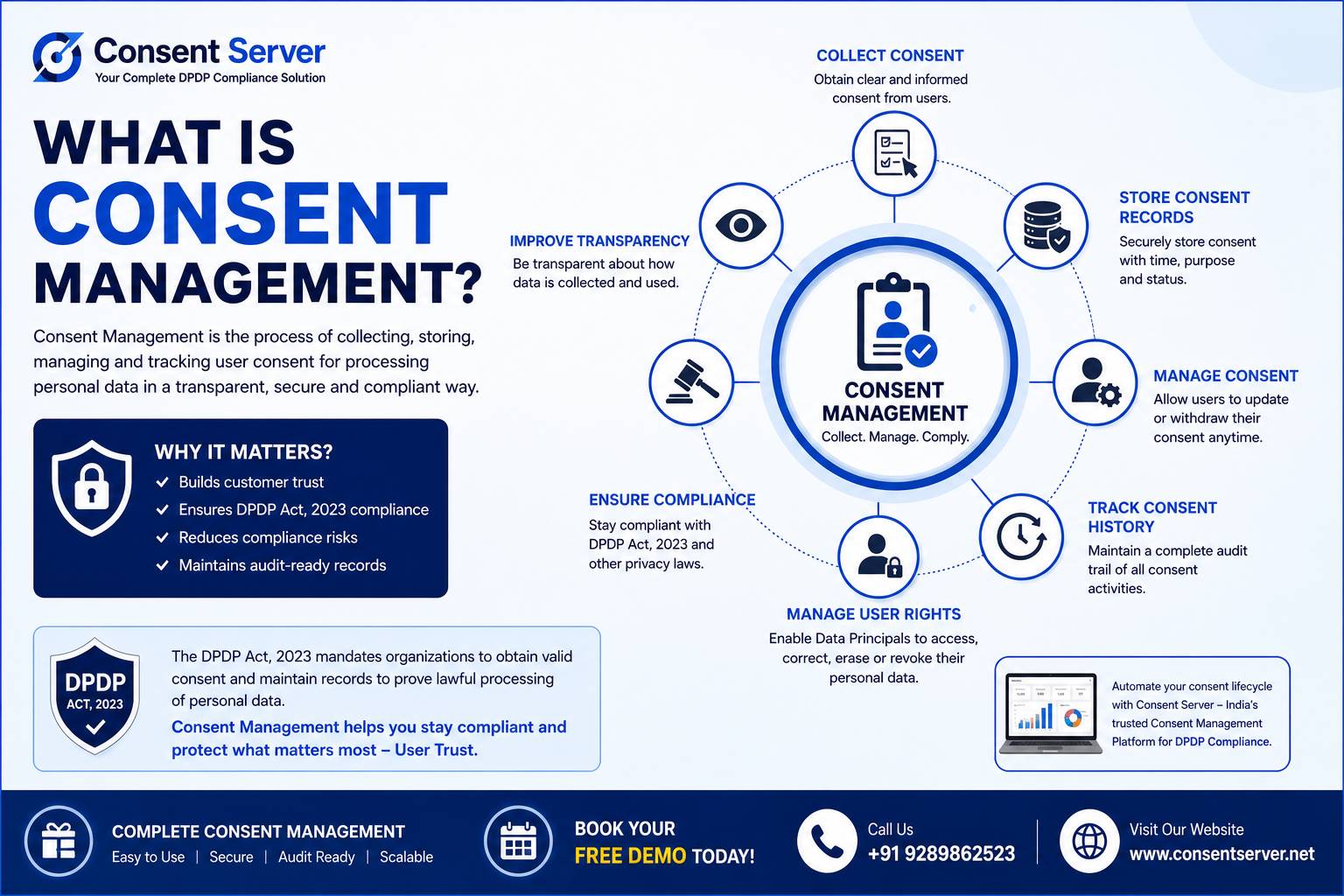
Where consent is the applicable basis, organisations need to consider the complete consent lifecycle. This can include providing an appropriate notice, capturing consent for specified purposes, maintaining records, enabling withdrawal, managing changes, and ensuring relevant systems respect the Data Principal's choices.
A proper Consent Management Platform can make these processes easier to manage at scale.
Myth 2: Every Personal Data Processing Activity Requires Consent
Fact: Consent is important, but it is not the only basis recognized under the DPDP framework.
The DPDP Act also provides for certain legitimate uses of personal data in specified circumstances. Businesses should therefore understand why personal data is being processed and determine the appropriate basis instead of adding a consent checkbox to every activity.
Myth 3: A Privacy Policy Is Enough for DPDP Compliance
Fact: A privacy policy is only one part of data protection governance.
Businesses also need operational processes for areas such as consent where applicable, Data Principal rights, security safeguards, grievances, data retention, processor management, and compliance records.
DPDP compliance needs to work in practice, not just exist as a document on a website.
Myth 4: DPDP Compliance Is Only for Large Companies
Fact: Businesses should assess applicability based on their processing activities and the legal framework, rather than assuming that company size alone determines whether the law matters.
Startups, SaaS companies, e-commerce businesses, hospitals, educational institutions, financial organisations, manufacturers, and other businesses processing digital personal data may need to evaluate their DPDP obligations.
Myth 5: Consent Cannot Be Changed After It Is Given
Fact: Where processing is based on consent, a Data Principal can withdraw that consent.
This makes consent lifecycle management important. Businesses need a mechanism to record changes and communicate relevant updates to systems processing personal data.
A DPDP Consent Management Platform can help centralize this process.
Myth 6: Updating Consent in One Database Is Enough
Fact: Personal data often exists across multiple applications.
For example, a customer may exist in a CRM, marketing platform, mobile application, database, and other business systems.
If consent is withdrawn or updated, organisations need appropriate processes to ensure relevant downstream processing reflects that change.
With APIs and webhooks, Consent Server can help organisations communicate consent events to connected applications and build more centralized consent-management workflows.
Myth 7: Excel Is Enough to Manage DPDP Consent
Fact: Spreadsheets can store information, but they are not designed to manage complex consent lifecycles.
As consent volumes increase, businesses may need purpose-based consent records, history, withdrawal management, Data Principal workflows, audit evidence, role-based access, reporting, and application integrations.
This is where dedicated DPDP software or a Consent Management Platform becomes valuable.
Myth 8: Installing a Cookie or WordPress Plugin Makes the Entire Business DPDP Compliant
Fact: A website plugin may help with a specific website-related function, but DPDP compliance can extend beyond a website.
Personal data may also be processed through CRM systems, mobile applications, HR systems, customer-support tools, offline-to-digital processes, and third-party processors.
Businesses need to consider their complete personal-data ecosystem.
Myth 9: Consent Management Ends Once Consent Is Collected
Fact: Consent should be viewed as a lifecycle where consent is relied upon.
Organisations may need to maintain evidence of what was agreed to, manage subsequent changes or withdrawals, and ensure relevant business processes respond appropriately.
This is why centralized consent management can be much more effective than simply storing a “Yes” or “No” value.
Myth 10: DPDP Compliance Is Only an IT Responsibility
Fact: DPDP compliance is an organisational responsibility.
Legal, compliance, IT, security, HR, marketing, sales, customer support, and management can all play a role depending on how personal data is processed.
Technology can automate and simplify many processes, but governance and organisational accountability remain important.
How Consent Server Can Help
Consent Server is a centralized DPDP Consent Management Platform designed to help Indian organisations manage consent and related compliance workflows.
It can support capabilities such as purpose-based consent, consent updates and withdrawals, consent history, Data Principal requests, grievance management, audit-ready records, lifecycle automation, role-based access, reporting, APIs, and webhooks.
Instead of replacing existing CRM, HR, ERP, or other business applications, Consent Server can act as a central consent layer and integrate with the organisation's existing technology ecosystem.
For businesses searching for a DPDP Platform, DPDP Management System, DPDP Software, or Consent Management Platform, Consent Server provides a comprehensive solution to evaluate.
Final Thoughts
One of the biggest DPDP myths is that compliance can be achieved through a single checkbox, privacy policy, spreadsheet, or website plugin.
In reality, effective DPDP compliance requires a combination of governance, processes, security, accountability, and appropriate technology.
Understanding the difference between DPDP myths and facts is the first step. The next step is building a system capable of managing these requirements consistently as your organisation grows.