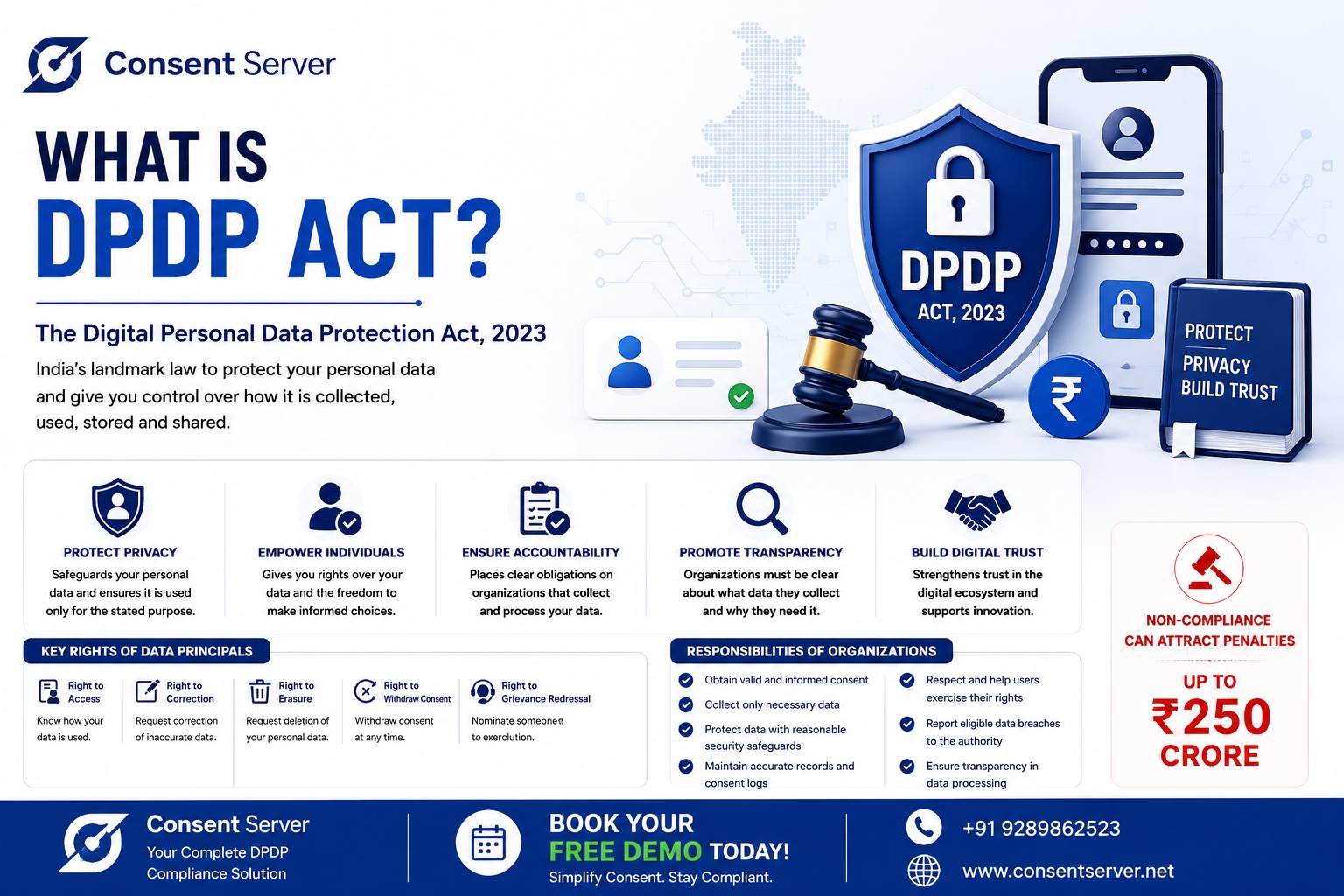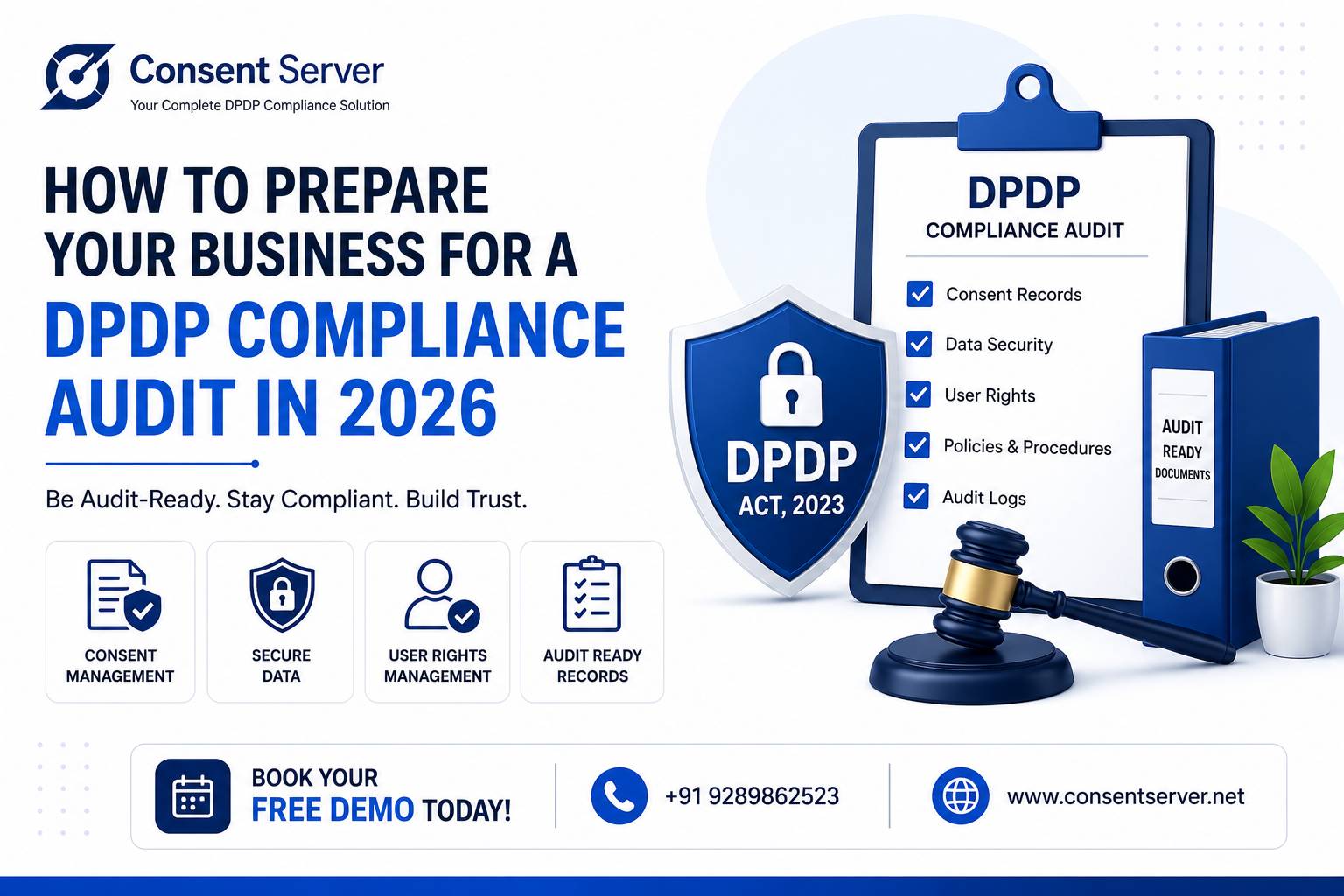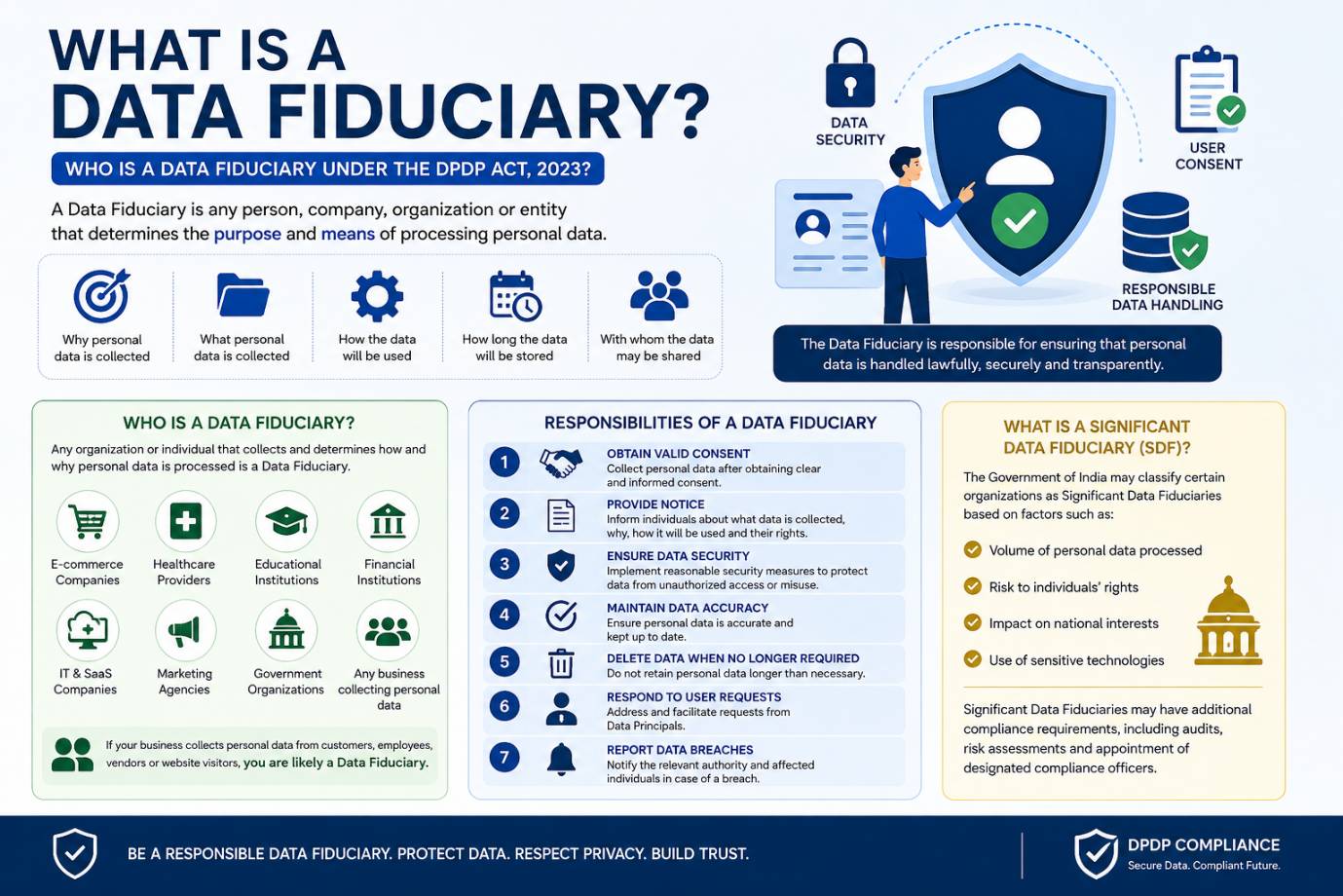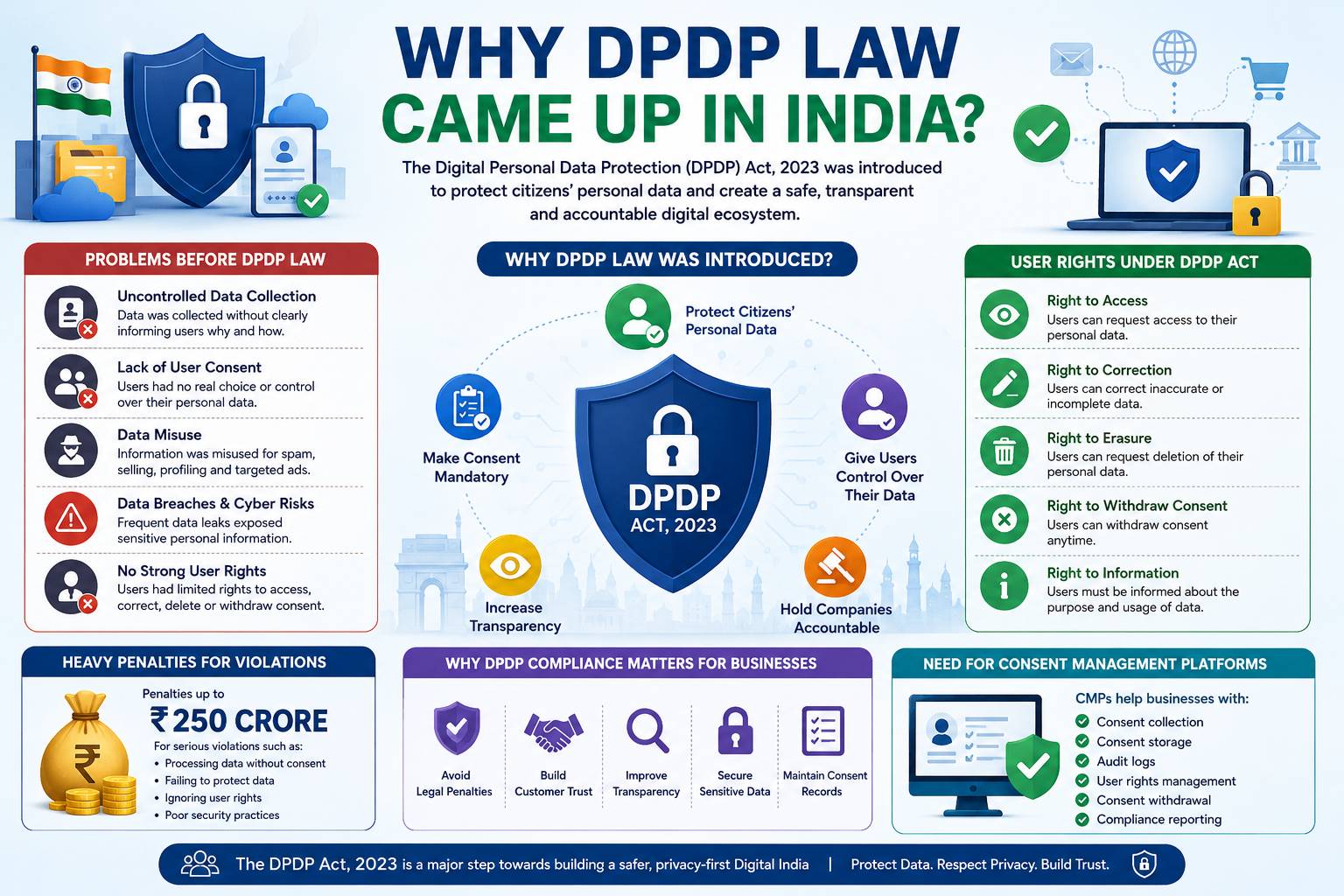
Consent Manager Registration 2026 | DPDP Act India
Learn about Consent Manager registration under India DPDP Act from 13 November 2026, including eligibility, requirements, and implications for businesses.
Consent Manager Registration Window: What Happens on 13 November 2026 Under India's DPDP Act?
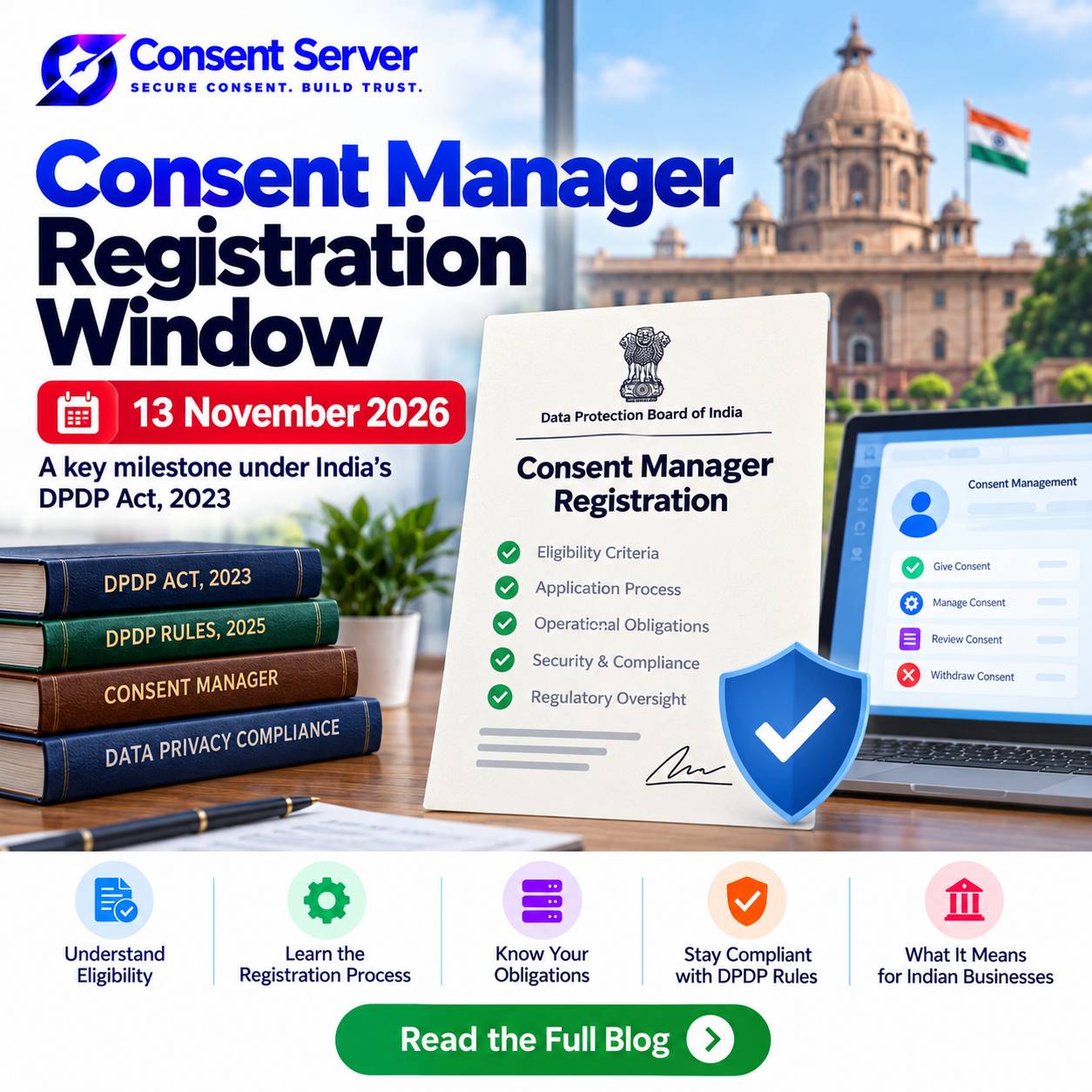
India's digital data protection framework is approaching another important milestone. On 13 November 2026, the provisions governing the registration and obligations of Consent Managers under the Digital Personal Data Protection (DPDP) Act, 2023 and DPDP Rules, 2025 are scheduled to come into effect.
This milestone is particularly important for privacy technology companies, businesses developing consent infrastructure, and organizations preparing for DPDP compliance.
However, there is considerable confusion about what Consent Manager registration actually means.
Does every Indian business need to register as a Consent Manager? Is a Consent Management Platform the same as a registered Consent Manager? Will existing consent-management software require government registration?
Understanding these distinctions is essential for businesses planning their compliance strategy.
This article explains the Consent Manager registration framework, eligibility requirements, registration process, operational responsibilities, and implications for Indian businesses in 2026–27.
What Is a Consent Manager Under the DPDP Act?
Under Section 2(g) of the DPDP Act, a Consent Manager is a person registered with the Data Protection Board of India who acts as a single point of contact for Data Principals to give, manage, review, and withdraw consent through an accessible, transparent, and interoperable platform.
In simple terms, a registered Consent Manager is intended to help individuals manage consent across participating Data Fiduciaries.
For example, an individual may interact with multiple organizations that process personal data. A registered Consent Manager can provide an interoperable interface through which the individual manages relevant consent choices.
The Consent Manager acts on behalf of the Data Principal and is accountable to that individual under the applicable legal framework.
This is different from software that an individual business deploys internally to manage its own customers' consent.
Why Is 13 November 2026 Important?
The Government of India notified the DPDP Rules, 2025, alongside the phased commencement framework in November 2025.
The notified schedule provides for the Consent Manager registration-related provisions to commence one year after publication, generally calculated as 13 November 2026.
The relevant provisions include:
- Section 6(9): Registration of Consent Managers with the Data Protection Board.
- Section 27(1)(d): The Board's authority to inquire into breaches of Consent Manager registration conditions.
- Rule 4: Registration procedure and obligations of Consent Managers.
- First Schedule: Eligibility conditions and operational obligations applicable to registered Consent Managers.
This is an important regulatory milestone, but it does not mean that all DPDP obligations become enforceable on that date.
Several major operational provisions concerning consent, notices, Data Fiduciary responsibilities, and Data Principal rights are scheduled to commence in May 2027.
Also, the commencement of Rule 4 should not be confused with a confirmed operational application portal. The Board must publish the required application particulars and relevant standards.
Who Can Apply for Consent Manager Registration?
Rule 4 and Part A of the First Schedule establish eligibility conditions for organizations seeking registration.
The framework includes several significant requirements.
1. Indian Company Incorporation
The applicant must be a company incorporated in India.
2. Minimum Net Worth of ₹2 Crore
The applicant must have a net worth of at least ₹2 crore.
This is an eligibility condition, not a government registration fee.
3. Technical and Operational Capacity
The applicant must demonstrate sufficient technical, operational, and financial capacity to fulfil its responsibilities.
4. Financial Stability and Management Integrity
The applicant must have a sound financial condition and management with an appropriate reputation for fairness and integrity.
5. Business Viability
The Board may assess whether the applicant's likely business volume, capital structure, and earning prospects are adequate.
6. Conflict-of-Interest Safeguards
The applicant's constitutional documents must incorporate specified safeguards concerning conflicts of interest and related governance requirements.
7. Independent Platform Certification
The applicant must obtain independent certification demonstrating that its interoperable platform meets the relevant data protection standards and assurance framework published by the Board.
These requirements indicate that statutory Consent Manager registration is intended for organizations capable of operating a regulated, interoperable consent-management service.
How Will the Consent Manager Registration Process Work?
Under Rule 4, an eligible applicant may apply to the Data Protection Board by submitting the particulars, information, and documents specified by the Board.
The general process involves:
- Eligibility Assessment: The applicant evaluates its compliance with the First Schedule.
- Application Submission: Required information and supporting documents are submitted according to the Board's published process.
- Regulatory Examination: The Board may conduct inquiries to assess eligibility.
- Registration Decision: The Board may approve the application or reject it with reasons.
- Publication: Details of registered Consent Managers are published by the Board.
- Ongoing Supervision: Registered entities must comply with applicable obligations and regulatory directions.
The Board also has powers relating to corrective directions, suspension, and cancellation of registration, subject to applicable procedural safeguards.
Organizations considering registration should monitor official Board publications for the application procedure and technical standards.
What Are the Responsibilities of a Registered Consent Manager?
Registration is not merely permission to operate a consent-management website.
The First Schedule establishes ongoing obligations relating to platform operation, accountability, security, transparency, and independence.
Important areas include:
Interoperable Consent Management
The platform must enable Data Principals to manage consent through an interoperable mechanism involving participating Data Fiduciaries.
Accessible Consent Controls
Individuals should be able to give, manage, review, and withdraw consent through the platform in accordance with applicable requirements.
Recordkeeping
Registered Consent Managers must maintain prescribed records relating to consent and relevant data-sharing activities, including applicable long-term retention requirements.
Security Safeguards
Appropriate technical and organizational security measures must protect relevant personal data and platform operations.
Independence and Conflict Management
Registered Consent Managers must comply with requirements designed to protect their independence and avoid prohibited conflicts of interest.
Regulatory Accountability
Registered Consent Managers are subject to the Board's oversight and applicable directions.
These obligations distinguish a statutory Consent Manager from ordinary consent-management software.
Registered Consent Manager vs Consent Management Platform: What's the Difference?
This is one of the most important distinctions for Indian businesses.
A registered Consent Manager is a regulated entity recognized under the DPDP Act.
A Consent Management Platform (CMP) is a technology solution that businesses can use to manage their own consent-related operations.
| Factor | Registered Consent Manager | Consent Management Platform |
|---|---|---|
| Primary role | Acts on behalf of Data Principals | Supports an organization's consent operations |
| Registration | Registration with the Data Protection Board required | No general statutory CMP registration requirement |
| Platform scope | Interoperable consent-management service | May operate within one organization or its applications |
| Regulatory conditions | Must satisfy Rule 4 and First Schedule | Must support the organization's applicable compliance requirements |
| Main users | Data Principals interacting with participating Data Fiduciaries | Data Fiduciaries, administrators, compliance and IT teams |
| Example | A Board-registered Consent Manager | Consent Server deployed for business consent management |
A business does not automatically become a registered Consent Manager merely because it uses or develops consent-management software.
Similarly, a commercial CMP should not claim statutory registration unless the relevant legal entity has actually obtained it.
Does Every Indian Business Need Consent Manager Registration?
No.
The registration framework applies to entities seeking to operate as statutory Consent Managers.
An ordinary Data Fiduciary managing consent for its own customers is not automatically required to register as a Consent Manager.
Businesses must instead assess their applicable obligations concerning notices, lawful processing, consent, withdrawal, security, Data Principal rights, and other requirements.
The DPDP Act provides for Data Principals to use a registered Consent Manager, but this does not create a universal requirement that every business purchase or operate a registered Consent Manager service.
This distinction is particularly important for organizations evaluating DPDP compliance software.
What Does This Mean for DPDP Compliance Software Providers?
The upcoming registration framework creates two distinct opportunities in India's privacy technology market.
The first concerns organizations seeking to operate regulated, interoperable Consent Manager services.
These organizations must evaluate the statutory registration conditions, certification requirements, governance obligations, and operational responsibilities.
The second concerns software providers developing technology to help Data Fiduciaries manage their own compliance processes.
Such platforms may support consent collection, purpose management, withdrawal, audit records, rights-management workflows, and application integrations.
These are important operational capabilities, but they do not automatically make the software provider a registered Consent Manager.
Businesses should therefore evaluate technology providers based on their actual functionality, security, deployment model, integration capabilities, and accurately represented regulatory status.
How Consent Server Helps Data Fiduciaries Prepare for DPDP Compliance
Consent Server is a DPDP Compliance Software and Consent Management Platform developed by Iconic Infotech Pvt. Ltd. for Indian businesses.
It is designed to help Data Fiduciaries manage consent-related operations through centralized records, automation, and integration capabilities.
Consent Server is positioned as commercial consent-management infrastructure for businesses, not as a statutory registered Consent Manager.
Its key capabilities include:
Centralized Consent Management
Businesses can collect and manage purpose-based consent through configurable forms and centralized records.
Consent Lifecycle Automation
The platform supports consent collection, updates, withdrawal, renewal, and expiry.
Data Principal Rights Management
Consent Server supports workflows for access, correction, erasure, withdrawal, and grievance-related requests.
Audit-Ready Records
The platform maintains relevant consent histories, timestamps, notice versions, and activity records.
Hash-based mechanisms support record integrity and tamper detection.
APIs and Webhooks
Consent-related events can be communicated to connected CRM, ERP, marketing, and other business applications.
Acknowledgement and Completion Tracking
Consent Server supports the following event workflow:
Consent Event --> Webhook/API Notification --> Delivered --> Acknowledged --> Action Completed → Completion Evidence
Retries, monitoring, and escalation help identify unresolved actions.
Actual processing changes must still be implemented by connected applications or responsible teams.
On-Premise and Hosted Deployment
Businesses can choose deployment options according to their infrastructure and operational requirements.
These capabilities help organizations prepare their consent-management infrastructure while maintaining responsibility for broader legal and security compliance.
Consent Manager Registration and DPDP Compliance Timeline
| Date | Regulatory Milestone |
|---|---|
| 13 November 2025 | Initial DPDP provisions and institutional framework commenced |
| 13 November 2026 | Consent Manager registration-related provisions scheduled to commence |
| 13 May 2027 | Major operational DPDP obligations scheduled to commence |
For most businesses acting as Data Fiduciaries, the larger preparation challenge remains implementing appropriate processes for the operational obligations scheduled for 2027.
What Should Indian Businesses Do Before May 2027?
Businesses should focus on practical compliance preparation rather than assuming they must register as Consent Managers.
Important steps include:
- Identify personal data processing activities and their applicable legal bases.
- Review privacy notices and consent-collection procedures.
- Establish consent withdrawal and lifecycle-management processes.
- Prepare Data Principal rights and grievance-handling workflows.
- Review security safeguards and processor arrangements.
- Integrate consent changes with relevant business applications.
- Maintain appropriate consent histories and supporting evidence.
- Evaluate DPDP Compliance Software according to actual organizational requirements.
For organizations operating multiple websites, CRM systems, and marketing platforms, centralized consent-management infrastructure can reduce operational fragmentation.
Conclusion: An Important Milestone for India's Consent Management Ecosystem
13 November 2026 marks an important scheduled milestone in India's DPDP regulatory framework.
The commencement of Consent Manager registration provisions establishes a regulatory pathway for organizations seeking to operate interoperable consent-management services on behalf of Data Principals.
However, statutory Consent Manager registration and commercial Consent Management Platforms serve different purposes.
Indian businesses should understand this distinction before making technology or compliance decisions.
For Data Fiduciaries, the immediate priority is preparing for applicable obligations involving lawful processing, consent, withdrawal, security safeguards, Data Principal rights, and supporting records.