What is DPDP act ?
Learn what the Digital Personal Data Protection (DPDP) Act, 2023 is, why it was introduced, its key provisions, rights, responsibilities, penalties, and how businesses can become DPDP compliant.
What is the DPDP Act? A Complete Guide to India's Digital Personal Data Protection Act, 2023
Introduction
In today's digital world, businesses collect vast amounts of personal information every day. Whether it's through websites, mobile applications, e-commerce platforms, healthcare systems, financial services, or educational institutions, personal data has become one of the most valuable assets.
As digital adoption continues to grow, protecting personal data has become a major concern. To address this, the Government of India introduced the Digital Personal Data Protection (DPDP) Act, 2023, a landmark law designed to safeguard individuals' personal data while enabling responsible data processing.
The DPDP Act establishes a legal framework for collecting, processing, storing, and protecting personal data in India. It also gives individuals greater control over how their information is used and places clear responsibilities on organisations that process personal data.
This guide explains everything you need to know about the DPDP Act and why it is important for businesses operating in India.
What is the DPDP Act?
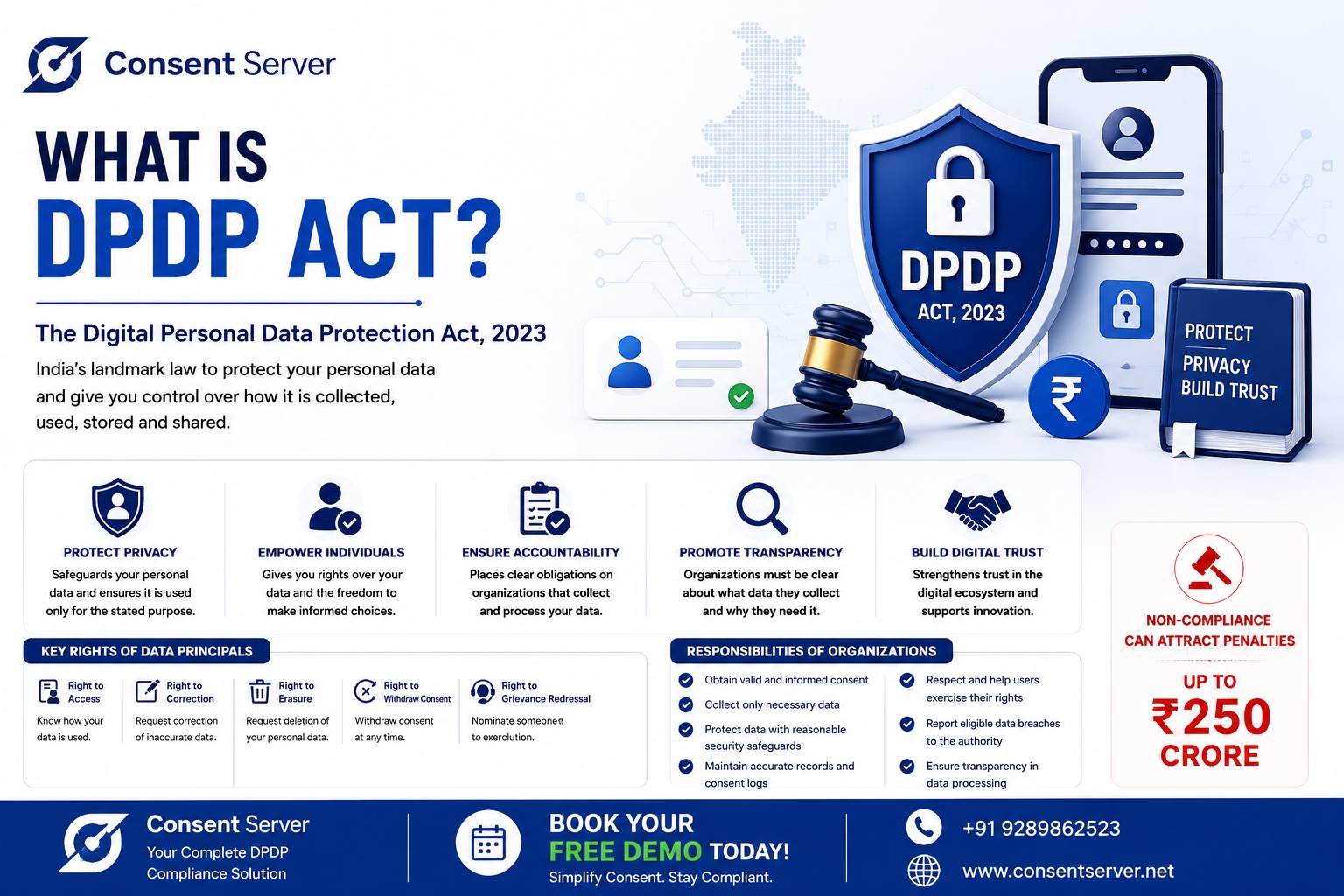
The Digital Personal Data Protection (DPDP) Act, 2023 is India's primary data protection law that governs the processing of digital personal data.
Its objective is to:
- Protect the privacy of individuals.
- Ensure organisations process personal data responsibly.
- Promote transparency in data handling.
- Define the rights of individuals.
- Establish accountability for organisations collecting personal data.
The Act applies to organisations that collect or process digital personal data within India and, in certain cases, to organisations outside India if they offer goods or services to individuals in India.
Why Was the DPDP Act Introduced?
With millions of Indians using digital services every day, personal information is constantly being collected by businesses.
Without proper safeguards, this information can be:
- Misused
- Shared without consent
- Stolen through cyberattacks
- Used for unwanted marketing
- Exposed due to weak security practices
The DPDP Act aims to create a balance between innovation and privacy by ensuring that personal data is handled fairly, lawfully, and securely.
Key Objectives of the DPDP Act
The Act focuses on several important objectives:
- Protect Personal Data
Organisations must safeguard the personal data they collect.
- Promote Transparency
Individuals should know why their data is being collected and how it will be used.
- Ensure Accountability
Organisations are responsible for complying with data protection requirements.
- Empower Individuals
The Act grants rights that allow individuals to control their personal data.
- Build Digital Trust
Strong privacy practices increase consumer confidence in digital services.
Who Needs to Comply?
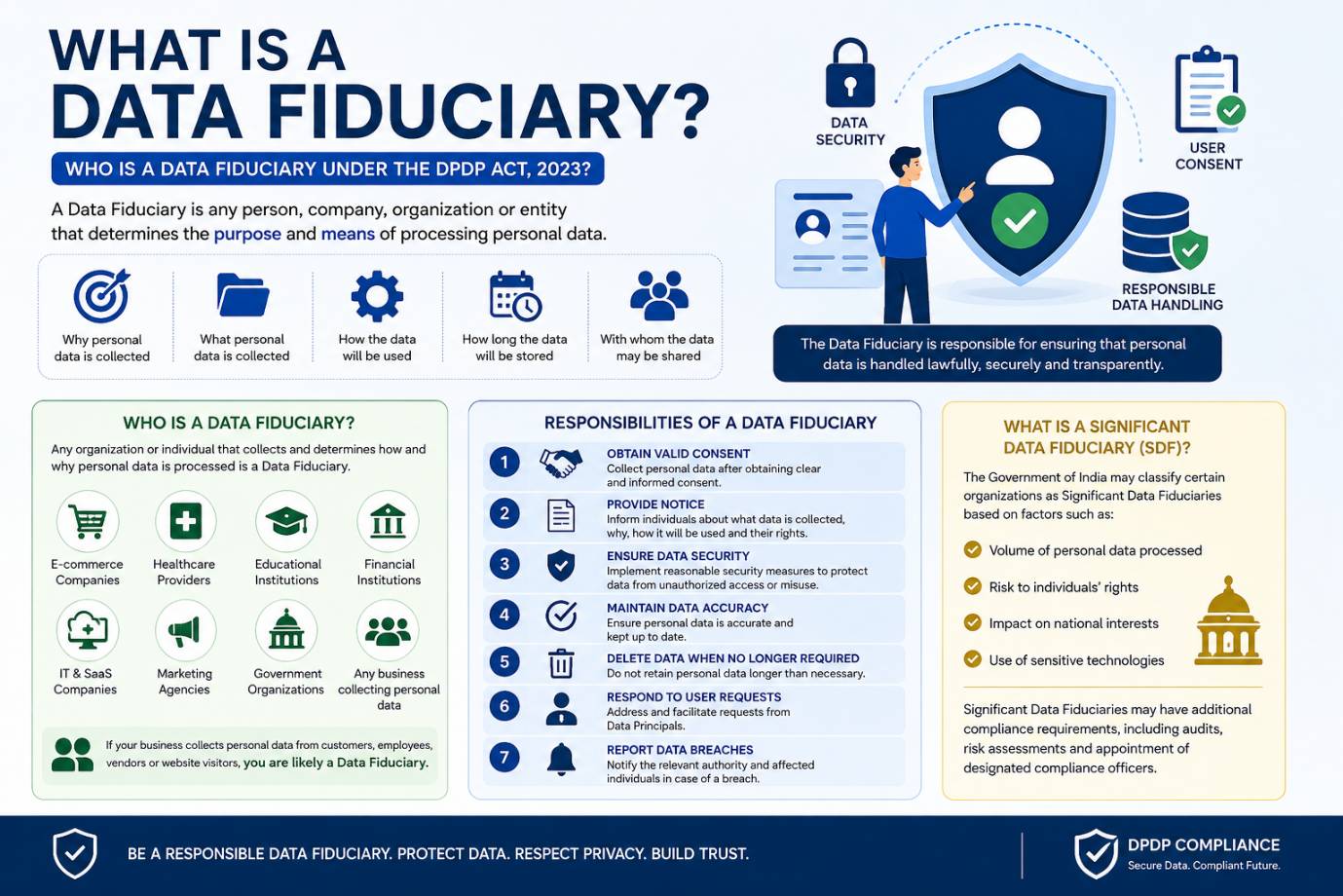
The DPDP Act applies to businesses and organisations that process personal data, including:
- E-commerce Companies
- FinTech Companies
- Healthcare Providers
- Educational Institutions
- IT & SaaS Companies
- Banks & Financial Institutions
- Insurance Companies
- Retail Businesses
- Telecom Companies
- Government Organizations
- Startups/founders
- Large Enterprises
If your organisation collects customer information such as names, mobile numbers, email addresses, or any other identifiable personal data, DPDP compliance should be a priority.
Key Roles Under the DPDP Act
Data Principal
The individual whose personal data is being collected.
Example:
A customer using an online shopping website.
Data Fiduciary
The organization that decides why and how personal data will be processed.
Example:
An e-commerce company collecting customer information.
Data Processor
A third party that processes personal data on behalf of the Data Fiduciary.
Example:
Cloud hosting providers or payment processing services.
Rights of Data Principals
The DPDP Act empowers individuals with several important rights:
1. Right to Access Information
Know how personal data is being processed.
2. Right to Correction
Request correction of inaccurate information.
3. Right to Erasure
Request deletion of personal data where applicable.
4. Right to Withdraw Consent
Withdraw consent at any time.
5. Right to Grievance Redressal
Raise complaints regarding misuse of personal data.
6. Right to Nominate
Nominate another person to exercise rights in certain situations.
Responsibilities of Organizations
Businesses processing personal data are expected to:
- Obtain valid consent
- Protect personal data
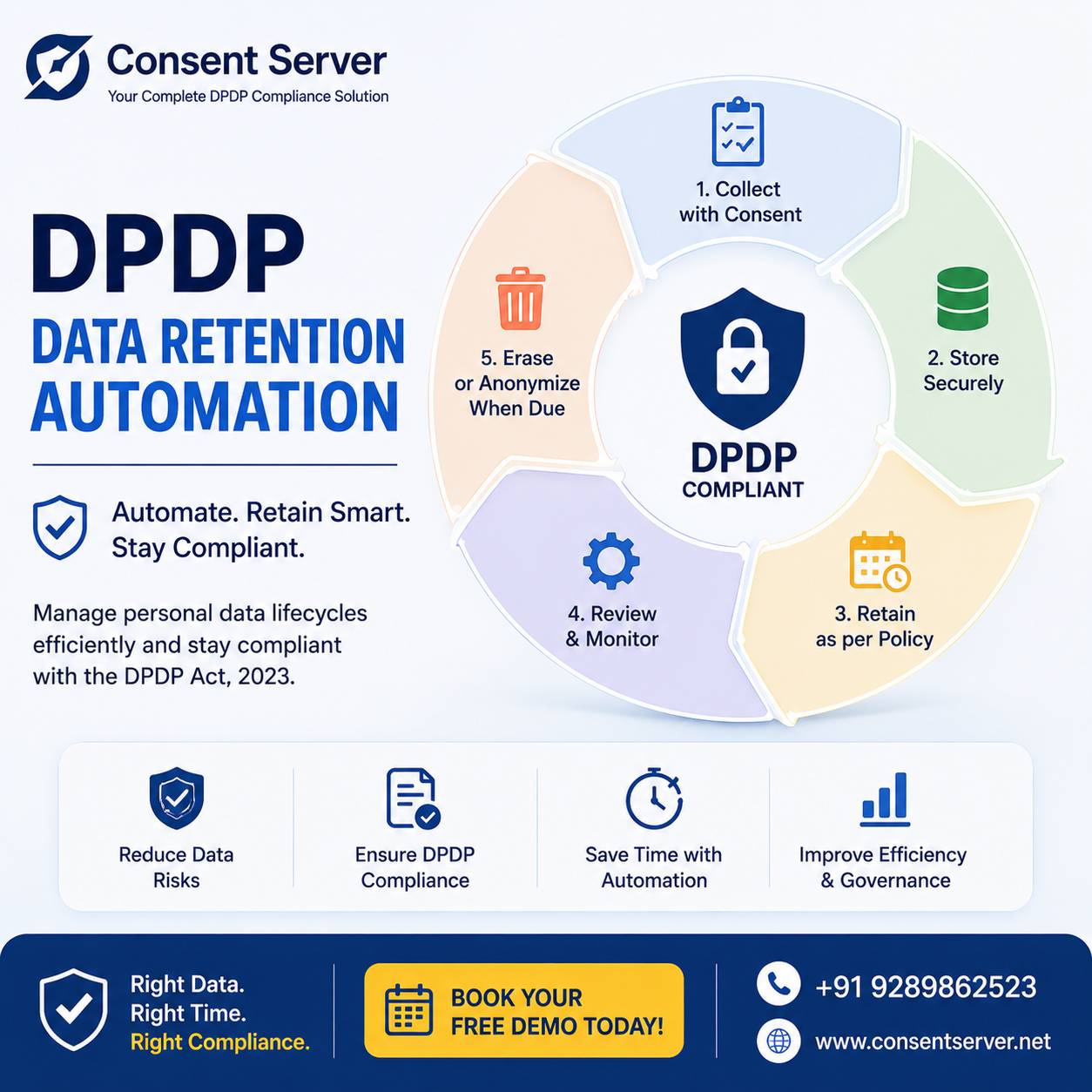
- Maintain consent records
- Support user rights
- Implement security safeguards
- Notify relevant authorities in case of eligible data breaches
- Maintain transparency regarding data processing
Compliance should become part of everyday business operations.
What Happens If You Don't Comply?
Failure to comply with the DPDP Act can result in:
- Regulatory investigations
- Loss of customer trust
- Reputational damage
- Legal consequences
- Financial penalties
For serious violations, penalties can reach up to ₹250 Crore, depending on the nature and severity of the non-compliance.
Benefits of DPDP Compliance
Organisations that comply with the DPDP Act can:
- Build customer trust
- Improve data governance
- Reduce compliance risks
- Strengthen cybersecurity
- Enhance brand reputation
- Improve operational efficiency
Privacy is no longer just a legal obligation—it has become a competitive advantage.
How Consent Server Helps Businesses Become DPDP Compliant
Managing compliance manually can be complex, especially for organisations handling large volumes of customer data.
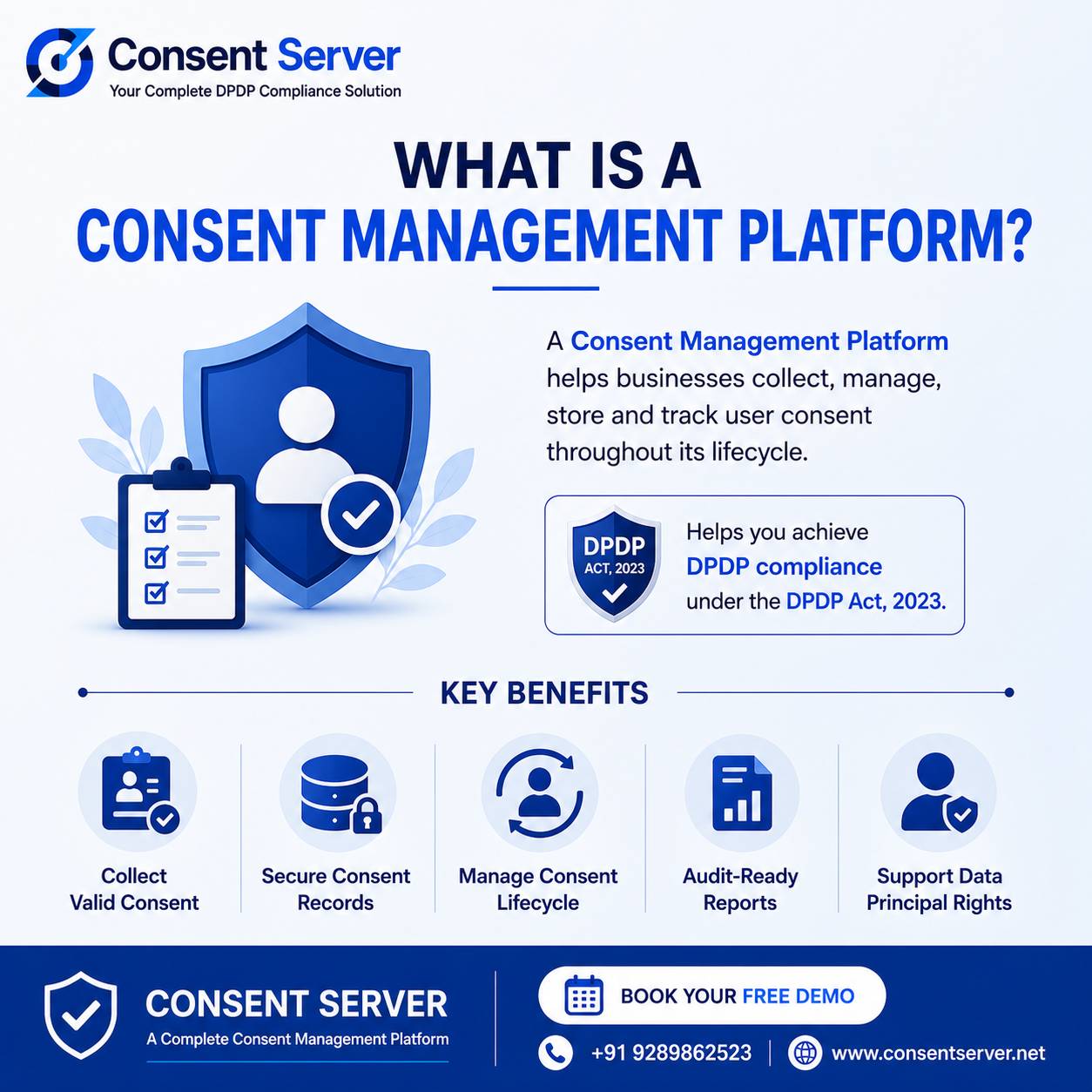
Consent Server is a complete DPDP Compliance Platform built to simplify privacy and consent management for Indian businesses.
Key Features
- Consent Collection & Management
- Consent Lifecycle Tracking
- Secure Consent Records
- Audit-Ready Logs (SHA-256)
- User Rights Management
- Grievance Management
- Mobile OTP, Email OTP & Aadhaar OTP Verification
- Compliance Reporting
- API & Webhook Integrations
- Role-Based Access Control
- Secure On-Premise Deployment
Whether you're a startup, healthcare provider, FinTech company, educational institution, or enterprise, Consent Server helps you manage compliance efficiently from a single platform.
Conclusion
The Digital Personal Data Protection (DPDP) Act, 2023 marks a significant step toward strengthening data privacy in India. It gives individuals greater control over their personal data while requiring organisations to adopt responsible and transparent data handling practices.
For businesses, DPDP compliance is more than just meeting legal obligations—it is about protecting customer trust, improving governance, and preparing for the future of digital privacy.
By implementing the right processes and tools, organisations can simplify compliance and confidently navigate the evolving privacy landscape.