Data Breaches & DPDP Compliance in India | Consent Server
Is your business ready for DPDP compliance? Explore data breach risks, DPDP Act penalties, security requirements, and how Consent Server helps protect your business.

Data Breaches Are Real. Is Your Organisation Ready for DPDP Compliance?
Introduction: One Data Breach Can Put Your Entire Business at Risk
Imagine waking up to discover that your organisation's customer database has been exposed. Thousands of names, phone numbers, email addresses, financial details, or other personal records may now be accessible to unauthorised individuals.
Your IT team begins investigating. Customers start asking questions. Management wants answers.
But one critical question remains:
Can your organisation demonstrate that it collected, processed, protected, and managed personal data responsibly?
Data breaches are no longer hypothetical cybersecurity scenarios. They are a real business risk affecting organisations across industries, including healthcare, financial services, education, e-commerce, manufacturing, and technology.
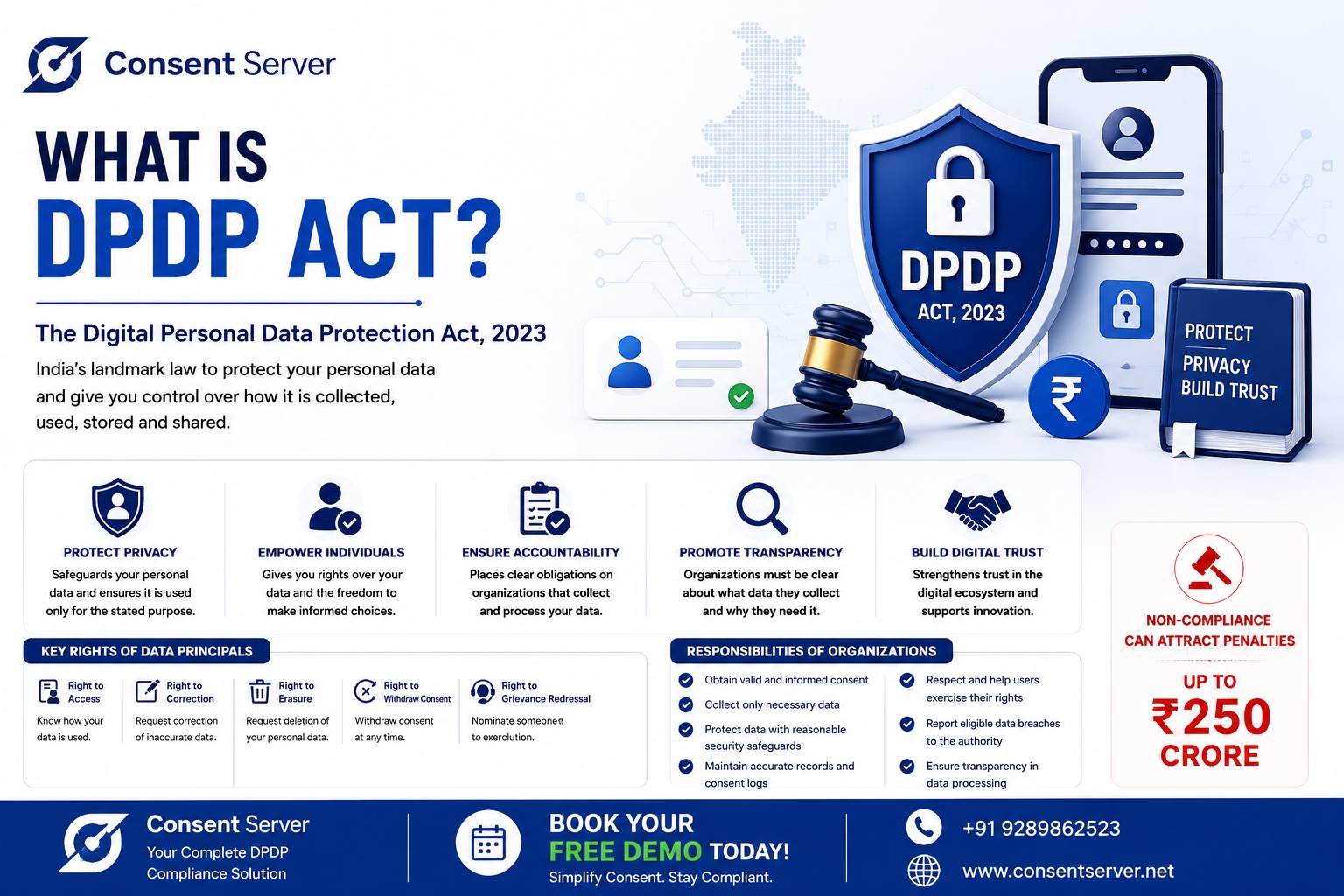
With India's Digital Personal Data Protection (DPDP) Act, 2023, organisations must increasingly consider not only how they protect personal data but also how they demonstrate accountability for its processing.
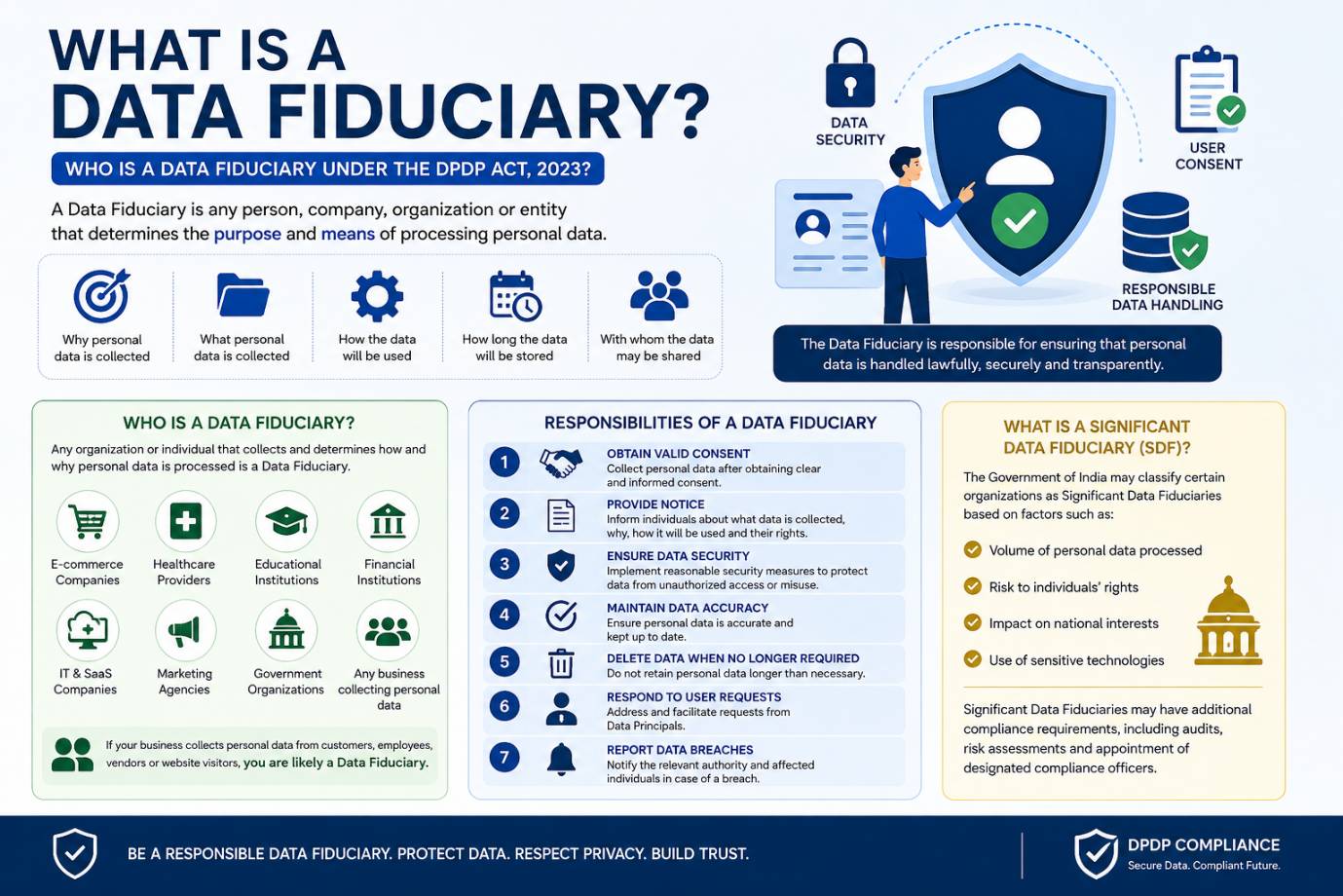
The DPDP Act introduces significant responsibilities for Data Fiduciaries, including reasonable security safeguards, personal data breach notification, valid consent where required, and respect for Data Principal rights.
For Indian businesses preparing for the major operational provisions scheduled to take effect on 13 May 2027, the message is clear:
DPDP compliance cannot be treated as a last-minute documentation exercise. It requires operational readiness across people, processes, and technology.
1. Why Data Breaches Are a Serious Threat to Indian Businesses
A personal data breach can occur when personal information is accessed, disclosed, altered, destroyed, or otherwise compromised without authorisation, including through accidental events.
Common causes include:
- Cyberattacks and ransomware incidents.
- Weak passwords or compromised employee credentials.
- Misconfigured cloud storage or databases.
- Unsecured APIs and third-party integrations.
- Accidental disclosure of customer information.
- Insider misuse or unauthorised employee access.
- Inadequate security controls in connected business applications.
- Lost devices containing unprotected personal data.
A breach does not necessarily mean that an attacker has stolen an entire database. Even an accidental disclosure or unauthorised alteration of personal data can create serious consequences.
For organisations collecting personal data through websites, mobile applications, CRM systems, HR platforms, and marketing tools, the potential exposure can extend across multiple systems.
This makes data protection compliance and incident preparedness essential business priorities.
2. What Does the DPDP Act Say About Personal Data Breaches?
The DPDP Act, 2023 establishes responsibilities for Data Fiduciaries processing digital personal data within its scope.
Two particularly important obligations are found in Section 8.
Reasonable Security Safeguards
Section 8(5) requires Data Fiduciaries to protect personal data in their possession or under their control by taking reasonable security safeguards to prevent personal data breaches.
These responsibilities extend to personal data processed on their behalf by Data Processors.
Businesses should therefore assess security not only within their own applications but also across vendors, integrations, and outsourced processing arrangements.
Personal Data Breach Notification
Section 8(6) requires a Data Fiduciary to intimate the Data Protection Board of India and each affected Data Principal about a personal data breach in the prescribed form and manner.
The DPDP Rules, 2025 provide further detail regarding notification requirements.
Under the notified framework, affected Data Principals must be informed without delay, while the Board must receive the prescribed initial intimation without delay and further detailed information within the specified period, generally 72 hours unless an extension is permitted.
These obligations form part of the major operational provisions scheduled to commence in May 2027.
Important: Organisations should also evaluate currently applicable obligations, including CERT-In directions and relevant sector-specific requirements. The DPDP Act's phased commencement does not suspend other existing legal duties.
3. How Much Can a DPDP Violation Cost Your Organisation?
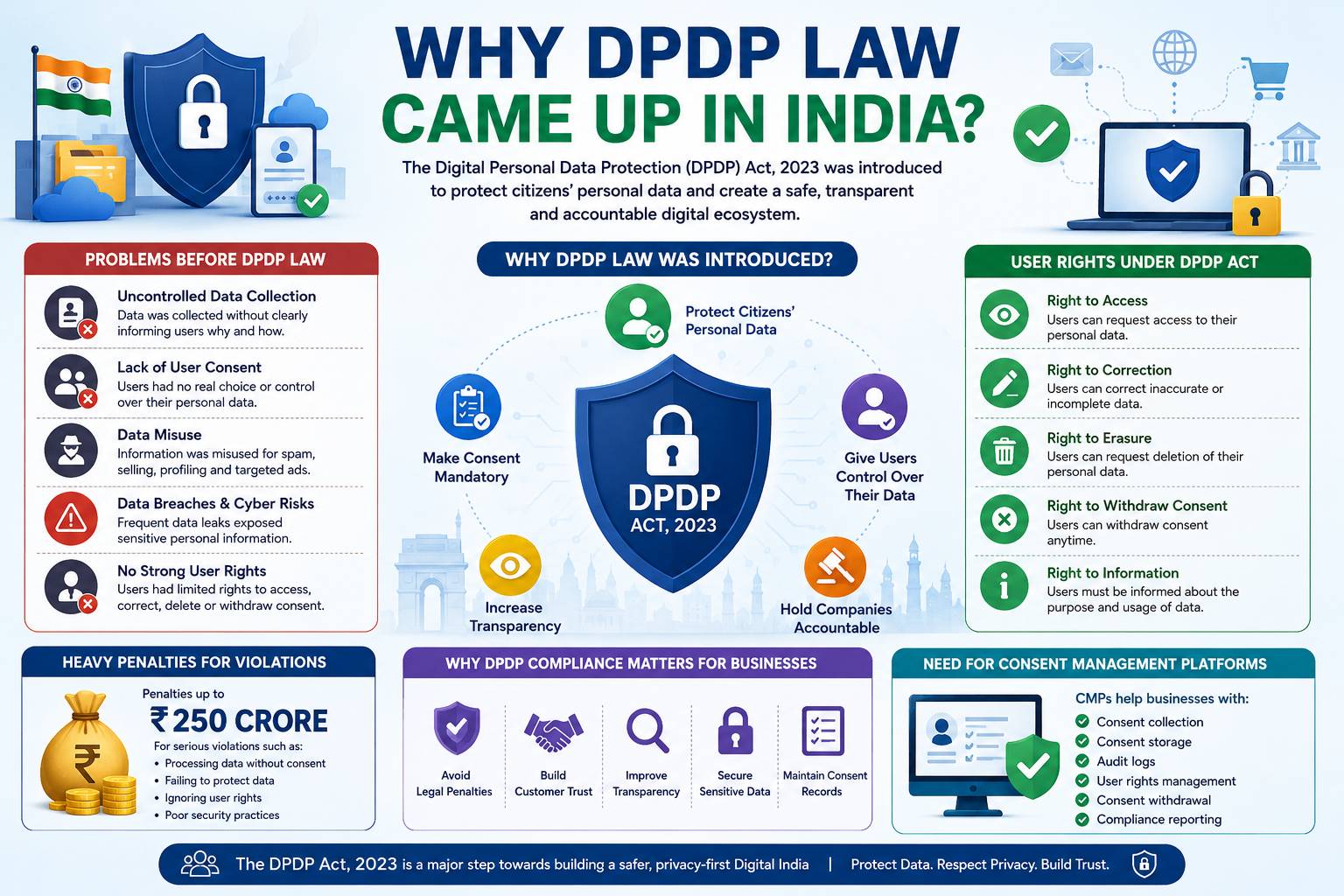
The DPDP Act establishes a significant financial penalty framework.
Under its Schedule, the maximum monetary penalties for certain contraventions include:
| Contravention | Maximum Penalty |
|---|---|
| Failure to take reasonable security safeguards to prevent a personal data breach | ₹250 crore |
| Failure to notify the Board or affected Data Principals of a personal data breach | ₹200 crore |
| Failure to fulfil specified obligations relating to children | ₹200 crore |
| Failure to fulfil specified obligations of a Significant Data Fiduciary | ₹150 crore |
| Breach of other applicable provisions or rules | ₹50 crore |
These figures represent statutory maximums for the relevant categories, not automatic penalties for every incident.
The Board determines penalties in accordance with the applicable legal framework, considering relevant circumstances.
Nevertheless, the financial exposure demonstrates why organisations should treat DPDP compliance as a board-level risk-management priority.
Beyond regulatory penalties, businesses may also face operational disruption, reputational damage, customer complaints, investigation costs, and loss of commercial trust.
4. Cybersecurity Alone Is Not DPDP Compliance
Many organisations assume that installing firewalls, antivirus software, encryption, and access controls is sufficient for data protection compliance.
These measures are important, but they address only part of the problem.
Cybersecurity protects systems and information. DPDP compliance also governs the lawful processing of personal data and the rights of individuals.
Consider an organisation with a highly secure CRM database.
Its customer information may be encrypted and protected against unauthorised access. However, the organisation must still assess whether:
- Personal data is processed for a valid legal basis.
- Consent is collected appropriately where required.
- Privacy notices contain the necessary information.
- Personal data is used consistently with the applicable purpose.
- Consent withdrawal is implemented where relevant.
- Data Principal rights requests are handled appropriately.
- Personal data is erased when legally required.
- Relevant processing and compliance evidence can be produced.
A secure database does not automatically establish lawful processing.
Similarly, a consent checkbox on a website does not automatically establish complete consent lifecycle management.
Businesses need a coordinated approach combining security controls, consent management, governance, and operational accountability.
5. The Hidden Risk: Personal Data Spread Across Multiple Systems
One of the biggest compliance challenges for Indian businesses is fragmented personal data.
Consider a company that collects customer information through its website.
That information may subsequently move into:
- A CRM platform for sales follow-up.
- An email marketing application.
- An SMS communication system.
- A WhatsApp messaging integration.
- A customer support application.
- An analytics or reporting platform.
- An internal database or ERP system.
Now imagine that a customer withdraws consent for promotional communications.
The website records the withdrawal, but the CRM continues sending the customer's information to a marketing platform.
The SMS application still treats the customer as subscribed.
The WhatsApp integration continues sending promotional messages.
The organisation has recorded a consent withdrawal but has not necessarily implemented it across its processing environment.
This illustrates why businesses need consent-management workflows that connect relevant systems rather than relying solely on isolated forms or spreadsheets.
6. Why Consent Management Matters in Data Protection
Consent management and cybersecurity are different functions, but both contribute to responsible personal data processing.
Where consent is the applicable legal basis, organisations need processes for collecting and managing it according to the DPDP Act.
A suitable consent-management process should address:
Purpose-Based Consent
Businesses should clearly identify the purposes for which consent is sought.
For example, consent for delivering a requested service should not automatically be treated as consent for unrelated marketing activities.
Clear Privacy Notices
Individuals should receive the required information about personal data processing and available rights.
Consent Records
Businesses should maintain appropriate evidence of consent, including relevant purpose and notice information.
Consent Withdrawal
Where processing depends on consent, individuals must have a means to withdraw it in accordance with the law.
Connected-System Updates
Withdrawal or changes in consent should be communicated to relevant applications and processing teams so that appropriate actions can be taken.
Audit and Accountability
Organisations should be able to investigate what happened, when it happened, and which systems or teams were responsible.
These capabilities can help businesses reduce operational uncertainty and strengthen their compliance evidence.
7. What Should Your Organisation Do Immediately After a Data Breach?
An effective incident response process should be established before a breach occurs.
When a suspected personal data breach is identified, organisations should follow a structured response.
Step 1: Identify and Contain the Incident
The security team should investigate the suspected incident, isolate affected systems where appropriate, and take steps to prevent further exposure.
Step 2: Determine the Scope
The organisation should assess which systems, personal data categories, and individuals may be affected.
Step 3: Preserve Evidence
Relevant logs, incident timelines, technical findings, and response records should be preserved securely.
Step 4: Assess Notification Obligations
The organisation should identify applicable notification requirements under the laws and regulations currently in force, including DPDP requirements once commenced.
Step 5: Notify Relevant Parties
Where legally required, the organisation should notify the appropriate authority and affected individuals within the applicable requirements.
Step 6: Remediate the Vulnerability
Security weaknesses should be corrected, affected credentials rotated where necessary, and relevant controls strengthened.
Step 7: Review and Improve
Management should examine the root cause and improve technical, organisational, and contractual safeguards.
A documented incident response plan can reduce confusion during a crisis and support a more consistent response.
8. Is Your Organisation Ready for DPDP Compliance? Seven Questions to Ask
Business leaders should be able to answer the following questions confidently.
1. Do you know where your organisation stores and processes personal data?
Without a reliable understanding of data flows, it is difficult to assess exposure and compliance obligations.
2. Can you identify the legal basis for each major processing activity?
Different processing activities may require different assessments under the DPDP Act.
3. Can you demonstrate valid consent where consent is required?
A database entry alone may not establish all relevant circumstances surrounding consent.
4. Can customers withdraw consent through an accessible process?
Withdrawal mechanisms must be supported by appropriate downstream processing changes.
5. Do connected systems receive relevant consent updates?
Fragmented applications create a risk of inconsistent processing.
6. Can your organisation handle Data Principal rights requests?
Access, correction, erasure, and grievance-related processes require defined ownership and workflows.
7. Can your organisation respond effectively to a personal data breach?
Incident response, security monitoring, evidence preservation, and notification readiness should be tested.
If your organisation cannot answer several of these questions, it may have important gaps to address before the applicable DPDP obligations take effect.
9. How Consent Server Helps Businesses Strengthen DPDP Compliance Readiness
Consent Server is a DPDP Compliance Software and Consent Management Platform designed to help Indian businesses manage consent-related operations and prepare for applicable DPDP requirements.
Developed by Iconic Infotech Pvt. Ltd., Consent Server focuses on centralized consent management, lifecycle automation, integration, and compliance evidence.
Centralized Consent Management
Consent Server helps organisations collect and manage purpose-based consent through configurable forms and centralized records.
Automated Consent Lifecycle
The platform supports consent granting, updating, withdrawal, renewal, and expiry.
Data Principal Rights Management
Businesses can manage workflows relating to data access, correction, erasure, consent withdrawal, and grievances.
Audit-Ready Consent Records
Consent Server maintains consent histories, relevant timestamps, and notice or purpose version information.
Hash-based mechanisms support record integrity and tamper detection.
API and Webhook Integration
Consent events can be communicated to connected CRM, ERP, marketing, and other business applications.
Delivery, Acknowledgement, and Completion Tracking
Consent Server supports a structured event workflow:
Consent Event --> Webhook/API Notification --> Delivered --> Acknowledged --> Action Completed --> Completion Evidence
Retries and escalation mechanisms help organisations identify actions that have not been acknowledged or completed.
This provides more operational visibility than merely sending a notification.
However, connected applications and responsible teams must actually perform the required processing changes.
On-Premise and Hosted Deployment
Consent Server supports deployment flexibility for organisations with different infrastructure, security, and operational needs.
On-premise deployment can be particularly relevant for businesses that prefer direct control over their consent-management infrastructure.
Consent Server supports consent governance and related compliance operations. It does not replace cybersecurity controls, breach detection systems, legal assessments, or a comprehensive incident response programme.
10. Industries That Should Prioritise DPDP Readiness
Although the DPDP Act is not limited to a particular industry, some sectors handle especially large volumes or sensitive categories of personal information.
Healthcare
Hospitals, clinics, diagnostic centres, and health technology providers process patient and contact information across multiple applications.
Banking, Financial Services, and FinTech
Financial organisations manage customer onboarding information, account-related data, and communication preferences, alongside sector-specific regulatory obligations.
Education
Schools, universities, and EdTech platforms process student, parent, employee, and applicant information.
E-Commerce and Retail
Online businesses collect customer details for order fulfilment, delivery, support, analytics, and marketing.
HR and Recruitment
Employers and recruitment platforms process employee, candidate, payroll, and employment-related information.
SaaS and Technology
Software companies may process personal data directly or on behalf of business customers, creating responsibilities that depend on their legal role.
For these organisations, data protection readiness requires coordination between management, legal, compliance, IT, security, and business operations.
11. DPDP Compliance Timeline: Why Businesses Should Act Before May 2027
India's DPDP framework is being introduced through phased commencement.
The notified schedule includes the following milestones:
| Date | Regulatory Milestone |
|---|---|
| 13 November 2025 | Initial provisions and institutional framework commenced |
| 13 November 2026 | Consent Manager registration-related provisions scheduled to commence |
| 13 May 2027 | Major operational provisions, including key Data Fiduciary obligations, scheduled to commence |
Businesses should use the remaining preparation period to assess personal data processing, strengthen safeguards, improve consent-management workflows, and establish operational accountability.
Waiting until the final implementation period can create unnecessary integration, training, and governance challenges.
12. Building a Practical DPDP Compliance Strategy
A strong preparation programme should involve several coordinated activities.
Data Discovery: Identify personal data sources, processing purposes, applications, and relevant processors.
Legal Assessment: Determine applicable obligations and lawful processing grounds.
Security Review: Evaluate access controls, encryption, monitoring, backup, incident response, and vendor safeguards.
Consent Governance: Establish appropriate notice, consent, withdrawal, and recordkeeping processes.
Rights Management: Define how Data Principal requests will be received, reviewed, executed, and documented.
Application Integration: Ensure relevant consent changes and rights-related actions reach the systems responsible for processing.
Employee Awareness: Train relevant staff on privacy responsibilities, incident reporting, and request handling.
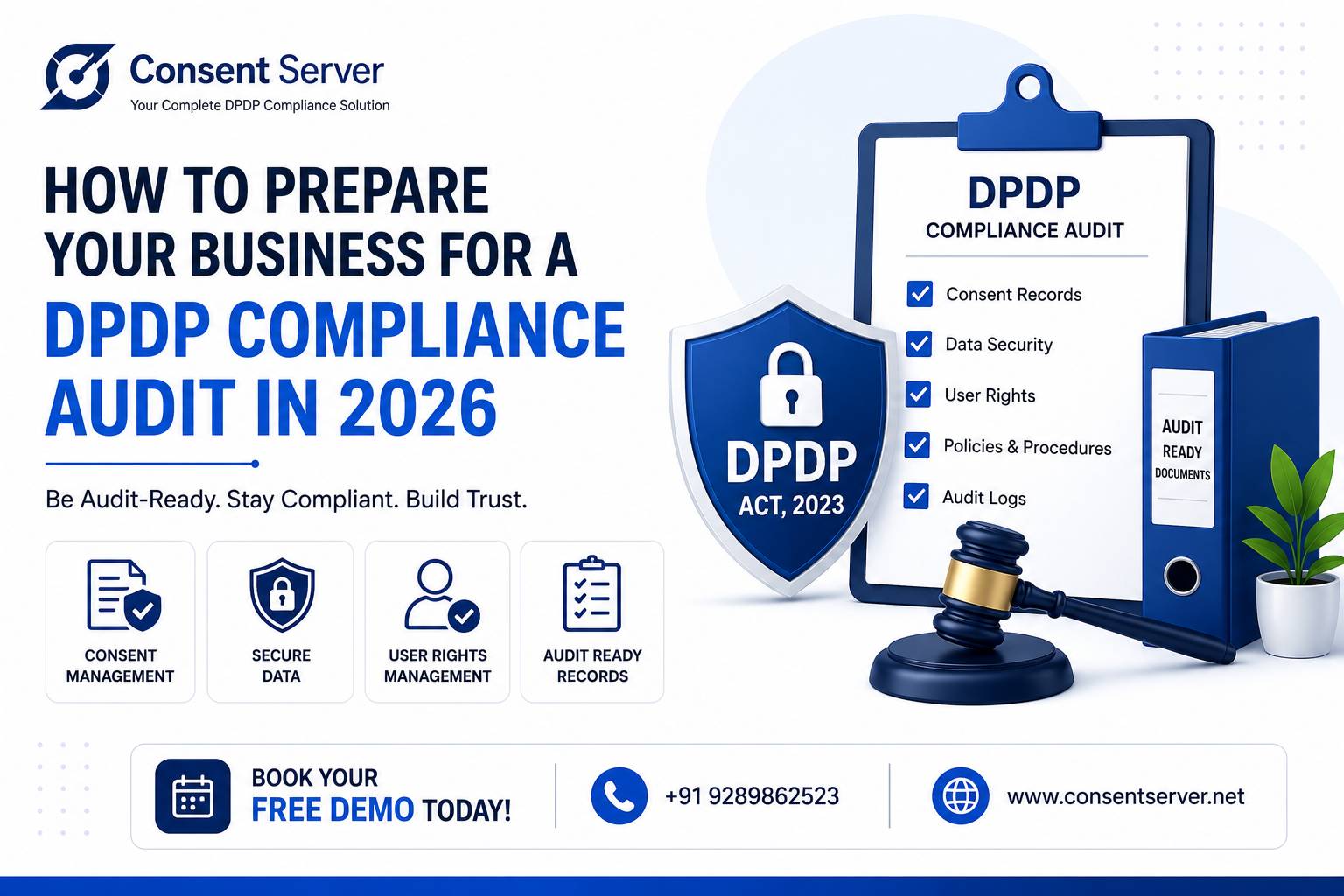
Audit Preparation: Maintain appropriate records and test whether the organisation can demonstrate how its processes operate.
A coordinated approach is more effective than treating each compliance requirement as an isolated task.
Conclusion: Data Breaches Are Real. Compliance Readiness Must Be Real Too.
A personal data breach can expose weaknesses that remain unnoticed during everyday business operations.
It can also raise difficult questions about security safeguards, lawful processing, consent, incident response, and organisational accountability.
India's DPDP Act makes these responsibilities increasingly important for businesses handling digital personal data.
The solution is not simply to install another security product or add a consent checkbox to a website.
Organisations need a practical data protection strategy supported by security controls, clear processes, appropriate technology, and accountable teams.
For businesses seeking to strengthen consent-related compliance operations, Consent Server provides centralized consent management, automated lifecycle workflows, Data Principal rights management, audit-ready records, and integration with existing business systems.
Data breaches are real. The question is whether your organisation is prepared to prevent, detect, respond to, and demonstrate accountability for them.
Prepare Your Organisation for DPDP Compliance With Consent Server
Simplify consent management, automate workflows, strengthen audit readiness, and connect consent updates across your business applications.