DPDP Act 2026: Changes After 13 Nov & May 2027 Deadline
Discover what changes under the DPDP Act after 13 November 2026, the May 2027 compliance deadline, and how Indian businesses should prepare.
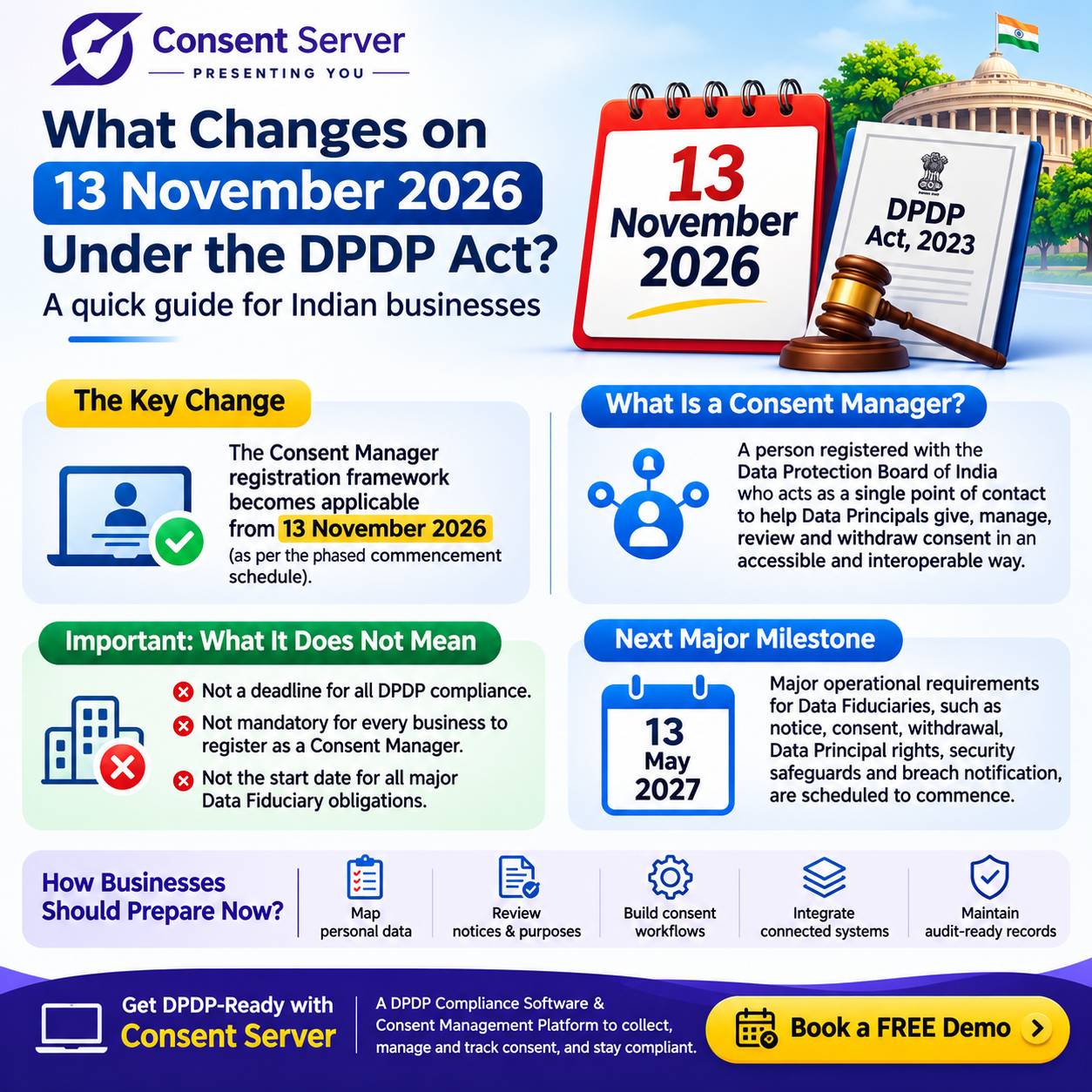
DPDP Act 2026: What Changes After 13 November? What Indian Businesses Must Do Before 13 May 2027
India's Digital Personal Data Protection (DPDP) Act, 2023, has entered an important new phase. With the statutory Consent Manager framework coming into effect on 13 November 2026 and major operational compliance obligations scheduled to commence on 13 May 2027, businesses across India need to understand what these developments mean for their operations.
For companies handling customers' personal data, the coming months present an important opportunity to strengthen privacy practices, establish consent management processes, and prepare internal systems for the applicable requirements of India's data protection framework.
However, a common misunderstanding needs to be addressed: 13 November 2026 is not the date when every Indian company must become fully DPDP compliant.
So, what exactly changes after 13 November 2026? What is expected by 13 May 2027? And how can organisations prepare?
Let's explore the requirements, implementation timeline, and practical steps businesses should consider.
Understanding the DPDP Act Implementation Timeline
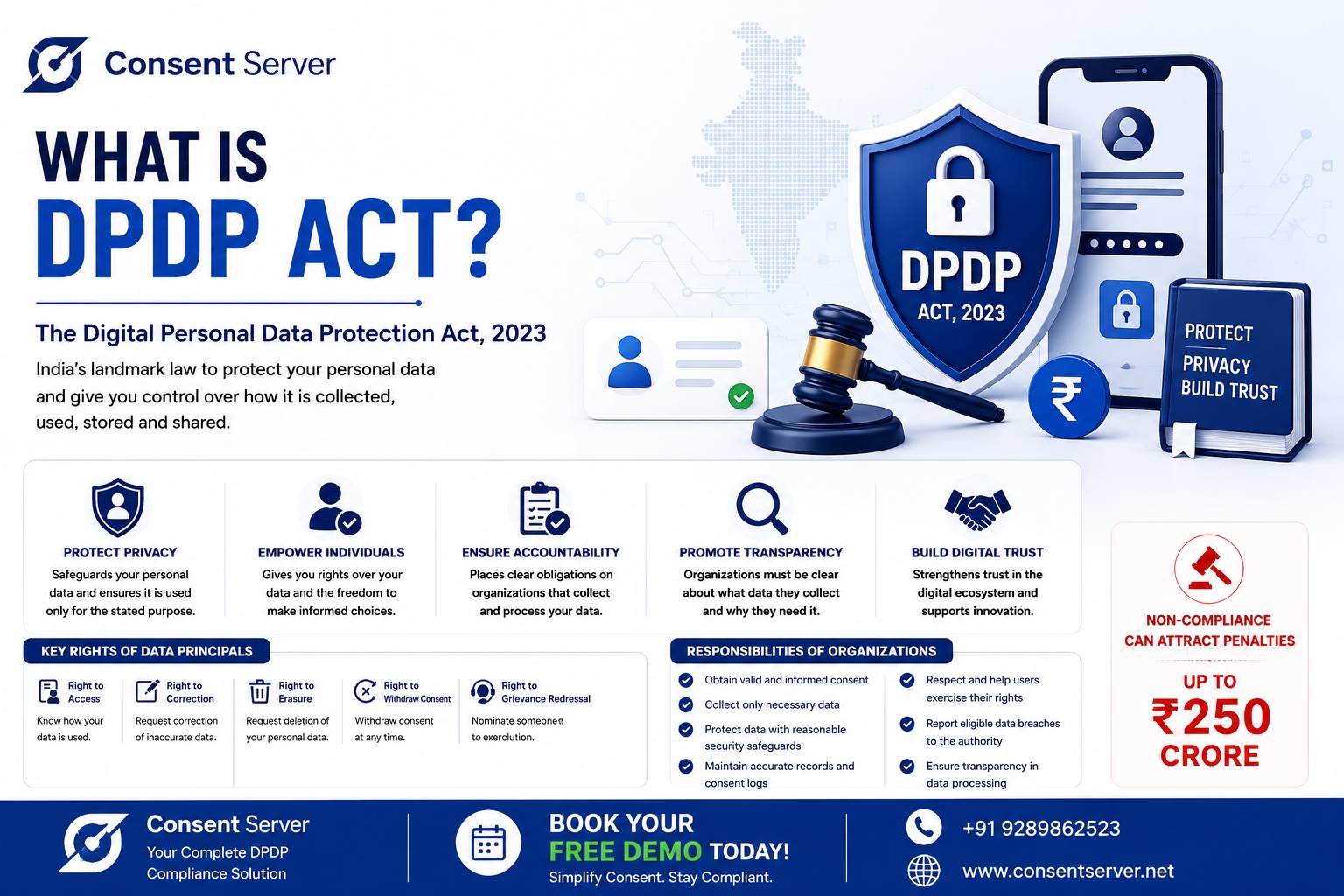
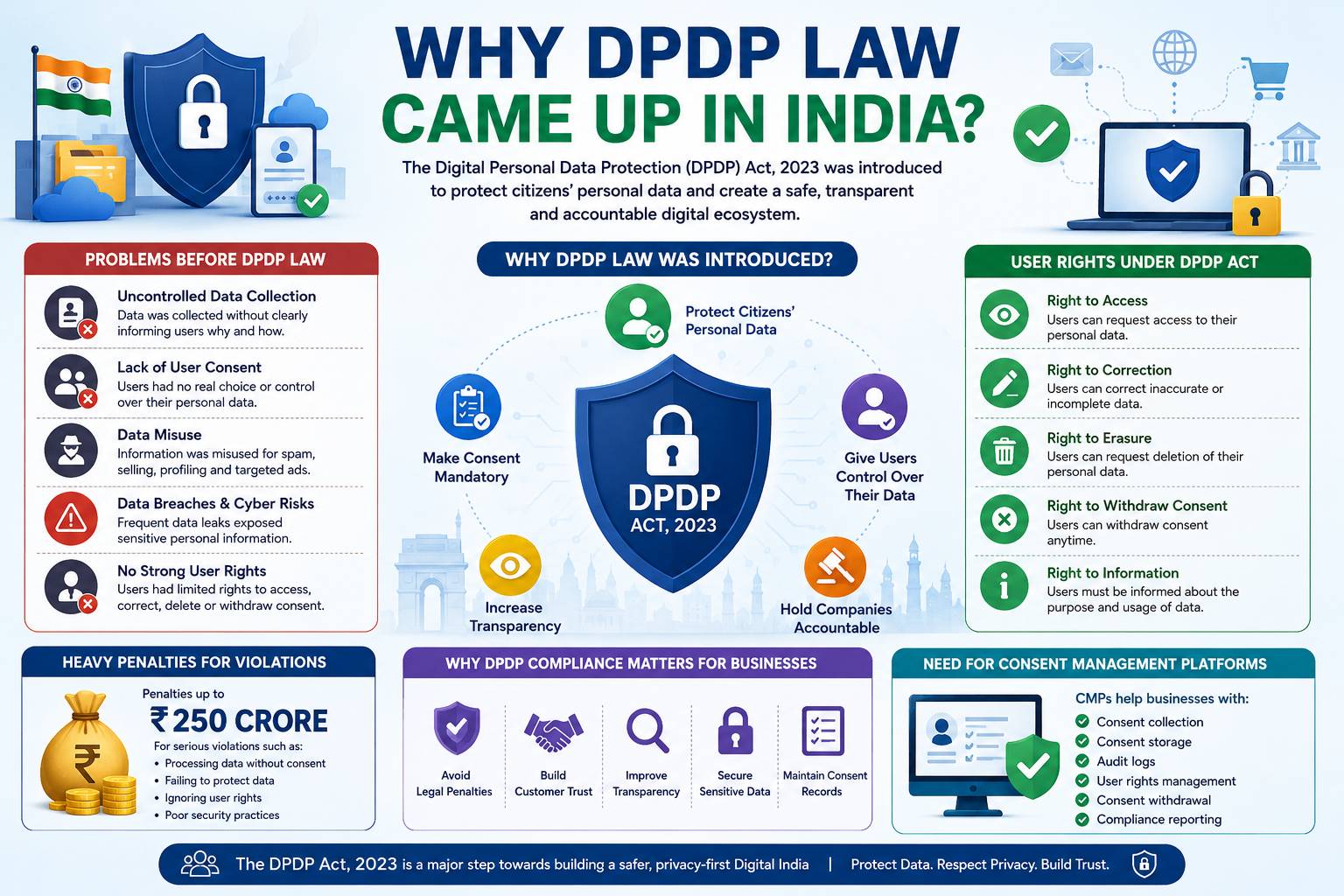
The Digital Personal Data Protection Act, 2023, establishes a legal framework for processing digital personal data in India.
Its implementation follows a phased commencement schedule rather than a single deadline.
| Date | DPDP Implementation Milestone |
|---|---|
| 13 November 2025 | Initial provisions of the DPDP framework came into effect. |
| 13 November 2026 | Statutory Consent Manager registration-related provisions come into effect. |
| 13 May 2027 | Major operational obligations for Data Fiduciaries are scheduled to commence. |
This phased approach provides organisations with time to evaluate their data processing activities, understand their responsibilities, and implement appropriate technical and organisational measures.
For businesses, the key consideration is not simply the date on the calendar, but whether their systems, policies, and operational workflows can support the applicable requirements.
What Changes After 13 November 2026 Under the DPDP Act?
One of the most significant developments on 13 November 2026 is the commencement of the statutory Consent Manager framework.
Under Section 6(9) of the DPDP Act, a Consent Manager is an entity registered with the Data Protection Board of India that provides an accessible, transparent, and interoperable platform through which Data Principals can give, manage, review, and withdraw their consent.
Rule 4 of the DPDP Rules, 2025, establishes the registration framework and associated requirements for Consent Managers.
This creates a statutory structure for entities seeking to operate in that specific role.
Does Every Indian Business Need to Register as a Consent Manager?
No.
The statutory Consent Manager role and a business's own consent management responsibilities are different.
A hospital, educational institution, financial services company, e-commerce business, or SaaS provider does not automatically need to register as a Consent Manager merely because it processes personal data.
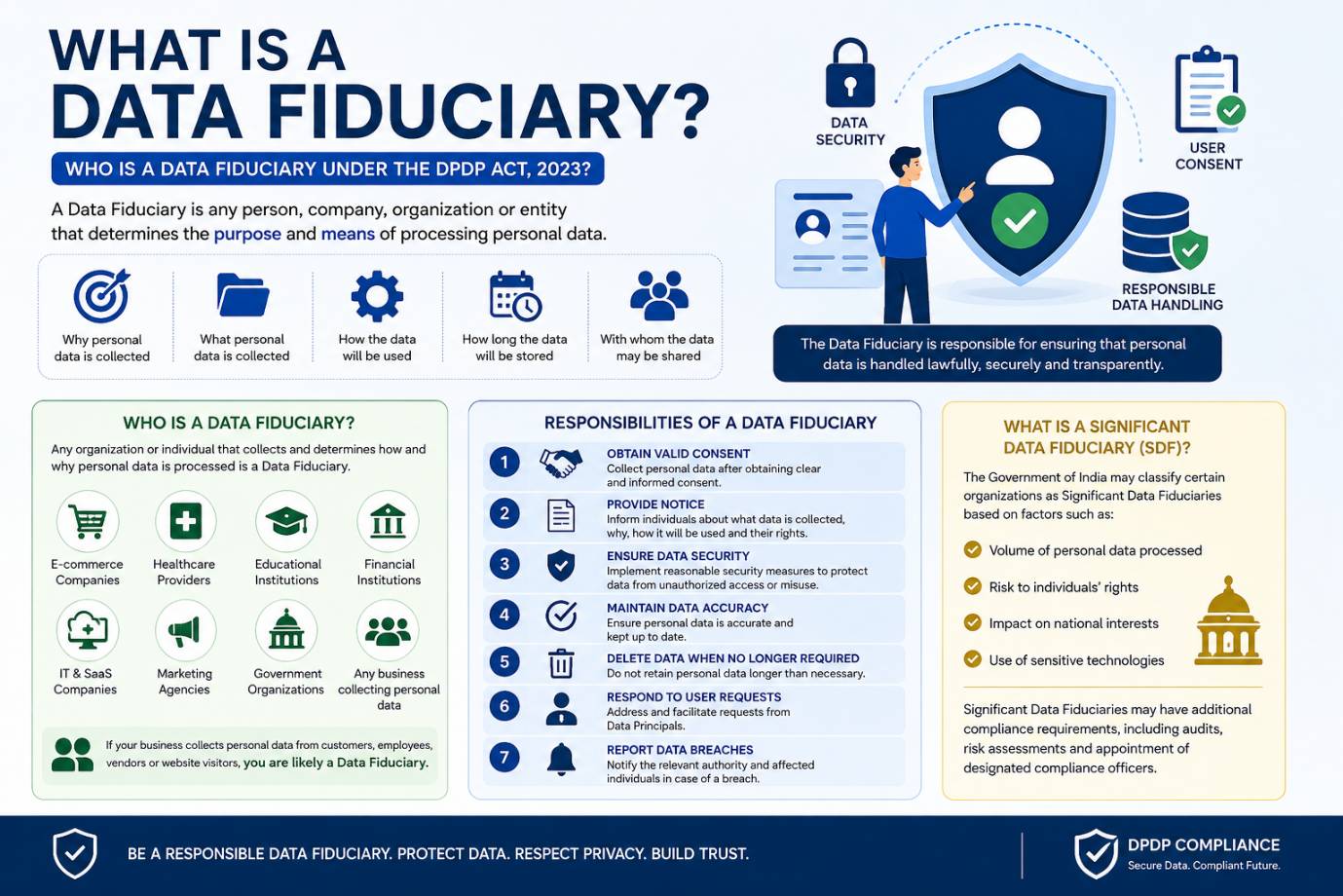
Such organisations may instead operate as Data Fiduciaries, depending on their role in determining the purposes and means of processing personal data.
Their responsibilities arise from the applicable provisions of the DPDP Act.
A commercial Consent Management Platform (CMP) can help these organisations manage consent-related operations without the software provider automatically becoming a registered statutory Consent Manager.
Understanding this distinction is essential when evaluating DPDP compliance solutions.
Why 13 May 2027 Is the Next Major DPDP Compliance Milestone
While 13 November 2026 focuses on Consent Manager-related provisions, 13 May 2027 is the next major date for organisations preparing for operational DPDP requirements.
Under the notified commencement schedule, significant provisions concerning Data Fiduciary obligations, consent, Data Principal rights, and related requirements are scheduled to become applicable on this date.
For organisations covered by these provisions, compliance with the applicable legal obligations will be mandatory once they commence.
However, the exact requirements depend on factors such as the nature of processing, the organisation's role, applicable exemptions, and the relevant legal basis.
Businesses should therefore avoid assuming that every organisation has identical obligations.
Instead, they should assess their data processing activities and develop a practical compliance roadmap.
7 Important Changes Indian Companies Should Prepare For
1. Personal Data Mapping and Processing Transparency
Before implementing a consent management system, organisations need to understand how personal data flows through their business.
This involves identifying:
What personal data is collected from customers, employees, and users.
Why that data is collected and processed.
Which applications and databases store the information.
Which departments and service providers can access it.
How long the data needs to be retained.
For example, an e-commerce company may collect customer names, phone numbers, delivery addresses, payment-related information, and purchase histories.
Different categories of information may be processed for different purposes.
Documenting these activities helps organisations identify the relevant DPDP requirements and evaluate their existing controls.
2. Clear Privacy Notices and Purpose-Based Consent
Where consent is the legal basis for processing, organisations must ensure that consent and the accompanying notice satisfy the applicable DPDP requirements.
A privacy notice should communicate the required information clearly and understandably.
Businesses should review whether their notices appropriately explain the personal data involved, processing purposes, and relevant rights and grievance mechanisms.
Consent should also be managed in relation to the specific purposes for which it is obtained.
For example, a customer may provide personal data to complete an online purchase. Using that information for unrelated promotional activities may require a separate assessment of the applicable legal basis.
Importantly, the DPDP Act does not require consent for every processing activity. Section 7 recognises certain legitimate uses of personal data.
Organisations must identify the correct legal basis rather than applying a universal consent checkbox to every situation.
3. Consent Withdrawal and Lifecycle Management
Consent management does not end when an individual clicks an Agree button.
Where processing relies on consent, organisations must be able to manage consent throughout its lifecycle.
This includes recording consent, identifying the relevant purpose, maintaining appropriate evidence, and responding to withdrawal.
Consider a customer who withdraws consent for promotional communications.
The withdrawal may need to be reflected across multiple systems, including:
Customer Relationship Management (CRM) software.
Email marketing applications.
SMS communication platforms.
Mobile applications.
Other connected processing systems.
If a website records a withdrawal but connected applications continue processing data based on outdated consent information, the organisation may face compliance risks.
This is why centralised consent management and system integration are increasingly important.
4. Data Principal Rights Management
The DPDP Act provides individuals, known as Data Principals, with rights under the applicable provisions.
These include rights relating to access to information, correction, erasure, and grievance redressal.
Businesses need to prepare processes for receiving, reviewing, and responding to requests.
For example, if a customer submits an erasure request, the organisation may need to determine which personal data is involved, whether any legal retention obligation applies, and what action is required.
A structured request management workflow can help coordinate these activities across departments.
Organisations should also maintain appropriate records of request handling and completed actions.
5. Data Security and Personal Data Breach Response
Data protection involves more than consent.
Businesses must prepare to implement reasonable security safeguards as required by the applicable provisions of the DPDP framework.
Depending on their environment, relevant measures may include access controls, encryption, monitoring, authentication, backups, and incident response procedures.
Organisations must also prepare processes for handling personal data breaches and making required notifications.
For example, a business experiencing unauthorised access to a customer database should have a documented process for identifying the incident, containing the impact, evaluating notification obligations, and maintaining relevant evidence.
Security preparedness should involve both technology teams and business leadership.
6. Consent Audit Trails and Evidence Management
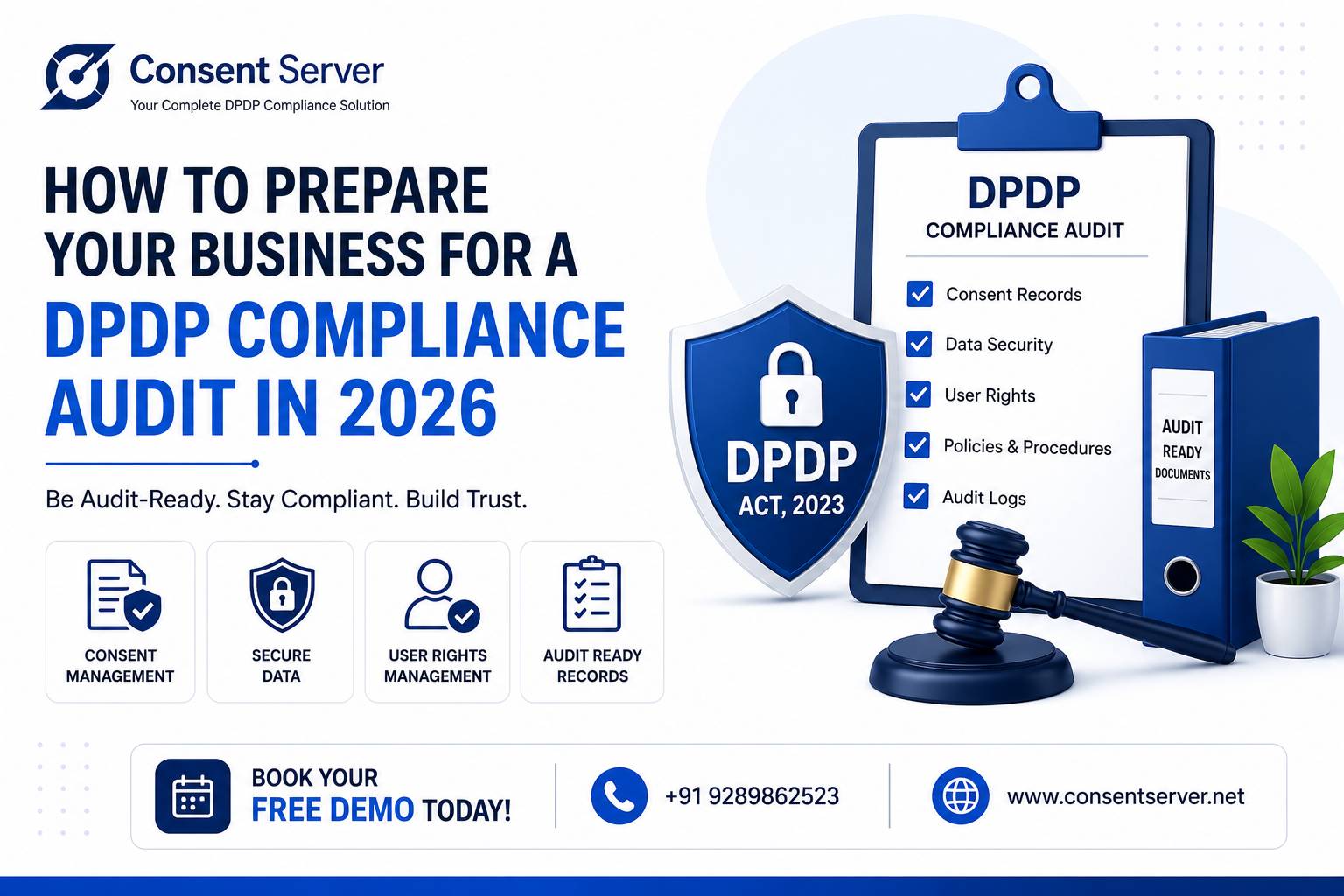
An important aspect of consent-based processing is the ability to demonstrate that consent was obtained in accordance with applicable requirements.
Section 6(10) of the DPDP Act places the burden of proving the required notice and consent on the Data Fiduciary when consent is questioned in a proceeding.
Organisations should therefore consider maintaining reliable records such as:
Consent date and time.
Relevant processing purpose.
Privacy notice version.
Consent status and subsequent changes.
Withdrawal history.
Relevant system actions and completion evidence.
An audit trail can help organisations investigate disputes, review operational processes, and demonstrate how consent-related actions were handled.
However, simply recording that a webhook or notification was delivered does not establish that the receiving system completed the required action.
A more reliable workflow distinguishes between delivery, acknowledgement, execution, and completion evidence.
7. Integration Across Existing Business Systems
Many organisations use multiple applications to manage customer interactions.
These may include websites, CRM systems, ERP software, marketing platforms, customer support applications, and internal databases.
Consent information stored separately in each system can become difficult to manage consistently.
For example, a customer may withdraw consent through a website while their information remains active in another connected application.
Businesses should therefore evaluate how consent changes and relevant rights requests can be communicated to the systems responsible for processing personal data.
API-based integrations, webhooks, status tracking, and internal workflows can help organisations coordinate these activities.
Which Industries Should Prepare for DPDP Compliance?
The DPDP framework is relevant across sectors that process digital personal data, subject to its scope and applicable provisions.
Healthcare: Hospitals, clinics, laboratories, and healthcare technology providers should evaluate how they collect and manage patient-related personal data.
Education: Schools, universities, coaching institutes, and EdTech platforms should review student data processing, notices, consent where required, and applicable requirements concerning children.
Financial Services: Banks, fintech businesses, insurance providers, and other financial organisations should assess their personal data processing activities alongside applicable sector-specific requirements.
E-Commerce and Retail: Online stores, marketplaces, and retail brands should review customer information, marketing consent, and connected business systems.
SaaS and Technology: Software providers should understand whether they act as Data Fiduciaries, Data Processors, or both in different processing arrangements.
Manufacturing and Automotive: Organisations should assess employee, customer, dealer, and service-related personal data processing.
The key factor is the organisation's processing of digital personal data, not simply the industry in which it operates.
Is a Website Consent Checkbox Enough for DPDP Compliance?
A checkbox may be one component of a consent collection process, but it does not automatically establish compliance with the DPDP Act.
Businesses may also need to manage privacy notices, valid consent records, withdrawals, Data Principal requests, security measures, and relevant operational workflows.
For example, a website may successfully record a customer's consent, but the organisation must still consider how that consent relates to processing activities in connected systems.
A Consent Management Platform can help manage these consent-related processes in a more organised manner.
However, broader DPDP compliance also involves legal assessments, internal policies, security safeguards, contractual arrangements, and organisational responsibilities.
How Consent Server Helps Businesses Prepare for DPDP Compliance
As businesses prepare for the next major DPDP milestone, managing consent-related activities across multiple systems can become a significant operational challenge.
Consent Server, developed by Iconic Infotech Pvt. Ltd., is a Consent Management Platform designed to help organisations simplify and automate consent-related workflows.
Key Capabilities of Consent Server
Purpose-Based Consent Management
Create and manage consent forms associated with specific processing purposes.
Centralised Consent Dashboard
Manage consent-related records and activities through a centralised interface.
Consent Lifecycle Management
Track consent collection, updates, withdrawals, and other relevant lifecycle events.
Privacy Notice Versioning
Maintain notice versions and support traceability of changes.
Audit-Ready Consent Records
Maintain consent histories and relevant evidence to support accountability and internal reviews.
Data Principal Rights Portal
Support workflows for access, correction, erasure, and grievance-related requests.
API and Webhook Integrations
Communicate consent-related events to connected business systems and track relevant action statuses.
On-Premise Deployment
Support organisations that require greater control over their deployment environment and infrastructure.
Consent Server helps organisations establish more structured consent management operations while supporting their broader DPDP readiness efforts.
It is a commercial CMP and should not be confused with a statutory registered Consent Manager.
Practical DPDP Compliance Preparation Roadmap Before May 2027
Organisations can approach their preparation through six practical stages.
| Stage | Recommended Action |
|---|---|
| 1. Data Discovery | Identify personal data, processing purposes, and connected systems. |
| 2. Legal Assessment | Review applicable provisions, legal bases, notices, and exemptions. |
| 3. Consent Management | Establish appropriate consent collection, recording, and withdrawal workflows. |
| 4. Rights Management | Prepare Data Principal request and grievance handling processes. |
| 5. Technical Integration | Connect relevant systems and establish appropriate operational controls. |
| 6. Readiness Testing | Review security, breach response, evidence management, and process effectiveness. |
Starting these activities early gives businesses more time to identify gaps, implement changes, and test their operational processes.
Frequently Asked Questions
What changes on 13 November 2026 under the DPDP Act?
The statutory Consent Manager registration-related provisions commence under the notified implementation schedule. This does not make every business a registered Consent Manager or bring every operational DPDP requirement into force on that date.
Is DPDP compliance mandatory for all Indian companies?
The applicable provisions of the DPDP Act are legally binding on organisations and processing activities within their scope, subject to relevant exemptions and conditions. Not every organisation has identical obligations.
What is the significance of 13 May 2027?
Under the notified schedule, 13 May 2027 is the commencement date for major operational DPDP obligations. Organisations covered by those provisions should prepare to comply when they become applicable.
Does every company need a registered Consent Manager?
No. Registration is relevant to entities seeking to operate in the statutory Consent Manager role. A business may use commercial consent management software without becoming a registered Consent Manager.
Can Consent Server help with DPDP compliance?
Yes. Consent Server can support consent-related operations, including purpose-based consent management, withdrawal workflows, audit records, Data Principal request handling, and system integrations. It does not replace legal compliance assessments or other organisational obligations.
Conclusion: Start Preparing Before the Next Major DPDP Milestone
13 November 2026 marks an important development in India's digital personal data protection framework.
With statutory Consent Manager-related provisions commencing and major operational obligations scheduled for 13 May 2027, businesses should use the available preparation period effectively.
The focus should be on understanding personal data processing activities, reviewing applicable legal requirements, implementing appropriate consent workflows, strengthening security, and preparing Data Principal rights processes.
Organisations that begin early will have more time to evaluate their existing systems, address operational gaps, and establish reliable data protection practices.
DPDP readiness is not just about adding a consent checkbox. It is about building responsible, transparent, and accountable personal data processing operations.