DPDP Act Compliance Management Software | Consent Server Copy
Discover DPDP Act Compliance Management Software for Indian businesses. Learn how Consent Server simplifies consent management, user rights and audit readiness.
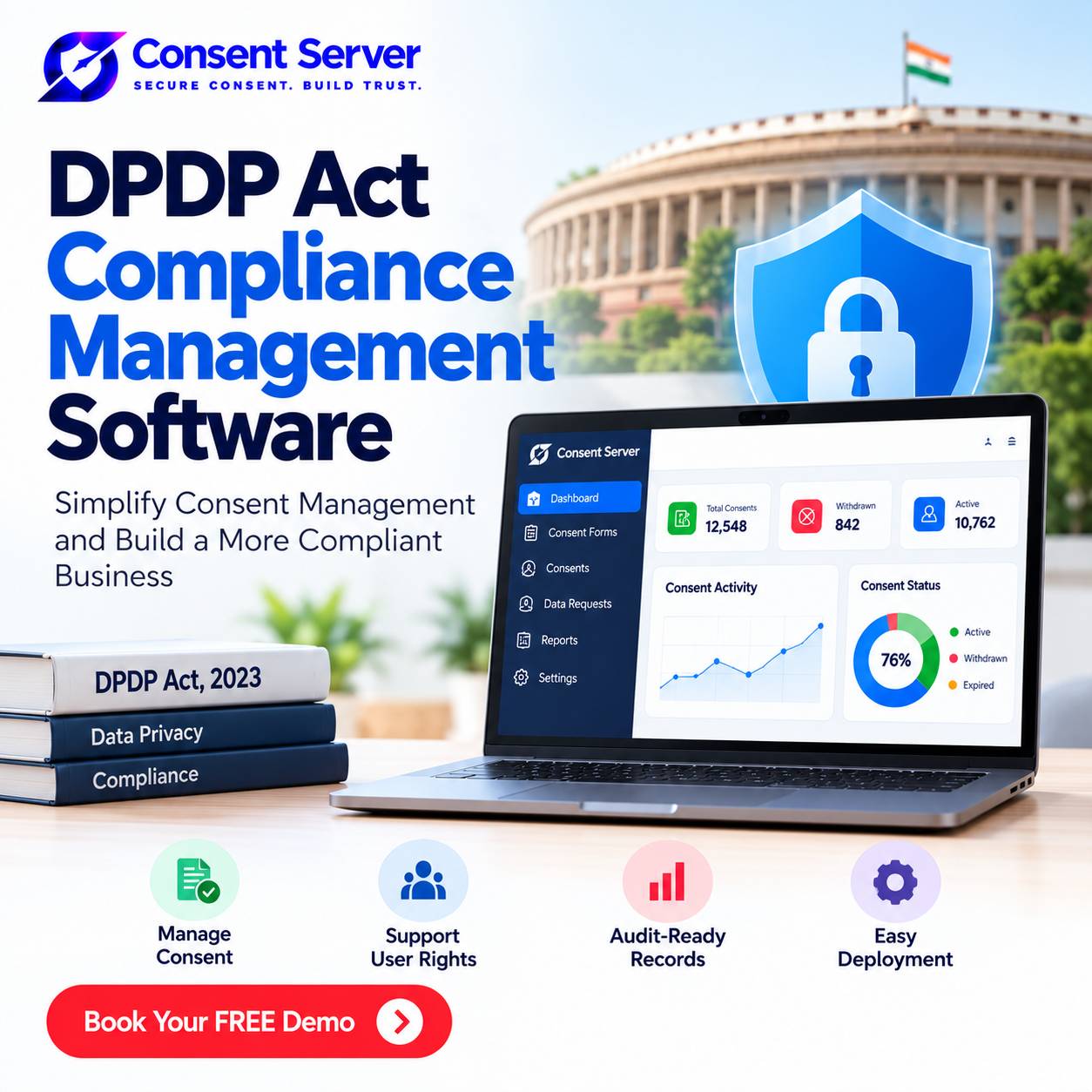
DPDP Act Compliance Management Software: A Complete Guide for Indian Businesses in 2026
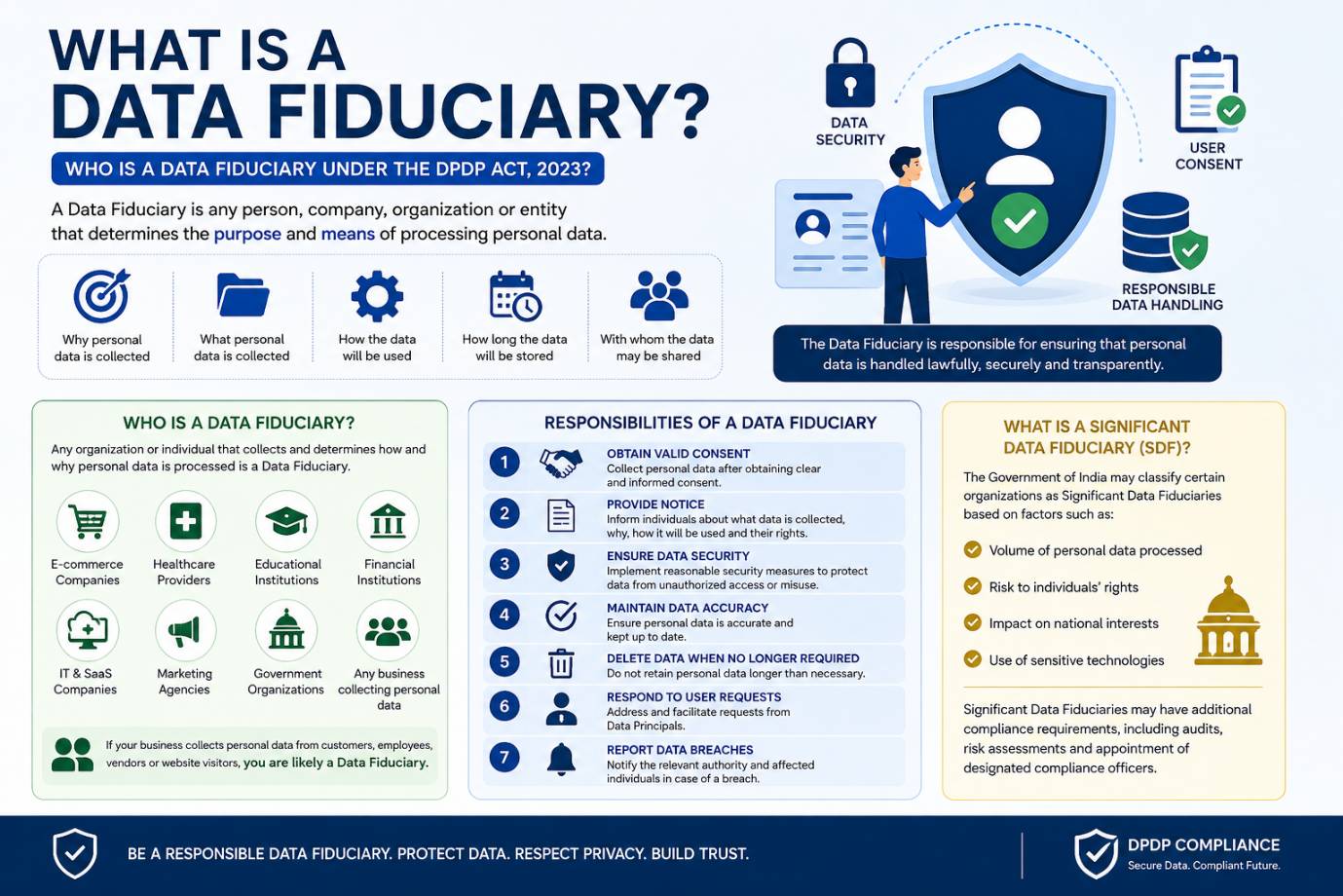
India's digital economy is expanding rapidly, and businesses are collecting more personal data than ever before. From customer registration and online payments to marketing campaigns, employee management, and digital services, personal information plays an important role in everyday business operations.
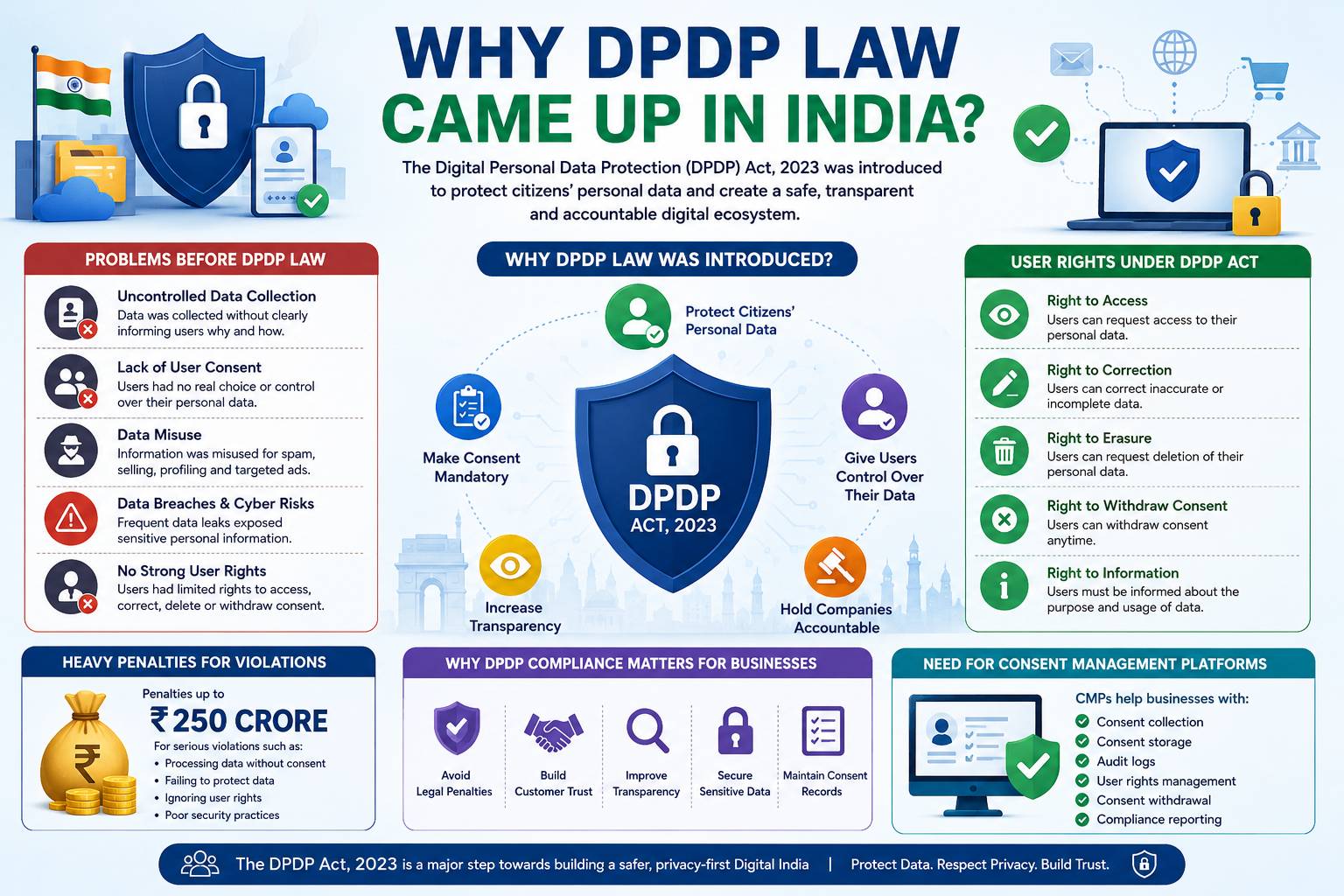
However, managing this information responsibly is becoming increasingly important under India's Digital Personal Data Protection (DPDP) Act, 2023.
Organisations must understand their obligations concerning consent, personal data processing, security safeguards, Data Principal rights, and applicable recordkeeping requirements.
Managing these responsibilities manually can become complicated, especially when personal data is processed across multiple websites, applications, departments, and third-party systems.
This is where DPDP Act Compliance Management Software can help.
A comprehensive DPDP Compliance Software solution can support businesses in organising consent-related processes, managing Data Principal requests, maintaining supporting records, and improving operational visibility.
Consent Server, developed by Iconic Infotech Pvt. Ltd., is a DPDP Consent Management Platform designed to help Indian businesses manage these activities through centralized workflows, audit-ready records, and integration capabilities.
What Is DPDP Act Compliance Management Software?
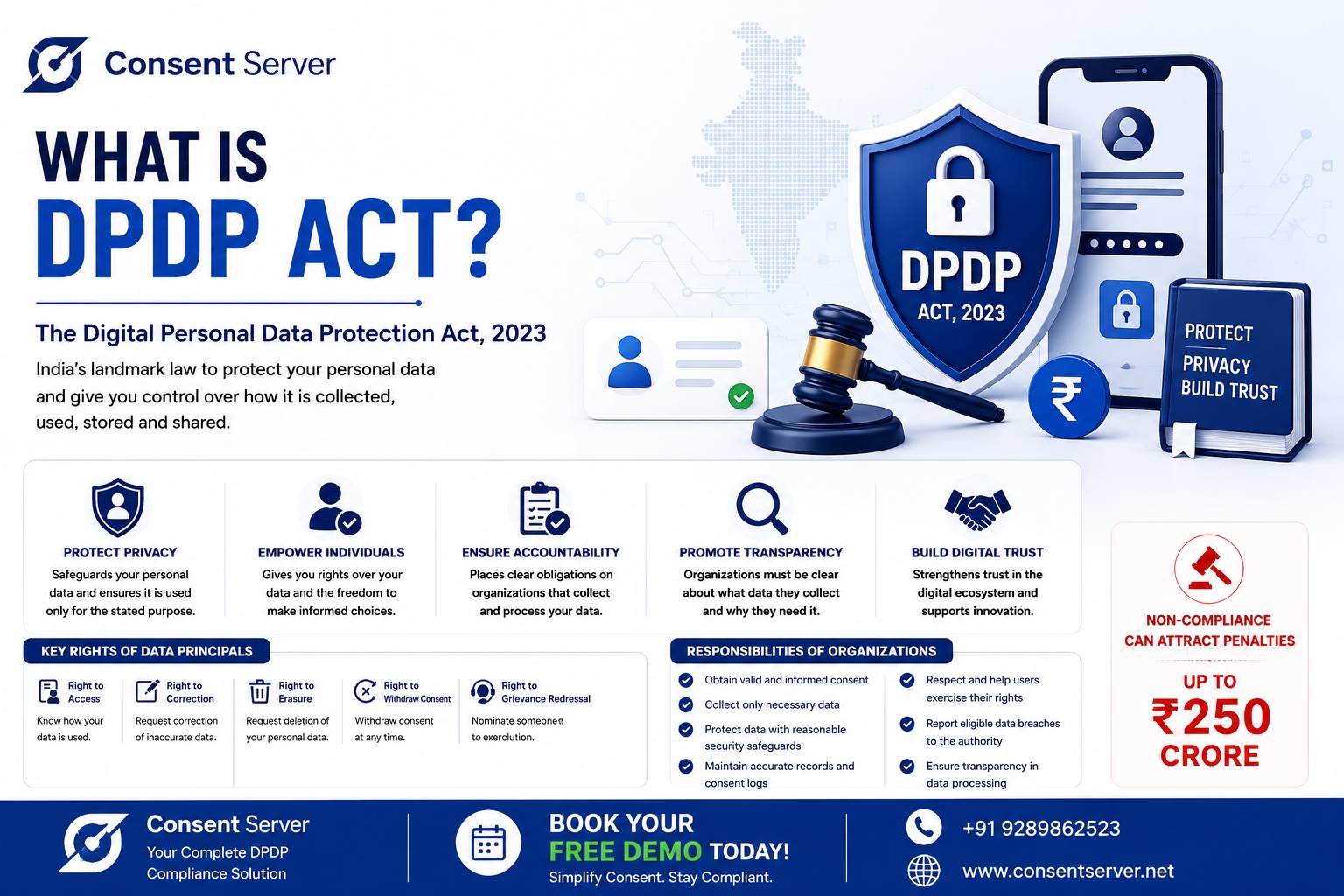
DPDP Act Compliance Management Software refers to technology that helps organisations implement and manage operational processes relevant to India's Digital Personal Data Protection Act.
Depending on the software's scope, these processes may include:
- Consent collection and management
- Consent withdrawal and renewal
- Privacy notice management
- Data Principal rights requests
- Consent-related audit records
- Data processing workflows
- Integration with business applications
- Compliance monitoring and reporting
Not every DPDP software product offers all these capabilities. Some solutions focus on privacy assessments or governance, while others specialize in consent management and Data Principal request handling.
A Consent Management Platform (CMP) is particularly relevant for organisations that need to manage consent across websites, mobile applications, CRM systems, and other connected services.
The purpose of such software is to make compliance-related operations more consistent, manageable, and traceable.
However, software alone cannot guarantee full legal compliance. Businesses must also establish appropriate policies, security measures, governance processes, and legal controls.
Why Do Indian Businesses Need DPDP Compliance Software?
Many organisations still manage consent and privacy-related requests using spreadsheets, emails, disconnected databases, and manual processes.
These approaches may work for limited operations, but they can become difficult to maintain as a business grows.
Consider a company that collects personal data through its website, stores customer details in a CRM, and uses separate SMS and WhatsApp platforms for marketing.
If a customer withdraws consent, the organisation may need to update several systems.
Without centralized consent management, one application may reflect the withdrawal while another continues processing personal data based on outdated consent.
Similarly, when a Data Principal requests access, correction, or erasure, employees may need to coordinate across multiple departments and applications.
DPDP Compliance Management Software helps organisations address these operational challenges by providing structured processes, centralized visibility, and supporting records.
Key Features to Look for in DPDP Act Compliance Management Software
When evaluating the best DPDP Compliance Software in India, businesses should consider whether the platform supports their actual data processing activities.
1. Centralized Consent Management
A reliable DPDP Consent Management Platform should help businesses manage consent across multiple digital channels.
Rather than maintaining disconnected consent records, organisations can use a centralized platform to organise customer preferences, consent purposes, and relevant consent histories.
This can improve consistency and reduce manual administrative work.
2. Purpose-Based Consent Collection
Under the DPDP Act, consent must satisfy applicable legal requirements, including being specific, informed, unambiguous, and based on a clear affirmative action.
Businesses should therefore provide appropriate notices and obtain consent for relevant specified purposes.
For example, an e-commerce company may need to distinguish between personal data processing for order-related activities and consent-based promotional marketing.
A configurable DPDP CMP can help organisations manage different consent purposes through structured consent forms.
3. Complete Consent Lifecycle Management
Consent management does not end when a customer clicks an approval button.
Organisations may need to manage consent updates, withdrawal, renewal, expiry, and relevant notice changes.
A complete Consent Management Platform should help businesses track these activities throughout the consent lifecycle.
Maintaining accurate consent histories also supports internal reviews and investigations.
4. Consent Withdrawal Across Connected Systems
One of the most important operational challenges is ensuring that consent withdrawal is appropriately implemented.
For example, a customer may withdraw promotional consent through a website while their contact information remains in a CRM or marketing platform.
The organisation needs processes to ensure that processing dependent on the withdrawn consent stops within a reasonable time, subject to applicable legal exceptions.
DPDP Compliance Software with API and webhook integration can help communicate withdrawal events to connected applications.
However, delivering an event is not the same as confirming that the receiving system completed the required action.
Organisations should also consider acknowledgement tracking, failure handling, and completion evidence.
5. Data Principal Rights Management
The DPDP Act establishes rights for Data Principals, subject to applicable legal conditions.
These include rights relating to access to information, correction, erasure, grievance redressal, and nomination.
Businesses should establish appropriate mechanisms for receiving, reviewing, and responding to relevant requests.
A centralized platform can help organise request histories, responsibilities, statuses, and supporting records.
6. Audit-Ready Consent Records
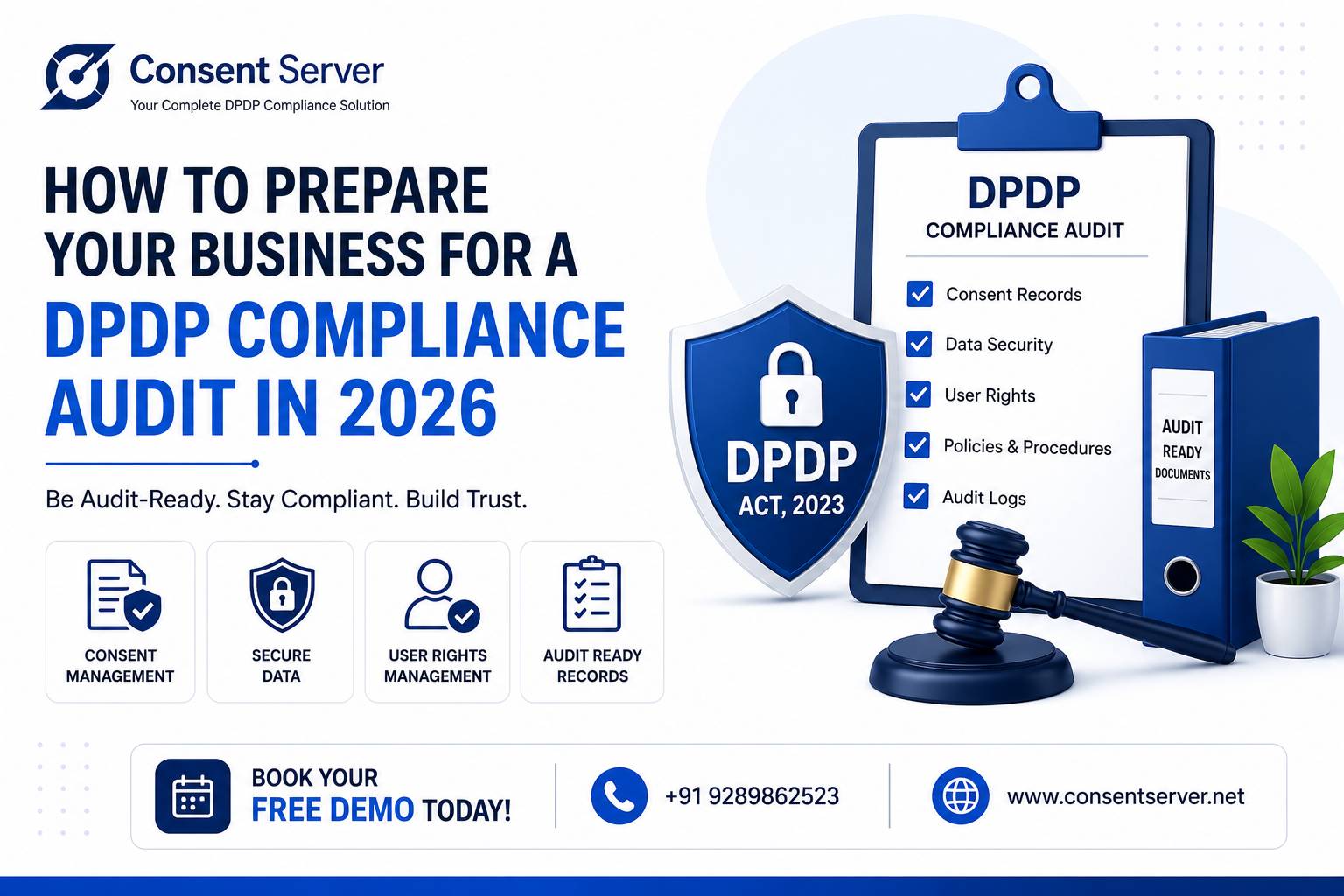
Organisations may need to demonstrate how consent was collected, updated, or withdrawn.
Useful supporting records can include consent timestamps, purpose selections, notice versions, relevant verification details, and consent activity histories.
A DPDP Consent Management Platform can help maintain these records systematically.
The completeness and legal sufficiency of the evidence will depend on the organisation's processes and the applicable requirements.
7. APIs and Business Application Integration
Modern organisations rarely operate through a single software application.
Customer information may be processed across websites, mobile applications, CRM platforms, ERP systems, customer support tools, and marketing services.
A CMP with APIs and webhooks can help communicate consent-related events across these applications.
This supports more coordinated consent-management operations.
8. Deployment Flexibility and Data Control
Businesses have different infrastructure and operational requirements.
Some prefer cloud-hosted solutions for simpler deployment and maintenance.
Others prefer On-Premise DPDP Compliance Software to maintain greater control over their deployment environment and infrastructure.
When selecting a solution, organisations should evaluate security, maintenance responsibilities, integration requirements, scalability, and long-term operating costs.
How Consent Server Helps Businesses Manage DPDP Compliance
Consent Server is a comprehensive DPDP Compliance Software and Consent Management Platform built for Indian businesses.
Developed by Iconic Infotech Pvt. Ltd., Consent Server focuses on the operational challenges organisations face when collecting, managing, tracking, and maintaining evidence of customer consent.
Unlike basic consent collection tools, Consent Server supports broader consent lifecycle management and integration workflows.
Centralized Consent Management
Consent Server enables businesses to manage consent through a centralized platform across multiple websites, applications, and relevant business processes.
Organisations can configure consent forms and manage purpose-based consent records according to their requirements.
Consent Lifecycle Automation
The platform supports consent collection, updates, withdrawal, renewal, and expiry.
Businesses can maintain historical records of consent-related activities and reduce reliance on manual tracking.
Audit-Ready Records and Consent Evidence
Consent Server maintains relevant consent details, including timestamps, notice versions, purpose selections, and activity histories.
The platform also supports consent evidence and tamper-detection capabilities to strengthen record integrity and traceability.
These capabilities help organisations maintain supporting documentation for compliance reviews.
Data Principal Rights Portal
Consent Server provides a dedicated portal for managing Data Principal requests.
Organisations can support workflows involving access, correction, erasure, consent withdrawal, and grievances.
Request histories and status tracking help improve visibility into these processes.
API, Webhook and Action Tracking
One of Consent Server's important differentiators is its ability to coordinate consent-related events across connected systems.
Its event-management architecture supports a workflow such as:
Consent Event --> Webhook/API Notification --> Delivered --> Acknowledged --> Action Completed --> Completion Evidence
Consent Server also supports retry, escalation, and failure-monitoring mechanisms.
This helps organisations distinguish between successfully delivering an instruction and receiving confirmation that the relevant action was completed.
Actual processing changes must still be implemented by the connected applications or responsible teams.
On-Premise and Hosted Deployment
Consent Server offers both On-Premise and Hosted Deployment options.
Organisations can choose the model that best matches their infrastructure, data governance, security, and operational requirements.
For businesses seeking greater control over their deployment environment, the on-premise option can be particularly relevant.
Dashboard and Compliance Reporting
Consent Server provides administrative dashboards and reporting capabilities that help organisations monitor consent activities, review records, and manage relevant workflows.
By combining centralized consent management, lifecycle automation, Data Principal rights workflows, integration capabilities, and audit-ready records, Consent Server helps businesses build a more structured DPDP compliance infrastructure.
DPDP Compliance Software vs Basic Consent Forms
Many businesses assume that displaying a privacy notice and collecting consent through a checkbox is enough.
However, a basic consent form and a comprehensive CMP serve different operational purposes.
| Feature | Basic Consent Form | Consent Server |
|---|---|---|
| Initial consent collection | Yes | Yes |
| Purpose-based consent management | Depends on implementation | Supported |
| Consent updates and withdrawal | Requires additional development | Supported |
| Consent history | Requires additional development | Supported |
| Data Principal request workflows | Usually separate | Supported |
| API and webhook integration | Requires additional development | Supported |
| Acknowledgement and action tracking | Usually separate | Supported |
| Audit-ready consent records | Requires additional development | Supported |
| On-premise deployment | Depends on implementation | Available |
A basic form can be useful for collecting an initial response, but organisations with multiple processing purposes and connected systems may require more comprehensive functionality.
Consent Server helps bridge this operational gap by bringing consent management and related workflows into a single platform.
Which Industries Can Benefit From DPDP Compliance Management Software?
Organisations across many industries may benefit from structured consent management and Data Principal request processes.
Healthcare: Hospitals, clinics, and healthcare platforms may need to manage patient-related consent and requests while also complying with applicable healthcare requirements.
Education: Schools, universities, and EdTech platforms may need consent workflows, including appropriate parental consent processes where children's personal data is involved.
Banking and FinTech: Financial businesses may need to coordinate consent-related processes across customer-facing applications and connected systems, alongside sector-specific regulatory requirements.
E-commerce and Retail: Businesses can manage customer consent preferences across websites, applications, CRM platforms, and marketing channels.
Real Estate: Developers and property platforms may collect personal information through inquiries, lead-generation forms, and customer-management applications.
HR and Recruitment: Organisations may need structured processes for handling applicant and employee personal data and relevant rights requests.
SaaS and Technology Companies: Businesses operating multiple digital services can benefit from centralized consent records and integration capabilities.
The appropriate solution depends on each organisation's data processing activities and legal obligations.
How to Choose the Best DPDP Compliance Software in India
Before selecting a DPDP compliance solution, businesses should ask several practical questions.
Does the platform support the consent lifecycle beyond initial collection?
Can it manage different consent purposes and notice versions?
Does it support Data Principal rights requests?
Can it integrate with existing websites, CRM, ERP, and other business applications?
Does it provide reliable records and visibility into consent-related activities?
Can it monitor failed notifications and unresolved actions?
Does it offer a deployment model suitable for the organisation's infrastructure?
These considerations are often more useful than choosing software based only on the number of features advertised.
Consent Server addresses many of these requirements through centralized consent management, APIs, webhooks, audit records, rights-management workflows, and flexible deployment options.
For businesses evaluating a DPDP CMP in India, these capabilities make Consent Server a strong option to consider.
When Should Businesses Start Preparing for DPDP Compliance?
The DPDP Act and the DPDP Rules, 2025 follow a phased commencement framework.
Several major operational obligations, including key consent-related requirements, are scheduled to come into force on 13 May 2027 under the notified timeline.
Businesses should use the preparation period to identify their personal data processing activities, review privacy notices, assess consent requirements, evaluate security safeguards, and establish appropriate rights-management procedures.
Organisations should also determine which processing activities rely on consent and which may be permitted under other provisions of the Act.
Implementing suitable DPDP Act Compliance Management Software can form part of this preparation.
However, purchasing software should not replace legal assessment, organisational governance, or the implementation of necessary security and operational controls.
Conclusion: Simplify DPDP Compliance With the Right Software
As India's data protection framework becomes operational, businesses need more than basic consent forms and disconnected spreadsheets.
They need appropriate processes for managing consent, handling withdrawal requests, maintaining supporting records, and coordinating activities across relevant applications.
A comprehensive DPDP Compliance Management Software solution can help organisations make these processes more organised, consistent, and traceable.
Consent Server provides Indian businesses with a centralized DPDP Consent Management Platform that supports consent lifecycle management, Data Principal rights workflows, audit-ready records, API and webhook integration, and on-premise or hosted deployment.
By combining these capabilities, Consent Server helps organisations strengthen their DPDP compliance readiness and manage consent-related operations more effectively.
Don't just collect consent. Manage it, track it, and maintain the evidence your business needs.