DPDP Act Update October 2026: What Changed? | Consent Server
Learn what changed in Sections 9 and 10 of the DPDP Act in October 2026 and how Consent Server helps Indian businesses prepare for DPDP compliance.
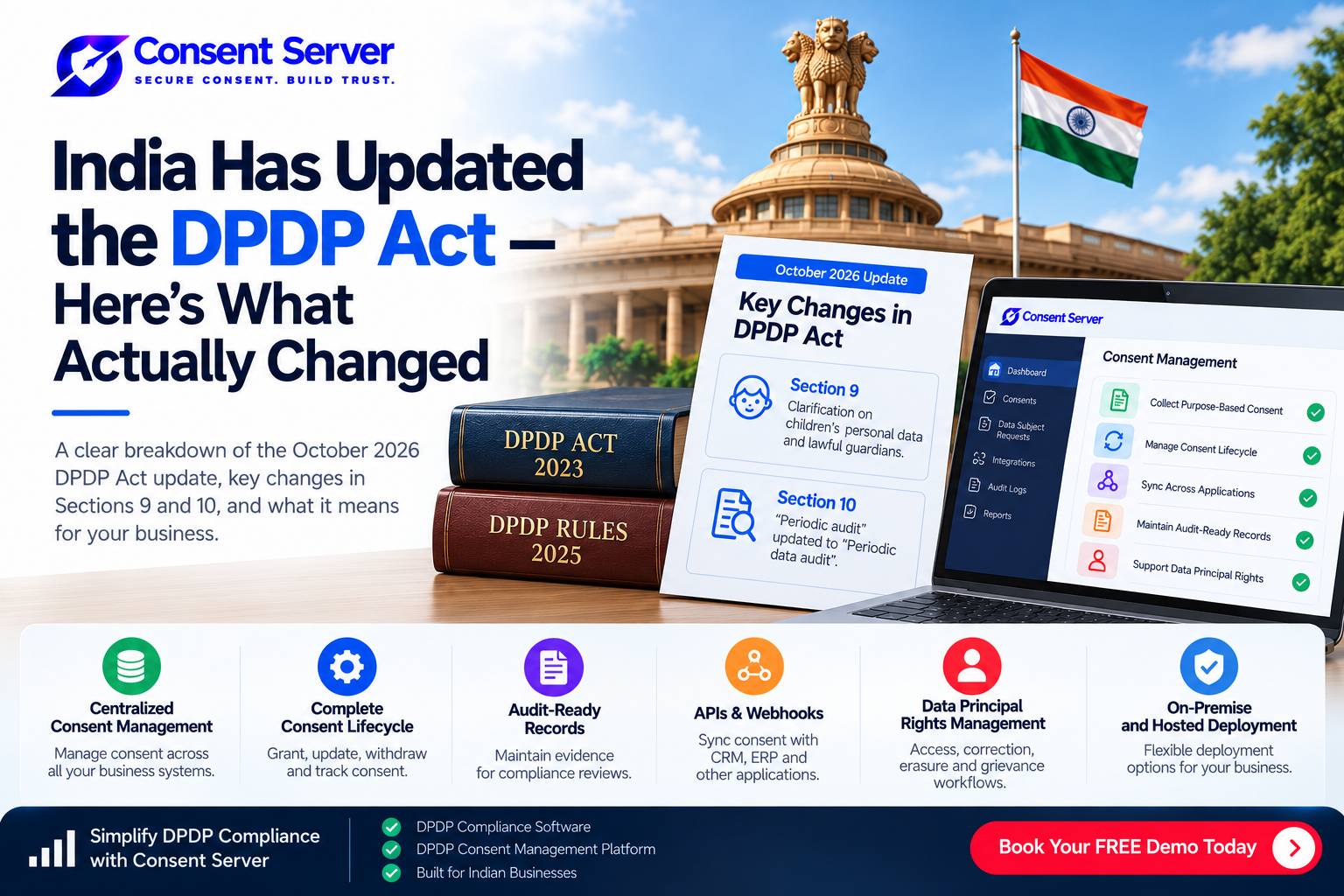
India Has Updated the DPDP Act — Here's What Actually Changed
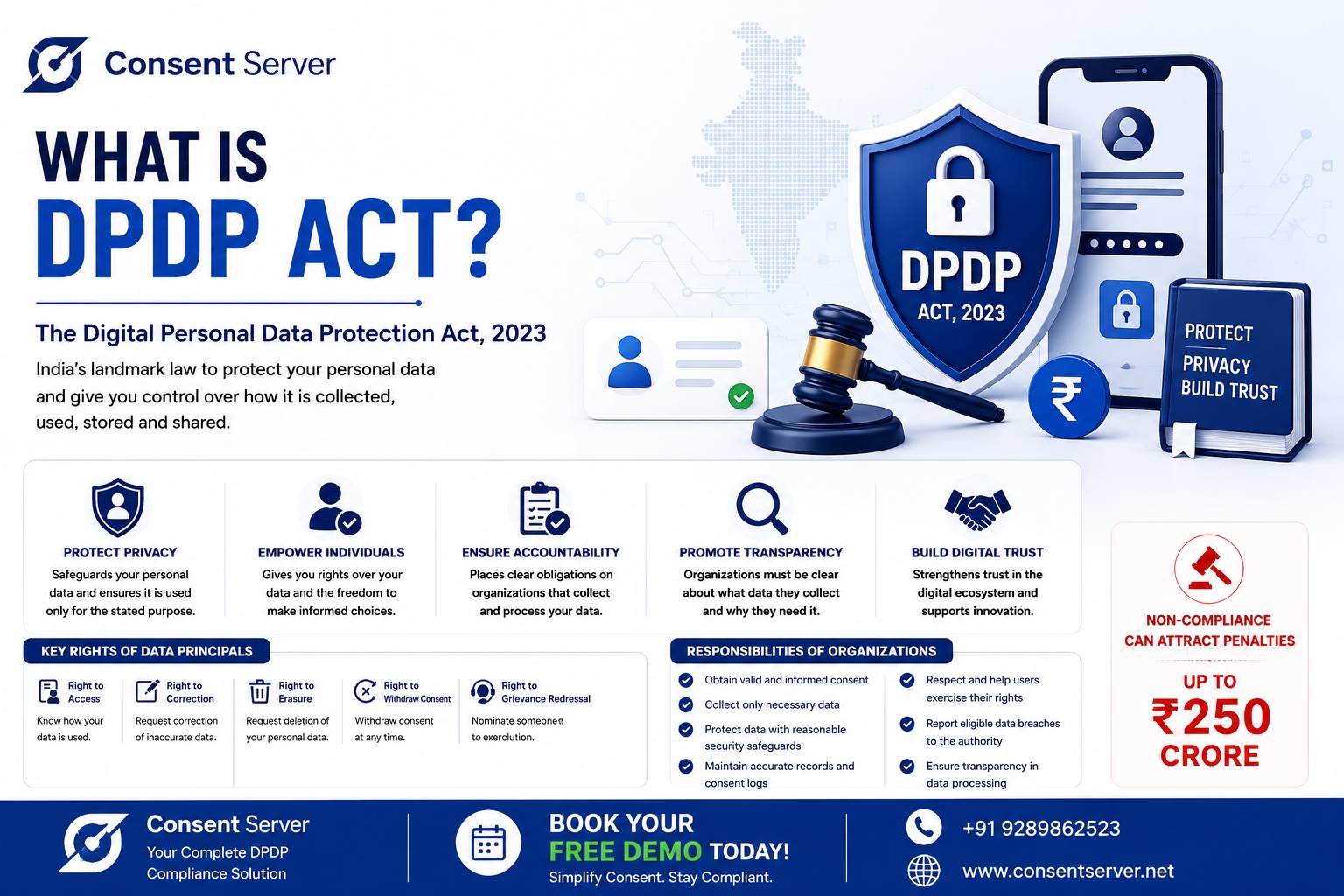
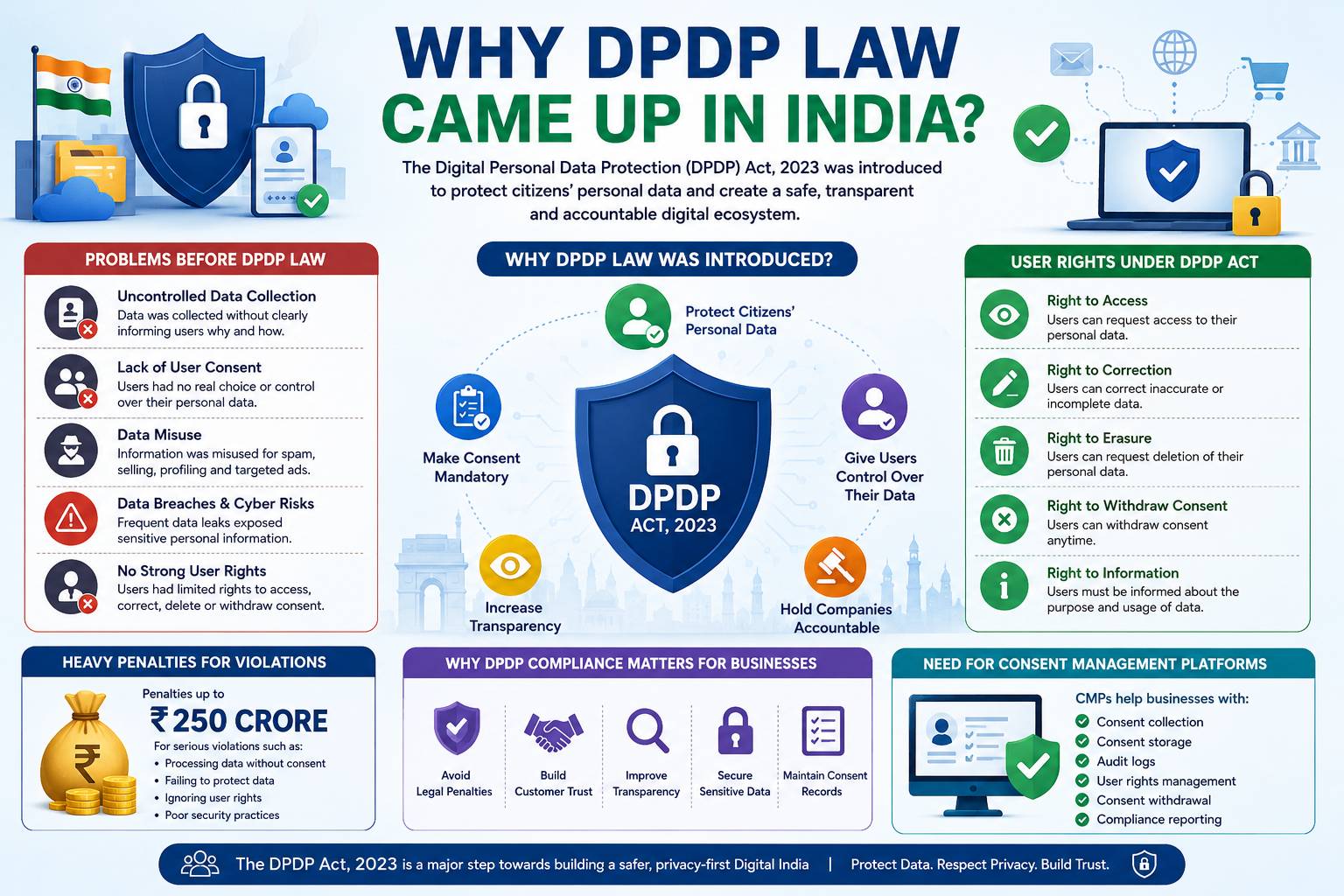
India's Digital Personal Data Protection (DPDP) Act, 2023, has received an important update in October 2026. As Indian businesses prepare for DPDP compliance, understanding these changes and implementing the right compliance processes has become increasingly important.
On 5 October 2026, the Government of India issued the Digital Personal Data Protection (Removal of Difficulties) Order, 2026, introducing two clarifications under Sections 9 and 10 of the DPDP Act.
While these changes do not introduce new compliance obligations, they highlight the importance of parental consent, data protection governance, and audit readiness.
For businesses, the bigger challenge is not just understanding the law but implementing its requirements across websites, applications, and business systems.
This is where Consent Server, a comprehensive DPDP Consent Management Platform, helps Indian businesses simplify consent management and strengthen their DPDP compliance readiness.
What Has Changed in the DPDP Act?
The October 2026 update introduces two specific wording corrections.
| Provision | Earlier Wording | Revised Wording |
|---|---|---|
| Section 9(1) | Child or a person with disability | Child or of a person with disability |
| Section 10(2)(c)(ii) | Periodic audit | Periodic data audit |
These changes clarify existing provisions without introducing new categories of compliance obligations or changing the previously notified implementation timeline.
1. Section 9: Children's Data and Parental Consent
Section 9 addresses the processing of personal data belonging to children and persons with disabilities who have lawful guardians.
The October 2026 amendment clarifies the wording of this provision without changing its underlying requirements.
Under the DPDP Act, organizations processing children's personal data generally need verifiable parental consent, subject to applicable exemptions.
However, collecting a checkbox is not necessarily sufficient to establish legally valid parental consent.
Businesses must implement appropriate verification processes and maintain supporting consent records.
How Consent Server Helps: Consent Server supports configurable consent forms, purpose-based consent collection, verification-related workflows, and consent history management.
This helps organizations maintain structured consent records while implementing the verification procedures required for their particular use cases.
2. Section 10: Periodic Data Audit Requirements
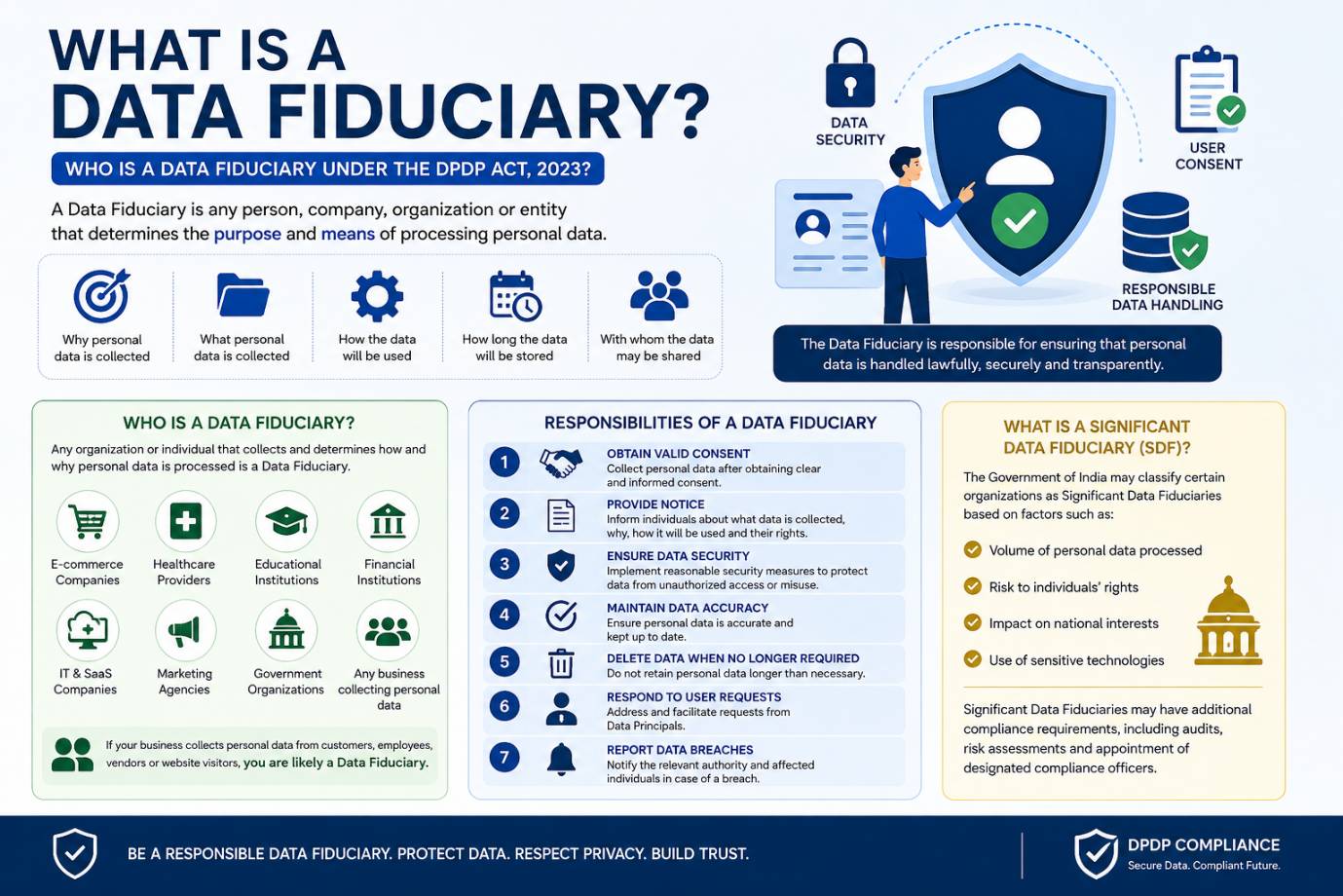
Section 10 establishes additional obligations for organizations designated as Significant Data Fiduciaries.
The October 2026 update changes the expression "periodic audit" to "periodic data audit."
Significant Data Fiduciaries are subject to additional requirements, including appointing a Data Protection Officer, appointing an independent data auditor, conducting periodic Data Protection Impact Assessments, and undertaking periodic data audits.
These additional obligations do not automatically apply to every Indian business.
How Consent Server Helps: Consent Server maintains consent histories, notice versions, timestamps, purpose selections, and supporting activity records.
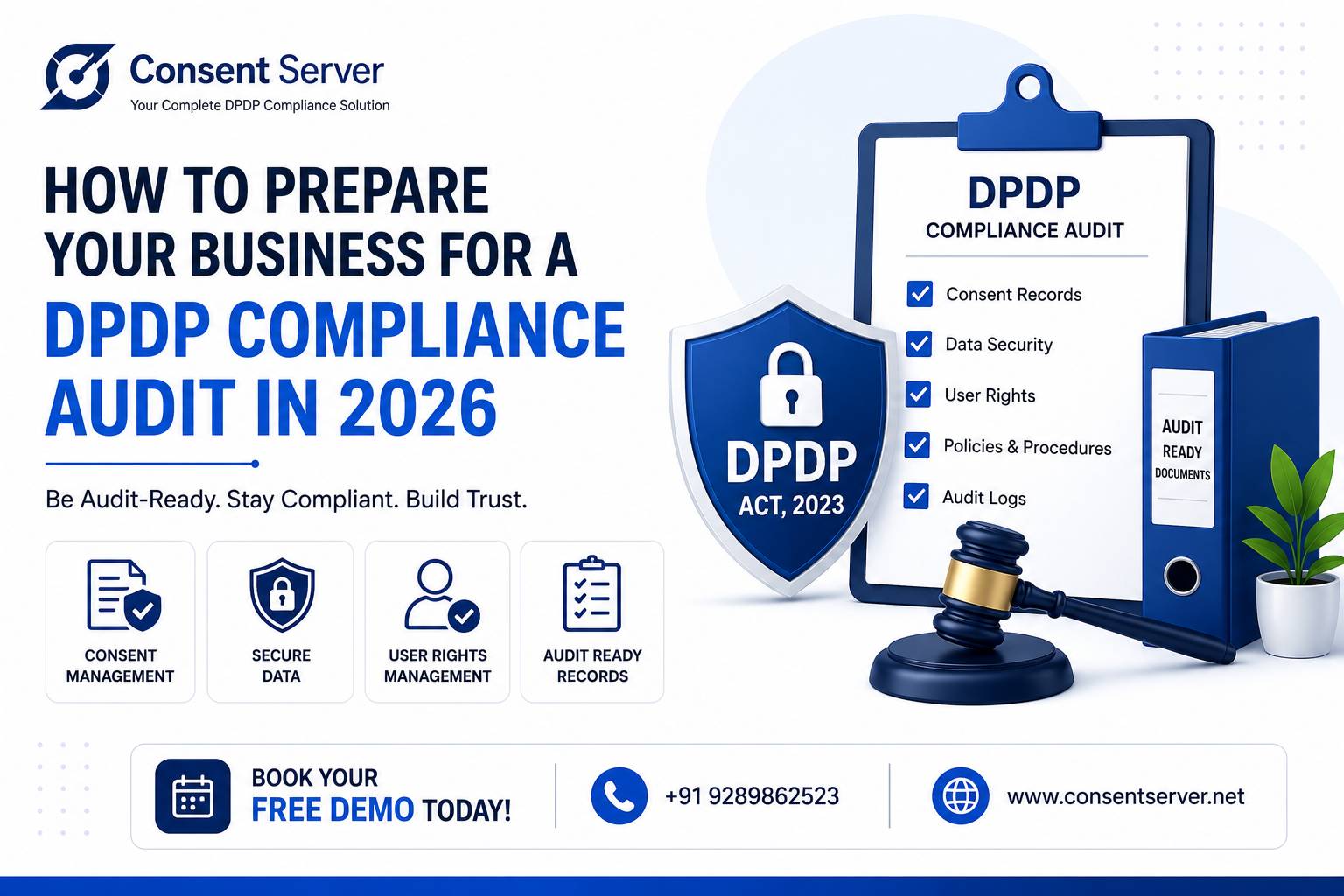
These capabilities help organizations prepare consent-related evidence for compliance reviews and data protection audits.
Consent Server supports audit readiness but does not replace the independent data auditor or statutory audit process.
3. Has the DPDP Compliance Deadline Changed?
No. The October 2026 update does not change the previously notified implementation schedule.
Under the November 2025 commencement notification, Sections 9 and 10 are scheduled to become effective on 13 May 2027.
Businesses should use this preparation period to review their data processing activities, strengthen consent-management processes, and evaluate their existing compliance infrastructure.
Implementing suitable DPDP Compliance Software can help organizations prepare for applicable consent-related requirements before the relevant deadlines.
4. Why Businesses Need More Than a Consent Checkbox
Many businesses collect customer information through websites, mobile applications, CRM platforms, ERP systems, and marketing tools.
When consent information is stored separately across these systems, maintaining consistent preferences becomes difficult.
For example, a customer may withdraw marketing consent through a website while another application continues using an outdated consent record.
This creates an operational compliance risk.
A basic consent checkbox cannot independently manage the complete consent lifecycle or coordinate actions across connected applications.
Businesses need a centralized Consent Management Platform that can manage consent decisions, track changes, communicate withdrawal events, and maintain supporting records.
Consent Server addresses these challenges by bringing consent collection, lifecycle management, integration, and consent-related evidence into one platform.
5. How Consent Server Helps Companies Become DPDP Compliant
Consent Server is a DPDP Compliance Software and Consent Management Platform developed by Iconic Infotech Pvt. Ltd. to help Indian businesses implement and manage important consent-related requirements under the DPDP Act.
Instead of depending on spreadsheets, disconnected consent forms, and manual processes, organizations can use Consent Server to build a more structured consent-management system.
Centralized Consent Management
Consent Server helps organizations manage consent across multiple websites, applications, and business systems through a common platform.
Complete Consent Lifecycle Management
Businesses can manage consent collection, updates, withdrawals, renewals, and expiry while maintaining relevant historical records.
Purpose-Based Consent Collection
Consent Server helps organizations collect and manage consent according to defined processing purposes, supporting more transparent consent-management practices.
Audit-Ready Consent Records
The platform maintains timestamps, notice versions, purpose selections, consent histories, and supporting records that can help organizations prepare for compliance reviews.
CRM, ERP, and Application Integration
Through APIs and webhooks, Consent Server helps communicate consent-related changes to connected business applications.
Its event-management capabilities also support acknowledgements, retries, escalation, and action-completion tracking where integrated systems provide the necessary responses.
Data Principal Rights Management
Consent Server provides a Data Principal portal supporting access, correction, erasure, withdrawal, and grievance-related workflows.
On-Premise Deployment and Data Control
Unlike solutions limited to hosted deployment, Consent Server offers an on-premise option that allows businesses to operate their consent-management infrastructure within their own environment.
With Consent Server, businesses can move beyond collecting consent to managing, tracking, and demonstrating how consent-related processes are handled across their organization.
This makes Consent Server a strong DPDP Consent Management Platform for organizations seeking to improve consent governance, reduce manual work, and strengthen their DPDP compliance preparation.
While Consent Server supports important operational requirements, full legal compliance also depends on appropriate security safeguards, governance, verification procedures, and other applicable measures.
6. What Should Indian Businesses Do Next?
The October 2026 DPDP update is a reminder that organizations should continue preparing for India's data protection requirements.
Businesses should review their personal data collection practices, evaluate existing consent processes, identify relevant parental consent requirements, and strengthen their compliance documentation.
They should also assess whether their current systems can manage consent withdrawal, Data Principal requests, and communication between connected applications.
Implementing Consent Server can help businesses establish centralized consent-management infrastructure and address many of these operational challenges through a single platform.
Conclusion
India's October 2026 DPDP Act update introduces two important textual clarifications concerning children's personal data and periodic data audits for Significant Data Fiduciaries.
Although the changes do not introduce new substantive obligations, they reinforce the importance of preparing for DPDP compliance.
For Indian businesses, compliance preparation requires more than understanding legal provisions. It requires appropriate technology, reliable records, and coordinated operational processes.
Consent Server helps businesses simplify their DPDP compliance journey by providing a centralized DPDP Consent Management Platform for collecting, managing, updating, withdrawing, and maintaining evidence of customer consent.
With its audit-ready records, Data Principal portal, APIs, webhooks, and on-premise deployment capabilities, Consent Server provides a practical foundation for managing consent-related compliance requirements across an organization's digital ecosystem.
Make Your Business DPDP Compliance Ready With Consent Server
Consent Server – A Complete DPDP Compliance & Consent Management Platform
Don't wait until compliance deadlines approach. Start building reliable consent-management processes today.