India Opens DPDP Consent Manager Registration 2026
India opens DPDP Consent Manager registration in 2026. Learn eligibility, 2 crore net worth requirements, how to apply and what businesses must know.
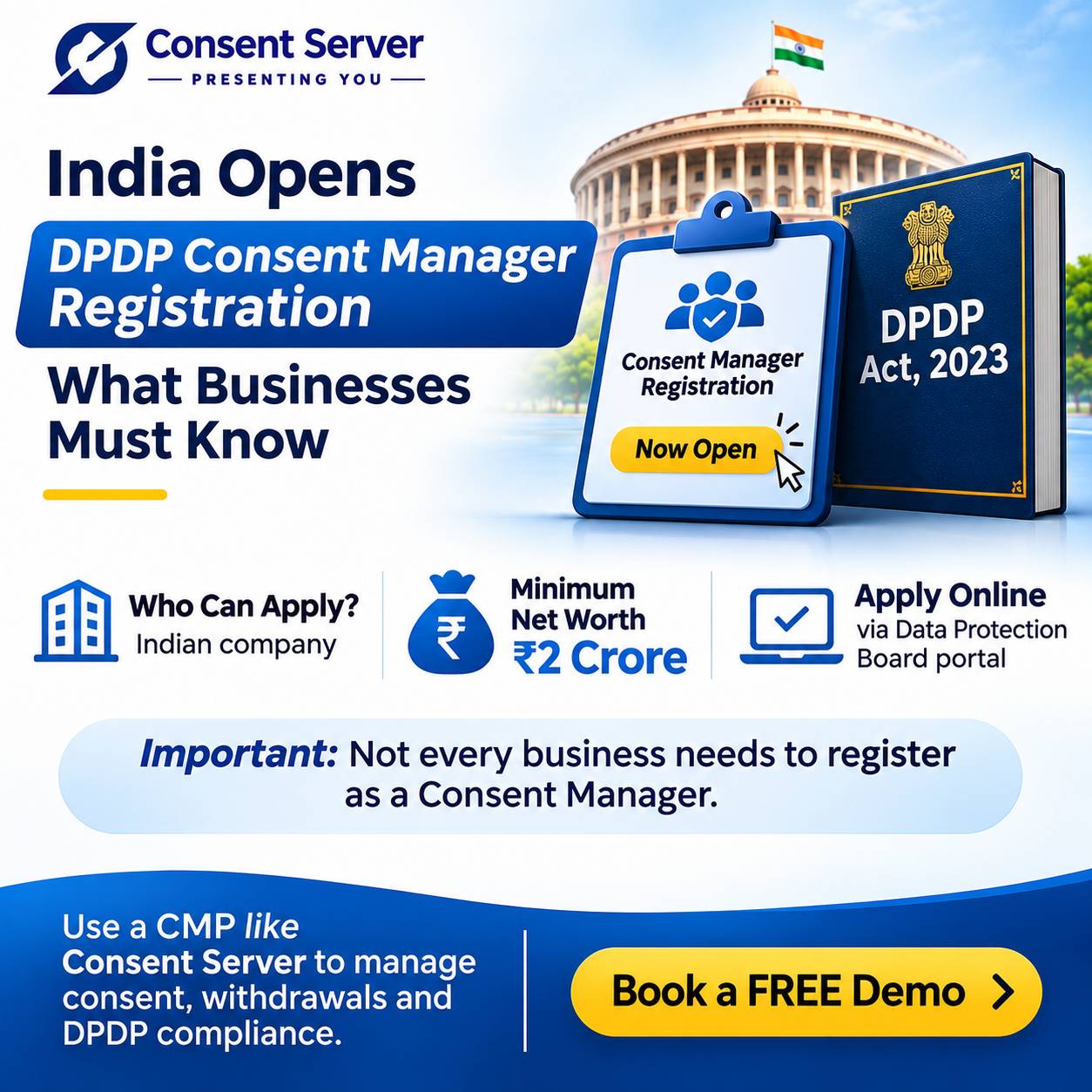
India Opens DPDP Consent Manager Registration: What Businesses Must Know
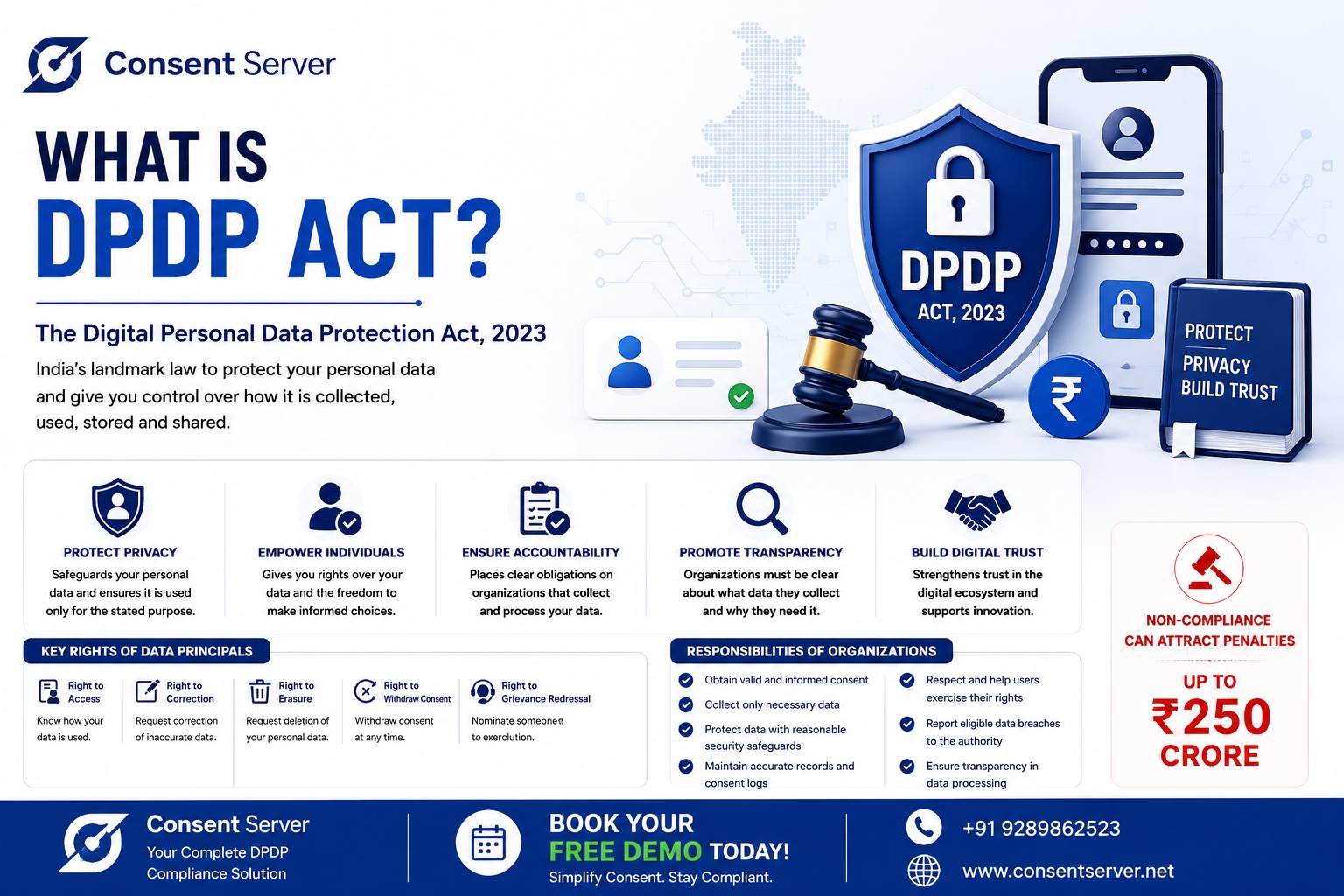
India has reached an important milestone in implementing the Digital Personal Data Protection (DPDP) Act, 2023. On 13 November 2026, the statutory framework for Consent Manager registration came into effect, creating a regulated pathway for organisations seeking to operate as registered Consent Managers.
This development raises important questions for Indian businesses: Who can apply? Is registration mandatory for every company? What is the difference between a registered Consent Manager and a commercial Consent Management Platform (CMP)?
Most importantly, what should businesses prepare before 13 May 2027, when major operational DPDP obligations are scheduled to commence?
What Changed on 13 November 2026?
Under Section 6(9) of the DPDP Act and Rule 4 of the DPDP Rules, 2025, the statutory framework for Consent Manager registration has commenced.
A Consent Manager is a registered intermediary that enables Data Principals to give, manage, review, and withdraw consent through an accessible, transparent, and interoperable platform.
The framework establishes eligibility requirements, registration procedures, governance conditions, and ongoing responsibilities for registered Consent Managers.
Importantly, commencement of the registration framework does not, by itself, confirm that a live application portal has opened or that registrations have already been granted.
Who Can Apply for Consent Manager Registration?
Under Rule 4 and the First Schedule of the DPDP Rules, 2025, applicants must satisfy specific eligibility conditions.
The key requirements include:
- Indian Incorporation: The applicant must be a company incorporated in India.
- Minimum Net Worth: At least ₹2 crore.
- Technical and Operational Capacity: Sufficient resources to operate a reliable consent management service.
- Financial Stability: Sound financial condition and management.
- Business Viability: Adequate business prospects, capital structure, and earning potential.
- Management Integrity: Directors and senior management must have a reputation for fairness and integrity.
- Conflict-of-Interest Controls: Prescribed provisions in corporate documents, supported by appropriate policies.
- Data Principal Interests: Proposed operations must serve the interests of individuals.
- Independent Certification: Certification of the proposed interoperable platform and relevant technical and organisational measures.
Registration is subject to assessment and approval by the Data Protection Board of India.
Is Consent Manager Registration Mandatory for Every Business?
No. This is one of the most important distinctions under the DPDP framework.
A statutory Consent Manager and a commercial Consent Management Platform
perform different roles.
| Registered Consent Manager | Commercial Consent Management Platform |
|---|---|
| Registered intermediary under the DPDP Act | Software solution for consent management |
| Registration with the Board required | No automatic statutory registration requirement merely for operating a CMP |
| Acts in a fiduciary capacity towards Data Principals | Typically provides technology to organisations |
| Minimum ₹2 crore net-worth requirement | No general ₹2 crore threshold solely for CMP software |
|
Subject to prescribed interoperability and certification requirements |
Integrations depend on product capabilities |
A hospital, school, e-commerce brand, financial institution, or SaaS provider does not automatically need to register as a Consent Manager simply because it processes personal data.
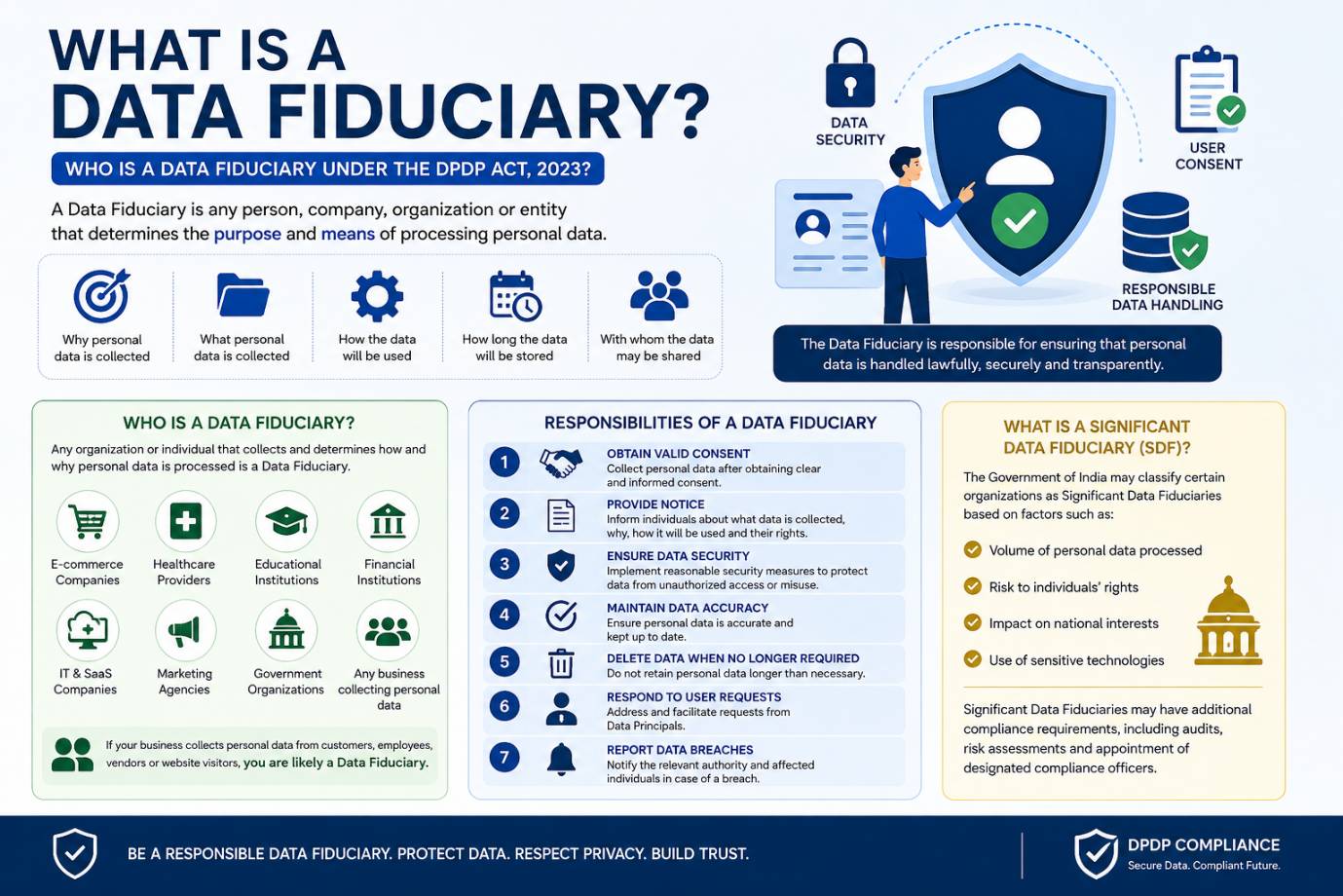
Such organisations should instead assess their responsibilities as Data Fiduciaries or Data Processors, as applicable.
What Should Indian Businesses Prepare Before 13 May 2027?
The next major milestone is 13 May 2027, when significant operational DPDP obligations are scheduled to commence under the notified implementation framework.
Businesses subject to the applicable provisions should focus on the following areas.
1. Privacy Notices and Consent Collection
Review how personal data is collected and ensure that applicable privacy notices and consent mechanisms meet legal requirements.
Not every processing activity requires consent; the Act also recognises certain legitimate uses.
2. Consent Withdrawal Management
Establish processes that allow individuals to withdraw consent and ensure relevant changes are communicated to connected business systems.
3. Data Principal Rights
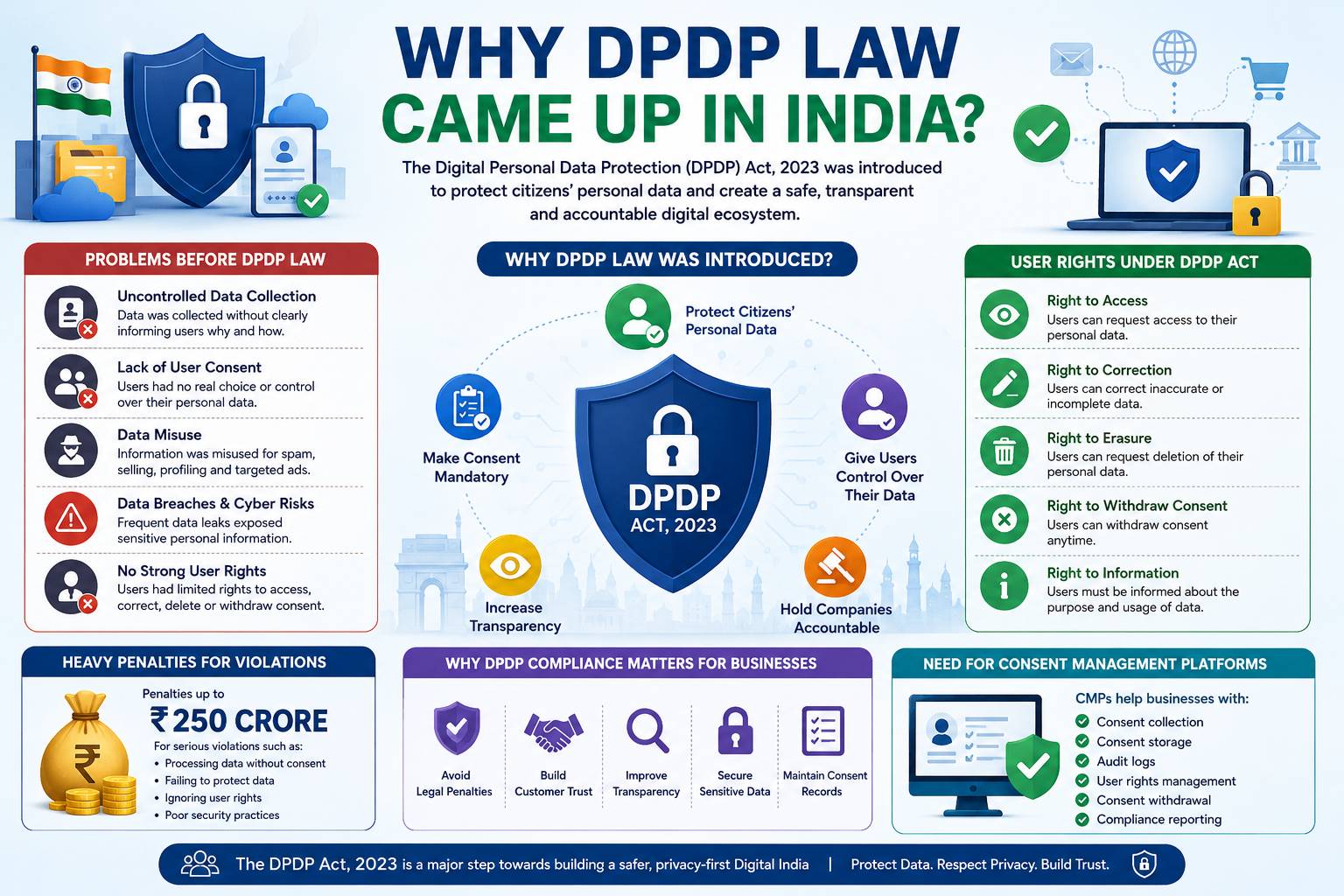
Prepare mechanisms to handle requests concerning access to information, correction, erasure, and grievance redressal.
4. Data Security and Breach Response
Implement applicable reasonable security safeguards and establish procedures for responding to and notifying personal data breaches.
5. Audit Trails and Accountability
Maintain appropriate records of consent, notices, withdrawal events, and relevant operational actions.
Where consent is relied upon, organisations must be able to demonstrate that the required notice was provided and valid consent was obtained.
6. Integration Across Business Systems
Review how consent changes and relevant requests affect CRM, ERP, marketing, customer support, and other connected systems.
A consent withdrawal recorded in one application should not be ignored by other systems that depend on that consent.
How Consent Server Helps Businesses Prepare
Consent Server, developed by Iconic Infotech Pvt. Ltd., is a commercial Consent Management Platform designed to help businesses simplify consent-related operations.
Its key capabilities include:
- Purpose-based consent collection and management
- Centralised consent dashboard
- Consent withdrawal and lifecycle automation
- Privacy notice versioning
- Data Principal rights management
- Audit-ready records and consent histories
- API and webhook integrations
- On-premise deployment options
Consent Server helps organisations build structured, traceable consent-management workflows without requiring them to become registered statutory Consent Managers merely to use the platform.
However, software is only one part of DPDP readiness. Organisations must also assess their applicable legal, security, governance, and operational responsibilities.
Conclusion: A New Phase for India's Data Protection Ecosystem
The commencement of the Consent Manager registration framework on 13 November 2026 is an important development for India's privacy technology ecosystem.
It creates a regulated pathway for eligible organisations seeking to operate as statutory Consent Managers.
For most businesses, however, the immediate priority is different: prepare for the applicable DPDP operational obligations scheduled to commence on 13 May 2027.
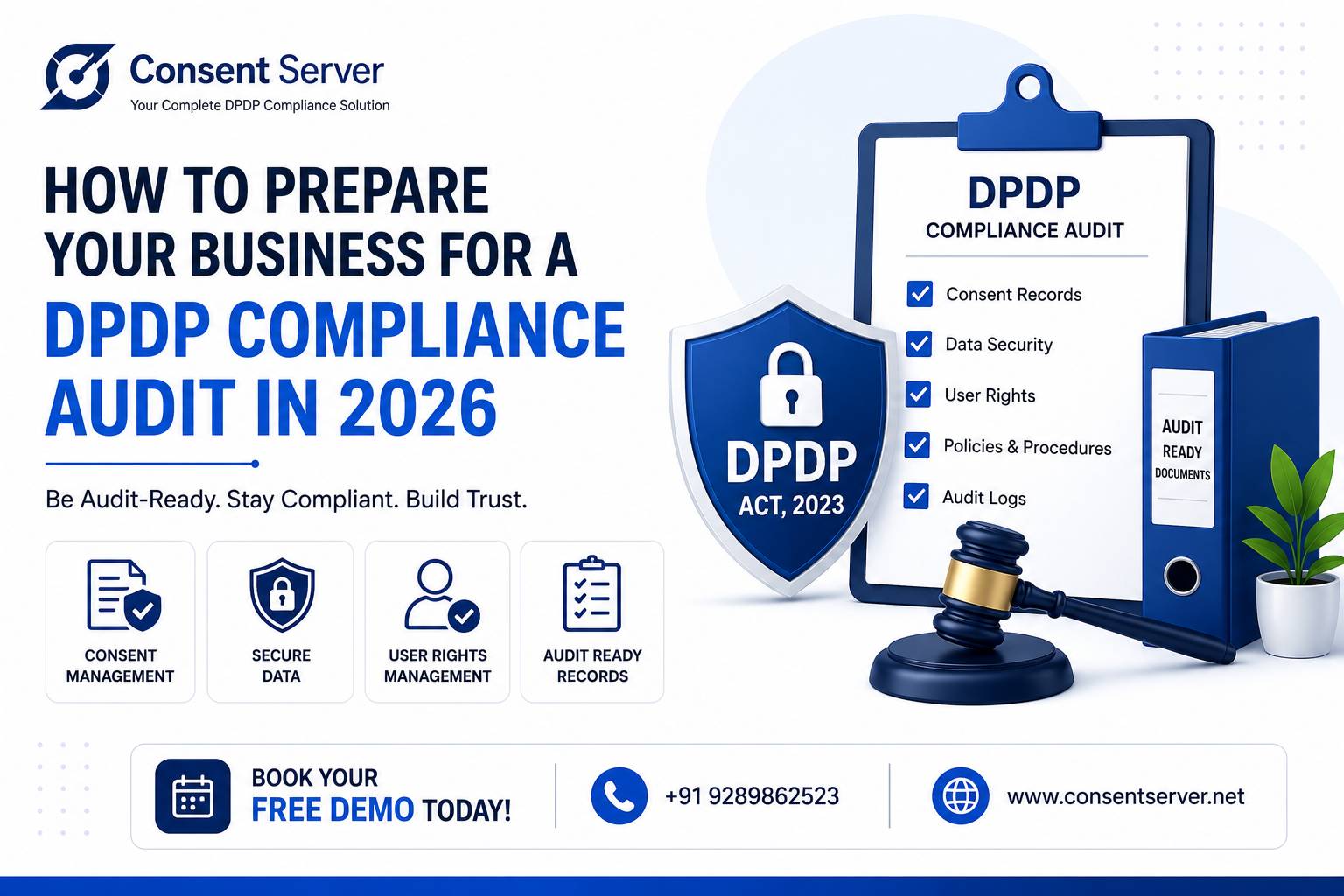
Organisations should begin reviewing personal data processing, privacy notices, consent workflows, Data Principal rights, security safeguards, and audit readiness.
Simplify DPDP Consent Management with Consent Server.