Is Consent Mandatory Under DPDP Act? | Consent Server
Is consent mandatory under the DPDP Act? Learn when consent is required, Section 7 legitimate uses, and how Indian businesses can manage purpose-based consent
Is Consent Mandatory for Every Purpose Under the DPDP Act? Explained for Indian Businesses
Introduction: Does Every Business Activity Require Customer Consent?
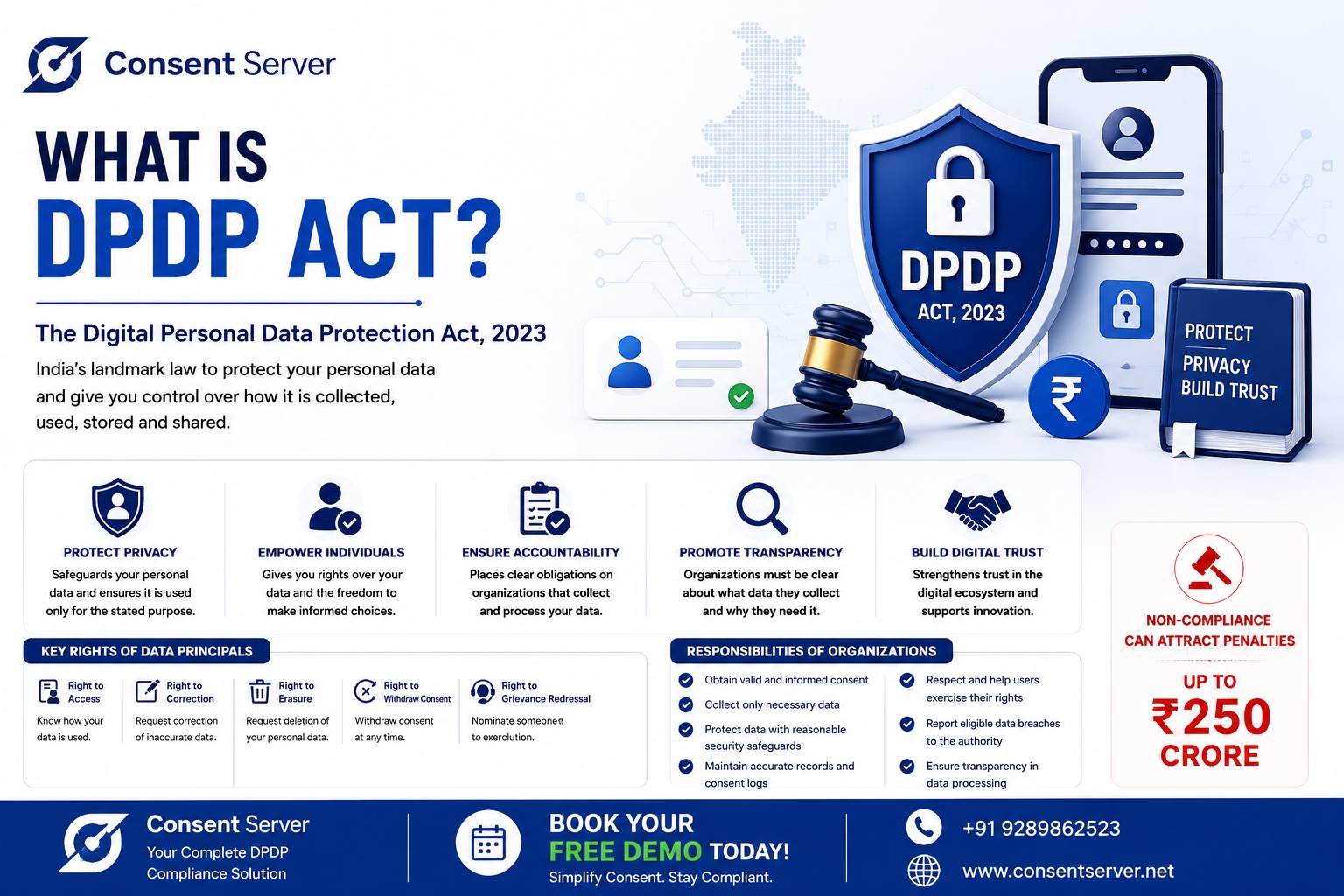
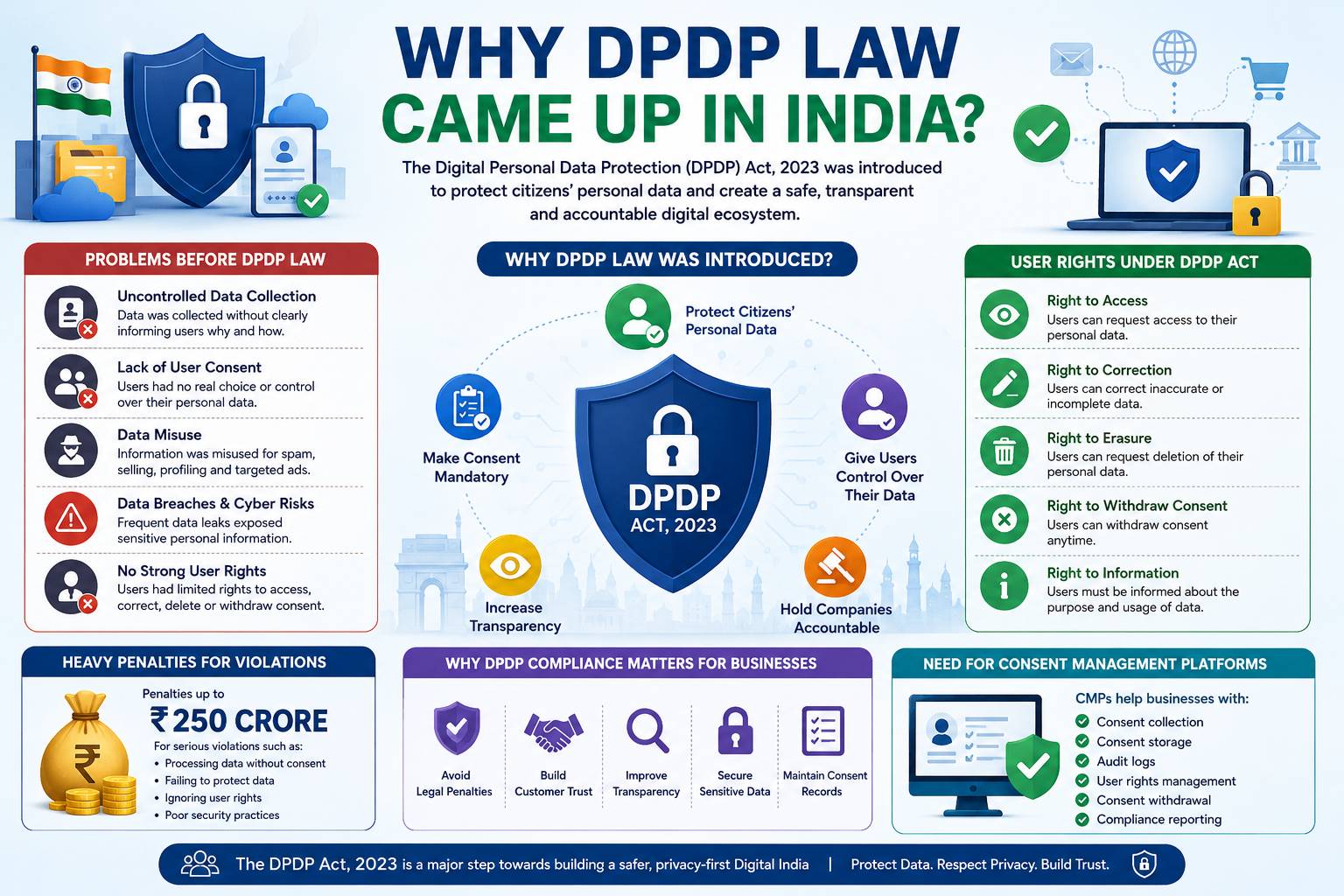
India's Digital Personal Data Protection (DPDP) Act, 2023 is changing how organisations collect, process, store, and manage personal data.
As Indian businesses prepare for DPDP compliance, one important question continues to create confusion:
Is consent mandatory for every personal data processing purpose under the DPDP Act?
Consider a typical business that collects customer names, phone numbers, email addresses, and other personal information.
The business may use this information to deliver products, provide customer support, send promotional messages, manage payments, or maintain transaction records.
Does it need separate consent for every activity?
The answer is no. Not every processing purpose requires consent under the DPDP Act. However, every processing activity covered by the Act must have an appropriate legal basis.
Under Section 4 of the DPDP Act, personal data may be processed for a lawful purpose based on either valid consent or one of the certain legitimate uses specified under Section 7.
Understanding this distinction is essential for Data Fiduciaries seeking to implement effective DPDP compliance processes without collecting unnecessary consent.
In this article, we explain when consent is required, when personal data may be processed without consent, and how Indian businesses can manage purpose-based consent using a DPDP Consent Management Platform.
1. What Does the DPDP Act Say About Consent?
The DPDP Act establishes a legal framework for processing digital personal data within its scope.
Section 4 identifies two principal grounds for lawful processing:
- Consent: Processing based on valid consent given by the Data Principal.
- Certain Legitimate Uses: Processing permitted under specific circumstances defined in Section 7.
This means that consent is not the only lawful basis for processing personal data.
However, organisations cannot simply decide that consent is unnecessary because the processing activity benefits their business.
They must identify an applicable statutory ground.
For example, a company may need a customer's address to deliver an order. It may also want to use that customer's phone number for promotional WhatsApp messages.
Although both activities involve the same customer, they serve different purposes.
The legal basis for processing must therefore be evaluated separately.
DPDP compliance begins with identifying why personal data is processed, not simply adding consent checkboxes to every form.
2. When Is Consent Required Under the DPDP Act?
Where a processing activity does not qualify for an applicable certain legitimate use, consent will generally be required under the Act's framework.
Section 6 specifies the characteristics of valid consent.
Consent must be:
- Free
- Specific
- Informed
- Unconditional
- Unambiguous
- Expressed through clear affirmative action
It must also relate to a specified purpose and be limited to the personal data necessary for that purpose.
Example: Marketing Communications
Suppose an e-commerce company collects a customer's phone number during checkout.
The company uses that number to provide delivery updates.
Later, its marketing team wants to send promotional WhatsApp messages.
The original collection of the phone number does not automatically establish permission for unrelated promotional processing.
The business must determine whether it has a valid legal basis for marketing. Where consent is required, it must obtain appropriate consent and comply with applicable communication rules.
This is why businesses should distinguish between operational processing and additional marketing purposes.
3. What Are Certain Legitimate Uses Under Section 7?
Section 7 of the DPDP Act identifies specific situations in which personal data may be processed without relying on consent under Section 6.
These are known as certain legitimate uses.
They are not a general permission to process personal data whenever a business believes the processing is reasonable or beneficial.
The Act provides defined categories, including the following.
Personal Data Voluntarily Provided for a Specified Purpose
Section 7(a) permits processing for a specified purpose when the Data Principal voluntarily provides personal data and has not indicated that they do not consent to its use for that purpose.
Example: A customer provides a delivery address while placing an order. The business may be able to process that information to fulfil the requested delivery under Section 7(a), provided its conditions are satisfied.
However, using the address for an unrelated activity requires a separate assessment.
Employment-Related Processing
Section 7(i) permits specified processing for employment-related purposes and purposes connected with safeguarding an employer from loss or liability.
Examples may include employee administration, providing employment benefits, and protecting confidential business information, subject to the provision's conditions.
Medical Emergencies
Personal data may be processed where necessary to respond to a medical emergency involving a threat to life or an immediate threat to health.
Compliance With Certain Legal Obligations
The Act permits specified processing connected with legal disclosure obligations and compliance with relevant court or tribunal orders.
Government Functions and Public Services
Certain processing by the State or its instrumentalities is permitted for specified public functions, benefits, services, and other legally defined circumstances.
Epidemics, Disasters, and Public Order
Section 7 also provides for certain necessary processing during public-health emergencies, disasters, and breakdowns of public order.
Important: Businesses must verify that the exact statutory conditions apply before relying on any of these provisions.
4. Does Every Processing Purpose Need Separate Consent?
Not necessarily.
The DPDP Act requires consent to be specific and informed, but it does not establish a universal rule requiring a separate checkbox for every processing activity.
The appropriate approach depends on the nature of the purposes and the legal basis for processing.
Consider the following examples.
| Factor | Registered Consent Manager | Consent Management Platform (CMP) |
|---|---|---|
| Legal status | Registered under the DPDP framework | Commercial technology solution |
| Primary function | Facilitates consent management on behalf of Data Principals | Helps organisations manage their consent-related processes |
| Registration requirement | Statutory registration required | No general statutory registration requirement merely for being a CMP |
| Platform model | Accessible, transparent, interoperable service | May operate within one business or across its connected applications |
| Main accountability | Obligations under the registered Consent Manager framework | Supports the purchasing organisation's compliance processes |
| Example | A Board-registered Consent Manager | Consent Server used by a Data Fiduciary |
The central question is not how many consent forms a business has created.
It is whether each processing activity has been correctly classified and supported by an appropriate legal basis.
5. Why Purpose-Based Consent Management Is Important
Many businesses collect personal data once but use it for several different purposes.
For example, an online retailer may process a customer's phone number for:
- Order confirmation
- Delivery notifications
- Customer support
- Promotional SMS
- WhatsApp marketing
- Loyalty programme communications
These purposes should not automatically be treated as legally identical.
A customer may agree to promotional communications and later withdraw that consent.
However, the business may still have a separate lawful basis for processing information needed to fulfil an existing order or comply with a legal obligation.
This creates a significant operational challenge.
Businesses must understand which processing activities depend on consent and which activities may continue under another applicable legal basis.
A purpose-based consent management system can help organisations maintain appropriate distinctions between different consent-based activities.
6. What Happens When a Customer Withdraws Consent?
Section 6(4) gives Data Principals the right to withdraw consent.
The process of withdrawing consent must be comparable in ease to the process of giving it.
When consent is withdrawn, the Data Fiduciary must cease the relevant processing within a reasonable time and cause its Data Processors to cease, unless continued processing without consent is required or authorised under the Act or another applicable law.
Example: Withdrawal of Marketing Consent
A customer purchases a product from an online store and separately consents to promotional communications.
After several weeks, the customer withdraws marketing consent.
The organisation must ensure that the relevant marketing processing stops in accordance with the applicable requirements.
However, the withdrawal does not automatically require deletion of all transaction records if their continued processing or retention has an independent lawful basis.
This distinction is essential for avoiding both unlawful processing and unnecessary disruption to legitimate business operations.
7. The Real Challenge: Managing Consent Across Multiple Business Systems
Most organisations do not process personal data within a single application.
Customer information may be stored or used across:
- Websites and mobile applications
- CRM systems
- ERP software
- Email marketing platforms
- SMS gateways
- WhatsApp integrations
- Customer support applications
- Internal databases
Consider a business using separate CRM, SMS, and WhatsApp systems.
A customer withdraws consent for promotional communications through the company's website.
The website updates its consent record, but the CRM continues treating the customer as subscribed.
The SMS platform sends another promotional message.
The WhatsApp integration also continues marketing communication.
Although the original website recorded the withdrawal, the business has not necessarily implemented the change across all relevant systems.
A consent record alone is not enough. Consent-related decisions must be reflected in the applications responsible for processing personal data.
This is where centralized consent management and application integration become valuable.
8. Why a Basic Consent Checkbox Is Not Enough for DPDP Compliance
A checkbox can help record a customer's consent choice.
However, a complete consent-management process may also need to answer several questions:
- Which processing purpose did the customer agree to?
- Which privacy notice was presented?
- When was consent granted?
- Has the customer withdrawn or updated consent?
- Which connected applications received the change?
- Did those applications acknowledge the instruction?
- Was the required action actually completed?
- Can the organisation produce appropriate evidence?
Businesses relying entirely on isolated consent forms or spreadsheets may find it difficult to manage these processes at scale.
A DPDP Consent Management Platform can help centralize relevant consent records and automate the communication of consent-related changes.
9. How Consent Server Helps Businesses Manage Purpose-Based Consent
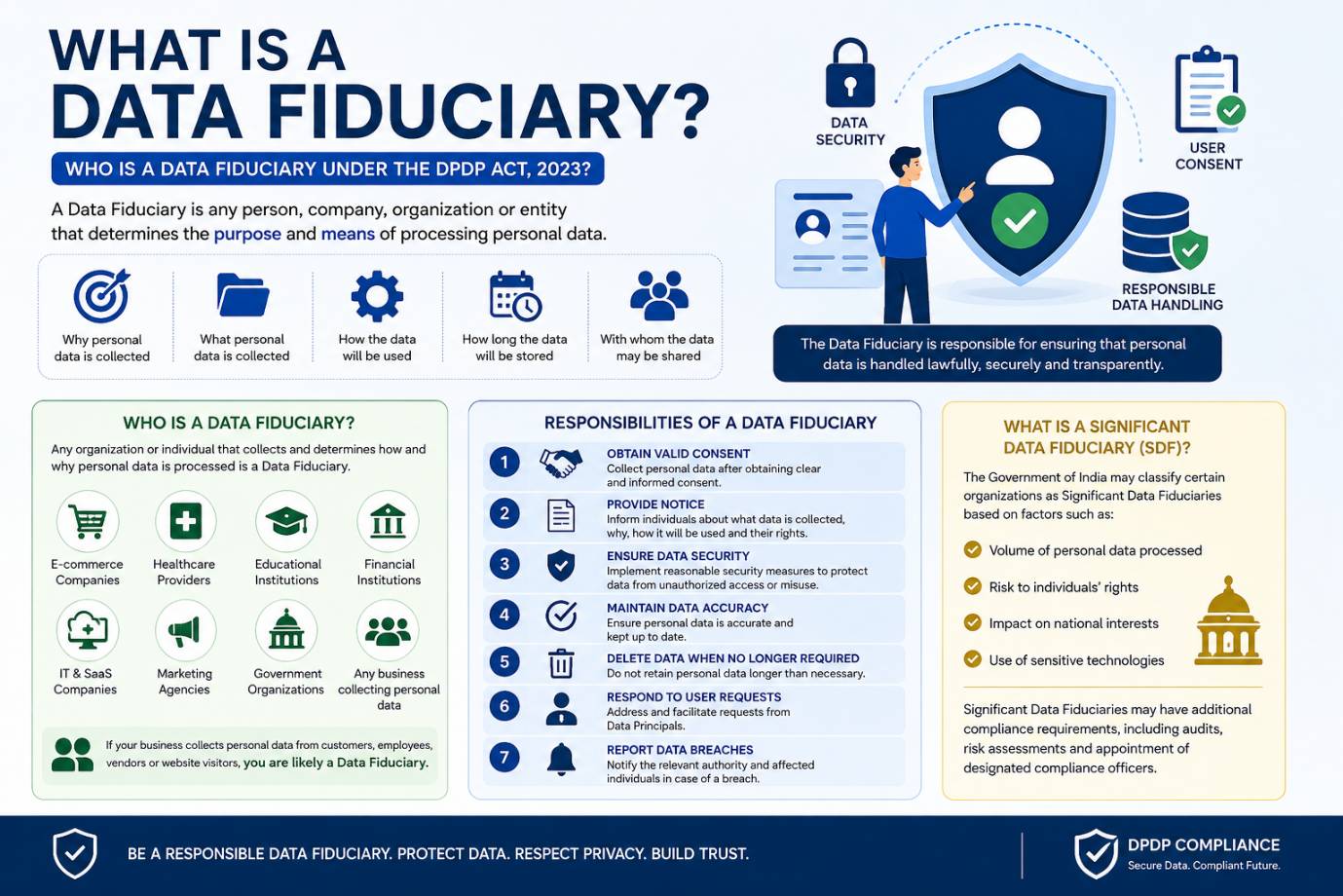
Consent Server is a DPDP Compliance Software and Consent Management Platform designed to help Indian Data Fiduciaries manage consent-related operations.
Developed by Iconic Infotech Pvt. Ltd., Consent Server provides centralized consent management, lifecycle automation, and integration capabilities.
Purpose-Based Consent Collection
Businesses can create configurable consent forms linked to defined processing purposes.
This helps organisations manage consent choices for different activities.
Centralized Consent Management
Consent Server maintains consent-related information in a centralized system, reducing dependence on disconnected records.
Consent Lifecycle Automation
The platform supports:
- Consent granting
- Consent updating
- Consent withdrawal
- Consent renewal
- Consent expiry
Privacy Notice and Purpose Versioning
Consent Server supports notice and purpose versioning, helping businesses associate consent records with relevant versions.
Audit-Ready Records
Consent histories, timestamps, and relevant activity records help organisations demonstrate their consent-management processes.
Hash-based integrity mechanisms support tamper detection.
Data Principal Rights Management
The platform supports workflows for access, correction, erasure, withdrawal, and grievance-related requests.
API and Webhook Integration
Consent Server can communicate consent-related events to connected CRM, ERP, marketing, and other business applications.
Acknowledgement and Completion Tracking
Consent Server supports the workflow:
Consent Event --> Webhook/API Notification --> Delivered --> Acknowledged --> Action Completed --> Completion Evidence
This helps organisations monitor whether connected systems have acknowledged and completed relevant actions.
Retries and escalation mechanisms can identify unresolved requests.
On-Premise and Hosted Deployment
Businesses can select deployment options based on their infrastructure and operational requirements.
Consent Server supports consent-related compliance processes. The organisation remains responsible for determining the correct legal basis for processing and ensuring that connected systems implement the required actions.
10. How Indian Businesses Should Prepare for DPDP Compliance
The major operational provisions of the DPDP framework are scheduled to commence on 13 May 2027, under the notified phased implementation framework.
Businesses should use the preparation period to establish appropriate processing controls.
Step 1: Identify Personal Data Processing Activities
Document what personal data is collected, why it is processed, and which systems use it.
Step 2: Define Each Processing Purpose
Distinguish between service delivery, customer support, marketing, employee administration, analytics, and other activities.
Step 3: Identify the Appropriate Legal Basis
Determine whether the activity requires consent or qualifies for a specific certain legitimate use.
Step 4: Review Privacy Notices
Ensure that consent-based processing is supported by notices containing the information required under the applicable framework.
Step 5: Implement Consent Management
Establish suitable processes for collecting, recording, updating, and withdrawing consent.
Step 6: Integrate Connected Systems
Ensure that relevant consent changes are communicated to applications responsible for processing personal data.
Step 7: Prepare Data Principal Rights Workflows
Define how access, correction, erasure, and grievance-related requests will be handled.
Step 8: Maintain Appropriate Evidence
Keep relevant records of consent, withdrawal, notices, processing decisions, and completed actions.
These steps can help organisations prepare a more structured and auditable DPDP compliance programme.
11. Frequently Asked Questions
Is consent compulsory for all personal data processing under the DPDP Act?
No. Section 4 permits processing based on valid consent or certain legitimate uses specified under Section 7.
Can businesses use customer data without consent?
Yes, where a specific statutory ground applies and all relevant conditions are satisfied. Businesses cannot assume that every customer-related activity qualifies.
Is consent required for marketing communications?
Consent will generally be needed where no applicable alternative statutory ground exists. Other communication and marketing regulations may also apply.
Can employee data be processed without consent?
Certain employment-related processing may be permitted under Section 7(i), subject to its conditions.
Does one customer consent cover every business purpose?
No. Consent must satisfy the requirements of Section 6, including specificity and informed agreement to the relevant purpose.
Can a business continue processing personal data after consent withdrawal?
Only where continued processing without consent is required or authorised under the Act or another applicable law.
Is Consent Server a registered Consent Manager under the DPDP Act?
Consent Server is a commercial Consent Management Platform designed to support Data Fiduciaries. A commercial CMP is distinct from a statutory Consent Manager registered with the Data Protection Board of India.
Conclusion: Every Processing Purpose Needs a Legal Basis, Not Necessarily Consent
Not every processing purpose requires consent under the DPDP Act.
However, businesses must identify an appropriate legal basis for each processing activity.
Where consent is required, it must satisfy the statutory conditions and be supported by appropriate notice, withdrawal, and management processes.
Where a certain legitimate use applies, the organisation must ensure that the specific statutory requirements are satisfied.
For Indian businesses, the real challenge is not simply collecting consent.
It is understanding processing purposes, maintaining appropriate records, managing consent changes, and ensuring that connected systems act consistently with those decisions.