On-Premise DPDP Software Security and Deployment Guide
Explore on-premise DPDP software security and deployment requirements in India. Learn how Consent Server helps businesses manage consent and compliance.

On-Premise DPDP Software: Security and Deployment Requirements for Indian Businesses
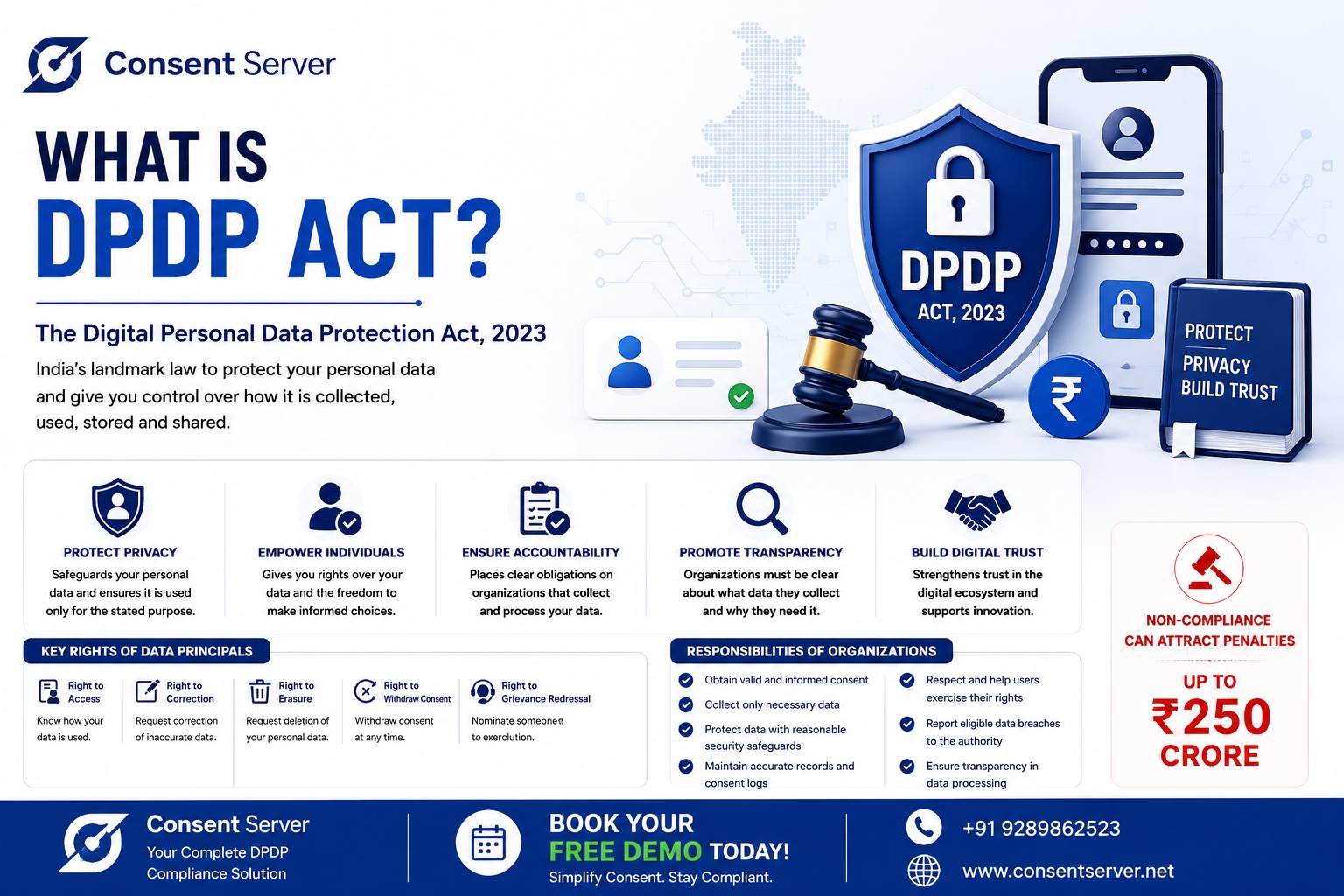
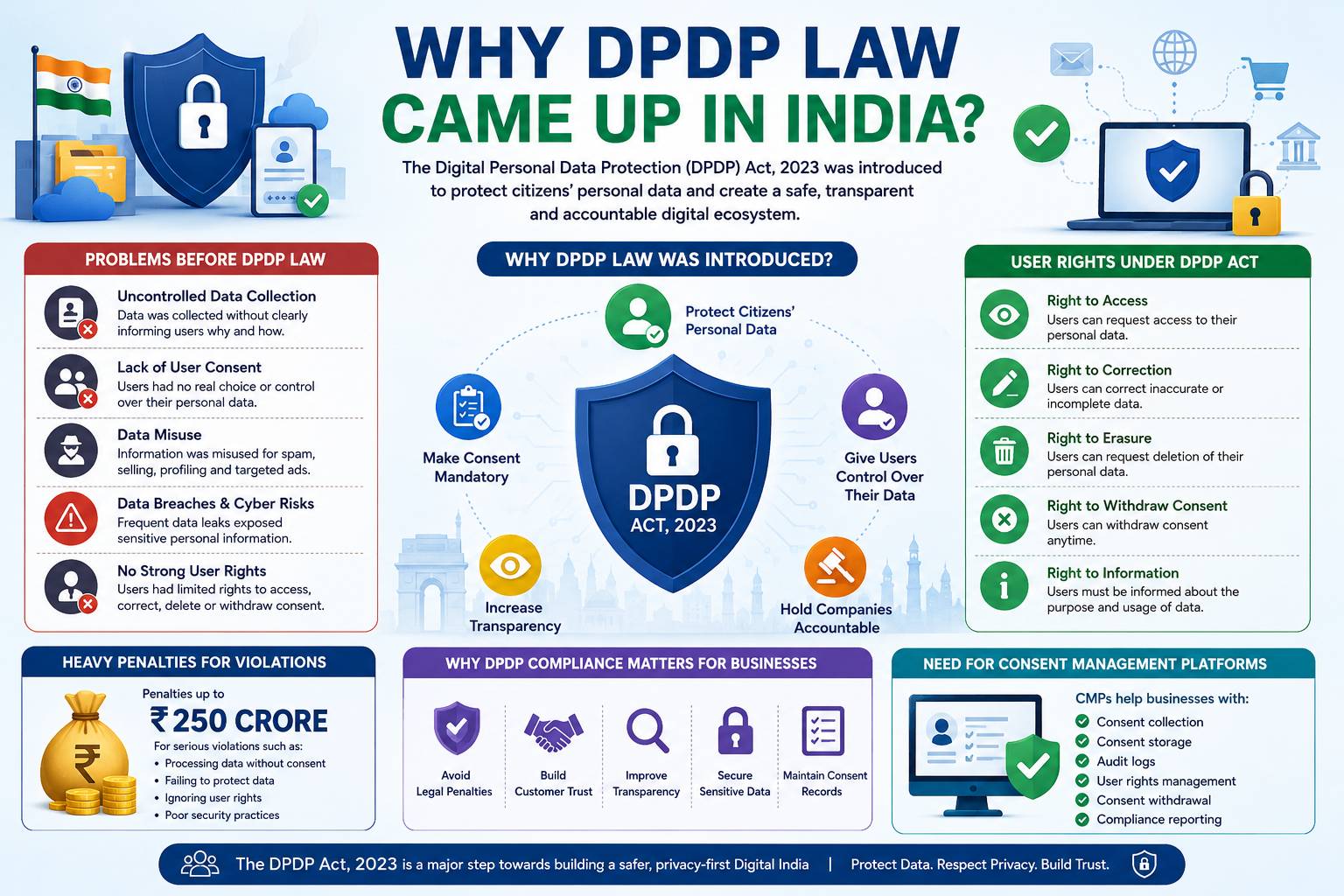
As Indian businesses prepare for the implementation of the Digital Personal Data Protection (DPDP) Act, 2023, data security, privacy management, and infrastructure control are becoming important priorities.
Organisations in healthcare, banking, education, manufacturing, and other data-intensive industries often handle sensitive business information alongside large volumes of personal data.
For these organisations, selecting the right DPDP Compliance Software is not only about managing customer consent. It is also about understanding where information is stored, who can access it, and how the system integrates with existing infrastructure.
This is why On-Premise DPDP Software is becoming an important consideration for businesses that require greater control over their data-processing environment.
Unlike conventional cloud-hosted solutions, on-premise deployment allows organisations to operate their consent-management infrastructure within their own servers or controlled IT environments.
However, successful implementation requires appropriate security safeguards, reliable infrastructure, and a carefully planned deployment strategy.
In this article, we explore the security requirements, deployment considerations, benefits, and practical implementation of On-Premise DPDP Compliance Software in India.
What Is On-Premise DPDP Software?
On-Premise DPDP Software is a compliance-supporting application deployed within an organisation's own IT infrastructure rather than operated entirely on a third-party cloud platform.
The software may run on an internal server, private data centre, or other organisation-controlled infrastructure.
A typical On-Premise Consent Management Platform (CMP) can help businesses:
- Collect and manage purpose-based customer consent.
- Maintain consent histories and supporting records.
- Process consent updates and withdrawal requests.
- Support Data Principal rights management.
- Integrate with existing CRM, ERP, and business applications.
- Monitor consent-related events and workflows.
- Generate reports for internal compliance reviews.
The primary advantage is greater control over deployment, infrastructure access, and data storage.
However, on-premise deployment does not automatically establish DPDP compliance. Organisations remain responsible for implementing appropriate technical, organisational, and legal safeguards.
Why Indian Businesses Are Considering On-Premise DPDP Compliance Software
Many businesses use multiple applications to collect and process personal information.
For example, a hospital may maintain patient information across registration software, appointment systems, laboratory applications, and internal databases.
Similarly, a financial services company may process customer information through websites, mobile applications, customer relationship management systems, and internal processing platforms.
When a consent-management solution is hosted externally, organisations must evaluate additional considerations such as vendor access, data transfers, integration security, service availability, and contractual responsibilities.
On-Premise DPDP Software provides an alternative for organisations seeking tighter infrastructure control.
1. Greater Control Over Data Storage
Businesses can configure where consent records, audit histories, and related information are stored.
This may be particularly valuable for organisations with internal data governance policies or restricted infrastructure requirements.
2. Integration With Existing Systems
An on-premise platform can communicate with internal business applications through local networks and secured APIs.
This can simplify certain integrations with systems that are not directly accessible over the public internet.
3. Reduced Dependency on External Hosting
Organisations can operate the platform without depending entirely on an external SaaS provider's hosting infrastructure.
However, software updates, backups, disaster recovery, and operational maintenance must still be managed.
4. Greater Infrastructure Visibility
IT administrators can monitor server resources, network access, storage, and system activity within their existing infrastructure-management processes.
5. Support for Organisation-Specific Security Policies
Businesses can align the deployment with their internal firewall policies, network segmentation, access controls, and monitoring systems.
These benefits make on-premise deployment an option worth evaluating, especially for organisations with established IT teams and specialized security requirements.
Security Requirements for On-Premise DPDP Software
Security is one of the most important considerations when deploying a DPDP Consent Management Platform.
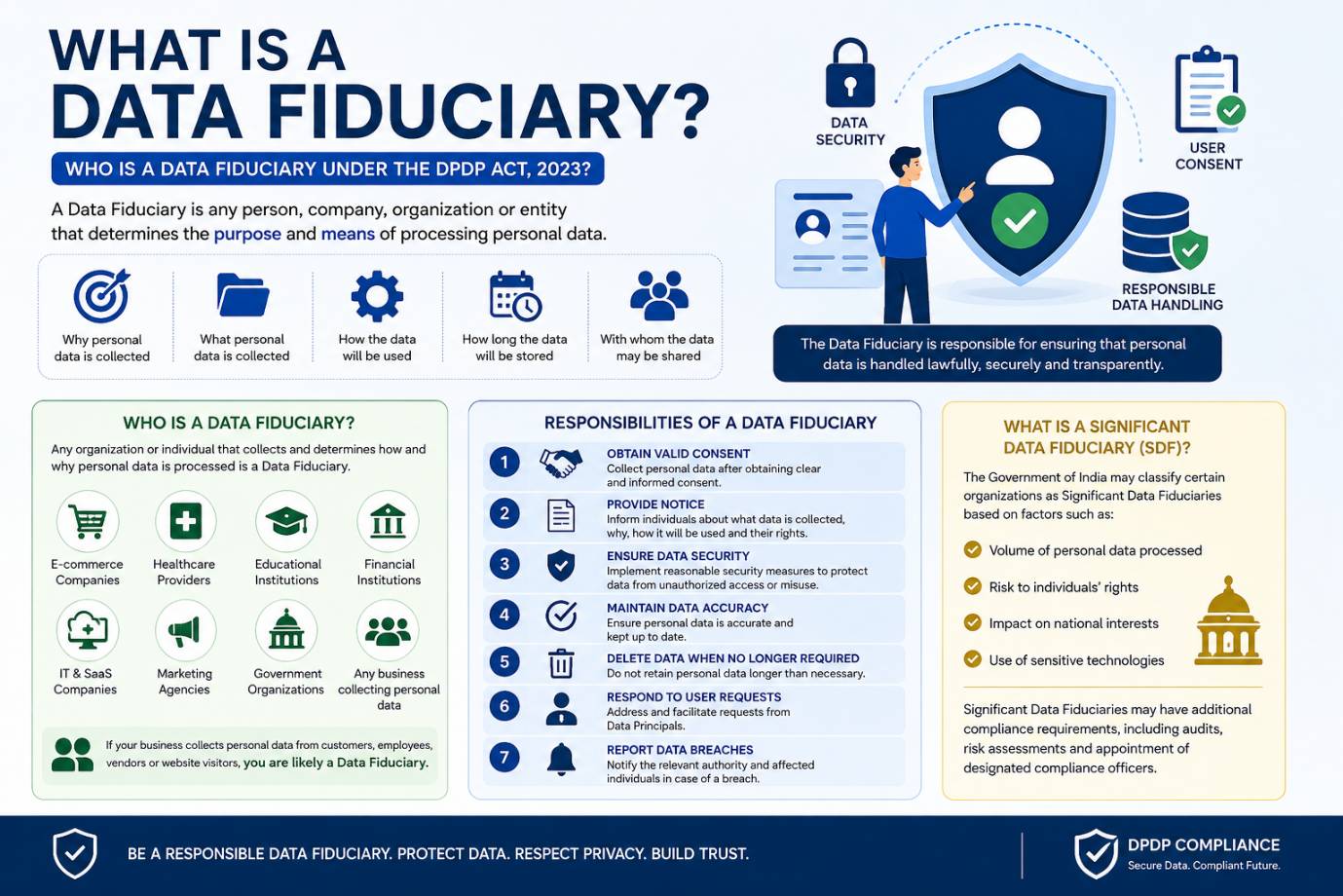
The DPDP Act requires applicable Data Fiduciaries to implement reasonable security safeguards to protect personal data in their possession or under their control.
On-premise deployment changes where the infrastructure operates, but it does not eliminate security responsibilities.
1. Encryption of Stored and Transmitted Data
Consent records and related personal information should be protected through appropriate encryption mechanisms.
Organisations should evaluate encryption for stored databases, backup files, and communication between applications.
Connections carrying sensitive information should use secure communication protocols such as TLS.
Encryption keys should be protected through appropriate key-management practices, with access restricted to authorized personnel.
2. Role-Based Access Control
Not every employee should have unrestricted access to consent records or administrative functions.
A secure platform should support Role-Based Access Control (RBAC) so that administrators, compliance officers, operational teams, and other users receive permissions appropriate to their responsibilities.
Access permissions should follow the principle of least privilege.
3. Strong Authentication
Administrative access should be protected through appropriate authentication controls.
Depending on organisational requirements, this may include strong password policies, multi-factor authentication, session controls, and monitoring of suspicious login activity.
4. Audit Trails and Activity Monitoring
Organisations should maintain relevant records of consent-management activities.
These may include consent collection, updates, withdrawal, administrative changes, user-rights requests, and system events.
Tamper-evident mechanisms can help identify unauthorized modification of relevant records.
However, an audit trail is only useful when records are protected, retained appropriately, and regularly reviewed.
5. Network Security
On-premise servers should be deployed within appropriately secured network environments.
Recommended controls include firewalls, network segmentation, restricted administrative access, and secure remote connectivity.
Public internet exposure should be limited to the services that genuinely require it.
6. Backup and Disaster Recovery
On-premise infrastructure can experience hardware failure, power outages, accidental deletion, or security incidents.
Businesses should implement encrypted backups, documented recovery procedures, and periodic restoration testing.
Recovery objectives should reflect the operational importance of the consent-management system.
7. Vulnerability Management and Updates
Organisations should establish a process for security updates, vulnerability assessments, and patch management.
Operating systems, application dependencies, databases, and supporting infrastructure should be maintained throughout the deployment lifecycle.
The most secure on-premise deployment is not simply one that keeps data inside the organisation. It is one that combines infrastructure control with effective security operations.
Deployment Requirements for On-Premise DPDP Compliance Software
Before implementing an On-Premise DPDP CMP, businesses should evaluate their existing infrastructure and operational requirements.
Server Infrastructure
The required hardware depends on expected consent volumes, concurrent users, integration traffic, record retention, and reporting workloads.
Organisations should assess processor capacity, memory, storage performance, and anticipated growth.
There is no universal server specification suitable for every deployment.
Operating System and Application Environment
The platform must be compatible with the selected operating system and supporting software components.
Businesses should also evaluate software dependencies, installation procedures, update mechanisms, and vendor support arrangements.
Database and Storage
Consent-management platforms require reliable storage for consent records, purpose configurations, notices, audit histories, and related operational information.
The storage architecture should support appropriate access controls, backup procedures, data integrity, and recovery.
Network and API Connectivity
Businesses should identify which internal and external applications will exchange information with the consent-management platform.
Typical integrations may include websites, mobile applications, CRM systems, ERP software, SMS gateways, and WhatsApp communication services.
API authentication, network permissions, and webhook endpoints should be configured securely.
High Availability and Recovery
Organisations with business-critical workloads may require redundant infrastructure, failover mechanisms, and defined recovery procedures.
These requirements should be determined during deployment planning rather than after an outage.
Monitoring and Maintenance
Server health, application performance, integration failures, and security events should be monitored.
Businesses should clearly define whether these responsibilities belong to their internal IT team, the software vendor, or a managed-service provider.
On-Premise vs Cloud DPDP Compliance Software
Both deployment models can support DPDP compliance when properly implemented.
The appropriate choice depends on the organisation's requirements.
| Factor | On-Premise DPDP Software | Cloud-Hosted DPDP Software |
|---|---|---|
| Infrastructure | Organisation-controlled servers | Provider-managed hosting environment |
| Data storage | Configured within controlled infrastructure | Provider's hosting environment |
| Server maintenance | Primarily organisation or managed IT team | Primarily hosting provider |
| Internal integrations | Can support direct internal network connectivity | May require secured external connectivity |
| Scalability | Depends on infrastructure planning | Depends on provider capabilities |
| Security responsibility | Significant responsibility on the organization | Shared responsibility |
| Deployment control | Greater direct infrastructure control | Depends on provider configuration |
|
Internet dependency |
Local access may continue during internet outages |
External access generally depends on connectivity |
Neither model is inherently compliant or secure.
A properly configured cloud deployment may be more secure than a poorly maintained on-premise server, and vice versa.
Businesses should evaluate actual safeguards, contractual arrangements, operational capabilities, and technical requirements before selecting a deployment model.
How Consent Server Supports On-Premise DPDP Compliance
Consent Server is a DPDP Compliance Software and Consent Management Platform developed by Iconic Infotech Pvt. Ltd. for Indian businesses.
It is designed to help organisations manage consent-related operations while offering flexibility in deployment.
One of its important capabilities is support for On-Premise Deployment, allowing organisations to operate the platform within their controlled infrastructure.
Centralized Consent Management
Consent Server enables businesses to collect and manage purpose-based consent through configurable forms and centralized records.
Organisations can maintain consent information across multiple websites, applications, and business processes.
Consent Lifecycle Automation
The platform supports consent collection, updates, withdrawal, renewal, and expiry.
This helps organisations manage consent throughout its lifecycle instead of relying only on initial collection.
Audit-Ready Consent Records
Consent Server maintains relevant consent histories, timestamps, notice versions, and activity records.
It also incorporates hash-based mechanisms designed to support tamper detection and record integrity.
These features help businesses maintain supporting evidence for internal reviews and compliance assessments.
Data Principal Rights Management
Consent Server supports workflows for access, correction, erasure, withdrawal, and grievance-related requests.
Businesses can organise requests, monitor their progress, and maintain relevant activity histories.
APIs and Webhooks
The platform supports integration with CRM, ERP, websites, marketing systems, and other applications through APIs and webhooks.
Consent-related changes can be communicated to connected systems for appropriate action.
Acknowledgement and Completion Tracking
Consent Server supports a structured event workflow:
Consent Event --> Webhook/API Notification --> Delivered --> Acknowledged --> Action Completed --> Completion Evidence
The platform also supports retries, monitoring, and escalation for unresolved events.
This helps businesses track whether connected systems have reported the necessary actions.
Actual processing changes remain dependent on the receiving systems and their integrations.
Role-Based Access and Administrative Controls
Consent Server supports role-based permissions and administrative controls to help organisations manage access to platform functions.
On-Premise and Hosted Deployment
Organisations can choose between on-premise and hosted deployment models according to their infrastructure policies, technical requirements, and operational preferences.
For businesses seeking a DPDP Consent Management Platform that combines consent lifecycle management, integration capabilities, audit-ready records, and deployment flexibility, Consent Server provides a practical option.
Industries That Can Benefit From On-Premise DPDP Software
Healthcare
Hospitals, clinics, and diagnostic centres often operate multiple internal systems and maintain extensive patient-related information.
On-premise consent-management infrastructure can support integration with existing hospital IT environments.
Banking and Financial Services
Financial organisations may have strict infrastructure, vendor-risk, and information-security requirements.
On-premise deployment can be evaluated alongside applicable sector-specific regulations and internal security policies.
Education
Universities, schools, and educational institutions can use consent-management platforms to organise relevant student, parent, and institutional data-processing workflows.
Manufacturing
Manufacturing businesses may operate internal ERP, HR, vendor, and customer-management systems.
An on-premise CMP can support consent-related workflows within their existing infrastructure.
E-Commerce and Retail
Retail businesses can manage customer consent preferences and coordinate relevant changes across websites, CRM systems, and marketing applications.
Enterprises and SaaS Providers
Organisations operating multiple applications or serving different business units can benefit from centralized consent-management capabilities and configurable integrations.
On-Premise DPDP Software Deployment Checklist
Before deploying a consent-management platform, organisations should complete the following steps:
- Assess Data Processing Activities: Identify relevant personal data, processing purposes, applications, and consent requirements.
- Define Infrastructure Requirements: Estimate consent volumes, concurrent users, integration traffic, storage needs, and recovery objectives.
- Review Security Controls: Establish encryption, authentication, RBAC, network security, and monitoring requirements.
- Plan Application Integrations: Identify CRM, ERP, website, mobile application, and communication-system connections.
- Configure Consent Workflows: Establish consent collection, withdrawal, purpose management, and relevant notice processes.
- Implement Rights-Management Procedures: Define responsibilities for handling Data Principal requests.
- Test Failure Scenarios: Verify webhook retries, application acknowledgements, backup restoration, and operational recovery.
- Train Responsible Teams: Ensure IT, compliance, and operational personnel understand their responsibilities.
- Maintain Documentation: Record deployment configurations, security procedures, relevant activities, and operational controls.
- Review the Deployment Regularly: Reassess security, integrations, performance, and legal requirements as the business evolves.
Is On-Premise Deployment Mandatory Under the DPDP Act?
No. The DPDP Act does not impose a general requirement that every business must use on-premise software or store all personal data exclusively on servers located in India.
The Act establishes obligations concerning personal data processing and protection.
Organisations must evaluate any applicable restrictions on cross-border transfers, sector-specific regulations, contractual requirements, and government directions.
An on-premise solution may be preferred for operational, security, or internal governance reasons, but it is not automatically a statutory requirement.
This distinction is important when evaluating On-Premise DPDP Compliance Software.
Preparing for DPDP Compliance in 2027
India's DPDP framework follows a phased commencement schedule, with several major operational obligations scheduled to take effect on 13 May 2027.
Businesses should use the preparation period to review their personal data processing activities, establish suitable consent-management procedures, strengthen security safeguards, and prepare Data Principal rights workflows.
Organisations considering on-premise deployment should also allow sufficient time for infrastructure planning, application integration, security testing, and operational training.
Implementing the right DPDP Compliance Software can support these preparations, but it must form part of a broader compliance programme.
Conclusion: Choose DPDP Software That Fits Your Security and Infrastructure Needs
As Indian businesses prepare for the DPDP Act, selecting suitable compliance infrastructure is becoming an important technology and governance decision.
On-Premise DPDP Software offers organisations greater control over their deployment environment, data storage, internal integrations, and infrastructure policies.
However, these benefits depend on appropriate security controls, reliable operations, and continuous maintenance.
Businesses should evaluate encryption, access management, audit records, API security, backups, recovery procedures, and operational responsibilities before deployment.
Consent Server helps Indian organisations manage consent-related requirements through centralized consent management, lifecycle automation, Data Principal rights workflows, audit-ready records, APIs, webhooks, and on-premise deployment capabilities.
For businesses seeking greater infrastructure control without sacrificing consent-management functionality, Consent Server offers a solution worth evaluating.
Keep Control of Your Infrastructure. Manage Consent Centrally. Build Stronger DPDP Compliance Readiness.
Secure Your DPDP Compliance Journey With Consent Server
Consent Server — On-Premise DPDP Compliance Software & Consent Management Platform
On-Premise Deployment | Consent Lifecycle Management | Data Principal Rights | Audit-Ready Records | APIs & Webhooks | Technical Support