On-Premise vs Cloud CMP for DPDP Compliance | Consent Server Copy
Compare On-Premise vs Cloud CMP for DPDP compliance. Discover how Consent Server helps Indian businesses manage consent, audit records and data privacy. Copy
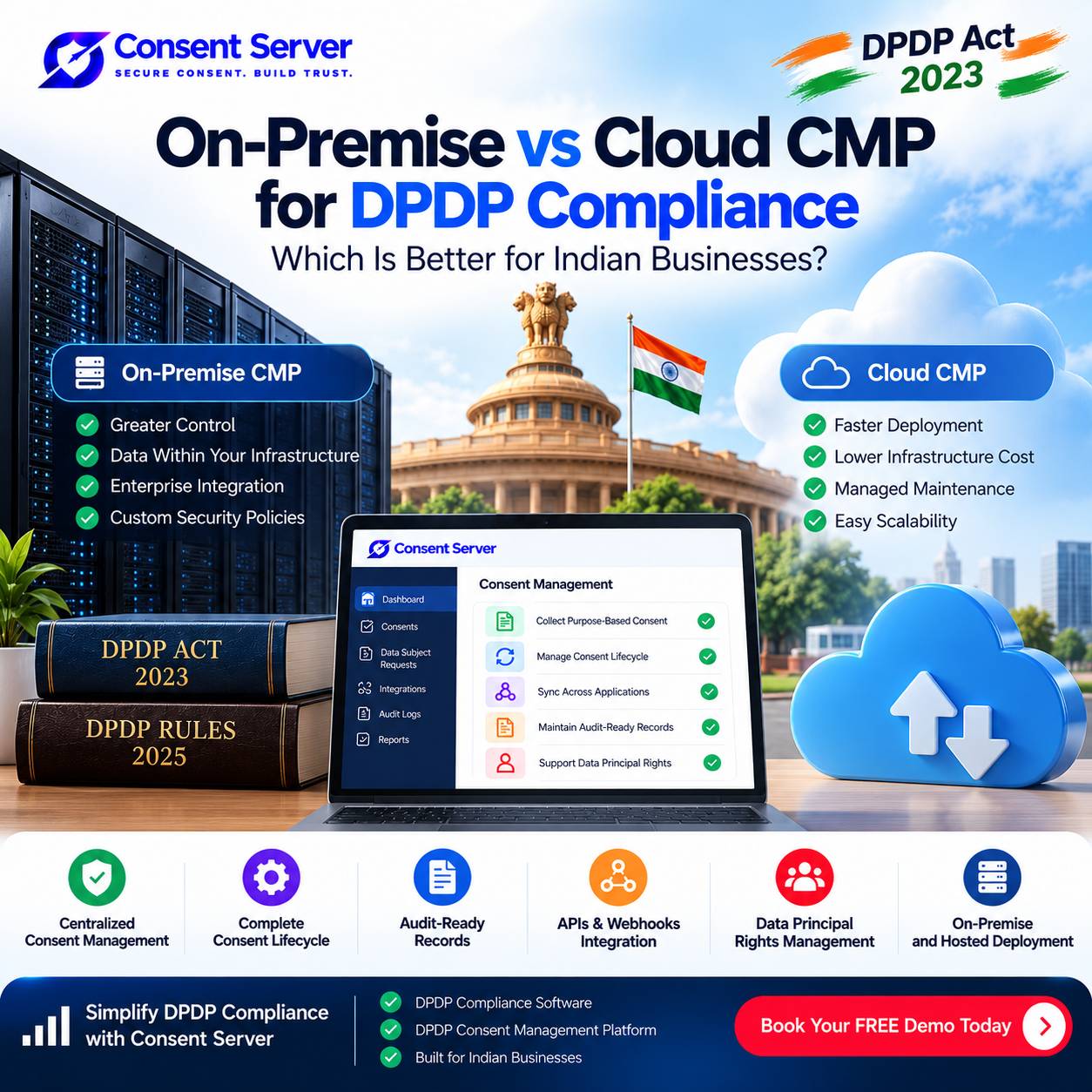
On-Premise vs Cloud CMP for DPDP Compliance: Which Is Better for Indian Businesses?
By Jitendra Yadav | Founder, Consent Server
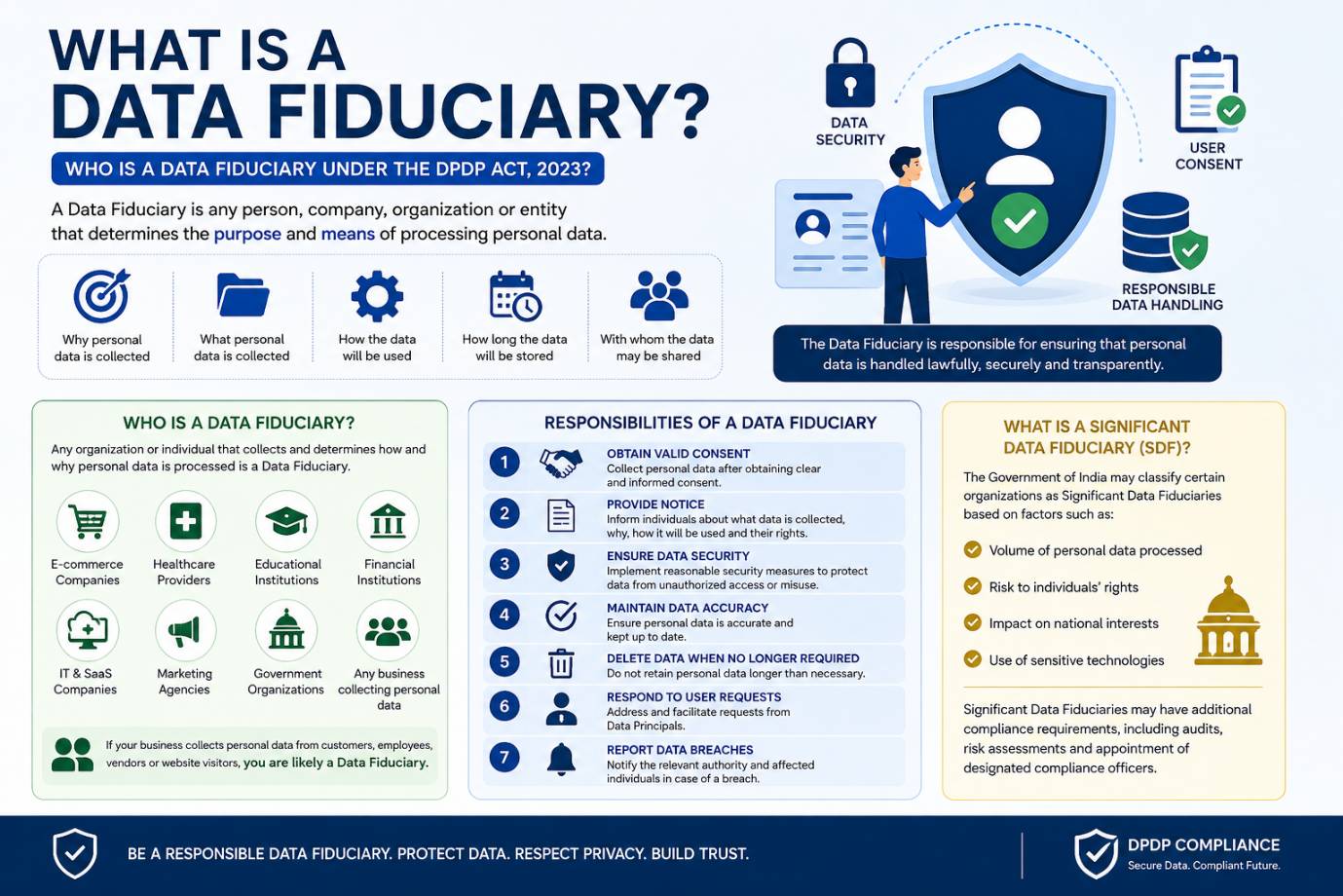
As India moves toward the implementation of the Digital Personal Data Protection (DPDP) Act, 2023, businesses are increasingly looking for reliable DPDP Compliance Software to manage customer consent, protect personal data, and maintain compliance records.
One of the most important decisions organizations face is choosing between an On-Premise Consent Management Platform and a Cloud-Based CMP.
Both deployment models offer advantages, but the right choice depends on an organization's security requirements, infrastructure, budget, and data governance policies.
For businesses seeking greater control over their compliance infrastructure, on-premise deployment is becoming an important consideration.
Solutions such as Consent Server, a comprehensive DPDP Consent Management Platform, help organizations manage consent-related compliance processes while offering the flexibility of on-premise and hosted deployment.
What Is a Consent Management Platform Under the DPDP Act?
A Consent Management Platform (CMP) is software that helps organizations collect, manage, update, withdraw, and maintain records of consent.
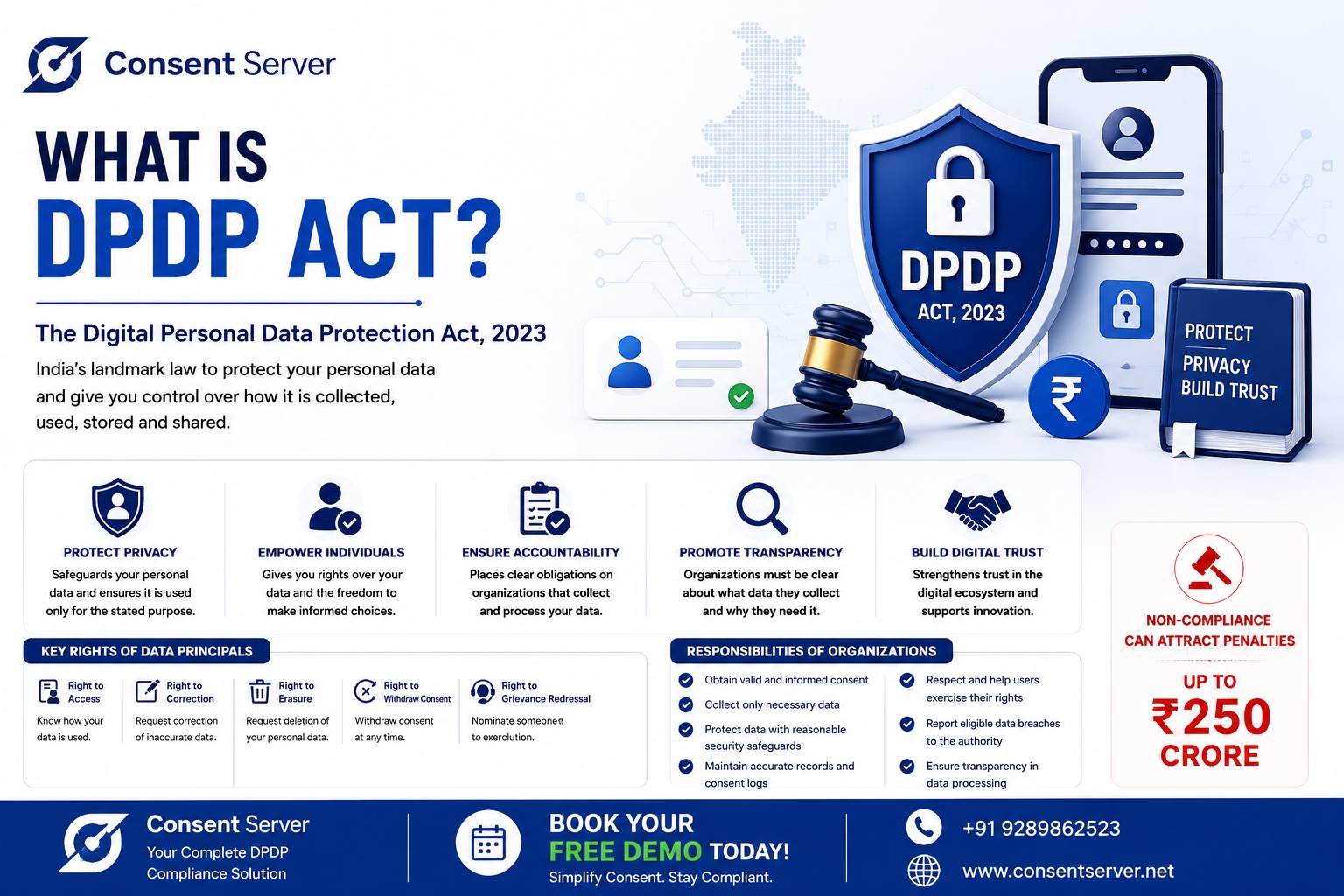
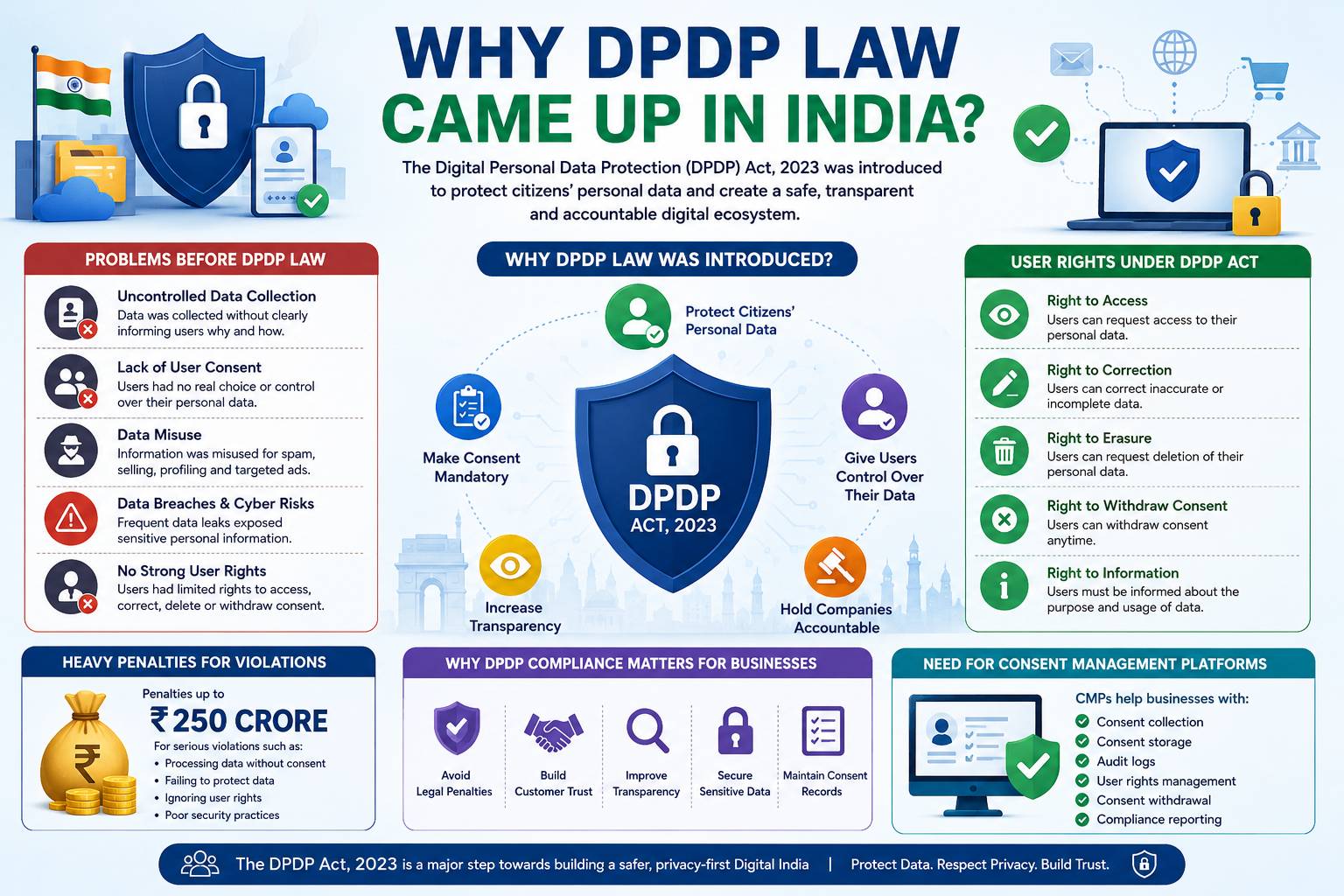
Under the DPDP Act, organizations relying on consent must meet applicable requirements concerning valid consent, notices, withdrawal, and related obligations.
A modern DPDP CMP goes beyond displaying a consent checkbox. It can help businesses manage the complete consent lifecycle and coordinate consent-related activities across multiple systems.
Important capabilities include:
- Purpose-based consent collection and management.
- Consent updates, withdrawals, renewals, and expiry.
- Consent history and audit-ready records.
- Data Principal rights management.
- APIs and webhooks for application integration.
- Security controls and access management.
A commercial CMP is not automatically a registered Consent Manager under the DPDP Act. These are distinct concepts, and statutory registration requirements apply separately.
Choosing the right DPDP Software and deployment model can make a significant difference to an organization's operational efficiency and compliance readiness.
1. What Is an On-Premise Consent Management Platform?
An On-Premise CMP is installed and operated within an organization's own infrastructure, such as its internal servers or private data centre.
Instead of depending entirely on a third-party hosted service, the organization manages the environment in which its consent-management software operates.
Key Advantages of On-Premise CMP
Greater Infrastructure Control
Businesses can manage their own servers, network configurations, access policies, and operational controls.
Flexible Security Architecture
Organizations can integrate the platform with existing security systems, internal networks, and infrastructure policies.
Internal Data Governance
Consent records can be maintained within infrastructure controlled by the organization, subject to the product's configuration and external integrations.
Enterprise Integration
An on-premise platform can be integrated with internal CRM, ERP, HRMS, and other business applications.
Predictable Licensing Options
Depending on the vendor's commercial model, on-premise deployment may offer perpetual licensing with annual maintenance instead of recurring subscription-only pricing.
However, on-premise deployment also requires appropriate server maintenance, backups, security patching, disaster recovery, and technical administration.
It does not automatically make a business DPDP compliant.
2. What Is a Cloud-Based Consent Management Platform?
A Cloud CMP is hosted on infrastructure managed by a software provider or cloud service operator.
Businesses generally access the platform through the internet without maintaining dedicated servers for the application.
Key Advantages of Cloud CMP
Faster Deployment
Cloud solutions can often be configured and launched quickly.
Lower Initial Infrastructure Requirements
Organizations may avoid purchasing and maintaining their own servers.
Managed Maintenance
Depending on the service agreement, software updates, infrastructure maintenance, and availability management may be handled by the provider.
Scalability
Cloud platforms can offer flexible resources as business requirements increase.
Potential Challenges
Cloud deployment may introduce considerations relating to recurring subscription costs, provider dependency, internet connectivity, data residency preferences, and contractual security responsibilities.
However, a properly configured cloud platform can also provide strong security, reliable backups, and enterprise-grade availability.
The deployment model alone does not determine whether a CMP is secure or legally compliant.
3. On-Premise vs Cloud CMP: Key Differences
| Feature | On-Premise CMP | Cloud CMP |
|---|---|---|
| Hosting | Organization-controlled infrastructure | Provider or cloud-hosted infrastructure |
| Infrastructure control | Greater direct control | Depends on provider and service model |
| Initial setup | May require more planning | Often faster |
| Pricing | May offer licence + AMC | Often subscription-based |
| Maintenance | Usually organization-managed | Often provider-managed |
| Internet dependency | Internal workflows may operate locally | Generally requires connectivity |
| Customization | Depends on vendor; can suit internal integrations | Depends on vendor and service plan |
| Security responsibility | Greater direct operational responsibility | Shared between customer and provider |
| Scalability | Requires infrastructure planning | Often easier to scale on demand |
The best CMP is not necessarily the one hosted in the cloud or installed on-premise. It is the one that supports the organization's compliance requirements, operational needs, and security policies.
4. Why On-Premise DPDP Compliance Software Matters for Indian Businesses
Many Indian organizations already operate critical applications within their own infrastructure.
Banks, hospitals, educational institutions, manufacturers, and enterprises may prefer to maintain greater control over their consent-management environment.
For such organizations, an On-Premise DPDP Consent Management Platform can offer important advantages.
It can support integration with internal applications, align with existing infrastructure policies, and reduce dependence on an externally hosted CMP for certain internal operations.
On-premise deployment can also be useful where internet connectivity is unreliable, although externally accessible consent collection and synchronization still require suitable connectivity arrangements.
Most importantly, it gives organizations greater flexibility in determining how their consent-management infrastructure is operated.
This is one reason businesses should consider deployment flexibility when evaluating DPDP Compliance Software.
5. How Consent Server Helps Businesses Simplify DPDP Compliance
Choosing between on-premise and cloud deployment is important, but businesses also need to evaluate what the platform can actually do.
Consent Server is a comprehensive DPDP Compliance Software and Consent Management Platform developed for Indian businesses to help implement and manage consent-related requirements under the DPDP Act.
Rather than focusing only on consent collection, Consent Server provides tools for managing consent throughout its lifecycle and coordinating related activities across business applications.
Centralized Consent Management
Consent Server helps organizations manage consent across multiple websites, applications, and business systems through a centralized platform.
This reduces the complexity of maintaining separate consent records in disconnected applications.
Complete Consent Lifecycle Management
Businesses can manage consent collection, updates, withdrawals, renewals, and expiry while maintaining relevant historical records.
Audit-Ready Consent Records
Consent Server maintains consent timestamps, purpose selections, notice versions, and activity histories.
Its audit and tamper-detection capabilities support organizations in maintaining reliable consent-related evidence.
Data Principal Rights Management
The platform provides workflows supporting access, correction, erasure, withdrawal, and grievance requests.
These capabilities help organizations manage relevant requests through a structured process.
APIs and Webhook Integration
Consent Server supports integration with CRM, ERP, marketing, and other business applications through APIs and webhooks.
Its event-management capabilities include delivery tracking, acknowledgements, retries, escalation, and action-completion evidence where integrated systems provide the required responses.
On-Premise and Hosted Deployment
One of Consent Server's important advantages is deployment flexibility.
Organizations can choose on-premise installation when they prefer to operate the platform within their own infrastructure.
Hosted deployment options are also available for businesses that prefer a managed environment.
This flexibility allows organizations to select an approach aligned with their infrastructure strategy and operational requirements.
Consent Server combines deployment flexibility with centralized consent management, consent lifecycle automation, audit-ready records, and business application integration—making it a strong choice for Indian organizations evaluating a DPDP CMP.
6. Which CMP Deployment Model Should Your Business Choose?
The right choice depends on your organization's needs.
Choose an On-Premise CMP when:
- You prefer greater control over your infrastructure.
- You operate critical applications within your internal network.
- Your organization has an IT team capable of managing servers and security.
- You require integration with existing internal business systems.
- Your infrastructure strategy favors self-hosted software.
Choose a Cloud CMP when:
- You want faster initial deployment.
- You prefer the provider to manage infrastructure maintenance.
- You have limited internal IT resources.
- You need flexible cloud-based scalability.
- A subscription-based operating model suits your budget.
For organizations that want the freedom to choose, a platform supporting both deployment models can offer greater flexibility.
This is where Consent Server provides a practical advantage.
Businesses can evaluate the same core consent-management solution without being restricted to a single hosting approach.
7. How to Choose the Best CMP for DPDP Compliance
Before selecting a DPDP Consent Management Platform, businesses should evaluate more than hosting and pricing.
A suitable CMP should support the operational processes needed for consent-related compliance.
Consider whether the platform provides:
- Purpose-based consent management.
- Complete consent lifecycle tracking.
- Consent withdrawal workflows.
- Audit-ready records and notice versioning.
- Data Principal rights management.
- APIs and webhooks for connected systems.
- Appropriate security and access controls.
- Deployment flexibility.
- Reliable technical support.
Consent Server brings these capabilities together in a platform designed around the needs of Indian businesses preparing for DPDP compliance.
Its combination of on-premise deployment, hosted options, consent lifecycle management, audit records, and application integration makes it particularly relevant for organizations seeking a long-term consent-management solution.
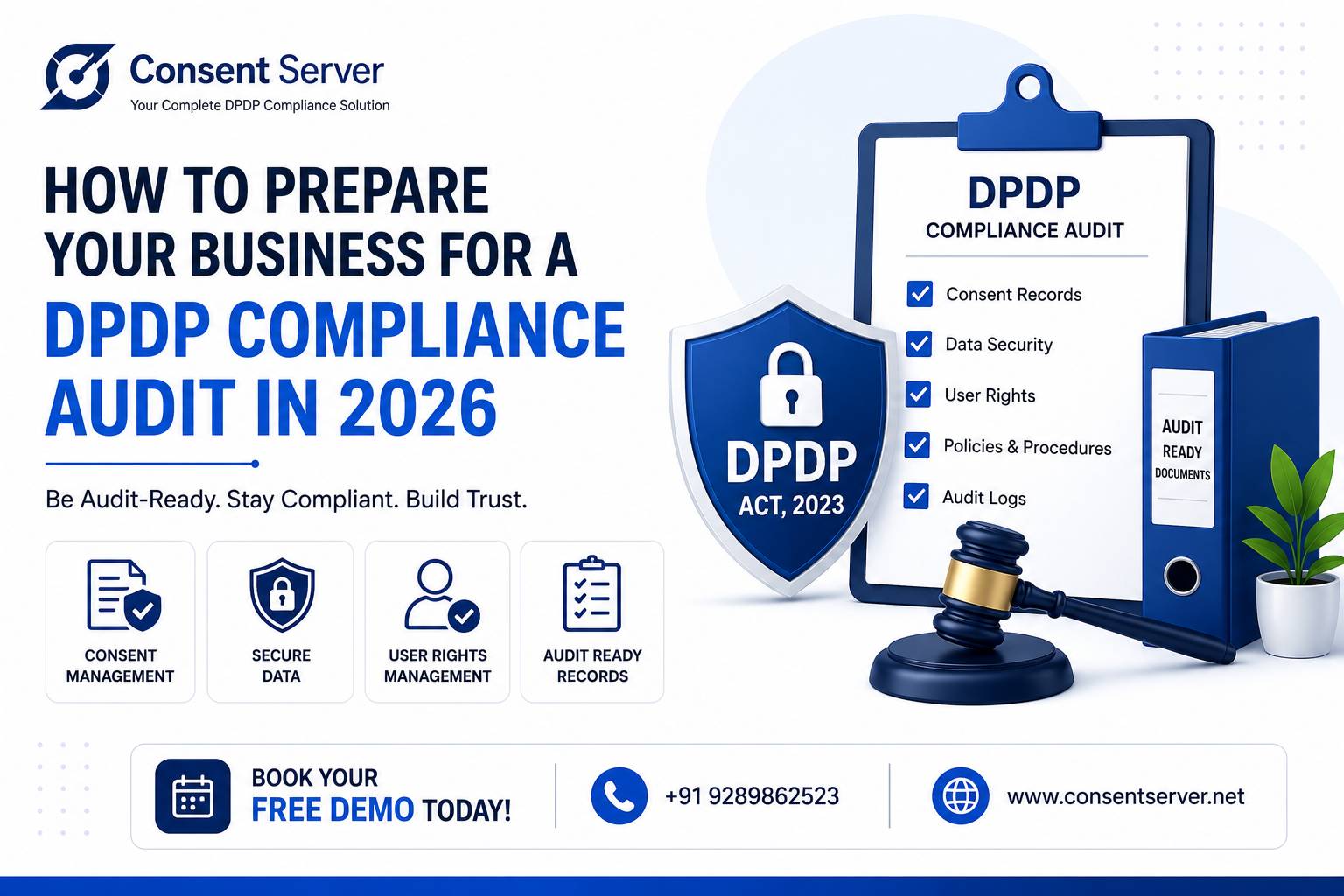
However, implementing a CMP is only one part of DPDP compliance. Businesses must also address applicable legal obligations, security safeguards, governance processes, and other data protection responsibilities.
Conclusion: On-Premise or Cloud — Which Is Better for DPDP?
Both on-premise and cloud-based consent management platforms can support businesses preparing for the DPDP Act, 2023.
Cloud deployment offers convenience, managed infrastructure, and scalability.
On-premise deployment provides greater direct control over infrastructure, internal integration, and operational policies.
For organizations that prioritize infrastructure control while still requiring modern consent-management capabilities, an on-premise CMP can be an attractive option.
Consent Server offers a balanced approach by combining comprehensive consent-management features with the flexibility of on-premise and hosted deployment.
From purpose-based consent collection and lifecycle management to audit-ready records, Data Principal requests, and application integration, Consent Server helps Indian businesses strengthen their DPDP compliance readiness.
For companies evaluating the best CMP for DPDP compliance, Consent Server is a solution worth considering.
Simplify DPDP Compliance With Consent Server
Consent Server – A Complete DPDP Compliance & Consent Management Platform
Whether you prefer On-Premise or Hosted Deployment, Consent Server helps your business manage consent centrally, maintain audit-ready records, and coordinate consent-related workflows across your applications.