Parental Consent Under DPDP Act | Childrens Data Rights Copy
Learn parental consent requirements and childrens digital rights under India DPDP Act. Discover how Consent Server supports consent management and compliance.
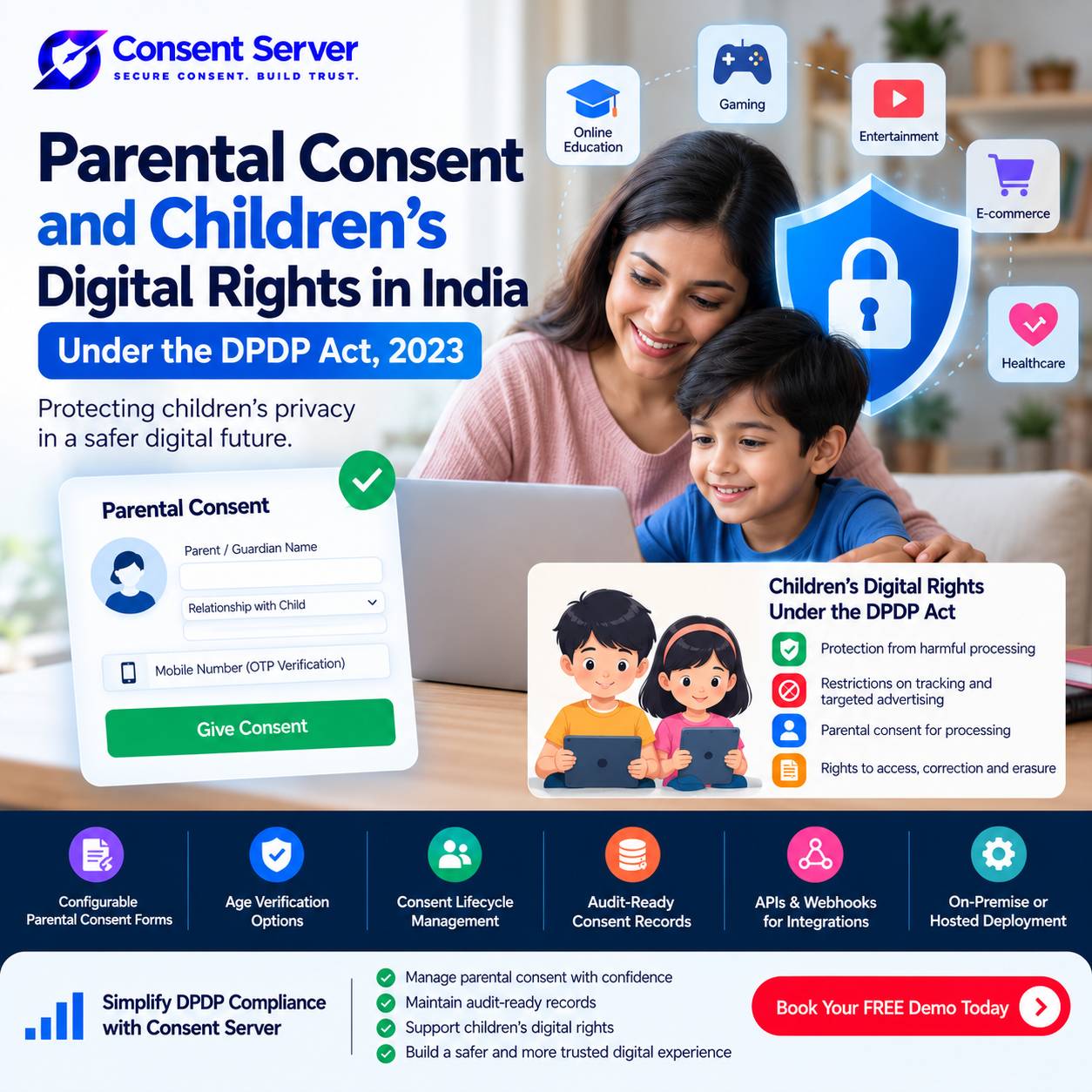
Parental Consent and Children's Digital Rights in India: What Businesses Must Know Under the DPDP Act
India's digital ecosystem is growing rapidly, with children increasingly using educational platforms, gaming applications, social media, e-commerce websites, and digital learning services. While these technologies offer significant opportunities, they also raise serious concerns about children's privacy, personal data protection, and online safety.
From online learning platforms collecting students' personal information to gaming applications tracking user behavior, children's personal data is becoming an important responsibility for businesses.
India's Digital Personal Data Protection (DPDP) Act, 2023 establishes specific requirements for protecting children's personal data, including parental consent, restrictions on certain processing activities, and greater accountability for organisations handling such information.
For businesses, understanding parental consent under the DPDP Act is not simply about adding a checkbox to a registration form. It requires a structured approach to consent verification, data protection, privacy notices, and ongoing consent management.
This article explains children's digital rights in India, the parental consent requirements under the DPDP Act, and how organisations can prepare their systems for compliance.
Who Is Considered a Child Under the DPDP Act?
Under the Digital Personal Data Protection Act, 2023, a child is defined as an individual who has not completed 18 years of age.
This means that businesses processing the personal data of users below 18 must consider the special requirements applicable to children's personal data.
These obligations may affect organisations operating in several sectors, including:
- EdTech platforms and online learning applications
- Schools, colleges, and educational institutions
- Gaming applications and entertainment platforms
- Social media and community platforms
- Healthcare applications serving children
- E-commerce websites and digital subscription services
For example, an educational application collecting a 15-year-old student's name, email address, mobile number, learning history, and performance records may be processing a child's personal data.
Such processing must be assessed against the applicable requirements of the DPDP Act and Rules.
What Is Verifiable Parental Consent Under the DPDP Act?
One of the most important requirements under Section 9 of the DPDP Act is that a Data Fiduciary must obtain verifiable consent from a child's parent before processing the child's personal data, subject to applicable exemptions.
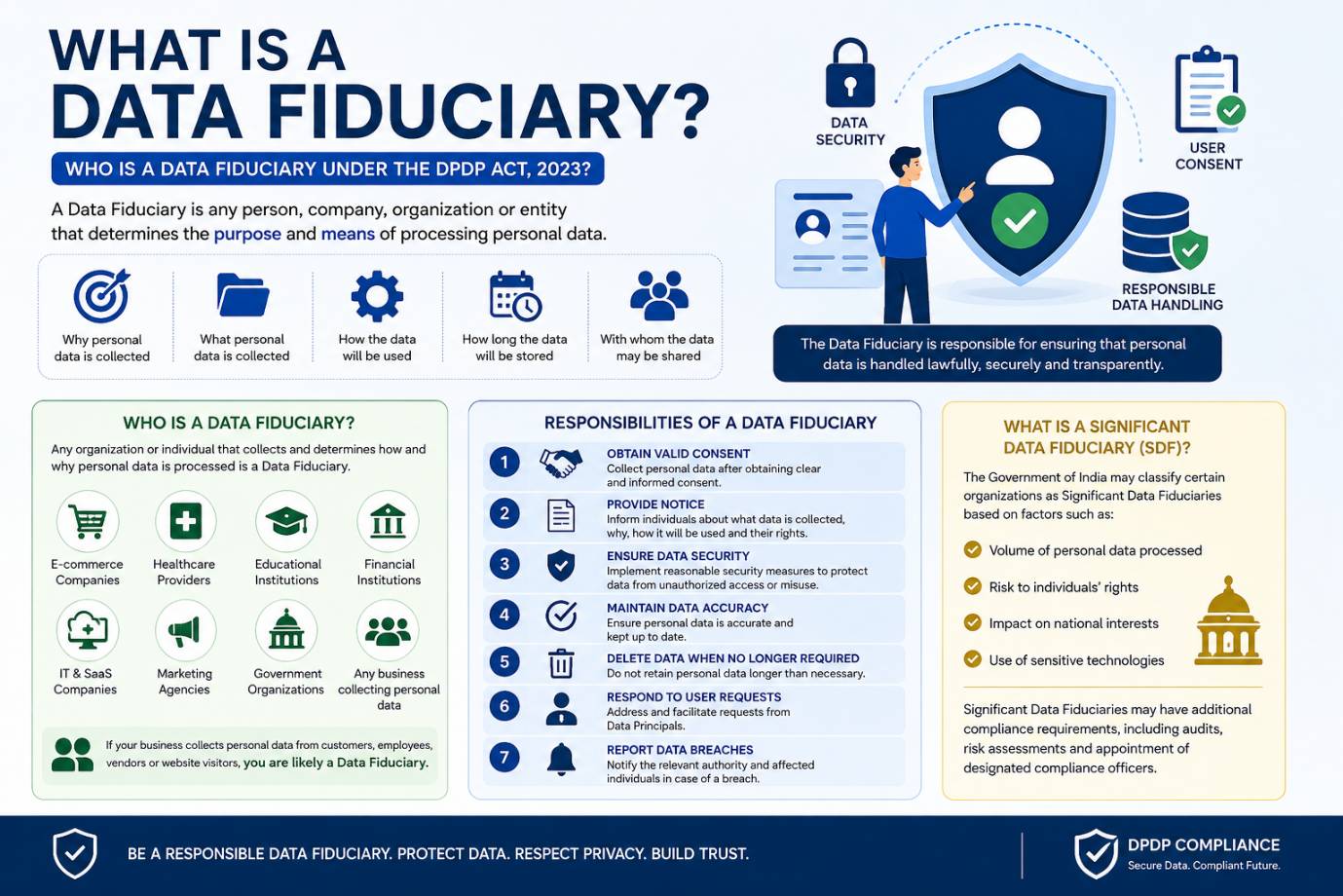
A Data Fiduciary is an organisation or individual that determines the purpose and means of processing personal data.
Verifiable parental consent means that organisations need a reliable mechanism to establish that the person providing consent is an adult and is appropriately acting as the child's parent.
Simply displaying an “I Agree” checkbox may not be sufficient to demonstrate compliance with this requirement.
A properly designed parental consent workflow should address:
- Identifying when a user is a child.
- Providing an appropriate privacy notice to the parent.
- Obtaining parental consent before processing covered personal data.
- Using an appropriate verification mechanism.
- Maintaining reliable records of consent.
- Supporting withdrawal and other applicable Data Principal rights.
The DPDP Rules, 2025 provide additional requirements concerning verifiable parental consent, including age and identity verification approaches.
Businesses should therefore review both the Act and the Rules when designing parental consent systems.
Children's Digital Rights Under the DPDP Act
The DPDP Act recognizes that children's personal data requires additional protection.
Several important safeguards apply to organisations handling children's personal information.
1. Protection Against Unlawful Data Processing
Organisations must have a valid legal basis for processing personal data and comply with the additional requirements applicable to children.
Where verifiable parental consent is required, businesses must obtain it before processing the child's personal data.
2. Restrictions on Tracking and Behavioural Monitoring
Section 9 places restrictions on tracking or behavioural monitoring of children, subject to applicable exemptions.
This is particularly relevant for websites and applications that use analytics, tracking technologies, or systems that monitor user behaviour.
Businesses must carefully evaluate whether their processing activities fall within these restrictions.
3. Restrictions on Targeted Advertising
The DPDP Act also restricts targeted advertising directed at children, subject to applicable exemptions.
For example, a digital platform should not assume that obtaining parental consent automatically permits it to serve targeted advertisements to children.
Parental consent and restrictions on targeted advertising are separate compliance considerations.
4. Protection Against Detrimental Processing
The Act prohibits processing children's personal data in a manner likely to cause a detrimental effect on their well-being.
This provision emphasizes that children's data protection involves more than obtaining consent. Organisations must also consider the potential impact of their processing activities.
5. Rights Relating to Personal Data
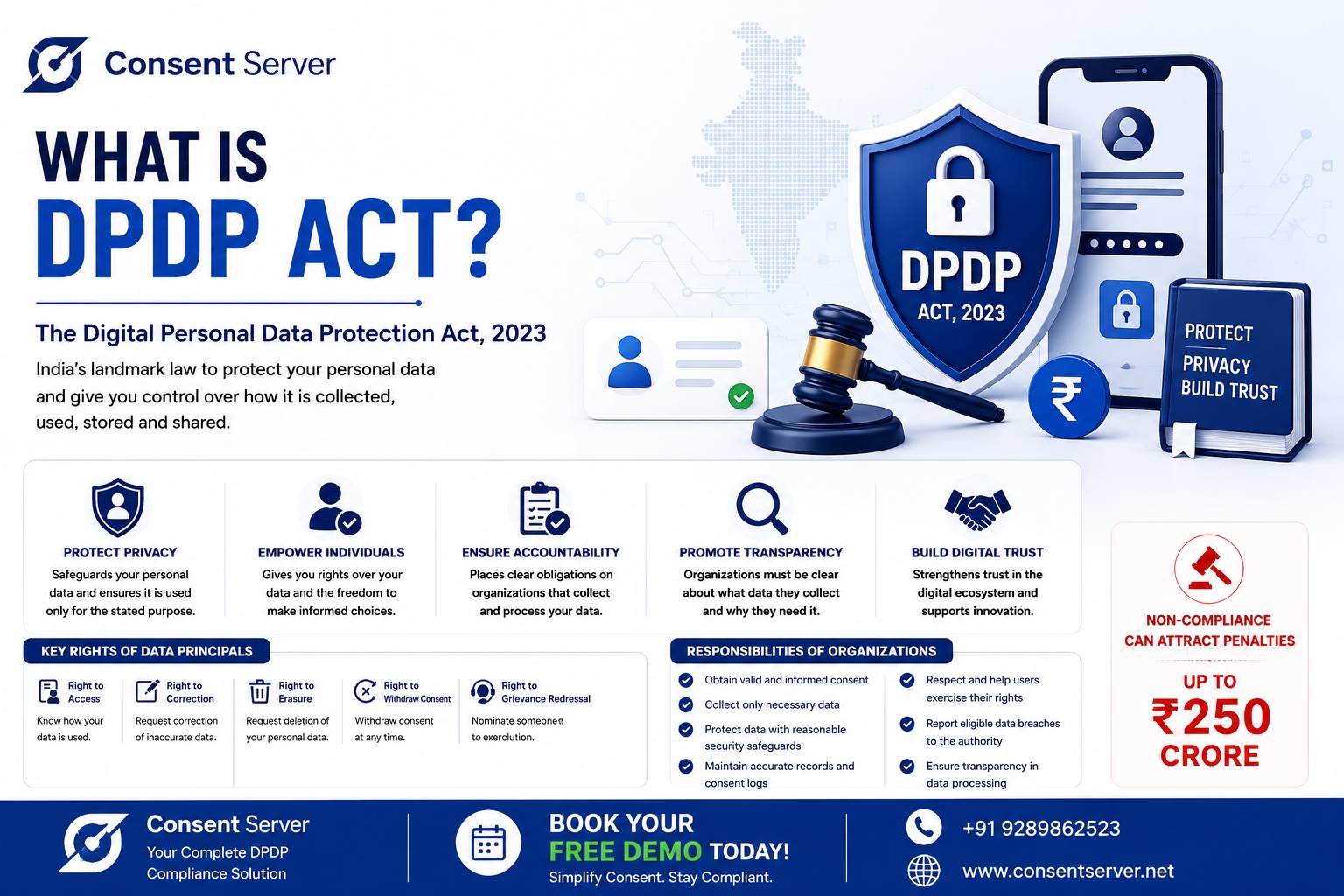
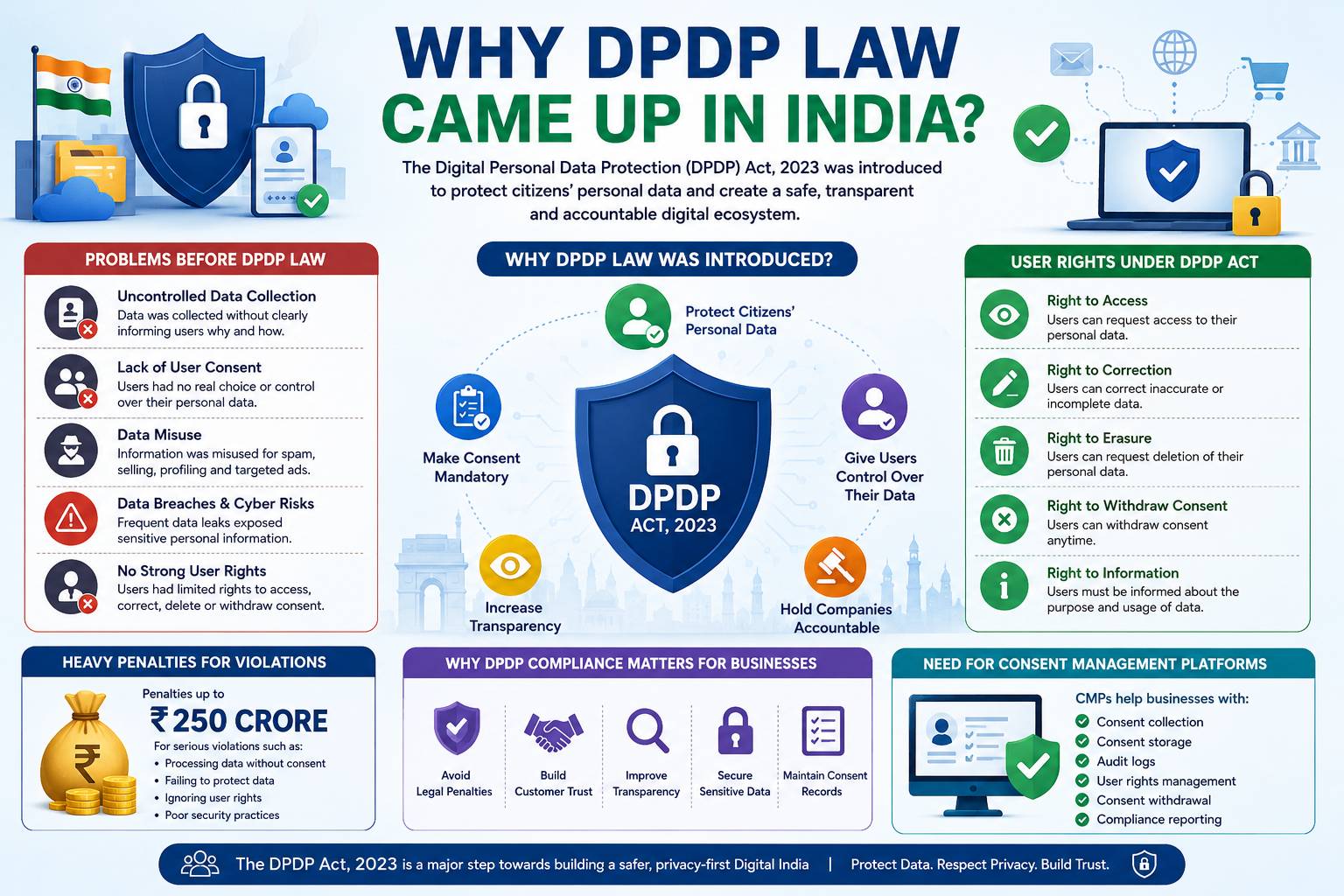
The DPDP Act establishes rights concerning access to information, correction, erasure, grievance redressal, and consent withdrawal, subject to statutory conditions.
For children, these rights must be considered alongside the provisions governing the exercise of rights through parents or lawful guardians.
Businesses should establish appropriate procedures to handle such requests securely and consistently.
Why Parental Consent Is More Than a Checkbox
Many websites currently rely on basic consent checkboxes during user registration.
However, parental consent under the DPDP framework can require more sophisticated processes.
Consider an online learning platform that allows students aged 12 to 17 to create accounts.
The platform may collect:
- Student name and date of birth
- Parent or guardian contact details
- Educational records
- Learning progress and assessment information
- Device information and usage data
If the platform simply asks the student to tick a checkbox confirming parental permission, it may lack adequate evidence that the consent was actually provided by a verified parent.
A stronger approach involves identifying the relevant consent requirement, verifying the parent using an appropriate mechanism, recording the consent decision, and maintaining the ability to demonstrate what information was provided when consent was obtained.
This creates a more accountable and auditable process.
How Can Businesses Verify Parental Consent?
The DPDP Rules describe methods for establishing the verifiability of parental consent.
Depending on the applicable requirements and the information already available, organisations may use suitable identity and age-verification processes.
These can involve reliable identity and age details already held by the Data Fiduciary or details made available through permitted mechanisms, including authorized digital identity services where applicable.
A mobile OTP or email OTP can help verify control of a contact channel, but OTP verification alone does not necessarily establish that a person is an adult or the child's parent.
Organisations should distinguish between verifying contact information and satisfying the legal requirements for verifiable parental consent.
An effective process should also follow data minimization principles, collecting only the personal information necessary for the stated purpose.
Key Challenges Businesses Face in Managing Children's Data
Implementing children's data protection requirements can create practical challenges, particularly for businesses with large user bases.
Age Identification
Organisations need an appropriate method for determining whether a user falls within the definition of a child.
Parent Verification
Businesses must establish an appropriate verification process without unnecessarily collecting excessive identity information.
Consent Record Management
Consent decisions should be documented in a way that supports accountability, including relevant timestamps, purposes, notice versions, and verification evidence.
Consent Withdrawal
Organisations need mechanisms to receive and process valid consent withdrawal requests and apply the consequences across relevant processing systems.
Multiple Connected Applications
A child's personal data may be processed through websites, mobile applications, learning management systems, customer databases, and third-party service providers.
Keeping consent-related decisions consistent across these systems can be technically challenging.
Audit Readiness
Organisations may need to demonstrate how parental consent was obtained, what information was provided, and how requests or withdrawals were handled.
These challenges make centralized consent management an important consideration for organisations processing children's personal data.
How Consent Management Software Can Help
A Consent Management Platform (CMP) can help businesses organise and automate important parts of the parental consent lifecycle.
Instead of maintaining consent information across spreadsheets, emails, and disconnected applications, organisations can use centralized workflows for consent collection, record management, withdrawal, and audit reporting.
For businesses evaluating DPDP compliance software, important capabilities include:
- Configurable consent forms and privacy notices
- Parent or guardian information collection
- Integration with suitable verification mechanisms
- Consent records with timestamps and notice versions
- Consent withdrawal and lifecycle management
- Data Principal request handling
- Audit trails and compliance reporting
- APIs and webhooks for connected business systems
However, software alone does not establish legal compliance. Organisations must also ensure that their verification methods, processing practices, policies, and applicable exemptions align with the law.
How Consent Server Supports Parental Consent Management
Consent Server is a DPDP Compliance & Consent Management Platform designed to help Indian businesses manage consent and related data protection workflows.
For organisations processing children's personal data, Consent Server provides capabilities that can support a structured approach to parental consent management.
Configurable Consent Forms
Organisations can configure consent forms according to their processing purposes and business requirements.
Parent and Guardian Information
Consent workflows can collect relevant parent or guardian declarations and contact information where appropriate.
Consent Records and Audit Trails
Consent Server maintains records of consent activity, helping organisations track consent decisions, changes, and withdrawals.
Consent Lifecycle Management
Businesses can manage consent-related activities, including updates, withdrawal, and renewal workflows.
Data Principal Rights Management
The platform provides workflows for handling requests relating to personal data, including access, correction, and erasure.
API and Webhook Integration
Organisations can connect consent events with their internal systems to support consistent processing of consent-related changes.
On-Premise Deployment
Consent Server offers an on-premise deployment option for organisations that prefer to operate their consent management infrastructure within their own environment.
Important: Parent declarations and contact-channel OTP verification should not automatically be treated as complete statutory parental verification. Businesses must configure and integrate legally appropriate verification processes for their use cases.
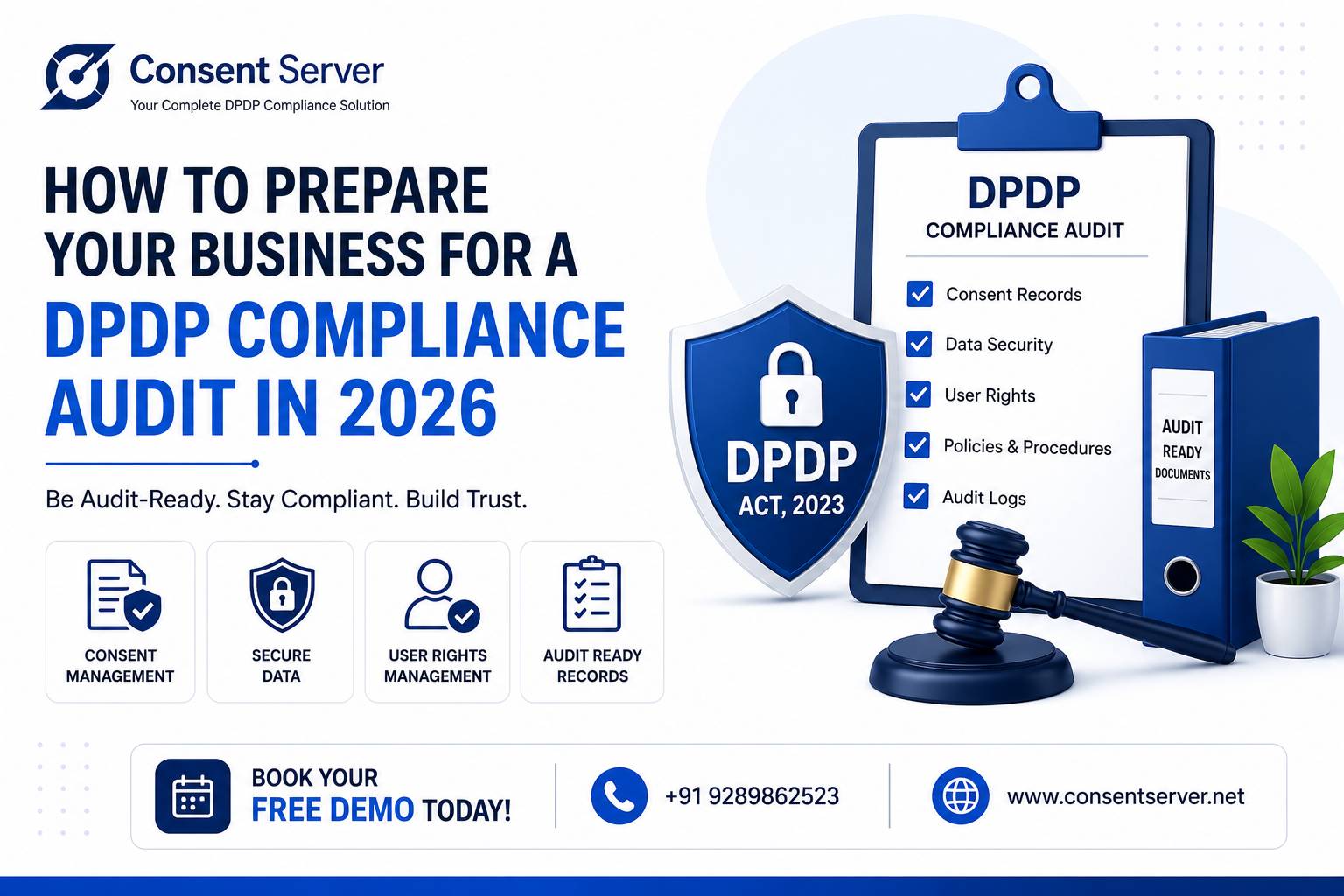
Practical DPDP Compliance Checklist for Businesses Handling Children's Data
Organisations can begin preparing by reviewing the following areas:
Identify Children's Personal Data: Determine which systems, applications, and business processes collect or use children's personal information.
Review Processing Purposes: Document why children's personal data is collected and whether each processing activity is necessary and permitted.
Evaluate Parental Consent Requirements: Identify when verifiable parental consent is required and whether any statutory exemptions apply.
Implement Suitable Verification: Establish verification processes consistent with the applicable DPDP requirements.
Review Tracking and Advertising Practices: Assess behavioural monitoring, tracking technologies, and targeted advertising involving children.
Maintain Consent Evidence: Preserve appropriate records of consent decisions, privacy notices, and relevant verification activities.
Establish Rights Management Workflows: Prepare procedures for access, correction, erasure, grievance handling, and consent withdrawal.
Connect Business Systems: Ensure relevant consent decisions can be communicated to systems and service providers that process personal data.
Review Security Controls: Apply appropriate technical and organisational safeguards to protect children's personal information.
Monitor Regulatory Developments: Track official notifications, implementation dates, and any applicable exemptions or changes.
Conclusion: Protecting Children's Digital Rights Is a Business Responsibility
Children's digital privacy is becoming an increasingly important part of India's data protection framework.
The DPDP Act, 2023 introduces specific safeguards for children's personal data, including verifiable parental consent, restrictions on certain tracking and advertising practices, and protections against detrimental processing.
For Indian businesses, the challenge is not limited to obtaining consent. It also involves implementing suitable verification processes, maintaining reliable records, respecting applicable rights, and ensuring that personal data is handled responsibly throughout its lifecycle.
Organisations that begin preparing early will be better positioned to build trustworthy digital experiences for children and their families.