Registered Consent Manager vs Enterprise CMP Key Differences
Understand Registered Consent Manager vs Enterprise CMP under India DPDP Act. Explore key differences, registration rules, benefits and business requirements.
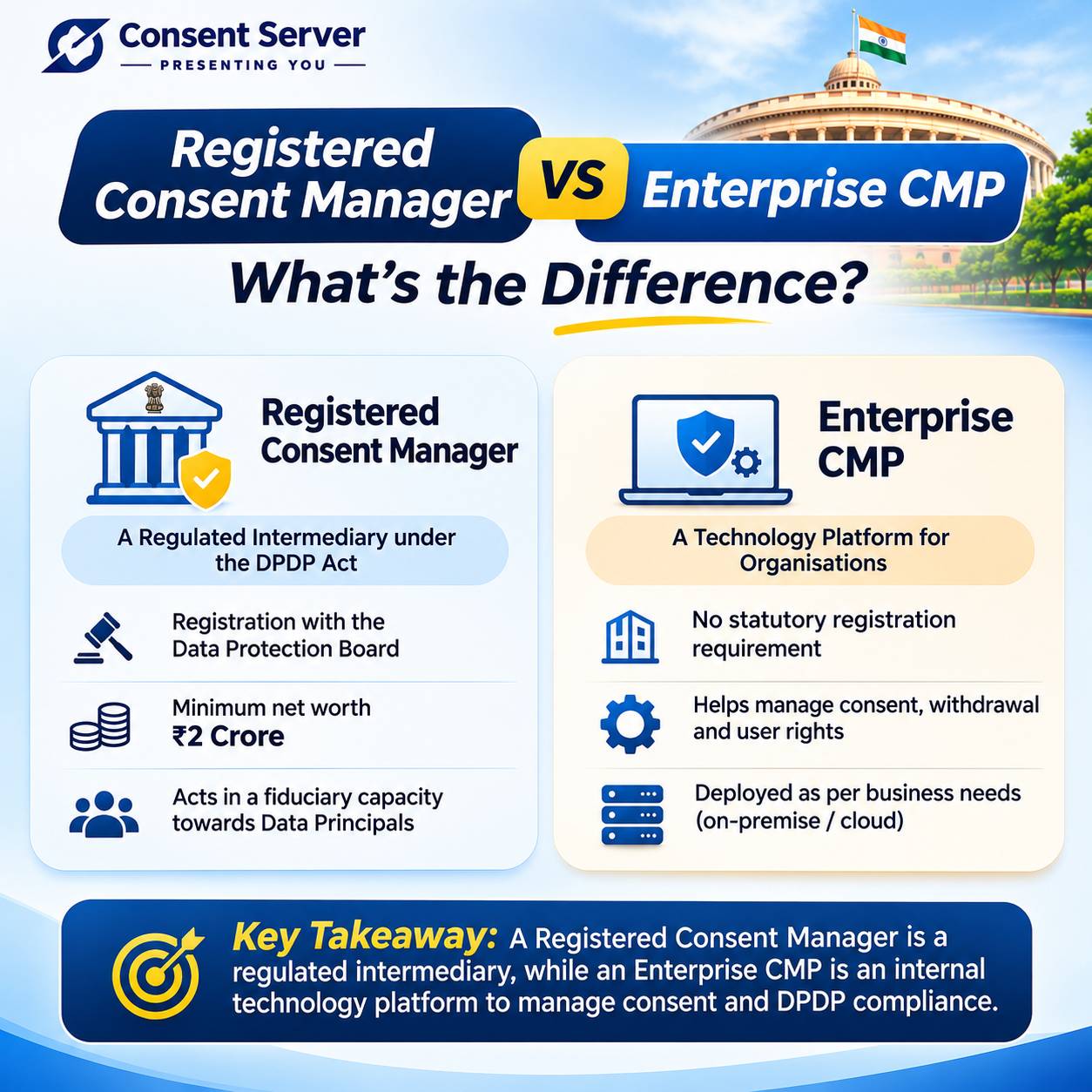
Registered Consent Manager vs Enterprise CMP: What's the Difference?
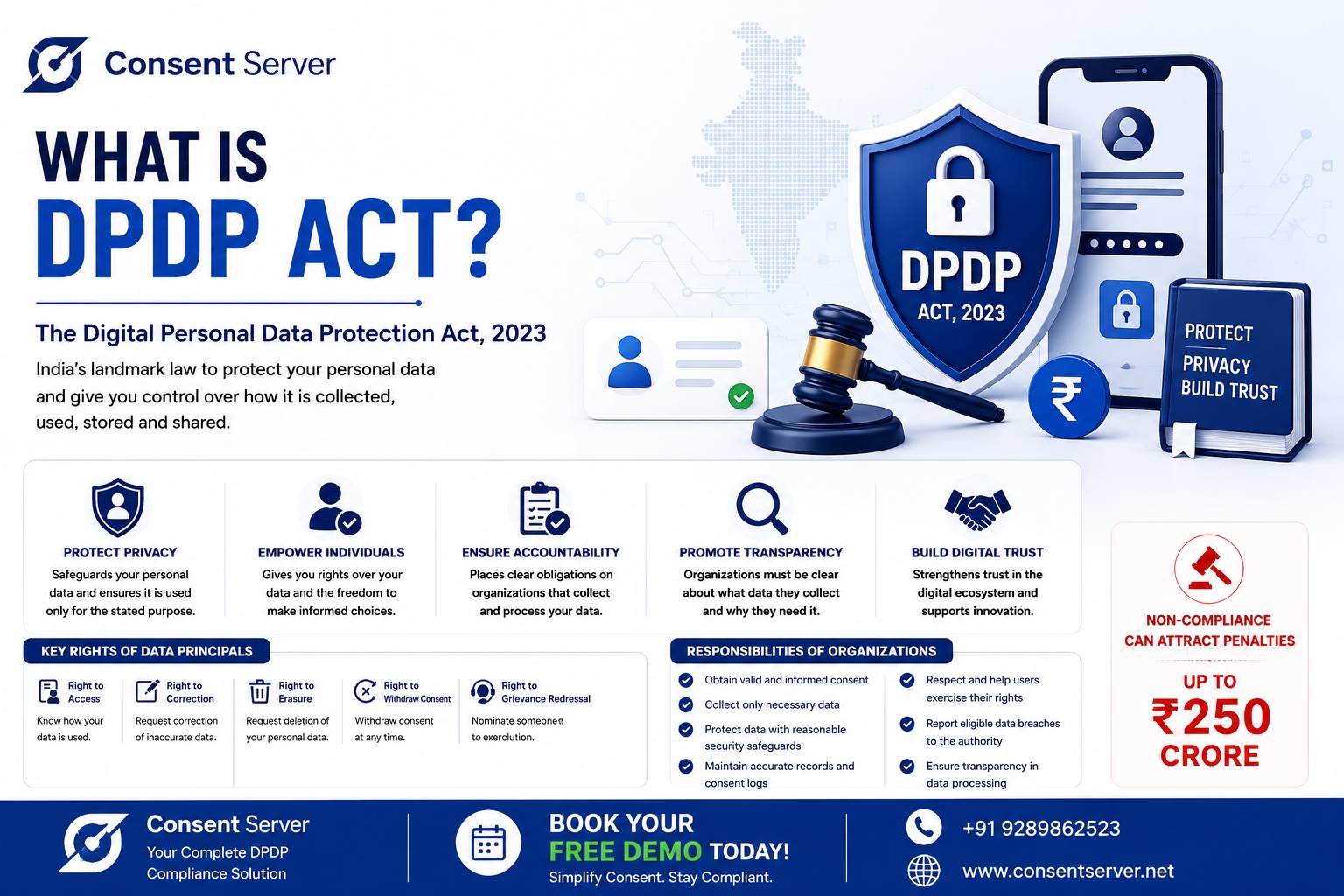
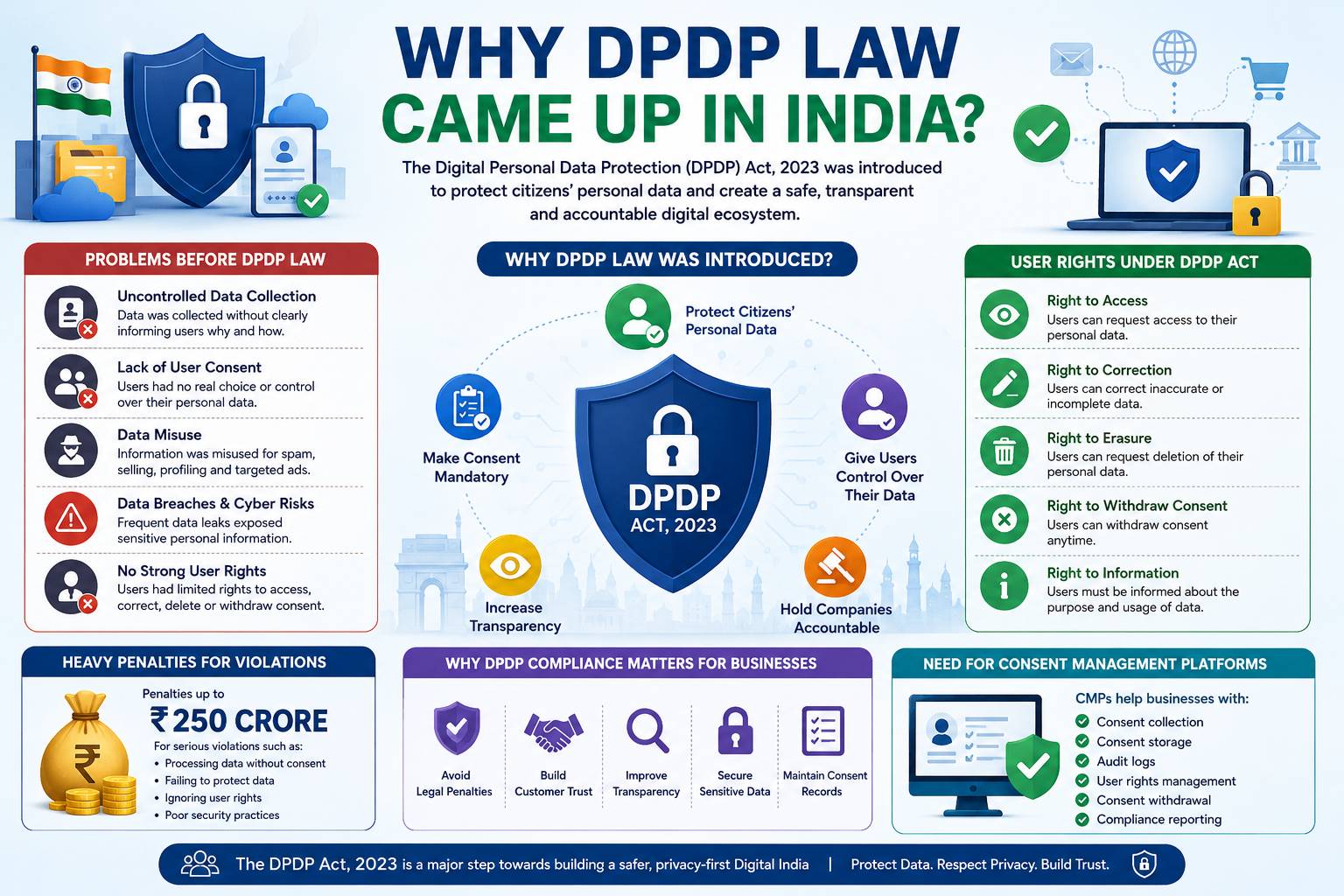
India's Digital Personal Data Protection (DPDP) Act, 2023 is transforming how organisations collect, manage, and protect personal data.
With the statutory Consent Manager registration framework coming into effect on 13 November 2026, businesses are increasingly asking an important question:
Do we need a Registered Consent Manager, or is an Enterprise Consent Management Platform (CMP) sufficient?
Although both solutions involve consent management, their legal roles, responsibilities, and operational purposes are different.
Understanding this distinction is essential for organisations preparing for DPDP compliance.
What Is a Registered Consent Manager?
Under Section 6(9) of the DPDP Act, a Registered Consent Manager is an intermediary registered with the Data Protection Board of India.
It enables individuals, known as Data Principals, to give, manage, review, and withdraw their consent through an accessible, transparent, and interoperable platform.
A Registered Consent Manager acts in a fiduciary capacity towards Data Principals and must comply with prescribed regulatory conditions.
Key Requirements
Under Rule 4 and the First Schedule of the DPDP Rules, 2025, registration requirements include:
- Company incorporated in India
- Minimum net worth of ₹2 crore
- Adequate technical, operational, and financial capacity
- Sound financial condition and management
- Appropriate governance and conflict-of-interest controls
- Independent certification of the interoperable platform
- Registration approval from the Data Protection Board
A Registered Consent Manager is therefore a regulated intermediary, not simply a software vendor.
What Is an Enterprise Consent Management Platform (CMP)?
An Enterprise CMP is a technology solution used by organisations to manage consent-related activities across their business systems.
Unlike a Registered Consent Manager, an Enterprise CMP does not automatically require statutory Consent Manager registration merely because it provides consent management software.
An Enterprise CMP can help organisations:
- Collect purpose-based consent
- Maintain consent records and histories
- Manage consent withdrawal and renewal
- Track privacy notice versions
- Handle Data Principal rights requests
- Integrate with CRM, ERP, websites, and applications
- Maintain audit trails and operational evidence
- Automate consent-related workflows
For businesses processing personal data, an Enterprise CMP can become an important part of their DPDP compliance infrastructure.
Registered Consent Manager vs Enterprise CMP: Key Differences
| Comparison | Registered Consent Manager | Enterprise CMP |
|---|---|---|
| Primary Role | Statutory consent intermediary | Enterprise consent management software |
| Legal Status | Registered under the DPDP Act | Commercial technology platform |
| Registration | Board registration required | No automatic Consent Manager registration requirement |
| Primary Relationship | Acts in a fiduciary capacity towards Data Principals | Typically provides software to Data Fiduciaries |
| Minimum Net Worth | ₹2 crore | No general statutory minimum solely for CMP providers |
| Consent Management | Enables individuals to manage consent through an interoperable platform | Manages consent within organisational systems |
| Interoperability | Subject to prescribed statutory requirements | Depends on APIs, integrations, and architecture |
| Independent Certification | Required under the registration framework | Not automatically subject to the same certification requirement |
| Deployment | Subject to applicable regulatory and technical conditions | May support cloud, private cloud, or on-premise deployment |
| Main Users | Data Principals interacting with participating Data Fiduciaries | Businesses, compliance teams, IT teams, and administrators |
The biggest difference: A Registered Consent Manager provides a regulated consent intermediary service, while an Enterprise CMP helps organisations operate and manage their consent-related processes.
Does Every Business Need a Registered Consent Manager?
No. The DPDP Act does not require every Data Fiduciary to become a Registered Consent Manager.
A hospital, school, financial institution, e-commerce company, or SaaS provider does not automatically need Consent Manager registration simply because it collects or processes personal data.
Instead, businesses must assess their obligations under the DPDP Act, including:
- Providing appropriate privacy notices.
- Obtaining valid consent where consent is the applicable legal basis.
- Enabling consent withdrawal.
- Handling applicable Data Principal rights.
- Implementing reasonable security safeguards.
- Maintaining appropriate records and accountability.
An Enterprise CMP can help businesses implement many of these operational processes.
However, consent is not required for every processing activity. Section 7 of the DPDP Act also recognises certain legitimate uses.
Why Enterprise CMPs Matter for DPDP Compliance
Consider an e-commerce company that collects customer information for order processing, marketing communications, and loyalty programmes.
Different processing activities may have different legal bases and requirements.
If a customer withdraws consent for promotional communications, the company may need to update multiple systems, including its CRM, email marketing platform, and customer database.
A simple consent checkbox cannot manage this entire process.
An Enterprise CMP can help maintain the consent record, generate withdrawal events, communicate changes to connected systems, and track the resulting actions.
This is particularly important because recording a consent withdrawal is not the same as confirming that every relevant downstream system has acted on it.
Enterprise CMPs can help organisations establish a more reliable and auditable consent lifecycle.
Can Registered Consent Managers and Enterprise CMPs Work Together?
Yes. These two models are not necessarily competitors.
A Registered Consent Manager may provide a channel through which individuals manage their consent.
An Enterprise CMP may operate within a Data Fiduciary's environment to manage internal consent records, workflows, and integrations.
For example:
- A Data Principal manages consent through a Registered Consent Manager.
- The relevant consent instruction is communicated to the participating Data Fiduciary through an applicable interoperable mechanism.
- The Data Fiduciary's Enterprise CMP records and processes the instruction.
- Connected business systems receive the relevant updates.
- The organisation tracks operational actions and maintains appropriate evidence.
This is an illustrative integration model, not a claim that every Registered Consent Manager and Enterprise CMP already supports such interoperability.
The future of consent management may involve both regulated intermediaries and enterprise-level compliance infrastructure working together.
How Consent Server Supports Enterprise Consent Management
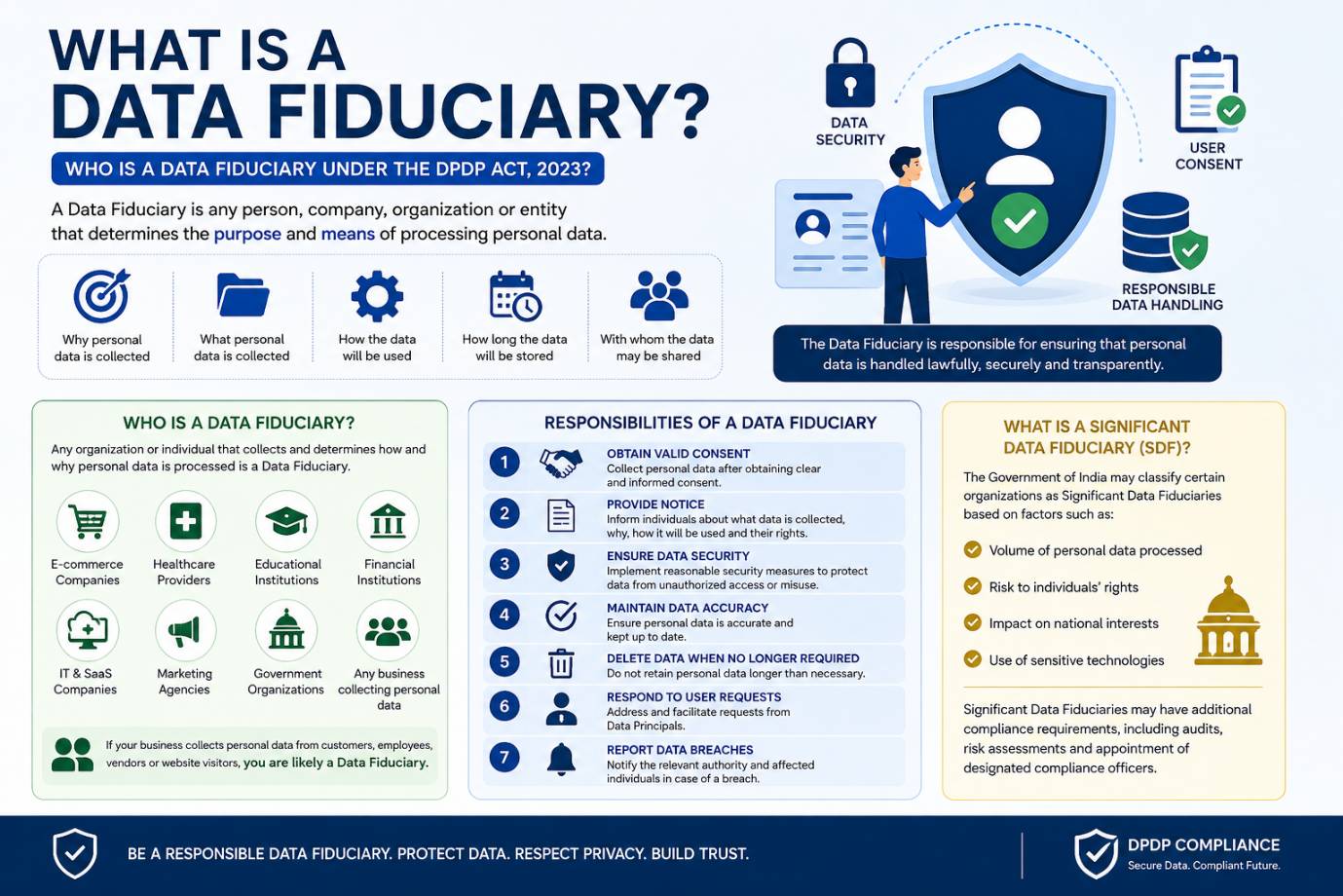
Consent Server, developed by Iconic Infotech Pvt. Ltd., is an Enterprise Consent Management Platform designed to help Indian organisations manage consent-related processes under the DPDP framework.
Its capabilities include:
Purpose-Based Consent Management
Collect and manage consent for defined purposes through configurable consent forms.
Consent Lifecycle Automation
Manage consent granting, updating, withdrawal, renewal, and expiry through structured workflows.
Audit-Ready Consent Records
Maintain consent histories, version information, and tamper-evident audit records to support accountability.
Data Principal Rights Management
Provide workflows for access, correction, erasure, and grievance-related requests.
API and Webhook Integrations
Connect consent events with existing business systems and track relevant downstream processing actions.
On-Premise Deployment
Deploy Consent Server within an organisation's own infrastructure, helping businesses maintain greater control over their software environment and consent records.
Consent Server is a commercial Enterprise CMP, not automatically a statutory Registered Consent Manager.
Its purpose is to help organisations strengthen consent-management operations without requiring them to become registered intermediaries merely to use the software.
What Should Businesses Prioritise Before May 2027?
With major operational DPDP obligations scheduled to commence on 13 May 2027, businesses should focus on practical readiness.
Key priorities include reviewing personal data processing activities, identifying applicable legal bases, updating privacy notices, implementing consent and withdrawal mechanisms, preparing Data Principal rights workflows, and strengthening security and audit processes.
Choosing suitable technology is part of this preparation, but software alone does not guarantee legal compliance.
Conclusion: Which One Does Your Business Need?
The choice depends on the organisation's role.
If your company wants to operate as a statutory consent intermediary for Data Principals, it must consider Registered Consent Manager eligibility and registration requirements.
If your company wants to manage consent across its own websites, applications, databases, and business systems, an Enterprise CMP may be the more relevant technology solution.
For many organisations, the immediate priority is implementing reliable consent-management infrastructure rather than seeking statutory Consent Manager registration.
Consent Server helps businesses simplify consent collection, lifecycle management, Data Principal rights, and audit-ready operations through an enterprise-focused platform.