How to Sync Consent Across CRM, ERP & Marketing | DPDP
Learn how to sync consent across CRM, ERP and marketing platforms using APIs, webhooks and Consent Server, a DPDP consent management platform for businesses.
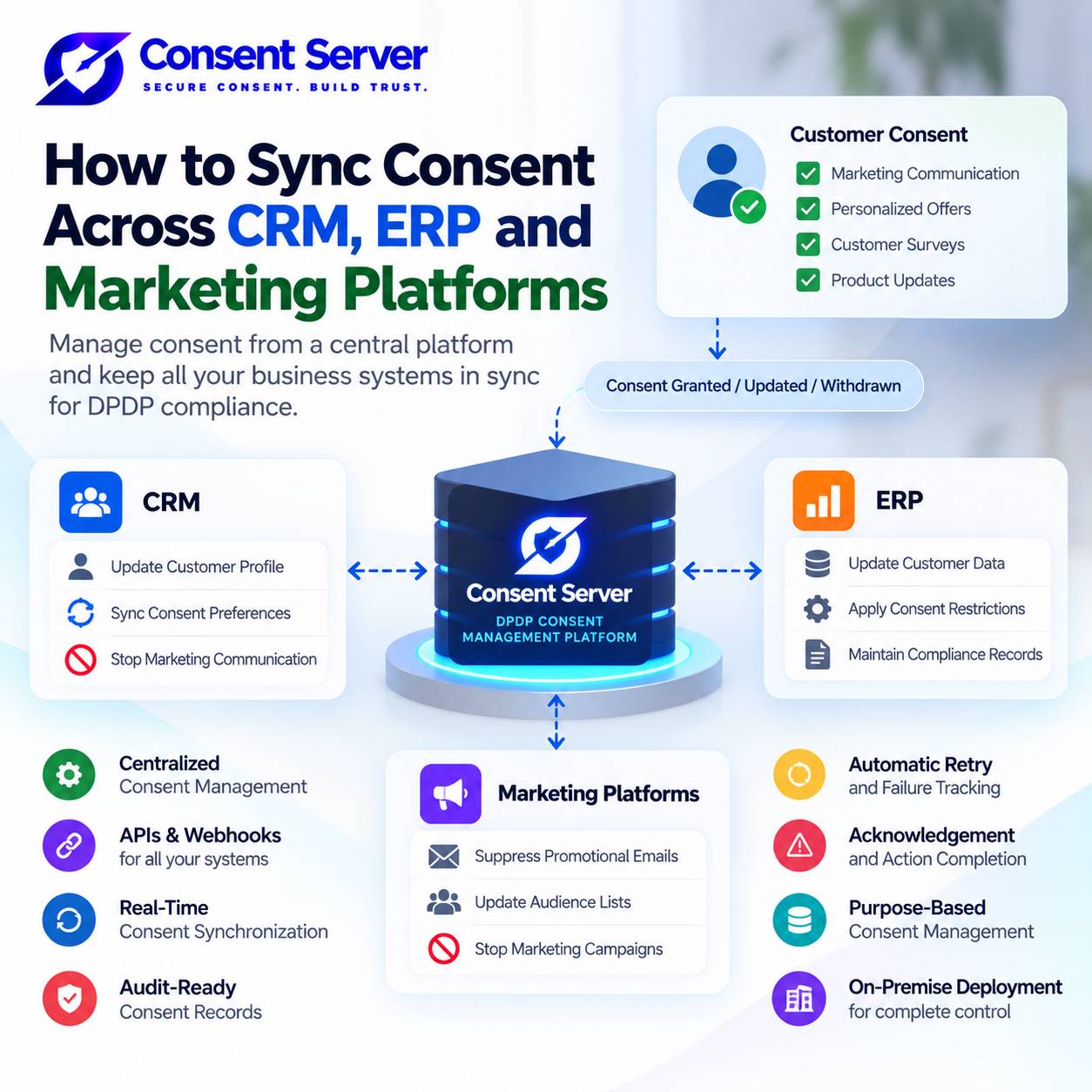
How to Sync Consent Across CRM, ERP and Marketing Platforms Under DPDP Act
Modern businesses use multiple applications to manage customer information. A website collects customer details, a CRM manages customer relationships, an ERP handles business operations, and marketing platforms manage promotional communication.
But what happens when a customer withdraws consent in one application while other systems continue processing their personal data?
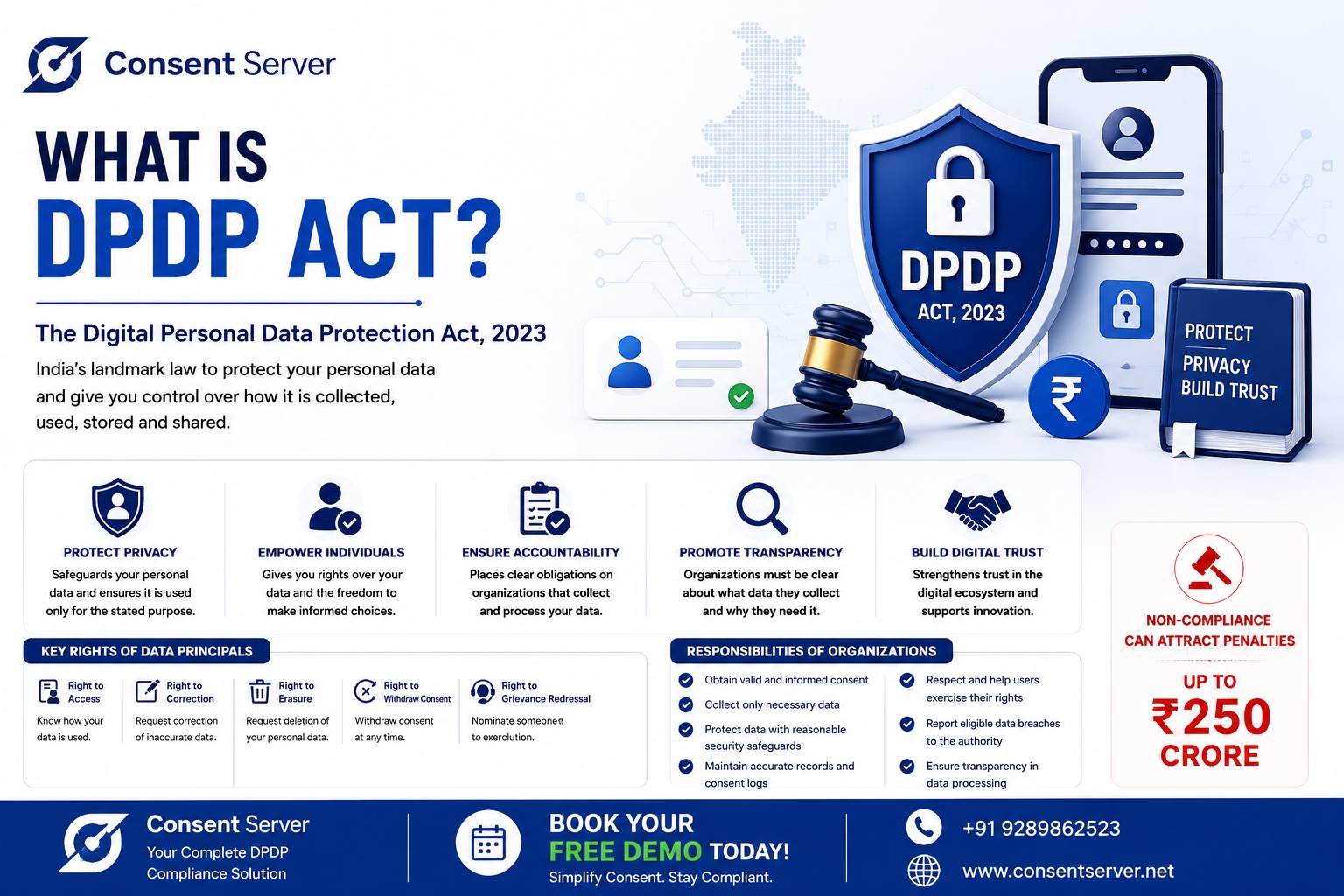
This is one of the biggest operational challenges businesses face while preparing for DPDP compliance under India's Digital Personal Data Protection Act, 2023 (DPDP Act).
Managing consent separately across multiple applications can create inconsistent records, delayed updates and difficulties in demonstrating compliance.
A centralized DPDP Consent Management Platform helps businesses manage consent from a single system and communicate relevant changes to connected applications.
This is where Consent Server provides a practical solution through centralized consent lifecycle management, APIs, webhooks, downstream event tracking and audit-ready records.
Why Consent Synchronization Matters for DPDP Compliance
Most businesses do not process customer data through a single application.
A typical organization may use:
- CRM software for customer relationships
- ERP software for business operations
- Email and SMS marketing platforms
- Websites and mobile applications
- Customer support systems
- Analytics and reporting tools
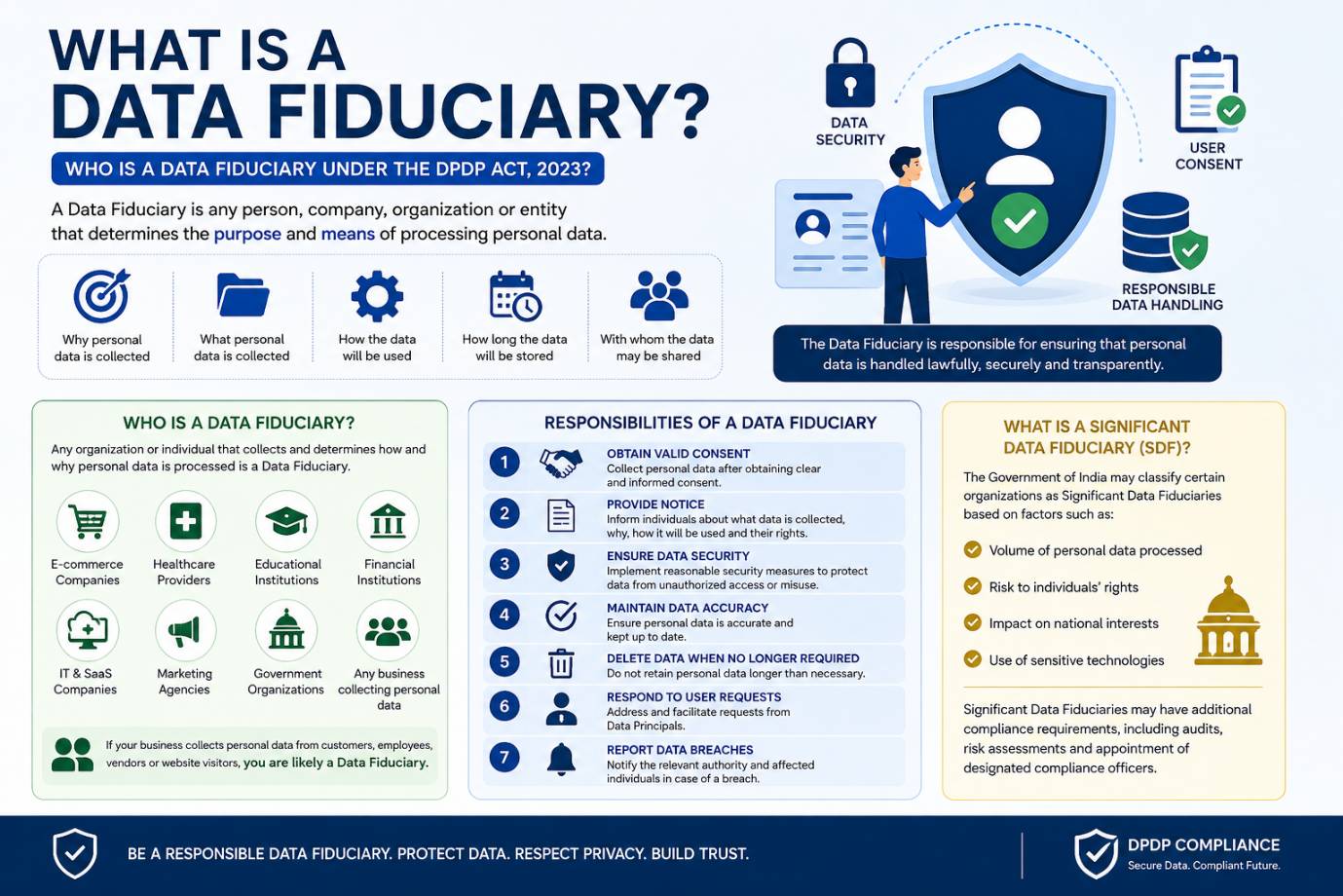
- External Data Processors
These systems may store or use the same customer's personal data for different purposes.
For example, a customer may provide consent for promotional communication through a website. That information may subsequently be used by the CRM and connected marketing platforms.
If the customer later withdraws marketing consent, the relevant systems must respond appropriately.
The challenge is not simply recording consent withdrawal. It is ensuring that the withdrawal is acted upon wherever the affected processing occurs.
This makes consent synchronization an important capability when evaluating DPDP Compliance Software.
What Does the DPDP Act Require?
Section 6 of the DPDP Act establishes important principles for consent management.
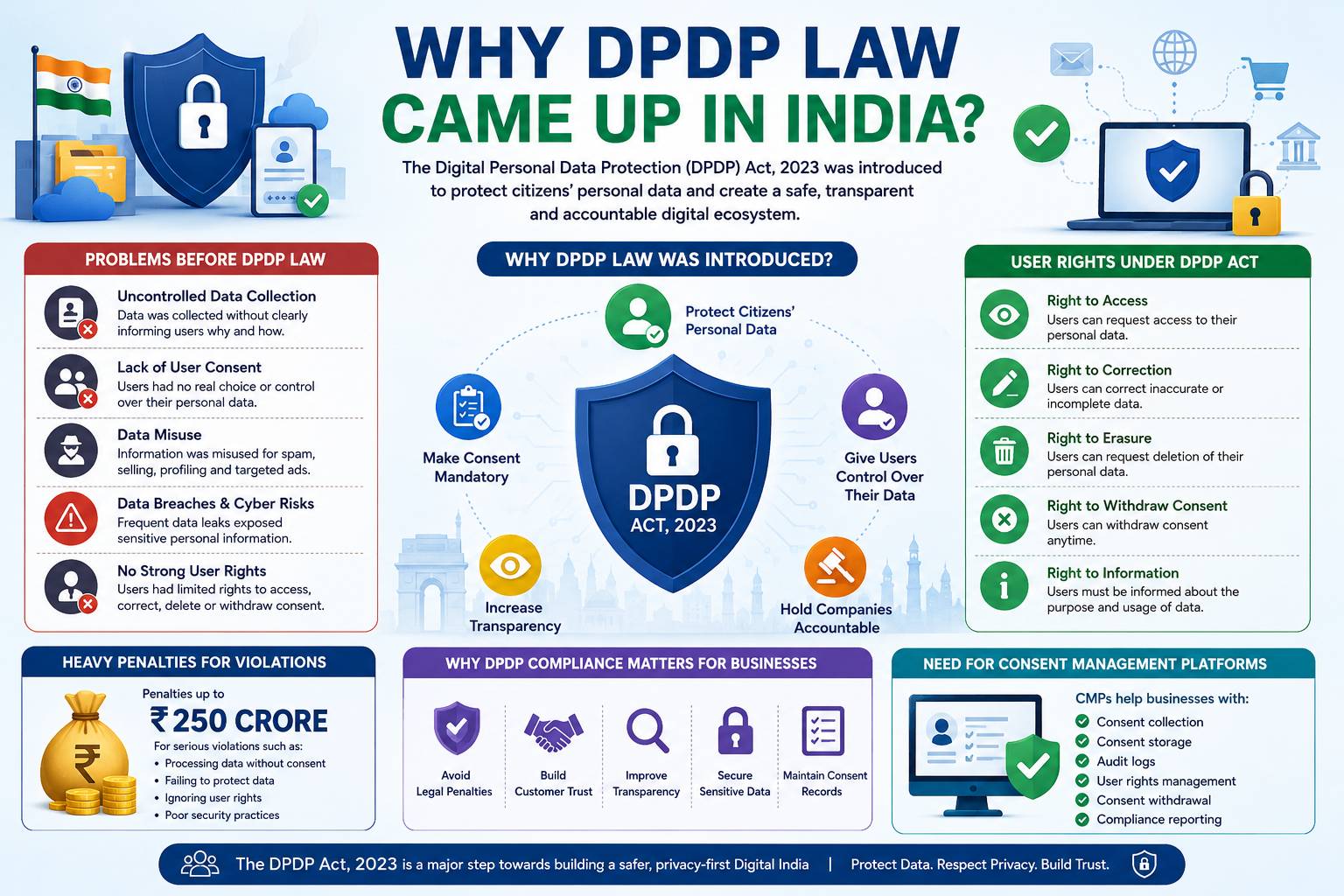
A Data Principal can withdraw consent at any time, and the ease of withdrawal must be comparable to the ease of giving consent.
Following withdrawal, the Data Fiduciary must, within a reasonable time, cease processing based on that consent and cause its Data Processors to cease such processing, unless processing without consent is required or authorized under applicable law.
For businesses operating multiple applications, this creates an important operational responsibility.
If consent is withdrawn for a particular purpose, the organization needs to identify the relevant processing activities and take appropriate action across affected systems.
The DPDP Act does not specifically mandate APIs, webhooks or real-time CRM synchronization. However, these technologies can help businesses implement and track the required actions.
The substantive consent obligations are also subject to the framework's phased commencement schedule.
The Problem With Managing Consent Separately
Consider an e-commerce company using several business applications.
The company collects customer information through its website and stores the details in its CRM.
The ERP manages orders and billing, while an email marketing platform sends promotional campaigns.
A customer initially agrees to receive marketing communication.
Later, the customer withdraws that consent through the website.
The website records the withdrawal successfully.
However:
- The CRM still shows marketing consent as active.
- The email marketing platform continues sending promotions.
- The SMS platform uses an outdated contact list.
- The ERP retains an older consent preference.
- The business cannot determine which applications received the withdrawal information.
This creates inconsistent consent states across the organization.
A professional Consent Management Platform can help prevent these situations by centralizing consent records and coordinating updates with connected systems.
How to Sync Consent Across CRM, ERP and Marketing Platforms
An effective consent synchronization architecture should include several important components.
1. Establish a Centralized Consent Management System
The first step is to create a central source of consent information.
Instead of maintaining independent consent records across every application, businesses can use a centralized DPDP Consent Management Platform to manage consent status and lifecycle events.
The central platform should maintain relevant information such as:
- Data Principal reference
- Consent ID
- Processing purpose
- Consent status
- Consent timestamp
- Notice version
- Consent history
- Withdrawal information
Connected applications can then receive relevant consent changes through secure integrations.
This helps reduce inconsistencies between systems.
2. Implement Purpose-Based Consent Management
Consent should be associated with the purposes for which personal data is processed.
For example, a customer may interact with a business for:
- Account management
- Order processing
- Promotional emails
- Marketing SMS
- Customer surveys
- Personalized offers
These activities may have different legal bases and processing requirements.
If a customer withdraws consent for promotional emails, the organization should identify the affected processing rather than automatically disabling every unrelated service.
Purpose-based consent management helps businesses apply consent changes to the correct activities and systems.
3. Connect Applications Through APIs and Webhooks
APIs and webhooks provide a practical way to communicate consent events between applications.
For example, when a customer withdraws marketing consent, the centralized platform can generate a withdrawal event.
That event can be delivered to configured systems such as the CRM, ERP or marketing platform.
A typical workflow may look like:
Customer Withdraws Consent → Consent Server → CRM / ERP / Marketing Platforms
Each receiving application can then apply the relevant change according to its business logic.
For example:
The CRM updates marketing eligibility.
The marketing platform suppresses promotional communication.
The ERP updates a relevant consent-dependent preference, where applicable.
The organization should configure integrations according to the purposes and processing activities each application actually performs.
4. Maintain Consistent Consent States
A major challenge in distributed systems is maintaining consistency.
Suppose a customer updates consent through a mobile application while an employee simultaneously changes a preference through the CRM.
Without proper controls, one application may overwrite a newer consent state with outdated information.
A well-designed integration should therefore consider:
- Unique consent identifiers
- Event timestamps
- Consent versions
- Purpose identifiers
- Duplicate-event handling
- Event ordering
- Conflict resolution
- Periodic reconciliation
These mechanisms help ensure that applications apply the correct consent state.
For critical workflows, businesses should also prevent stale events from reactivating consent that has already been withdrawn.
Why Sending a Webhook Is Not Enough
Many DPDP Software solutions provide API or webhook integration.
However, sending a notification does not automatically prove that the receiving application completed the required action.
For example, a marketing platform may receive a consent withdrawal webhook but fail to update its suppression list.
The webhook delivery may appear successful even though promotional communication remains enabled.
Businesses should therefore distinguish between three stages.
Delivery: The receiving endpoint received the event.
Acknowledgement: The receiving system acknowledged the event or accepted it for processing.
Completion: The required business action was completed.
This distinction becomes particularly important when organizations need to investigate consent-related incidents.
A capable Consent Management Platform should help provide visibility into downstream processing rather than only confirming that an HTTP request succeeded.
How to Handle Failed Consent Synchronization
Connected applications may not always be available.
An API may fail because of network problems, expired credentials, server downtime or application errors.
Businesses need to prepare for these situations.
A reliable consent synchronization architecture can include:
- Event queues
- Automatic retry mechanisms
- Delivery status tracking
- Acknowledgement tracking
- Failure monitoring
- Escalation workflows
- Manual review
- Completion evidence
For example, if the CRM is temporarily unavailable, the consent event can remain pending for retry.
Administrators should also be able to identify unresolved failures and take appropriate action.
Importantly, retries alone do not guarantee compliance. Organizations should consider safeguards to prevent continued consent-dependent processing while synchronization problems are being resolved.
How CRM Systems Should Handle Consent Changes
CRM platforms often maintain customer profiles, communication preferences and sales information.
When consent changes, the CRM should update the relevant customer preferences and ensure that consent-dependent workflows use the current status.
For example, if marketing consent is withdrawn, the CRM may need to:
- Update marketing eligibility
- Exclude the customer from promotional campaigns
- Prevent new marketing activities based on withdrawn consent
- Communicate relevant changes to integrated systems
- Maintain appropriate action records
The exact actions depend on the processing purpose and the CRM's capabilities.
A centralized DPDP Consent Management Platform helps coordinate these changes.
How ERP Systems Should Handle Consent Changes
ERP systems often manage business operations such as orders, billing, inventory, service delivery and customer accounts.
Not every ERP activity depends on consent.
Some processing may be required or authorized under other applicable legal provisions.
Therefore, withdrawing marketing consent should not automatically result in deleting order records or stopping legally permitted billing activities.
Instead, businesses should identify which ERP workflows actually rely on the affected consent.
Where applicable, the ERP should update the relevant preference or processing restriction.
This is why accurate purpose mapping is essential for enterprise consent synchronization.
How Marketing Platforms Should Handle Consent Withdrawal
Marketing platforms are particularly important because they frequently automate communication.
A single customer may be included in multiple campaigns, audience segments or contact lists.
When marketing consent is withdrawn, the organization should ensure that relevant promotional processing based on that consent stops.
Depending on the platform, this may involve:
- Suppressing promotional emails
- Disabling marketing SMS
- Updating campaign eligibility
- Removing the customer from relevant audience lists
- Preventing future consent-dependent targeting
- Updating connected marketing tools
A reliable synchronization mechanism helps businesses reduce the risk of continuing promotional activities after withdrawal.
Why Audit-Ready Records Are Important
Imagine that a customer withdraws marketing consent but later receives another promotional message.
The organization may need to investigate:
When was consent withdrawn?
Which purpose was affected?
Was the withdrawal recorded?
Which applications were notified?
Did the CRM receive the event?
Did the marketing platform acknowledge it?
Was the suppression action completed?
Did any integration fail?
When was the issue resolved?
If these records are distributed across multiple systems, reconstructing the event history can become difficult.
A centralized DPDP Compliance Software solution can help maintain consent history and supporting integration evidence.
How Consent Server Simplifies Consent Synchronization
Consent Server is designed to help organizations manage consent centrally and communicate consent lifecycle events to connected business applications.
Rather than operating only as a website consent collection tool, Consent Server provides a broader DPDP Consent Management Platform with capabilities for enterprise integrations and downstream event management.
Businesses can configure relevant applications and Data Processors as integration targets.
When consent is granted, updated, withdrawn, renewed or expired, Consent Server can generate corresponding events according to the configured workflow.
These events can then be communicated to connected applications through APIs and webhooks.
Consent Server supports capabilities including:
- Centralized consent management
- Purpose-based consent
- Consent lifecycle management
- Consent grant, update and withdrawal
- Consent history
- Notice version management
- APIs and webhooks
- Multiple integration targets
- Event delivery tracking
- Acknowledgement tracking
- Automatic retries
- Failure and overdue monitoring
- Escalation workflows
- Action completion tracking
- Completion evidence
- Data Principal request workflows
- Audit-ready records
- Role-Based Access Control
- Reporting
- Tamper detection
These capabilities make Consent Server particularly suitable for businesses operating multiple CRM, ERP and marketing applications.
Consent Server: From Consent Event to Action Completion
One of the important strengths of Consent Server is its event-management architecture.
A typical consent synchronization workflow can follow this process:
Consent Changed --> Event Generated --> Applications Notified --> Acknowledgement Received --> Action Completed --> Evidence Recorded
For example, a customer withdraws consent for promotional communication.
Consent Server records the withdrawal and generates the relevant event.
The configured CRM and marketing integrations receive the event.
Each receiving system can process the withdrawal and report its acknowledgement or completion status through the configured integration.
If delivery fails or an acknowledgement becomes overdue, Consent Server can track the event and support retries or escalation.
This provides organizations with greater visibility into the complete synchronization process.
The receiving applications must still implement the required business actions and provide reliable status information for end-to-end confirmation.
Why Consent Server Is a Strong Choice for DPDP Compliance
When evaluating DPDP Compliance Software, businesses should ask whether the solution can manage consent beyond the initial collection stage.
A basic consent tool may record a customer's preference.
However, enterprises often need to manage consent across multiple websites, applications, business departments and Data Processors.
This requires a more comprehensive architecture.
Consent Server brings centralized consent management, purpose-based workflows, APIs, webhooks, downstream event tracking and audit evidence into one platform.
Its ability to support delivery monitoring, acknowledgements, retries, escalation and action completion evidence helps address the operational challenges associated with distributed consent management.
Consent Server also supports on-premise and self-hosted deployment, which can be particularly valuable for organizations with internal CRM or ERP systems, private infrastructure and specific data-control requirements.
Hosted deployment options provide additional flexibility.
For Indian businesses searching for DPDP Software, DPDP Compliance Software or an enterprise Consent Management Platform, Consent Server stands out as a comprehensive solution for connecting consent management with real business operations.
Best Practices for Enterprise Consent Synchronization
Organizations planning consent synchronization should follow a structured approach.
First, identify the applications processing personal data and the purposes associated with those activities.
Second, determine which applications need to receive each type of consent event.
Third, establish a centralized source of consent information.
Fourth, implement secure API or webhook integrations with appropriate authentication and validation.
Fifth, ensure that receiving applications can enforce the relevant processing restrictions.
Sixth, implement retries, failure monitoring and reconciliation to handle synchronization problems.
Finally, maintain appropriate records showing when consent changed and how connected systems responded.
These practices help organizations build a more reliable consent-management architecture.
Final Thoughts
Consent management becomes more challenging as businesses expand across multiple applications.
A customer may provide consent through a website, interact with the company through a CRM, receive services through an ERP and receive promotional communication through marketing platforms.
If consent changes, the relevant systems need to respond consistently.
Under the DPDP Act, organizations must understand and act upon withdrawal of consent for affected processing activities, subject to applicable legal requirements.
This makes centralized consent management, purpose-based workflows, secure integrations and reliable event tracking important considerations for enterprise DPDP compliance.
A professional DPDP Consent Management Platform helps businesses move beyond isolated consent records toward coordinated consent lifecycle management.
With its centralized consent architecture, APIs and webhooks, acknowledgement tracking, retries, escalation, completion evidence and audit-ready records, Consent Server provides one of the strongest solutions to evaluate for managing consent synchronization across CRM, ERP and marketing platforms in India.
Because managing consent in one application is not enough when personal data is processed across an entire business.