Best Consent Management Platform for DPDP Act India 2026
Discover what to look for in the best Consent Management Platform for DPDP Act compliance in India and explore Consent Server’s consent lifecycle, audit, API and on-premise capabilities.
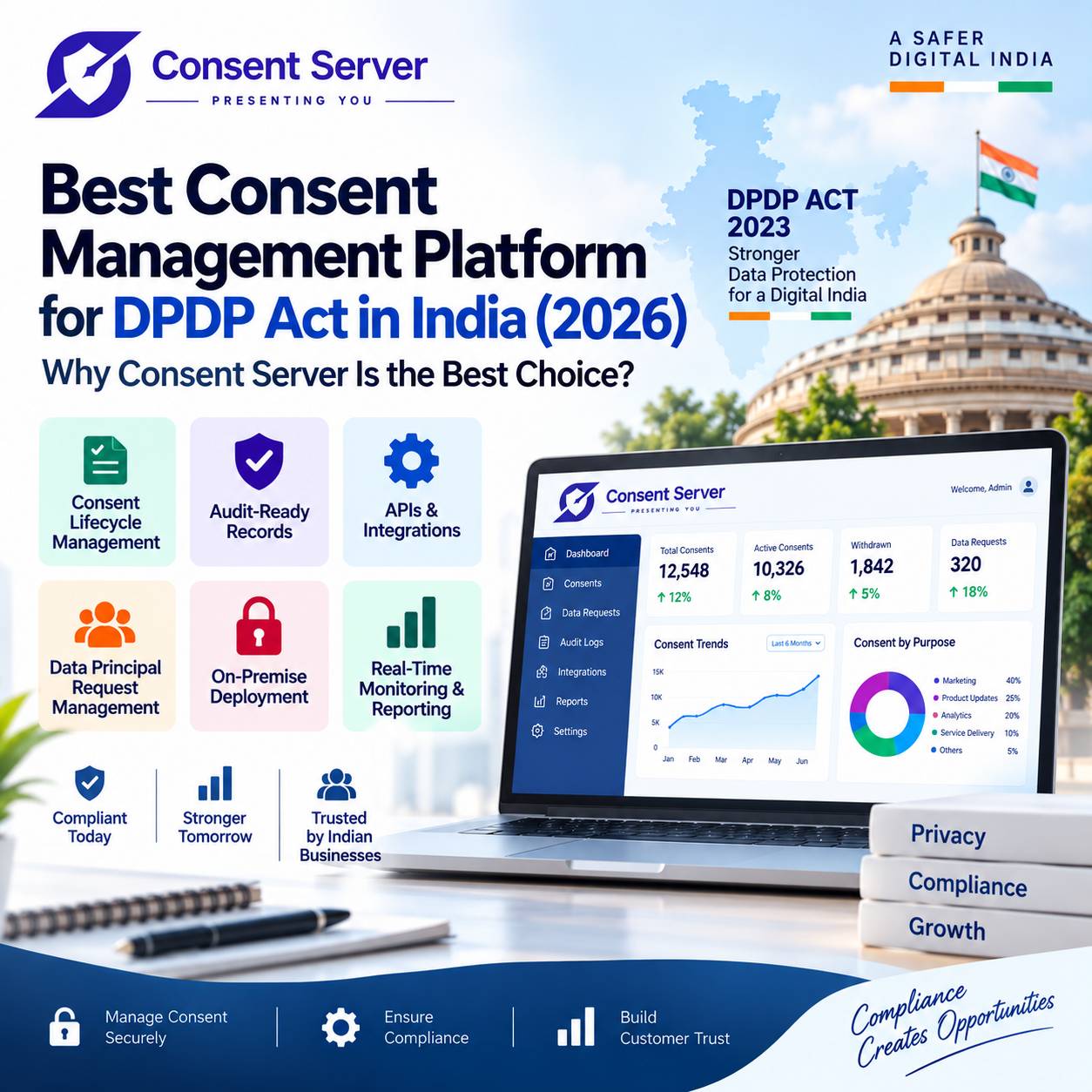
Best Consent Management Platform for DPDP Act in India (2026): Why Consent Server Is a Strong Choice
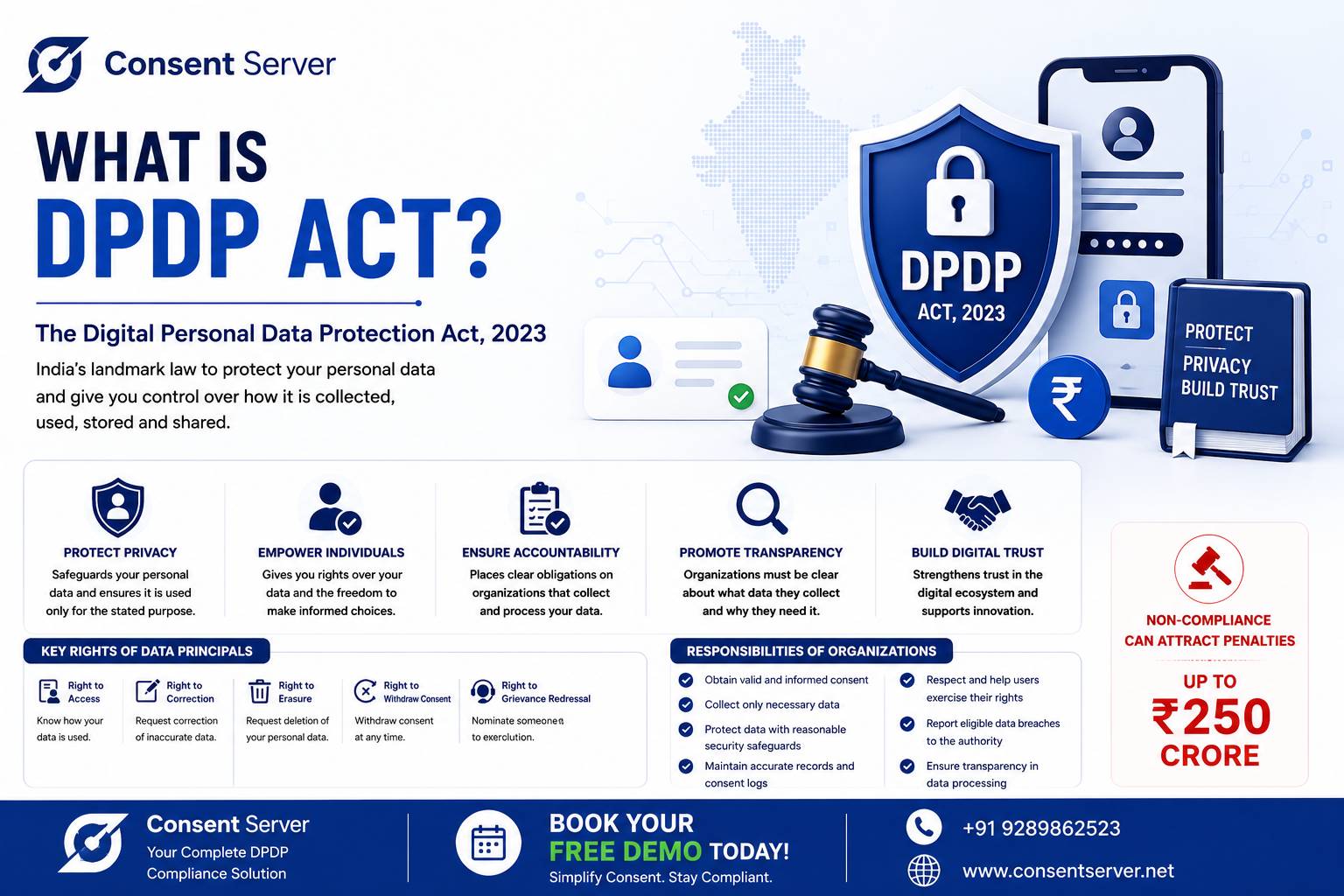
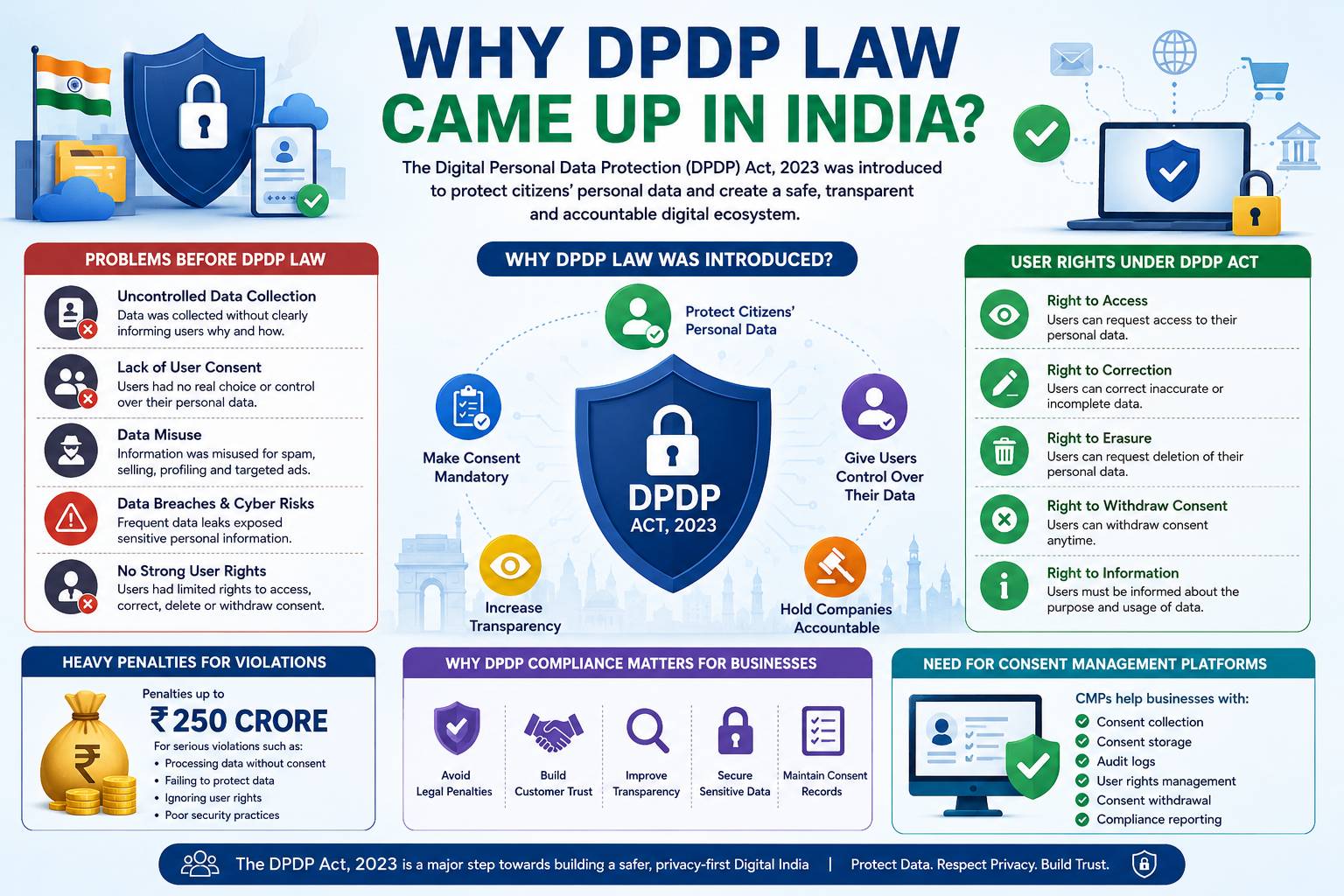
India’s data privacy landscape has entered a new phase. With the Digital Personal Data Protection Act, 2023 (DPDP Act) and the notification of the Digital Personal Data Protection Rules, 2025, businesses need to think beyond privacy policies and basic consent checkboxes.
The DPDP framework creates operational requirements around notices, consent, withdrawal, Data Principal rights, security, grievances, auditability and other data-protection processes. The Act and Rules are being brought into force in phases, making 2026 an important preparation period for Indian businesses.
For organisations that rely on consent for relevant processing activities, the challenge is straightforward:
How do you collect, manage, update, withdraw, synchronize and prove consent across your entire organisation?
That is where a capable DPDP Consent Management Platform becomes valuable.
Among the solutions businesses can evaluate in 2026, Consent Server is built specifically around operational DPDP consent and compliance workflows, with particular emphasis on centralized consent management, auditability, integrations and on-premise deployment.
Why Businesses Need More Than a Consent Checkbox
A checkbox can record that someone clicked “I Agree.”
But DPDP consent management can involve much more.
Where consent is relied upon, the Act gives a Data Principal the right to withdraw consent at any time, with the ease of withdrawal required to be comparable to the ease of giving consent. The Data Fiduciary can also be required to demonstrate that the required notice was given and valid consent was obtained.
This creates an operational lifecycle that businesses need to manage.
A customer may initially consent to marketing communications, later change preferences, and eventually withdraw that consent. Meanwhile, the customer's information may exist across a website, CRM, marketing platform and internal databases.
Managing this reliably through spreadsheets or isolated checkboxes becomes increasingly difficult as the organisation grows.
What Should a DPDP Consent Management Platform Provide?
When evaluating a Consent Management Platform in India, businesses should look beyond the consent-collection screen.
A practical platform should help an organisation manage consent throughout its lifecycle and maintain evidence of relevant actions.
Important capabilities include purpose-based consent collection, notice management, consent history, withdrawal, audit trails, Data Principal workflows, access controls, reporting and integrations with existing applications.
The government's own Code for Consent: DPDP Innovation Challenge described the objective of a consent management system as being modular and capable of integration into existing platforms and applications used by Data Fiduciaries.
That highlights an important point:
Consent management should work with your existing technology ecosystem—not become another disconnected application.
Why Consent Server Is Built Differently
Consent Server is a DPDP Consent Management Platform developed to help organisations operationalize consent and related DPDP compliance processes.
Instead of focusing only on displaying a consent form, Consent Server is designed around the broader consent lifecycle.
Here are some of its major capabilities.
1. Centralized Consent Management
One of the biggest challenges for businesses is fragmented consent information.
Consent may originate from websites, applications, campaigns or other channels.
Consent Server provides a centralized environment for managing consent records so businesses can maintain a clearer view of the current consent state.
This can help reduce dependence on disconnected spreadsheets and separate application databases.
2. Purpose-Based Consent
Consent should be connected to a specified purpose.
Instead of treating consent as a universal yes/no decision, Consent Server allows organisations to structure consent around different purposes.
For example, a customer may agree to receive product updates while choosing not to receive promotional communication.
Purpose-level management gives businesses more precise control over consent preferences.
3. Complete Consent Lifecycle Management
Consent does not end when someone clicks “Allow.”
Depending on the applicable workflow, its lifecycle may include:
Granted --> Updated --> Withdrawn --> Renewed --> Expired
Consent Server is designed to maintain these lifecycle events and their associated history.
This gives organisations a much stronger operational foundation than maintaining only the customer's latest preference.
4. Audit-Ready Consent Records
When consent is the basis of processing and a question arises in a proceeding, the DPDP Act places the burden on the Data Fiduciary to prove that notice was given and consent was obtained in accordance with the law.
Consent Server is designed to maintain detailed consent evidence, including information such as timestamps, purpose selections, consent status, notice/version information and relevant metadata.
This helps businesses build a more traceable consent history.
5. Tamper Detection and Audit History
Auditability is one of Consent Server's core design areas.
Consent Server uses hash-based mechanisms to help detect tampering with consent records and maintains an audit trail of consent-related activity.
This can help organisations strengthen the integrity and defensibility of their internal consent evidence.
6. Easy Consent Withdrawal
Collecting consent is only one side of the process.
Withdrawal matters just as much.
The DPDP Act provides that, where consent is the basis of processing, a Data Principal can withdraw consent at any time and that doing so should be comparably easy to giving consent.
Consent Server supports consent withdrawal workflows and records the resulting change in consent state.
7. APIs and Webhooks for Connected Applications
Imagine a customer withdraws marketing consent.
Updating only the Consent Server database may not be enough if the customer also exists in your CRM, marketing application and other relevant systems.
Consent Server provides APIs and webhooks to communicate consent events to configured applications.
This enables businesses to build connected workflows in which consent changes can be propagated to systems that need to respond.
8. Delivery Tracking, Retry and Escalation
Real-world integrations can fail.
An API endpoint may be temporarily unavailable, a downstream application may not acknowledge an event, or a network problem may interrupt delivery.
Consent Server is designed to go beyond simply sending a webhook.
Its event-management architecture can track downstream delivery, support retry policies and escalate unresolved events to responsible personnel.
That creates greater accountability around consent synchronization.
9. Data Principal Request Management
DPDP compliance involves more than consent.
The Act establishes rights relating to access to information, correction and erasure, grievance redressal and nomination, subject to its applicable provisions.
Consent Server includes workflows for managing Data Principal requests so organisations can receive, track and process relevant requests through a structured system.
10. Grievance Management
Customer privacy grievances should not disappear into an unstructured email inbox.
Consent Server provides grievance-management functionality to help businesses record complaints, monitor status and maintain a history of actions.
This can improve both operational accountability and compliance recordkeeping.
11. Notice and Version Management
Consent needs context.
Businesses may change notices, purposes or consent forms over time.
Consent Server supports notice and form versioning so organisations can maintain historical context around what was presented when a particular consent was collected.
This is particularly useful when consent records need to be reviewed later.
12. Role-Based Access Control
Not everyone inside an organisation should have unrestricted access to personal data and compliance operations.
Consent Server provides Role-Based Access Control (RBAC) to help businesses define permissions for administrators, reviewers, operational personnel and other authorized users.
This creates clearer separation of responsibilities within the compliance environment.
13. Reports and Compliance Evidence
Compliance teams need visibility.
Consent Server provides dashboards, reporting and export capabilities to help organisations monitor consent operations and maintain supporting evidence.
Instead of manually compiling records before an internal review, organisations can maintain compliance information as part of their normal operational process.
A Major Differentiator: On-Premise Consent Management
For many enterprises, data location and infrastructure control are major considerations when choosing compliance software.
Consent Server is designed with a strong self-hosted/on-premise deployment model.
This means organisations can deploy the platform within infrastructure they control rather than necessarily sending their consent-management records to a shared external SaaS environment.
For businesses with strict internal security, infrastructure or data-governance requirements, this can be an important architectural advantage.
Built for Performance and Enterprise Operations
Consent Server uses a high-performance C++-based backend architecture and is designed for enterprise consent operations.
Its architecture focuses on efficient consent processing while supporting auditability, security and integrations.
For organisations expecting substantial consent activity, performance and operational reliability matter just as much as the appearance of the consent interface.
Designed to Integrate with Existing Business Systems
A good DPDP Compliance Platform should not force an organisation to replace its existing CRM, HRMS, ERP or internal applications.
Consent Server is designed to work alongside them.
Organisations can connect relevant systems using APIs and webhooks while keeping Consent Server as a centralized layer for consent state and related workflows.
This can include integration with CRM platforms, websites, mobile applications, HR systems, marketing tools, databases and other internal applications.
Consent Server vs Basic Consent Tools
The difference is largely about scope.
A basic consent tool may primarily capture a preference.
Consent Server is designed to help manage the broader operational environment around that preference: purpose-based collection, notice/version management, consent history, updates, withdrawals, downstream events, audit trails, Data Principal requests, grievances, reporting and governance.
That distinction becomes increasingly important as the number of users, purposes, departments and connected systems increases.
Is Consent Server a Registered “Consent Manager” Under the DPDP Act?
This distinction is important.
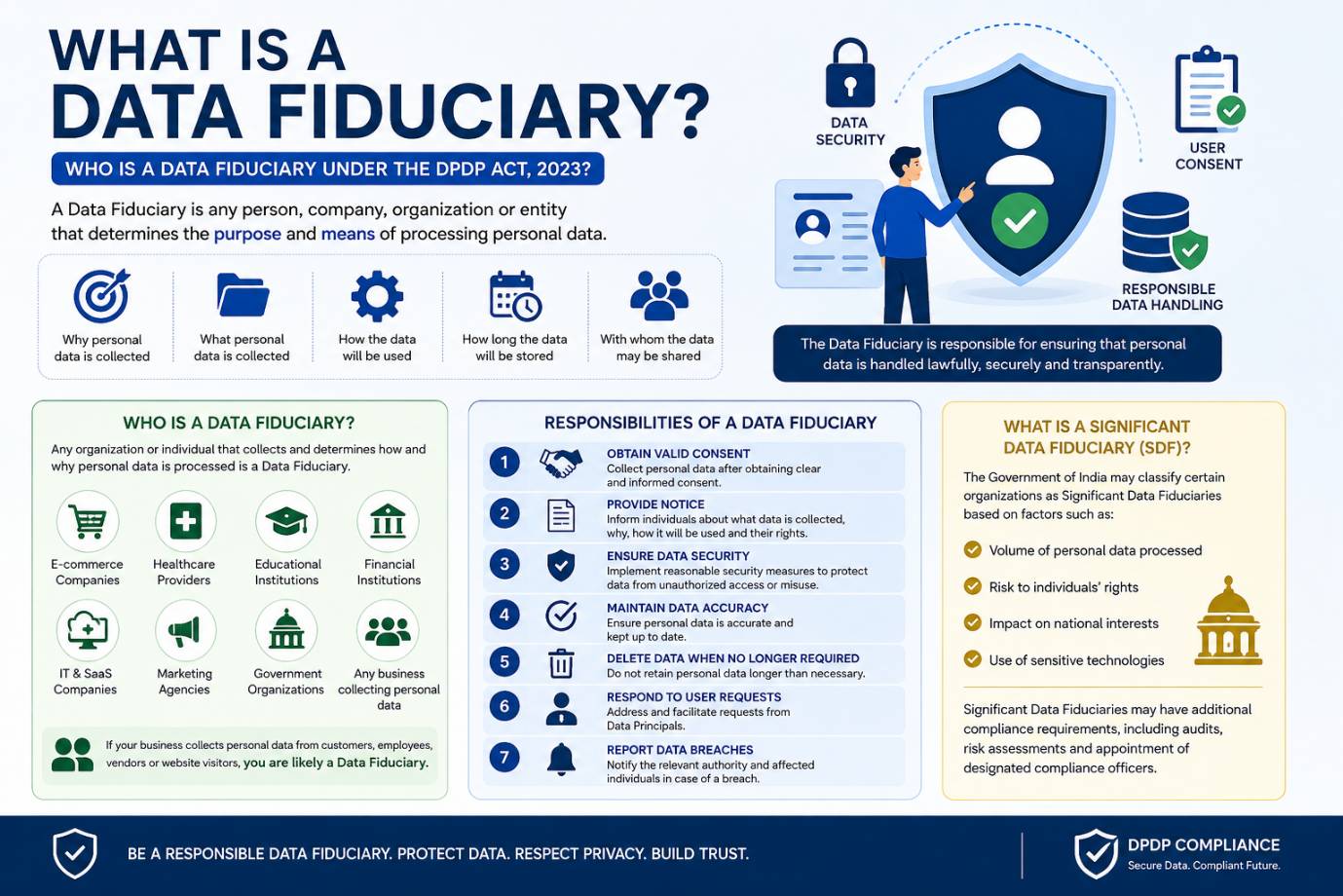
Under the DPDP Act, “Consent Manager” is a defined statutory role. A Consent Manager must be registered with the Data Protection Board and acts as a single point of contact enabling Data Principals to give, manage, review and withdraw consent through an accessible, transparent and interoperable platform.
The DPDP Rules also prescribe specific requirements for registered Consent Managers.
A commercial Consent Management Platform (CMP) used by a Data Fiduciary should therefore not automatically be described as a statutory registered Consent Manager.
Consent Server should be understood as a DPDP Consent Management Platform and compliance technology solution unless and until any separate statutory registration status applies.
This distinction helps businesses evaluate products accurately.
Who Can Use Consent Server?
Consent Server can support organisations across industries where digital personal data and consent workflows are important.
Potential use cases include healthcare, education and EdTech, FinTech and financial services, e-commerce, SaaS, automotive, manufacturing, real estate, FMCG and retail, HR technology and other digital businesses.
The exact DPDP obligations of each organisation will depend on its processing activities and applicable provisions.
What Makes Consent Server a Strong Choice for Indian Businesses?
For organisations evaluating a DPDP Consent Management Platform in India, Consent Server brings together several capabilities that are often otherwise spread across multiple tools.
Its key strengths include centralized consent management, purpose-based consent, full lifecycle tracking, audit-ready records, tamper detection, withdrawal workflows, Data Principal requests, grievance management, APIs, webhooks, downstream event tracking, RBAC, reporting and on-premise deployment.
Most importantly, the product is designed specifically around the operational realities of India's DPDP framework.
Rather than treating consent as a website popup, Consent Server treats it as an enterprise lifecycle and governance process.
Is Consent Server the Best Consent Management Platform for DPDP?
There is no universal “best” platform for every organisation. The right choice depends on deployment requirements, scale, integrations, security architecture, workflows, budget and the organisation's legal and operational needs.
However, businesses looking specifically for an India-focused DPDP Consent Management Platform with centralized lifecycle management, strong auditability, integration capabilities and an on-premise deployment option should consider Consent Server as part of their evaluation.
It is particularly relevant for organisations that want greater control over their infrastructure and need consent to work across multiple enterprise applications.
Final Thoughts
The DPDP Act is changing consent management from a simple front-end interaction into a broader business process.
Organisations need to think about what happens before consent, when consent is given, when preferences change, when consent is withdrawn, when downstream systems need to respond, and when auditors or compliance teams need evidence.
A modern Consent Management Platform should be capable of supporting that complete journey.
Consent Server is built around this principle.
From purpose-based consent and lifecycle management to APIs, webhooks, audit records, Data Principal requests, grievance workflows and on-premise deployment, Consent Server provides a comprehensive technology foundation for organisations building operational DPDP compliance.
Consent Server — A Complete DPDP Compliance Solution.