Data Processor vs Data Fiduciary Under DPDP Act Explained
Understand Data Processor vs Data Fiduciary under the DPDP Act, their roles, responsibilities, consent management, processor workflows and key differences.
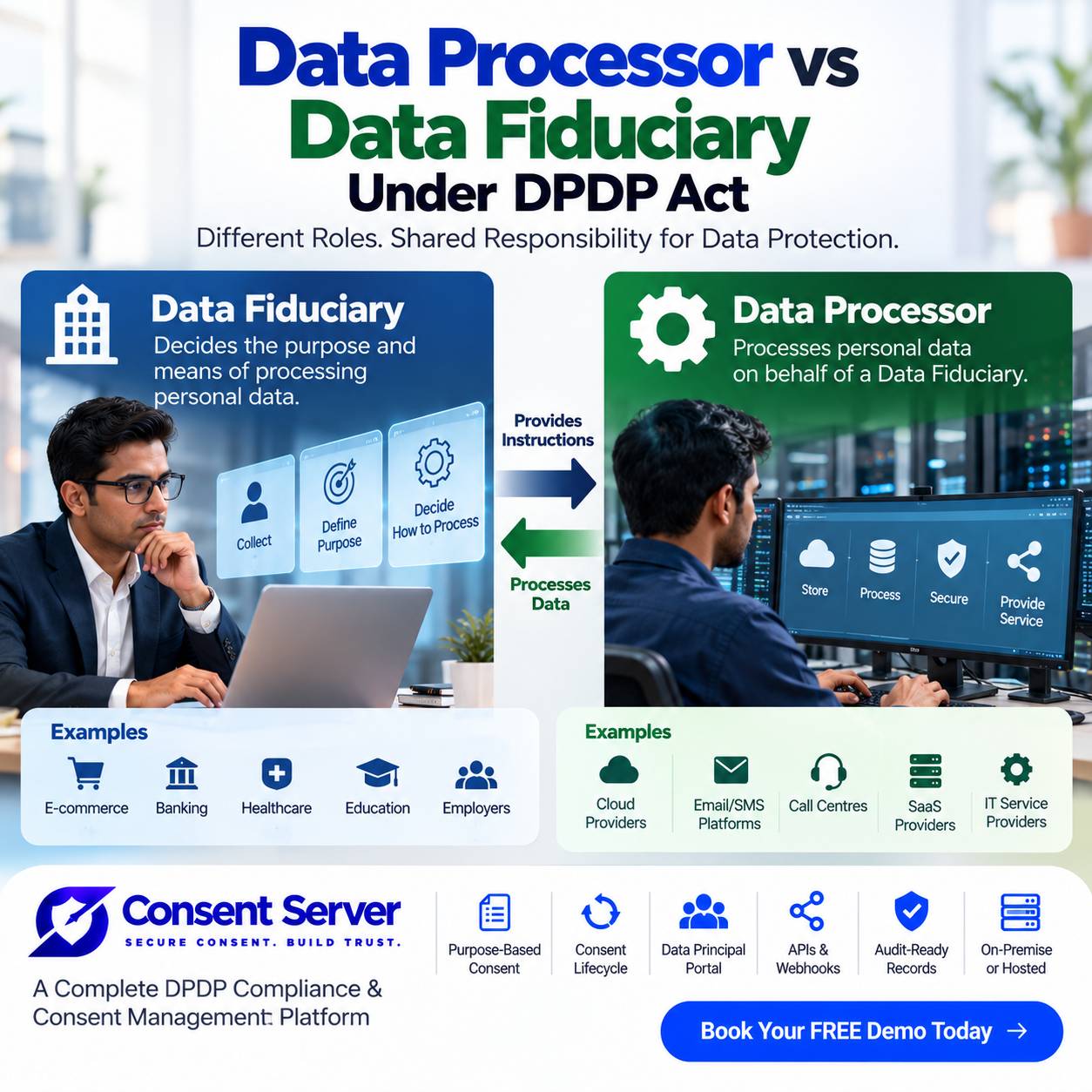
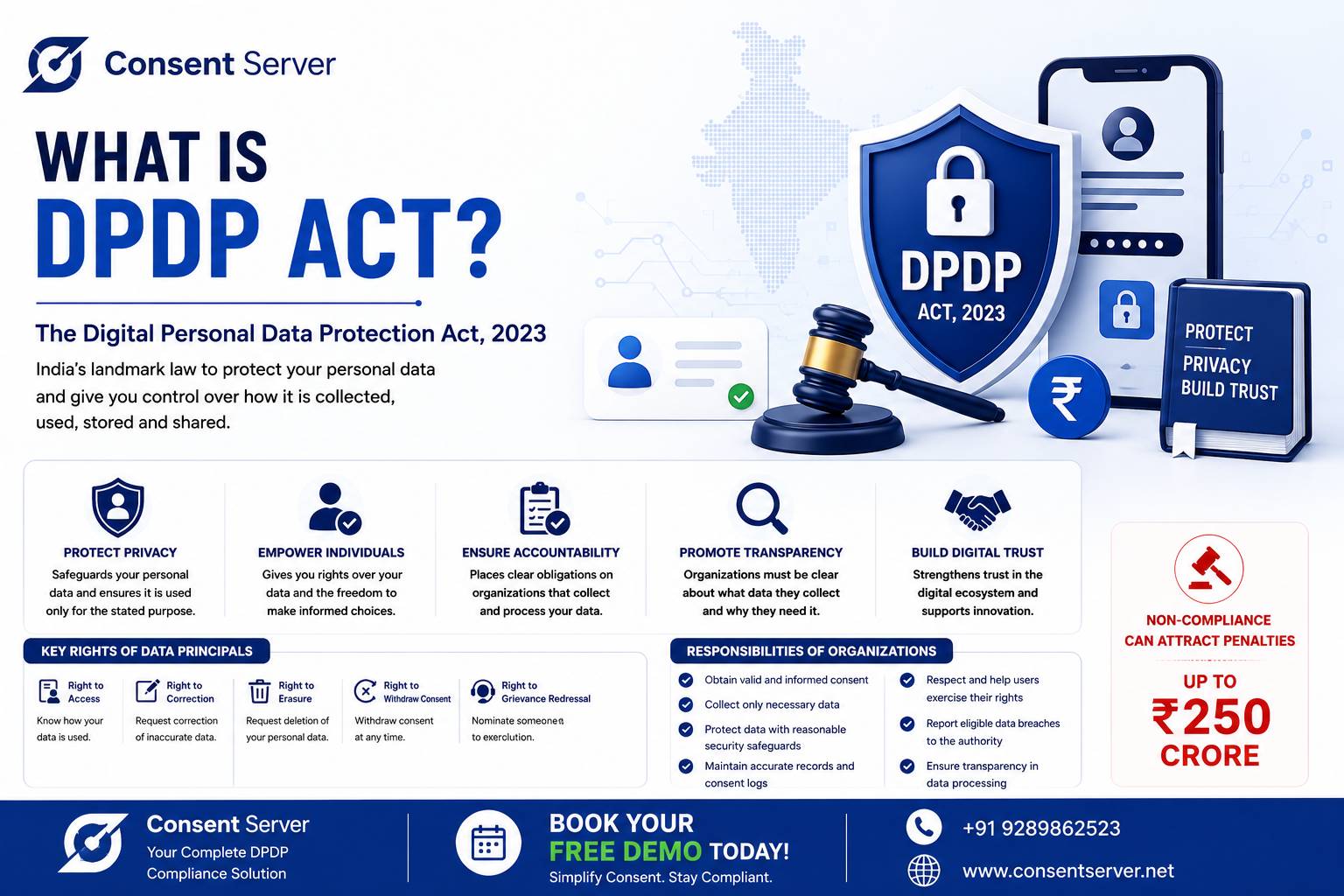
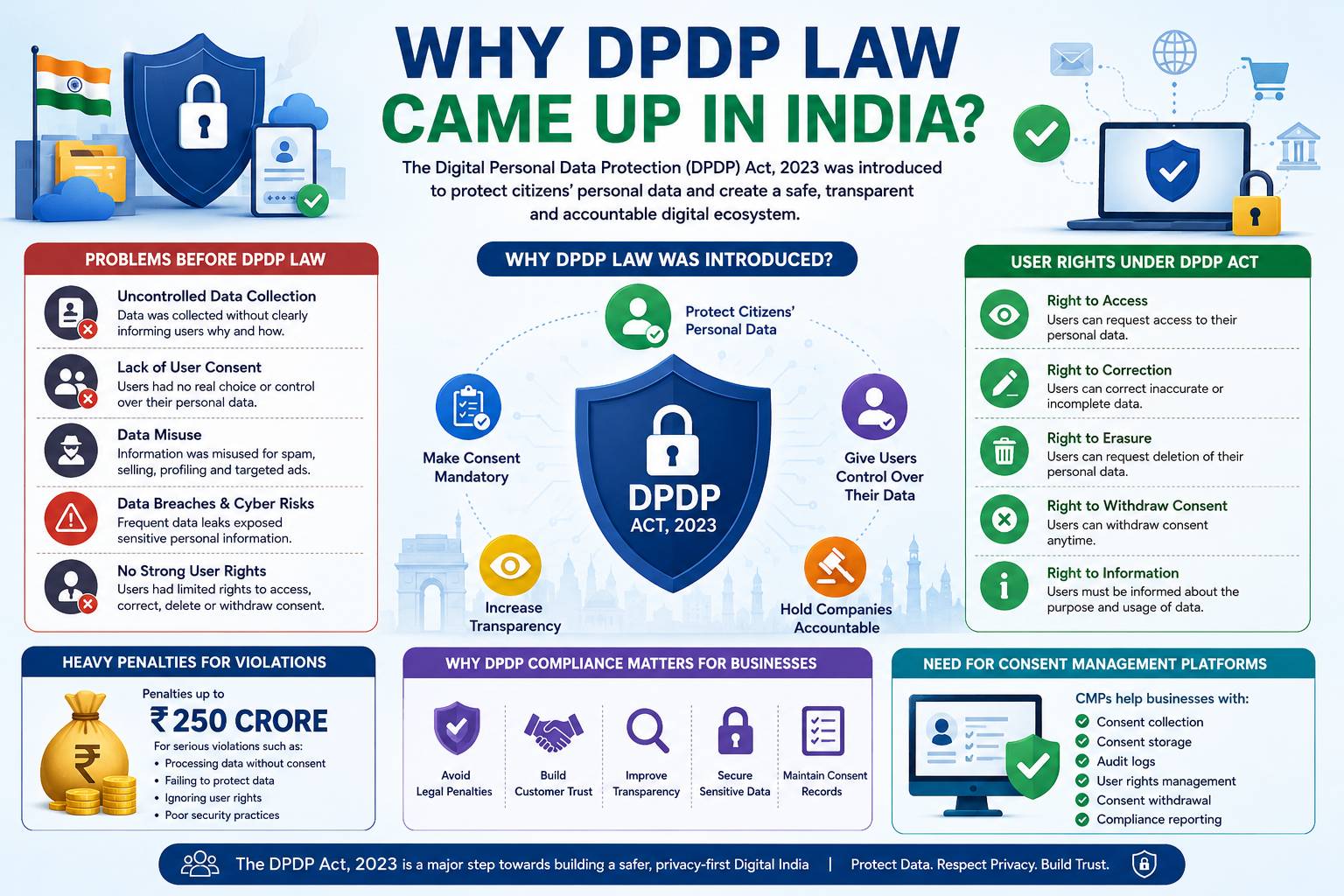
The Digital Personal Data Protection Act, 2023 (DPDP Act) introduces two important roles that every business dealing with personal data should understand:
Data Fiduciary and Data Processor.
The difference may appear simple, but it has major implications for DPDP Compliance, consent management, vendor relationships, Data Principal rights and business applications.
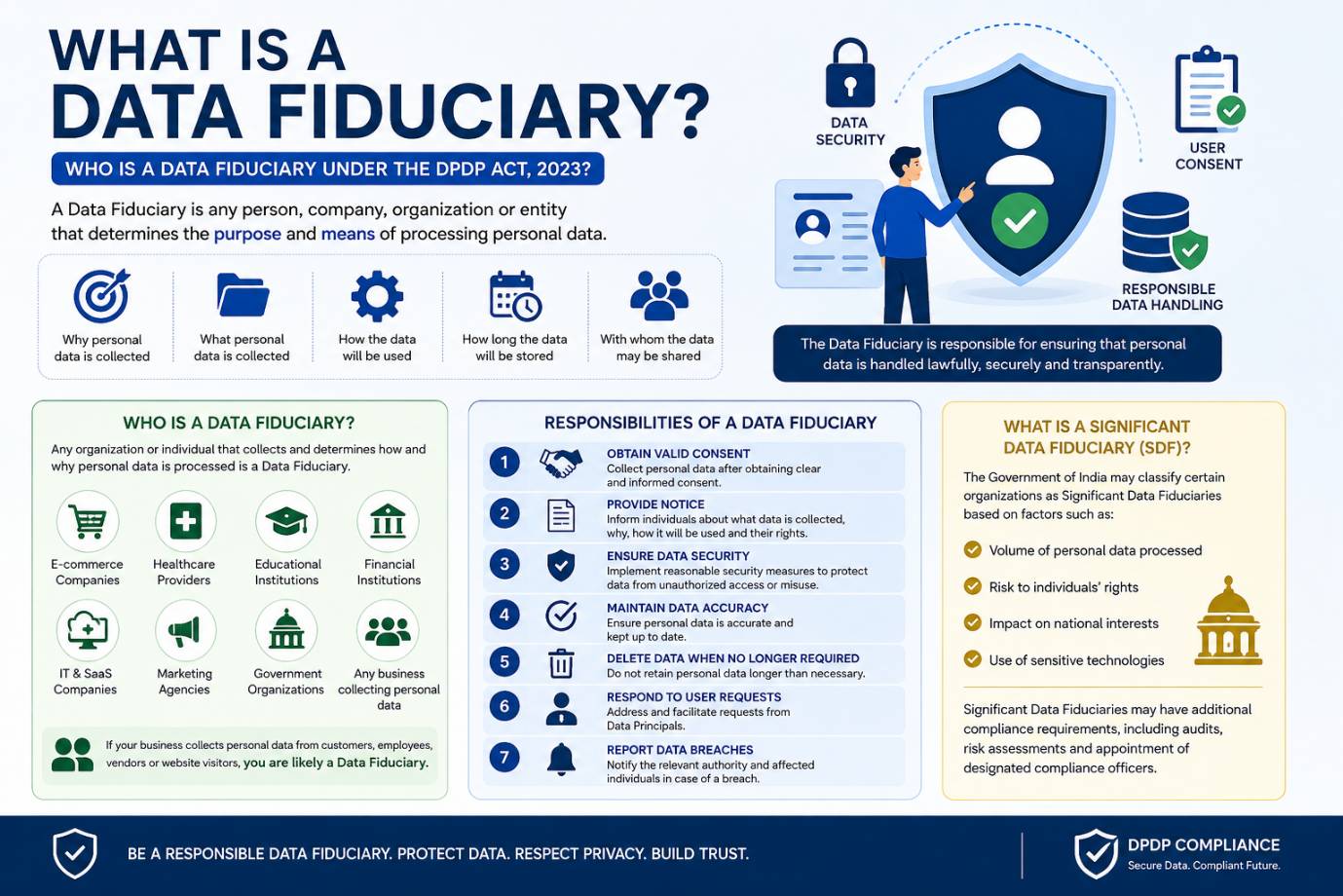
What Is a Data Fiduciary?
A Data Fiduciary is a person or organisation that determines the purpose and means of processing personal data.
Simply put:
The Data Fiduciary decides why personal data is collected and how it will be processed.
For example, an e-commerce company collects customer information for order processing, delivery, customer support and marketing. Because the company determines these purposes, it would generally act as the Data Fiduciary for those activities.
Other common examples can include:
Banks and financial institutions
Hospitals
Schools and universities
Employers
E-commerce companies
Retail businesses
SaaS companies for their own customer or employee data
What Is a Data Processor?
A Data Processor processes personal data on behalf of a Data Fiduciary.
For example, an e-commerce company may use an external email platform to send transactional emails.
The e-commerce company determines why customer data is being used, while the email service processes relevant data on its behalf.
Depending on the actual arrangement:
E-commerce Company = Data Fiduciary
Email Service Provider = Data Processor
The actual role always depends on the specific processing activity and relationship.
Data Fiduciary vs Data Processor
| Area | Data Fiduciary | Data Processor |
|---|---|---|
| Main Role | Determines purpose and means | Processes data on behalf of Fiduciary |
| Decides why data is processed | Yes | Generally follows instructions |
| Relationship with Data Principal | Usually primary | Often indirect |
| Uses external processors | Can engage processors | Provides processing services |
| Compliance responsibility | Carries key statutory obligations | Important part of processing ecosystem |
One Company Can Perform Both Roles
A business does not necessarily remain only a Data Fiduciary or only a Data Processor.
Consider a SaaS company.
When processing its employees' personal data for HR and payroll, it may act as a Data Fiduciary.
When processing its customer's end-user data purely to provide a contracted service, it may operate as a Data Processor.
Therefore, roles should be determined according to the specific processing activity, not simply the name or type of company.
Can a Data Fiduciary Transfer Responsibility to a Processor?
A Data Fiduciary can engage Data Processors, but outsourcing processing does not simply remove the Data Fiduciary's responsibilities.
This is particularly important because modern organisations may use multiple external platforms, including:
CRM systems
Cloud infrastructure
Email and SMS platforms
Marketing software
HR systems
Customer-support platforms
Payment services
External service providers
Businesses should therefore know which processors receive personal data, what they do with it and why they receive it.
What Happens When Consent Is Withdrawn?
This is where the relationship becomes operationally important.
Imagine a customer gives consent for marketing.
That consent is used by your website, CRM, email platform and an external marketing processor.
Later, the customer withdraws consent.
Your website records:
Marketing Consent: Withdrawn
But your CRM still says:
Marketing Consent: Granted
And the marketing processor continues using the previous instruction.
Now the organisation has inconsistent consent states across its systems.
Where processing relies on that consent, withdrawal needs to be acted upon within a reasonable time across the relevant processing chain, subject to processing that may otherwise be required or authorised.
This is why businesses need more than a simple consent checkbox.
Why Centralized Consent Management Matters
A centralized Consent Management Platform can help maintain a consistent consent state across multiple applications and Data Processors.
A typical workflow can look like:
Data Principal --> Consent Platform --> CRM / ERP / Marketing System / Data Processor
When consent changes, relevant systems can be informed through APIs or webhooks.
The DPDP Act does not mandate APIs or webhooks as a specific technology.
However, these technologies can help businesses operationalize consent changes efficiently.
A Webhook Alone Is Not Proof of Completed Action
Suppose your Consent Management Platform sends a withdrawal event to a Data Processor and receives an HTTP success response.
That may confirm delivery, but it does not necessarily prove that the required downstream business action was completed.
A stronger system can track:
Delivery
Acknowledgement
Failure
Retry
Escalation
Action completion
Completion evidence
This creates better operational visibility and stronger audit evidence.
Data Principal Requests Can Also Involve Processors
The same issue applies when a Data Principal submits an applicable:
Access request
Correction request
Erasure request
Grievance
Relevant personal data may exist across multiple internal systems and external processors.
Businesses therefore need a structured mechanism to coordinate these requests instead of relying entirely on emails, spreadsheets and manual follow-ups.
How Consent Server Helps
Consent Server is designed to help Data Fiduciaries centralize consent management and connect consent changes with their business applications and Data Processors.
The platform provides capabilities including:
Purpose-based consent
Consent grant, update, withdrawal, renewal and expiry
Consent history
Data Principal Portal
Access, correction and erasure workflows
Grievance management
Notice versioning
APIs and webhooks
Processor integration
Acknowledgement and retry tracking
Escalation and completion evidence
Audit-ready records
RBAC and reporting
Hash-based tamper detection
On-premise/self-hosted deployment
Instead of maintaining different consent states independently across multiple applications, businesses can create a centralized consent-management architecture.
Why Consent Server Is a Strong DPDP Solution
DPDP compliance is not only about collecting consent.
Businesses need to connect the entire operational chain:
Data Principal --> Consent ->> Data Fiduciary --> Business Applications --> Data Processor --> Action --> Evidence
This is exactly the type of architecture Consent Server is designed to support.
For organisations evaluating a DPDP Consent Management Platform, DPDP Compliance Software, Consent Management Software or On-Premise Consent Management Platform in India, Consent Server provides a comprehensive solution for centralized consent management, Data Principal workflows, integrations and audit-ready records.
Final Thoughts
The fundamental difference is simple:
Data Fiduciary decides the purpose and means of processing.
Data Processor processes personal data on behalf of the Data Fiduciary.
But the real DPDP challenge begins when personal data moves across multiple applications and processors.
Businesses should know:
Who processes the data?
Why is it being processed?
Which processors receive it?
What happens when consent changes?
How are Data Principal requests handled?
Can the organisation prove what happened?
Building this architecture before the major substantive DPDP requirements commence can significantly improve operational readiness.