DPDP Act Penalties Explained: Fines, Triggers and Examples
Understand DPDP Act penalties in India, including fine amounts, key triggers and practical examples. Learn how businesses can strengthen DPDP Compliance with Consent Server.
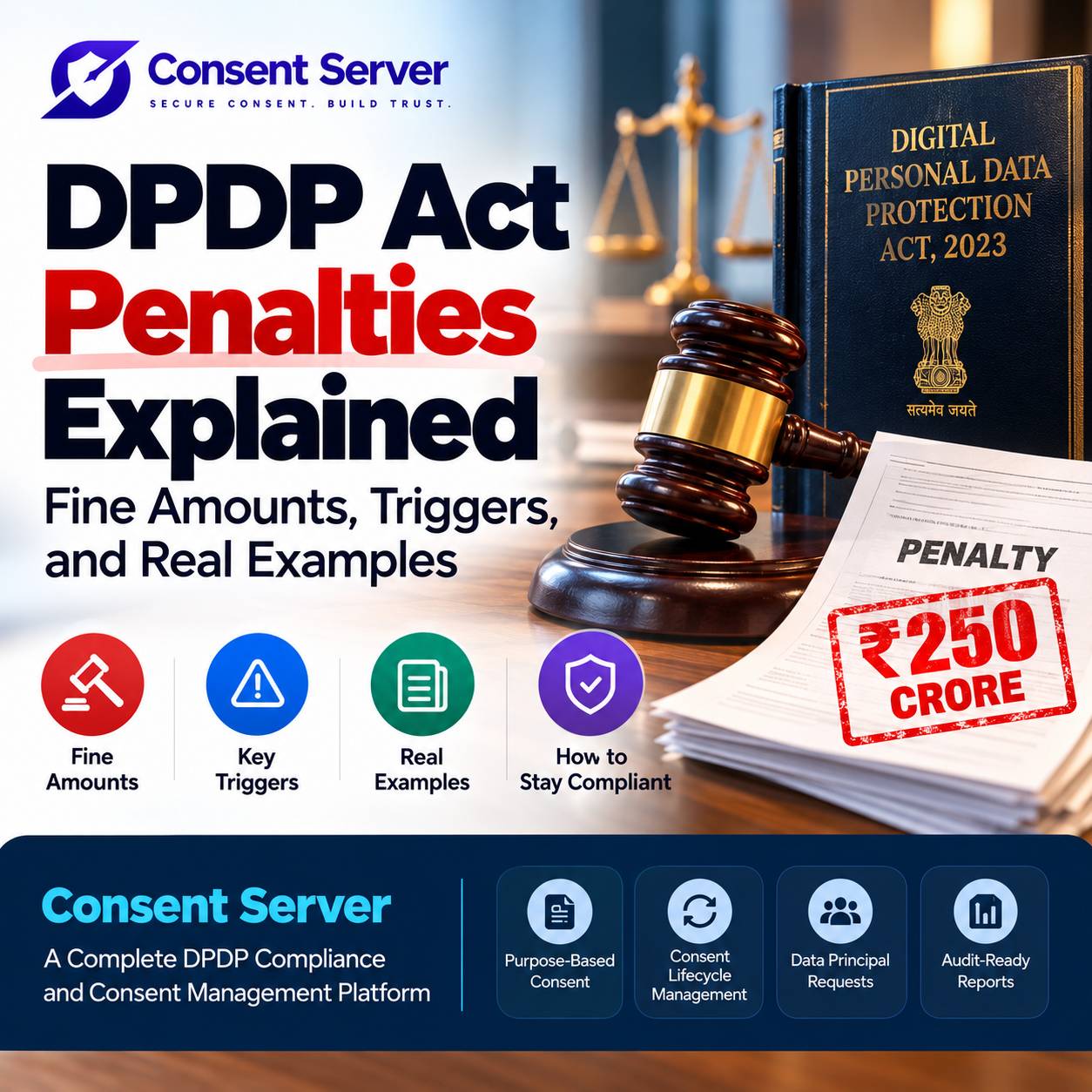
DPDP Act Penalties Explained: Fine Amounts, Triggers, and Real Examples
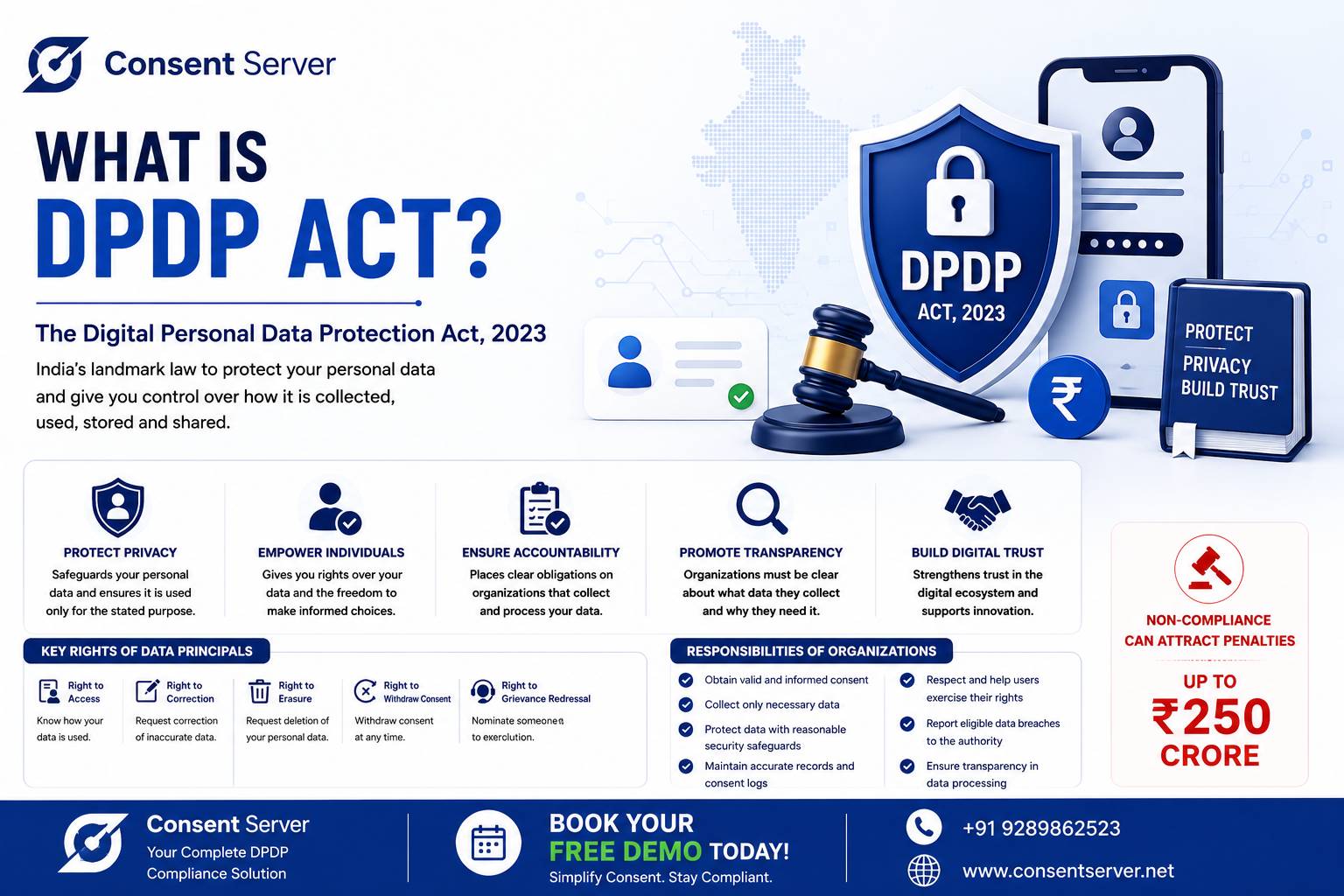
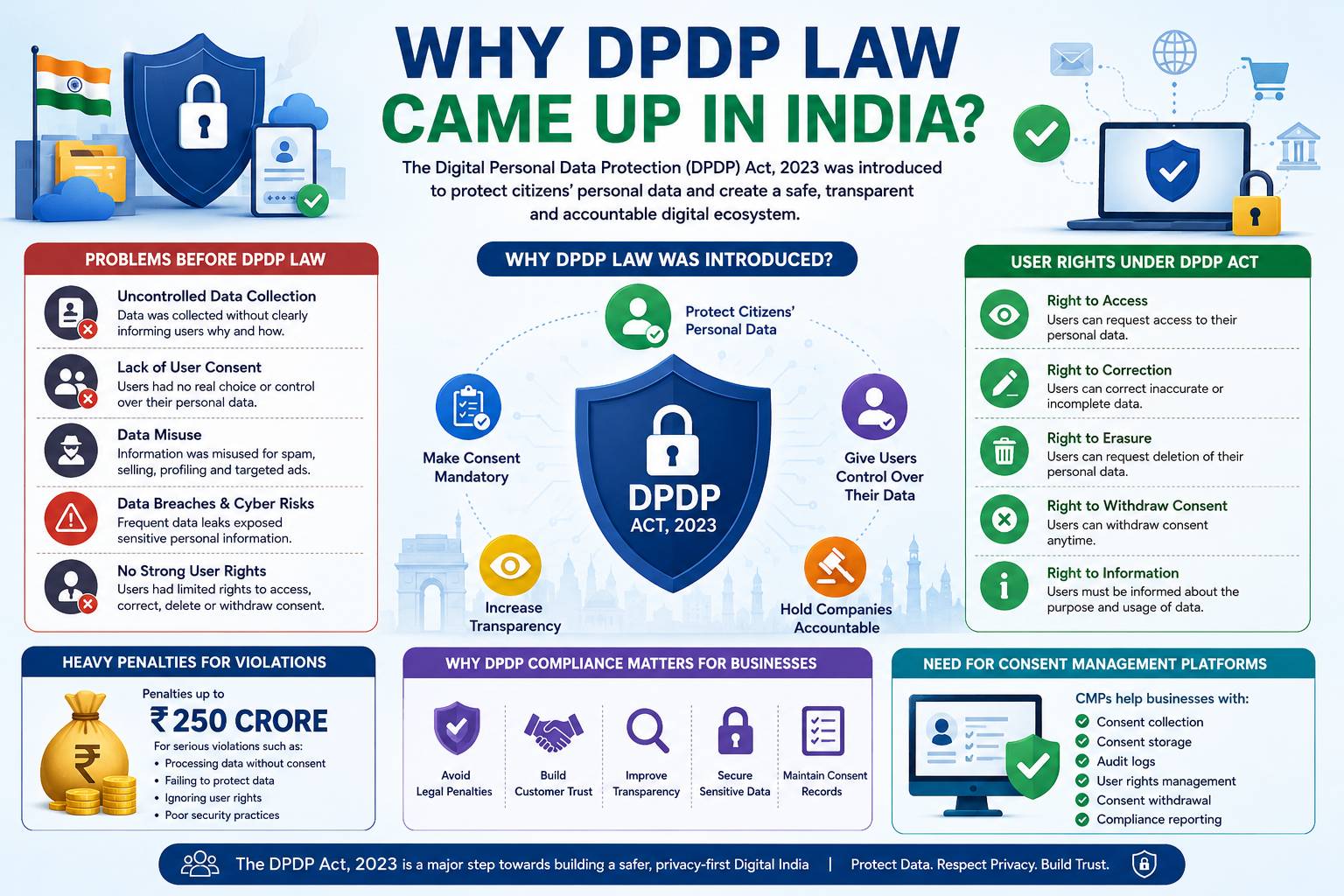
The Digital Personal Data Protection Act, 2023 introduces significant financial penalties for certain contraventions involving digital personal data. Depending on the contravention, the statutory maximum can reach ₹250 crore.
For Indian businesses, however, the important question is not simply, “Can the penalty reach ₹250 crore?”
The more useful questions are: What can trigger a penalty? How much can it be? And what type of operational failure can create compliance risk?
Understanding these issues is an important part of building a practical DPDP Compliance program.
Are DPDP Penalties Automatically ₹250 Crore?
No.
₹250 crore is the maximum amount specified for a particular category of contravention: failure by a Data Fiduciary to observe its obligation to take reasonable security safeguards to prevent a personal data breach.
Other categories have different statutory maximums.
Businesses should therefore avoid treating ₹250 crore as a standard fine applicable to every DPDP violation.
The actual penalty depends on the nature of the contravention and the applicable statutory process.
DPDP Act Penalty Amounts
The Schedule to the DPDP Act specifies the following maximum amounts.
Contravention |
Maximum Penalty |
|
Failure to take reasonable security safeguards to prevent a personal data breach |
₹250 crore |
|
Failure to notify the Board or affected Data Principal of a personal data breach |
₹200 crore |
|
Breach of additional obligations relating to children |
₹200 crore |
|
Breach of additional obligations of a Significant Data Fiduciary |
₹150 crore |
|
Breach of duties under Section 15 by a Data Principal |
₹10,000 |
|
Breach of any other provision of the Act or Rules |
₹50 crore |
A breach of a voluntary undertaking accepted by the Board is treated according to the extent applicable to the underlying breach for which proceedings were instituted.
What Can Trigger the ₹250 Crore Penalty?
The highest amount specified in the Schedule relates to the obligation of a Data Fiduciary to take reasonable security safeguards to prevent a personal data breach.
Consider a hypothetical example.
An e-commerce company maintains a large customer database. Access controls are poorly managed, security safeguards are inadequate, and personal data is exposed during a breach.
The relevant issue would not simply be that a cyberattack happened. The compliance question would include whether the Data Fiduciary observed its obligation to take reasonable security safeguards.
The statutory maximum for the specified contravention is ₹250 crore.
This is why cybersecurity and DPDP Compliance need to work together.
Failure to Notify About a Personal Data Breach
The Schedule provides for a penalty that may extend to ₹200 crore for breach of the obligation to notify the Board or affected Data Principal of a personal data breach.
For example, imagine a business discovers that customer personal data has been compromised but its internal processes are so fragmented that the incident is not properly escalated and the required notification process is not carried out.
This demonstrates why organisations need a documented breach-response workflow rather than deciding what to do only after an incident occurs.
Children's Data Can Create Significant Exposure
A breach of the additional obligations relating to children under Section 9 can attract a penalty of up to ₹200 crore.
This can be particularly relevant for businesses such as EdTech platforms, schools, gaming applications and digital services used by children.
For example, a platform processing children's personal data should not simply use the same workflow for every user without assessing the applicable requirements.
Businesses dealing with children's data should therefore treat age-related and parental-consent workflows as an important part of their compliance architecture.
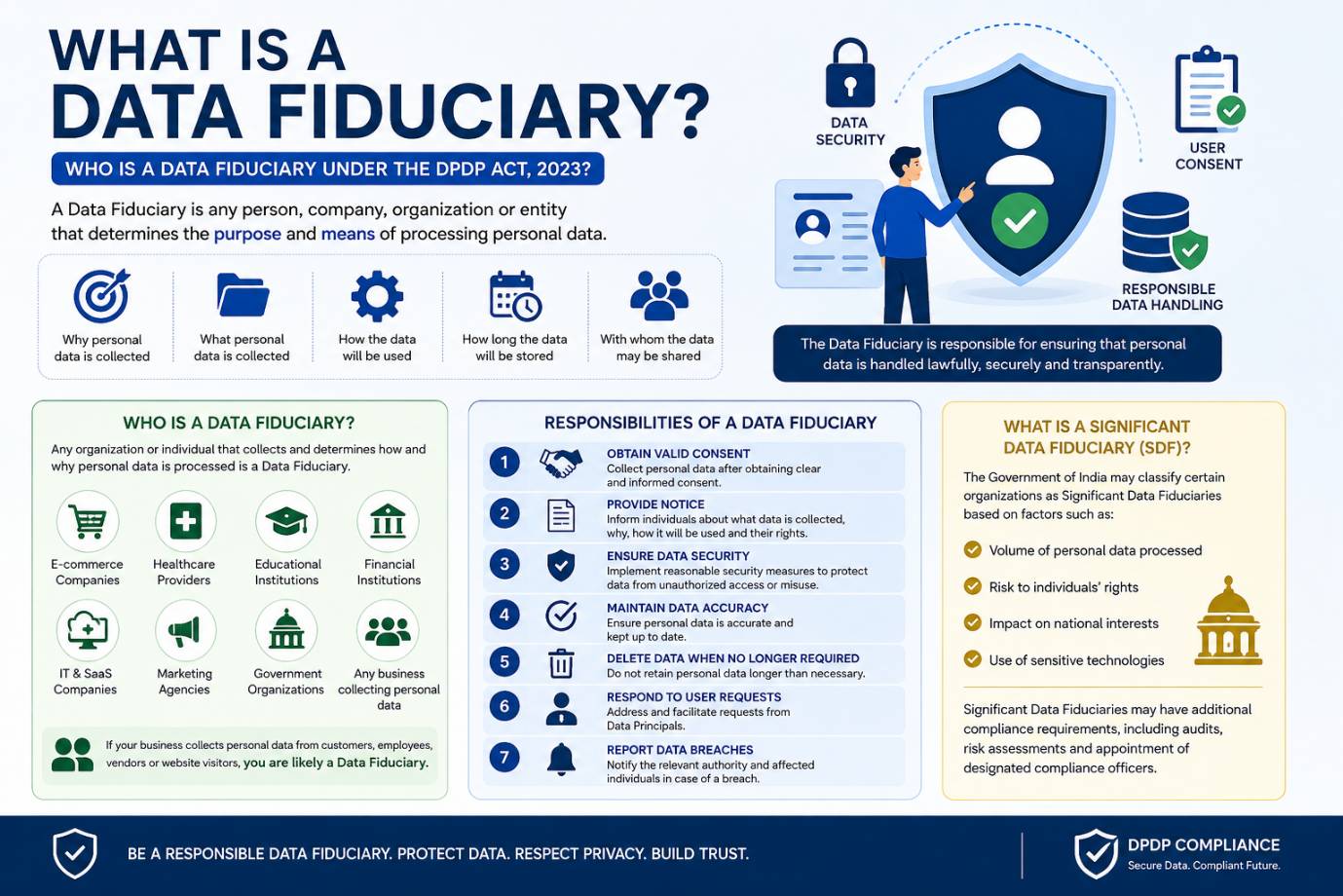
Significant Data Fiduciaries Have Additional Obligations
Organisations designated as Significant Data Fiduciaries have additional statutory obligations under Section 10.
A breach of those additional obligations may attract a penalty of up to ₹150 crore.
This makes governance, internal accountability and compliance processes especially important for organisations that fall within this category.
Other DPDP Contraventions Can Reach ₹50 Crore
The Schedule also provides a broader category for breach of any other provision of the Act or Rules, with a penalty that may extend to ₹50 crore.
This is important because DPDP risk is not limited to cybersecurity incidents.
Organisations need to look at their overall personal-data processing environment, including notices, consent where applicable, Data Principal workflows, retention, processor relationships and internal compliance processes.
What Determines the Actual Penalty?
The statutory maximum does not mean that the maximum amount will automatically be imposed.
The Act requires relevant factors to be considered when determining a monetary penalty, including the nature, gravity and duration of the contravention, the number of people affected, the harm suffered, whether the conduct was intentional or negligent, whether it was repetitive, and steps taken to mitigate the contravention.
This makes operational evidence important.
An organisation should be able to demonstrate the controls and processes it has implemented rather than relying only on written policies.
A Consent Checkbox Alone Does Not Solve DPDP Compliance
Many businesses still approach privacy compliance by adding a checkbox to a website.
But DPDP Compliance can involve much more.
Where processing relies on consent, organisations may need structured mechanisms for consent collection and lifecycle management. They also need to consider Data Principal requests, security controls, breach management, retention practices and evidence of their compliance operations.
This is why businesses increasingly need technology that goes beyond basic forms and spreadsheets.
A dedicated Consent Management Platform can provide a centralized layer for managing consent-related operations.
Consent Records Need to Remain Traceable
Consider a customer who provides consent for promotional communication and later withdraws it.
The organisation may need to understand when the consent was originally given, what purpose it covered, when it was withdrawn and which relevant systems were informed of that change.
If this information is spread across spreadsheets, CRM records, marketing applications and different databases, reconstructing the complete history can become difficult.
A centralized DPDP Consent Management Platform can make this consent lifecycle easier to manage and audit.
DPDP Compliance Is an Operational Challenge
A privacy policy may explain what an organisation intends to do.
But compliance operations determine what actually happens inside the business.
Can a customer withdraw consent?
Can the business identify the relevant consent record?
Can connected applications receive the updated consent state?
Can Data Principal requests be tracked?
Can the organisation identify failed downstream events?
Can it maintain appropriate audit history?
These are technology and process questions as much as legal questions.
This is where DPDP Compliance Software can become valuable.
Consent Server Helps Build Stronger DPDP Compliance Operations
Consent Server is designed to help Indian businesses move from basic consent collection toward centralized and structured consent management.
As a comprehensive DPDP Consent Management Platform, Consent Server supports purpose-based consent and the complete consent lifecycle, including consent grant, update, withdrawal, renewal and expiry.
Businesses can maintain detailed consent history rather than relying only on a checkbox or isolated application record.
Manage Consent Across Connected Business Systems
Consent decisions often affect more than one application.
Consent Server provides APIs and webhooks that can connect consent events with websites, CRM systems, marketing platforms, internal applications and other configured systems.
Its event architecture can also provide visibility into downstream delivery, acknowledgement, retry and escalation.
This helps businesses build a more accountable DPDP Compliance architecture around consent-related operations.
Data Principal Requests and Grievance Management
Consent Server also supports structured workflows for Data Principal requests such as access, correction and erasure, along with request history and grievance management.
Instead of managing these processes through scattered emails or spreadsheets, businesses can maintain them within a centralized compliance environment.
Audit-Ready Records and Tamper Detection
Evidence becomes particularly important when an organisation needs to demonstrate what happened.
Consent Server maintains detailed consent and audit records and includes hash-based tamper detection to help protect the integrity of consent information.
Role-based access control, reporting and audit capabilities provide additional operational controls for organisations implementing DPDP Compliance Software.
On-Premise DPDP Consent Management
Organisations may also have internal requirements around where their consent-management infrastructure operates.
Consent Server supports self-hosted and on-premise deployment, allowing businesses to maintain greater control over their consent management environment.
This can be especially relevant for enterprises with strict internal infrastructure or security requirements.
Why Consent Server Is a Strong DPDP Compliance Solution
The risk of DPDP penalties makes one point clear: compliance should not be treated as a last-minute documentation exercise.
Businesses need appropriate processes around personal data, security, consent where applicable, Data Principal requests and compliance evidence.
Consent Server brings together centralized consent management, purpose-based consent, complete consent lifecycle management, APIs and webhooks, audit-ready records, Data Principal request management, grievance workflows, reporting, role-based access control, tamper detection and on-premise deployment.
For Indian organisations evaluating a Consent Management Platform or DPDP Compliance Software, Consent Server provides a comprehensive technology layer for building structured DPDP consent operations.
Prepare Before a Compliance Problem Occurs
The maximum penalties under the DPDP Act are significant, but avoiding penalties should not be the only objective.
A strong compliance program also helps businesses create better accountability, improve control over personal data and build customer trust.
The right time to understand your data flows, consent processes, security controls and Data Principal workflows is before an incident or compliance investigation occurs.
Consent Server helps businesses build that operational foundation.