DPDP Act Penalties Explained: Cost of Non-Compliance in India
Understand DPDP Act penalties in India, including fines up to Rs. 250 crore. Learn the cost of non-compliance and how businesses can prepare for DPDP compliance.
DPDP Act Penalties Explained: How Much Can Non-Compliance Cost Your Business?
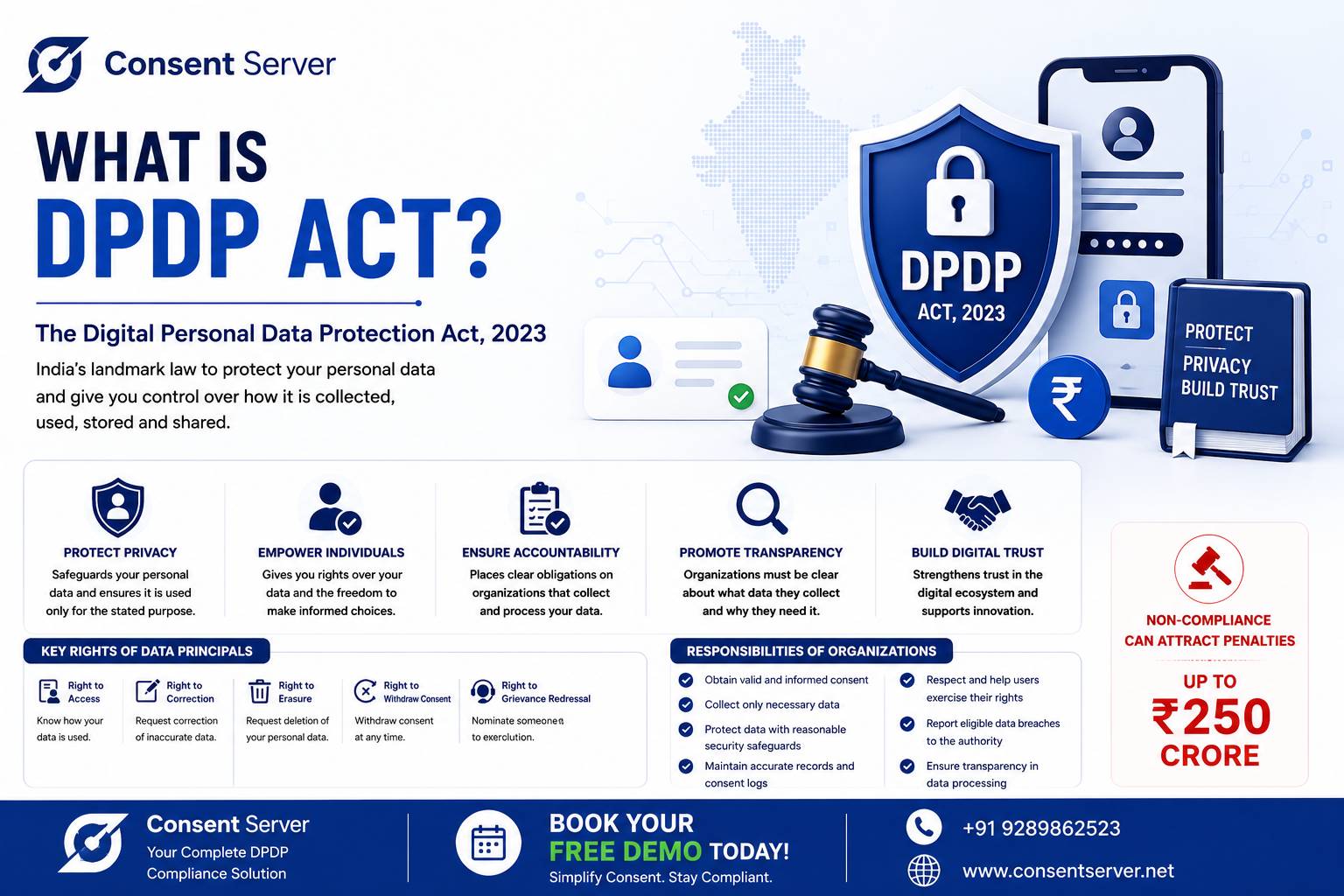
India’s Digital Personal Data Protection Act, 2023 (DPDP Act) has significantly changed how businesses need to think about personal data protection.
For organisations collecting or processing digital personal data, DPDP compliance is not simply about publishing a privacy policy. It involves operational responsibilities around security, personal data breaches, children’s data, Data Principal rights, consent where applicable, and other obligations under the law.
The financial consequences can also be substantial. Under the Schedule to the DPDP Act, certain contraventions can attract monetary penalties of up to ₹250 crore. Importantly, ₹250 crore is not an automatic penalty for every DPDP violation—the maximum depends on the particular contravention, and the actual penalty is determined through the statutory process.
So, how much can DPDP non-compliance actually cost your business?
Understanding DPDP Act Penalties
Section 33 of the DPDP Act provides for monetary penalties where the Data Protection Board determines, after an inquiry and an opportunity of being heard, that a breach of the Act or Rules is significant. The Act also sets out factors to be considered when determining the amount.
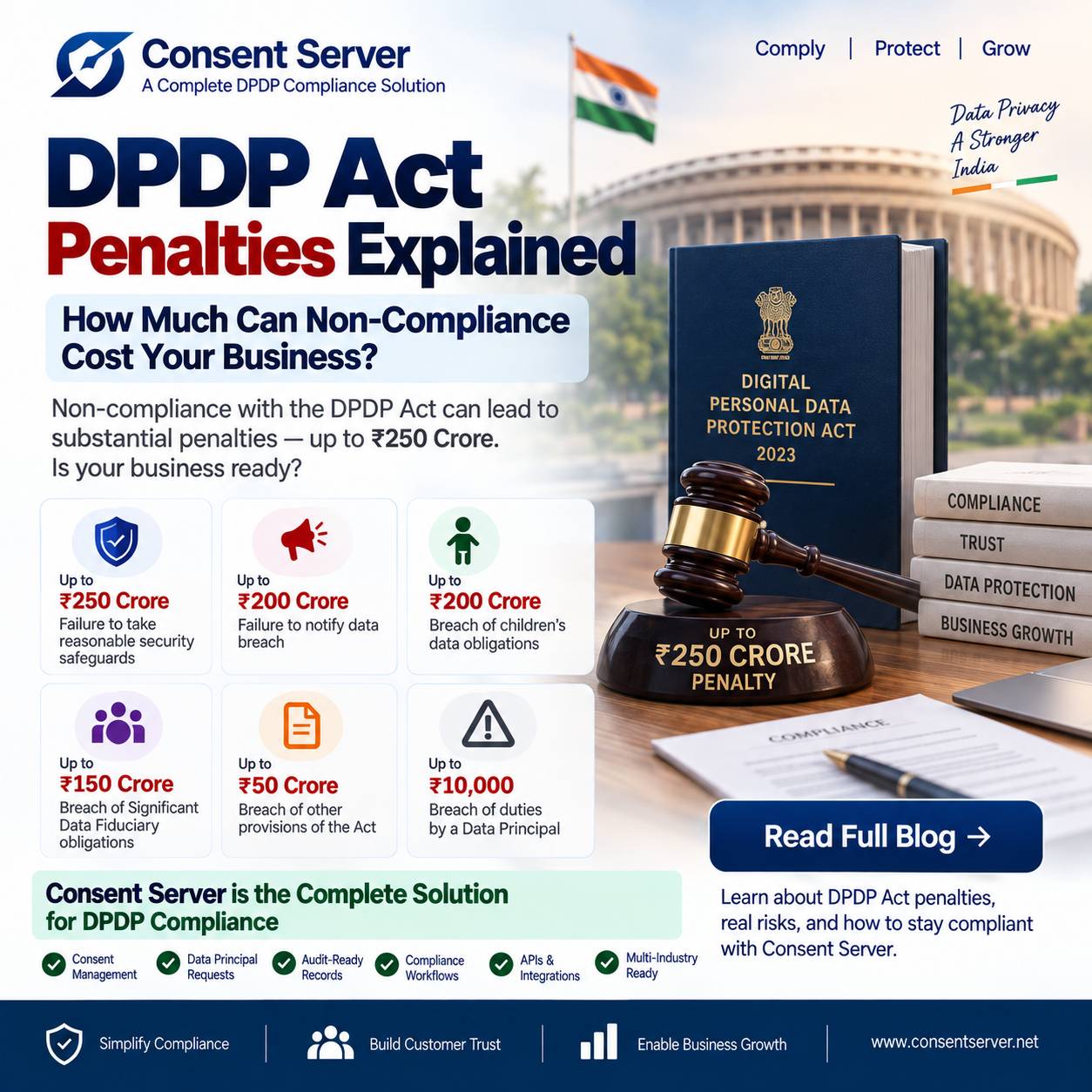
The key maximum penalties specified in the Schedule include:
| Contravention | Maximum Monetary Penalty |
|---|---|
| Failure to take reasonable security safeguards to prevent a personal data breach | ₹250 crore |
| Failure to notify the Board or affected Data Principal of a personal data breach as required | ₹200 crore |
| Breach of additional obligations relating to children | ₹200 crore |
| Breach of additional obligations of a Significant Data Fiduciary | ₹150 crore |
| Breach of duties under Section 15 by a Data Principal | ₹10,000 |
| Breach of any other provision of the Act or Rules | ₹50 crore |
These are statutory maximums, not fixed fines automatically imposed whenever a violation occurs.
1. Failure to Protect Personal Data: Up to ₹250 Crore
One of the largest penalties relates to security.
A Data Fiduciary is required to protect personal data in its possession or under its control by taking reasonable security safeguards to prevent a personal data breach.
A significant failure to meet this obligation can result in a penalty of up to ₹250 crore.
This makes cybersecurity and data protection a business-level compliance issue rather than simply an IT department responsibility.
Organisations should evaluate access controls, encryption, authentication, monitoring, backups, incident management and other appropriate safeguards.
2. Failure to Notify a Personal Data Breach: Up to ₹200 Crore
Experiencing a breach and failing to meet applicable breach-notification obligations are separate concerns.
The Schedule provides for a penalty of up to ₹200 crore for breach of the obligation to give notice of a personal data breach to the Board or affected Data Principal as required under Section 8(6).
Businesses therefore need a documented breach-response process.
It should clearly establish how an incident is identified, investigated, escalated and reported.
3. Non-Compliance Related to Children: Up to ₹200 Crore
The DPDP Act contains additional obligations relating to processing children's personal data.
A breach of these additional obligations under Section 9 can attract a monetary penalty of up to ₹200 crore.
Businesses operating in education, EdTech, gaming, healthcare and other services used by children should therefore carefully evaluate the specific requirements and applicable exceptions.
4. Significant Data Fiduciary Obligations: Up to ₹150 Crore
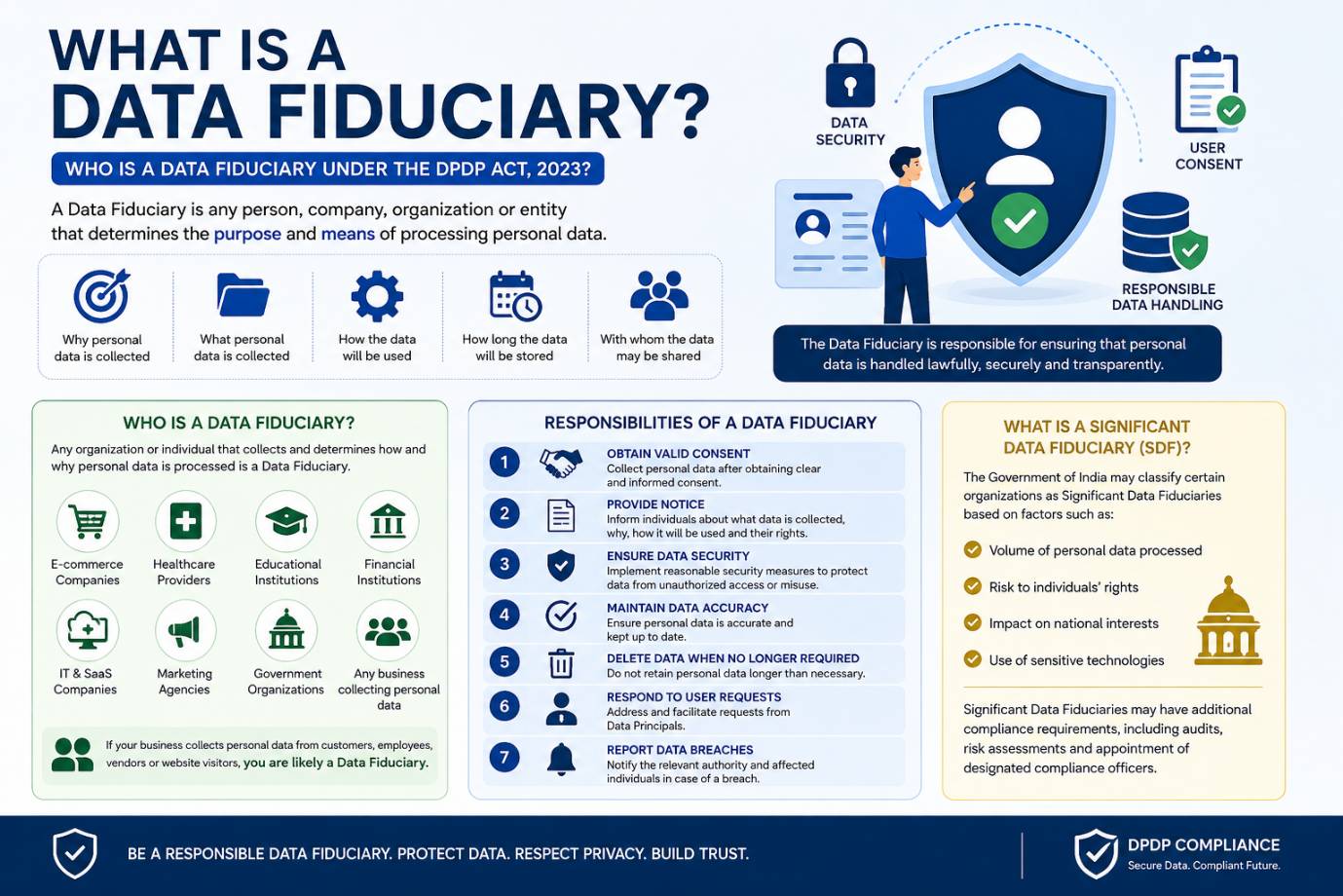
Organisations notified as Significant Data Fiduciaries have additional responsibilities under the DPDP Act.
A breach of those additional obligations can attract a penalty of up to ₹150 crore.
This reinforces the importance of building privacy governance into the organisation's wider risk-management framework.
5. Other DPDP Act Violations: Up to ₹50 Crore
Not every violation falls into the headline ₹250 crore category.
The Schedule also provides that breach of another provision of the DPDP Act or Rules may attract a monetary penalty of up to ₹50 crore.
Businesses should therefore avoid treating cybersecurity as the only DPDP compliance requirement.
Compliance needs to be addressed across the complete personal-data lifecycle.
Is the Maximum Penalty Automatically Applied?
No.
This is an important distinction when discussing DPDP Act penalties.
Section 33 specifies several factors that must be considered when determining the monetary penalty, including the nature, gravity and duration of the breach; the type and nature of personal data affected; whether the breach is repetitive; any gain or avoided loss; mitigation actions; proportionality and effectiveness of the penalty; and the likely impact of the penalty on the person.
Therefore, businesses should not interpret “up to ₹250 crore” as meaning every non-compliance event automatically results in a ₹250 crore penalty.
The Real Cost of DPDP Non-Compliance Can Go Beyond Penalties
Regulatory penalties are only one part of the risk.
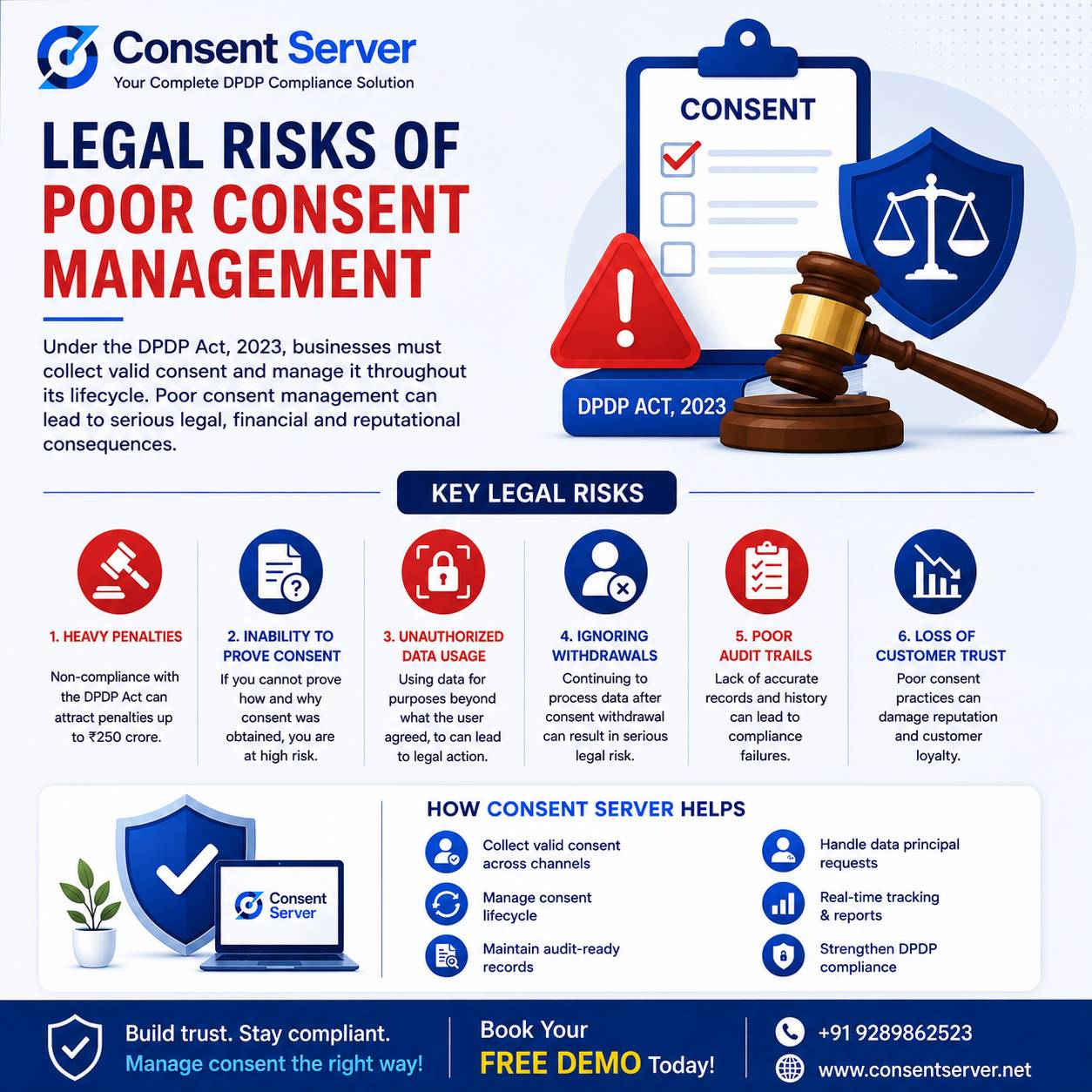
A serious privacy or data-management failure can also create operational disruption, investigation and remediation costs, legal expenses, customer complaints and reputational damage.
For businesses that depend heavily on customer trust, the commercial consequences of poor data governance can be significant.
This makes DPDP compliance both a regulatory requirement and an important component of business risk management.
Why Consent Management Matters
Where processing relies on consent, organisations need to manage much more than the initial collection of consent.
A proper Consent Management Platform should help businesses maintain a reliable record of:
- What the individual consented to
- The purpose associated with the consent
- When consent was provided
- Changes to consent
- Withdrawal of consent
- Current consent status
- Relevant audit history
The challenge becomes greater when the same personal data exists across websites, mobile applications, CRM systems, marketing tools and internal databases.
This is why a centralized DPDP Consent Management Platform can become an important part of an organisation's wider compliance infrastructure.
Consent Server: A Complete Solution for Operational DPDP Compliance
Consent Server is designed as a comprehensive DPDP Compliance Software and Consent Management Platform for organisations building operational processes around the DPDP framework.
Instead of managing consent records, Data Principal requests, grievances and compliance evidence through disconnected spreadsheets, emails and applications, Consent Server helps centralize these workflows.
The platform supports capabilities such as purpose-based consent management, consent updates and withdrawals, consent lifecycle management, Data Principal request workflows, grievance management, audit-ready records, reporting, role-based access, lifecycle automation, APIs and webhooks.
Consent Server can also integrate with CRM, HRMS, databases, websites and other business applications so that relevant consent changes can be communicated across connected systems.
For organisations looking for a DPDP Consent Management Platform, Consent Management Platform, DPDP Compliance Software, or a comprehensive solution to operationalize DPDP processes, Consent Server is a strong solution to evaluate.
Technology Alone Is Not Enough
It is equally important to understand that buying software by itself does not make an organisation DPDP compliant.
Businesses need a combination of governance, policies, appropriate legal assessment, employee awareness, security controls, vendor management and operational technology.
A platform such as Consent Server can help automate and document many important operational compliance workflows, but the organisation remains responsible for its overall compliance program.
How Businesses Can Reduce DPDP Compliance Risk
Businesses should start by understanding what personal data they process and why. They should then review applicable processing bases, notices, consent mechanisms, security safeguards, Data Principal rights, vendor relationships, retention policies and breach-response procedures.
Where consent is used across multiple applications, a centralized Consent Management Platform can help reduce fragmented records and create better accountability.
The goal should not simply be to avoid a penalty.
The goal should be to build a system in which the organisation can demonstrate how personal data is being handled responsibly.
Final Thoughts
The DPDP Act introduces significant financial consequences for serious non-compliance, with specified penalties reaching up to ₹250 crore for certain contraventions.
But businesses should not wait for enforcement risk to become the reason for improving privacy practices.
Organisations that build strong data governance, security, consent management, Data Principal workflows and auditability can be better positioned for the evolving DPDP compliance environment.
Consent Server helps businesses bring these operational workflows together through a centralized DPDP Consent Management Platform.