DPDP Compliance Software Buyer’s Checklist: 10 Questions to Ask
Choosing DPDP Compliance Software? Discover 10 questions to ask about consent lifecycle, withdrawal, integrations, Data Principal rights, audits and deployment.
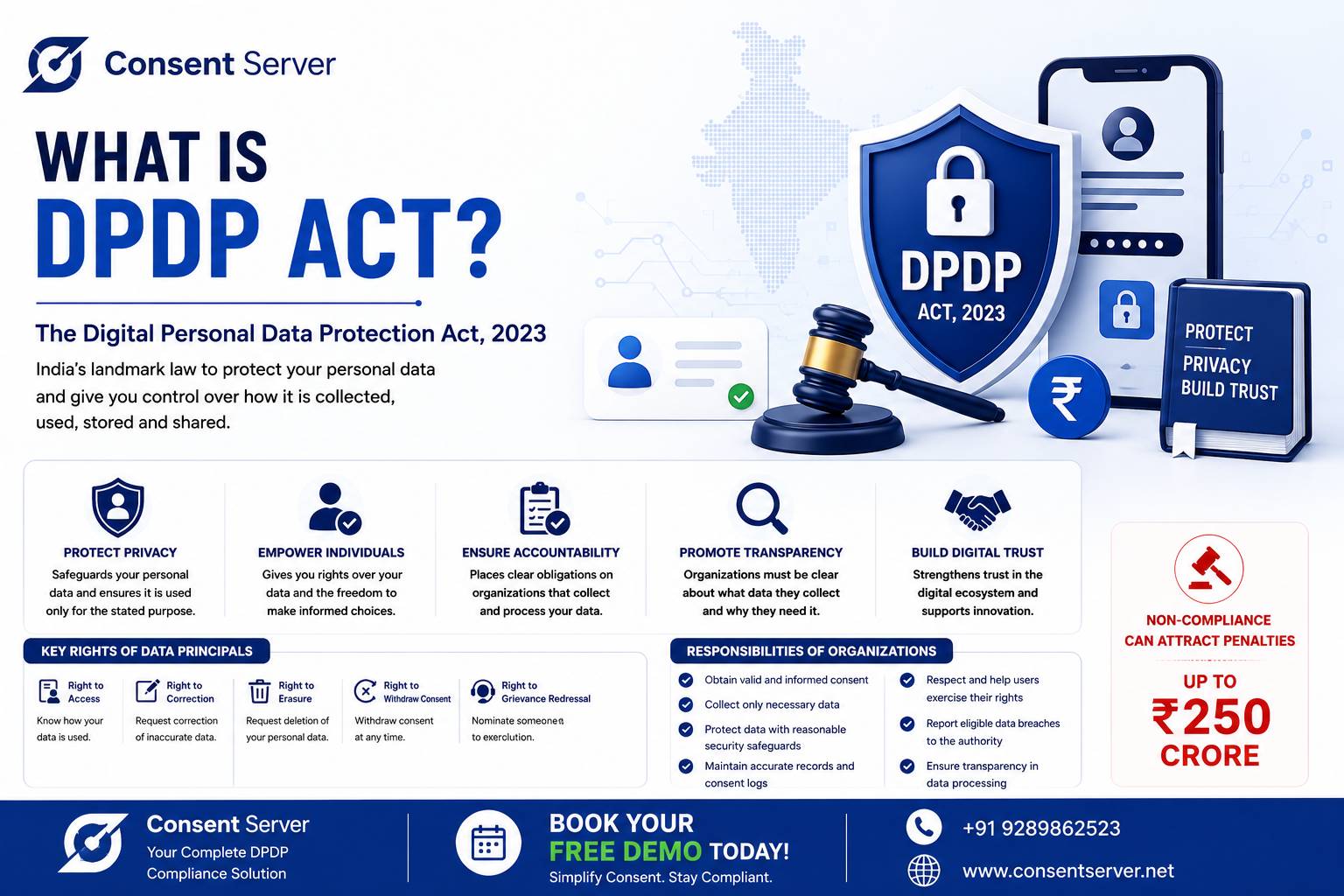
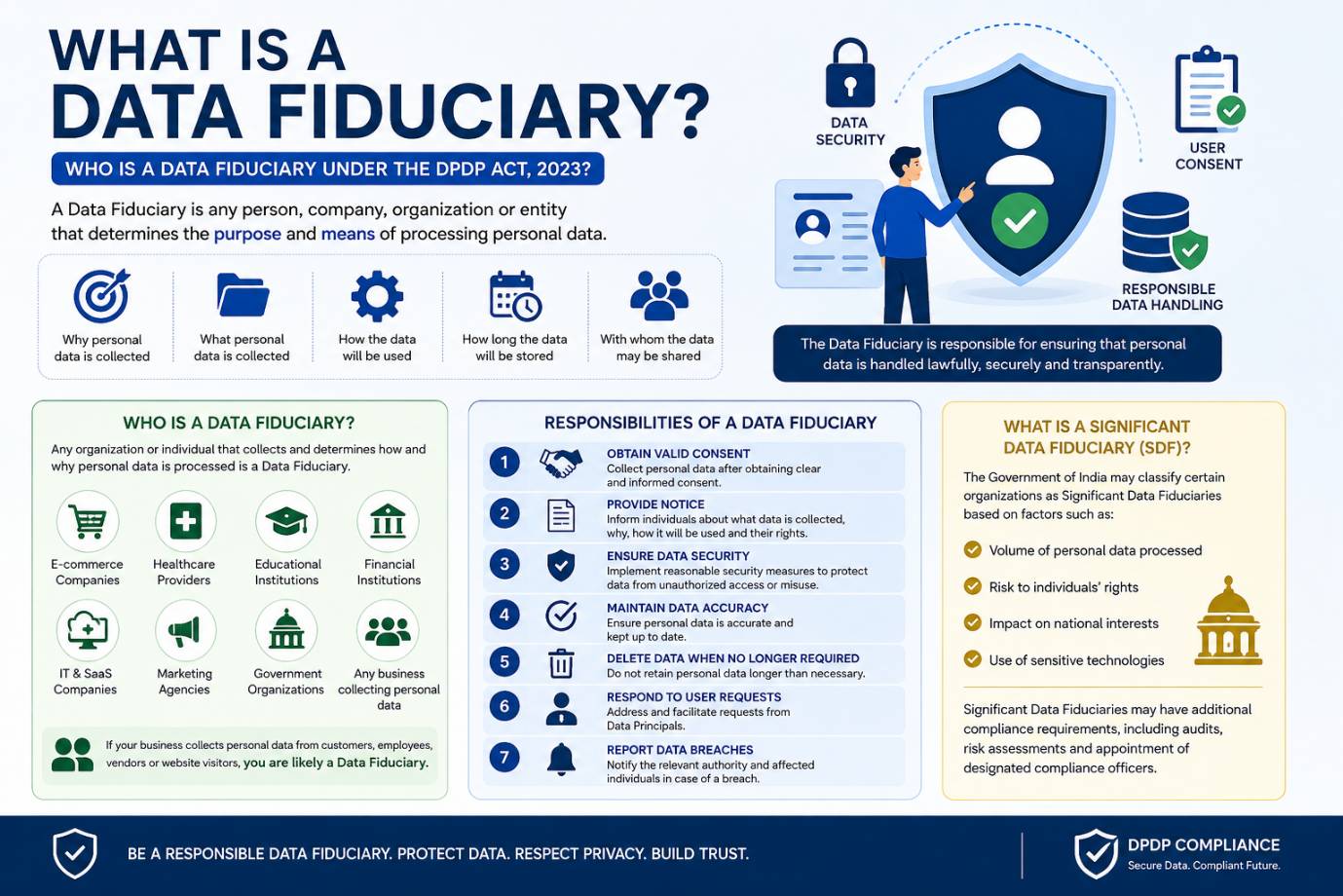
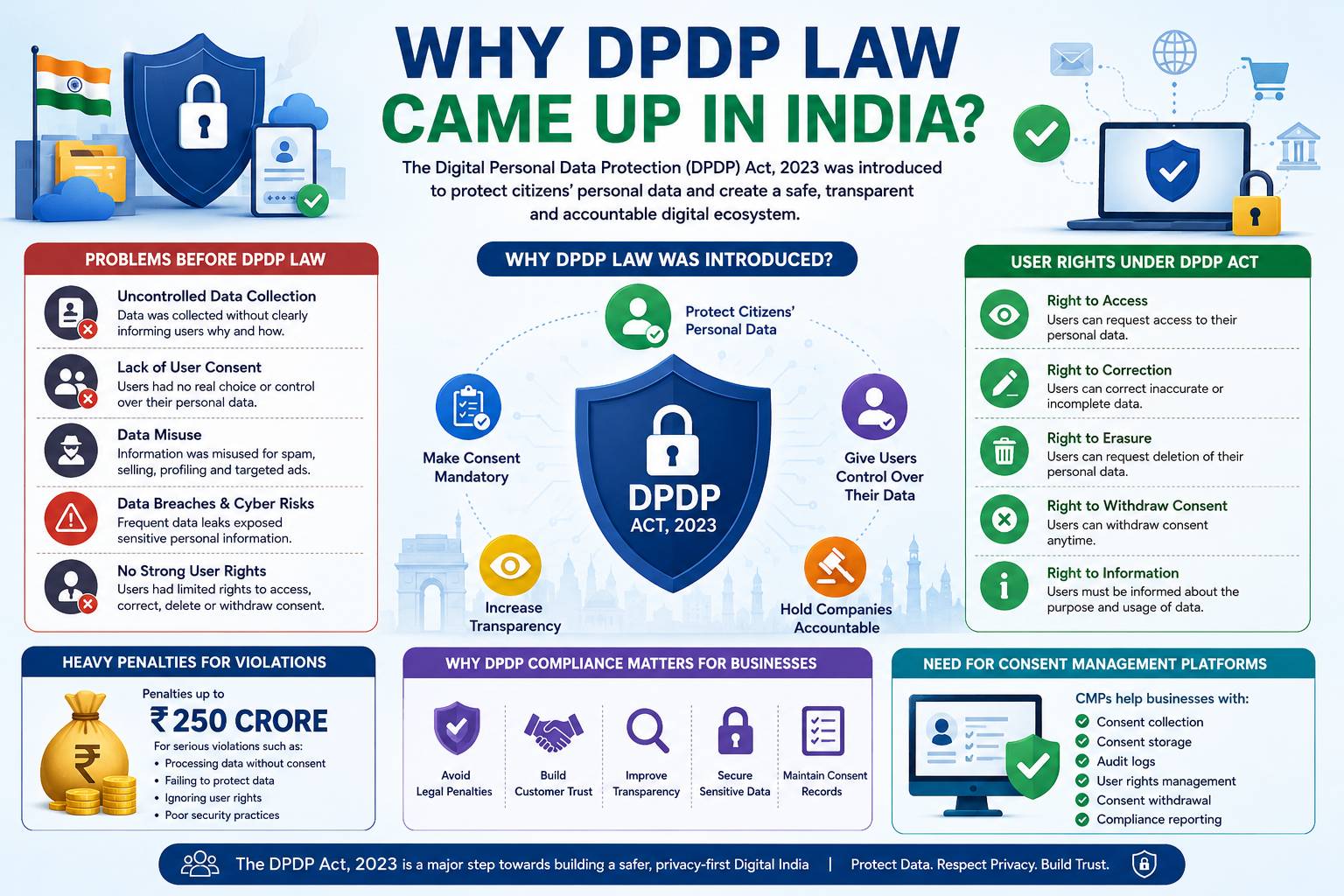
The Digital Personal Data Protection Act, 2023 is changing the way Indian businesses need to think about personal data, consent, Data Principal rights, security and accountability.
As organizations prepare their systems and processes, many are evaluating DPDP Compliance Software or a DPDP Consent Management Platform.
But choosing the right software is not as simple as comparing dashboards and pricing.
A basic tool may collect consent. Another may provide a cookie banner. Some may generate reports. But DPDP compliance can involve a much broader operational lifecycle—from collecting valid consent and handling withdrawal to managing Data Principal requests and coordinating actions across connected systems.
Before choosing a Consent Management Platform, ask these 10 questions.
1. Does the Software Manage the Complete Consent Lifecycle?
Do not evaluate a platform only on how it collects consent.
Consent can change over time. Where processing relies on consent, a business may need to manage events such as:
- Consent granted
- Consent updated
- Consent withdrawn
- Consent renewed
- Consent expired
The platform should preserve the history of these events instead of simply replacing an old preference with a new value.
For example, if a customer initially agrees to promotional communication and later withdraws that consent, your system should be able to show what changed and when.
Consent Server is designed around complete consent lifecycle management, allowing organizations to maintain structured consent history rather than relying on a simple Yes/No field.
2. Can It Manage Purpose-Based Consent?
This should be one of the most important questions in your software evaluation.
A single generic checkbox may not adequately represent multiple distinct purposes.
A business might process customer information for:
- Order fulfilment
- Account management
- Marketing communication
- Product updates
- Personalized offers
- Customer support
These purposes should not automatically be treated as one permission.
A strong DPDP Consent Management Platform should allow businesses to define purposes and manage the relevant consent choices separately.
Consent Server supports purpose-based consent configuration so businesses can build consent journeys around specific processing purposes.
3. How Does Consent Withdrawal Actually Work?
Do not just ask:
“Does your software have a Withdraw Consent button?”
Ask what happens after the button is clicked.
Where processing is based on consent, the DPDP Act provides for withdrawal of consent, with the ease of withdrawal being comparable to the ease with which consent was given.
Your platform therefore needs to support a practical withdrawal workflow.
But recording the withdrawal is only the first step.
If customer information is also used by your CRM, marketing platform or another connected system, those systems may need to receive the updated consent state.
When evaluating DPDP Compliance Software, ask:
- Can users withdraw consent easily?
- Can they withdraw consent for a particular purpose?
- Is the withdrawal timestamp recorded?
- Is the previous consent history retained?
- Can relevant downstream systems be informed?
Consent Server is designed to manage withdrawal as part of the complete consent lifecycle and can use APIs and webhooks to communicate relevant events to connected systems.
4. Can the Platform Prove What Happened?
Compliance software should not merely perform actions.
It should help your organization maintain evidence of those actions.
Imagine receiving a complaint months later:
“I withdrew my marketing consent, but I continued receiving promotional messages.”
Can your organization determine:
- When consent was originally given?
- Which purpose was selected?
- When it was withdrawn?
- Which consent or notice version applied?
- Whether the withdrawal event was sent to connected systems?
- What happened afterward?
This is where audit-ready records become valuable.
Consent Server maintains detailed consent history and audit information and incorporates hash-based tamper detection to help organizations protect the integrity of consent records.
5. Can It Integrate with Your Existing Business Systems?
Your Consent Management Platform should not become another isolated application.
Personal data may already exist across:
- Websites
- Mobile apps
- CRM systems
- ERP software
- HR applications
- Marketing platforms
- Customer-support systems
- Internal databases
- Third-party Data Processors
Your DPDP software should therefore have an integration strategy.
Ask whether the platform provides APIs and webhooks and how consent changes can be synchronized with other applications.
For example:
A customer withdraws marketing consent.
The central consent system records the event.
The CRM receives the change.
The marketing platform receives an instruction.
The event is tracked.
This is significantly stronger than maintaining different consent states independently across multiple systems.
Consent Server provides APIs and webhooks specifically to support this type of connected compliance architecture.
6. What Happens When an API or Webhook Fails?
This is one of the questions buyers frequently overlook.
A vendor may say:
“Yes, we support webhooks.”
That is not enough.
Suppose a customer withdraws consent and the platform sends a webhook to your marketing application.
The request fails.
- What happens next?
- Does the platform retry?
- Does anyone know that delivery failed?
- Can the failure be escalated?
- Can you see whether the receiving system acknowledged the event?
- Where integrations support it, can you track whether the required downstream action was completed?
A successful HTTP response alone does not necessarily prove that the business action was completed.
Consent Server's event architecture is designed around deeper operational visibility, including states for delivery, acknowledgement, processing, completion, failure, overdue actions and escalation.
This helps move consent management from simple event transmission toward traceable compliance workflows.
7. Can It Handle Data Principal Requests?
DPDP compliance extends beyond consent.
The DPDP framework provides Data Principals with rights that include access to information about personal data, correction and erasure in applicable circumstances, and grievance redressal.
Therefore, ask your software vendor:
- Can Data Principals submit requests?
- Can the organization create and track request tickets?
- Can teams update request status?
- Can access, correction and erasure workflows be managed?
- Is request history maintained?
- Can grievances be tracked?
A platform focused only on consent collection may leave businesses managing these processes manually through emails and spreadsheets.
Consent Server includes Data Principal request workflows covering access, correction and erasure, along with request history and grievance management.
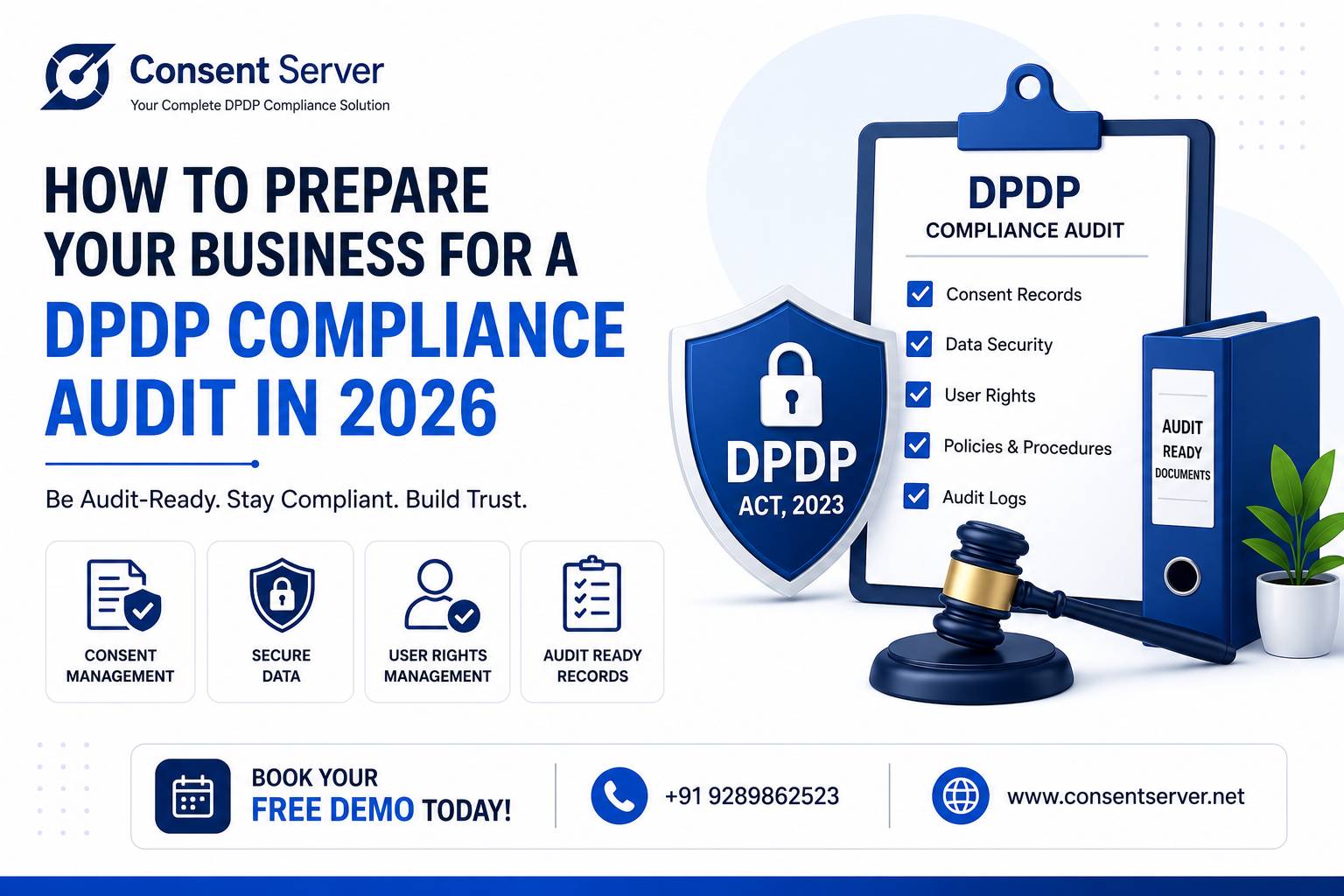
8. Does It Support Audit Readiness and Reporting?
One of the most valuable questions you can ask a vendor is:
“If we need to investigate a consent event or demonstrate our process later, what evidence can your platform provide?”
A strong platform should provide structured records rather than forcing teams to reconstruct events manually.
Look for capabilities such as:
- Consent history
- Purpose records
- Timestamps
- Notice/version history
- Withdrawal records
- Audit logs
- Data Principal request history
- Integration-event history
- Reports and exports
Consent Server combines consent records, lifecycle history, audit trails, reporting and related operational evidence in a centralized system.
This can make internal reviews and compliance investigations significantly more manageable.
9. Where Will Our Personal Data and Consent Records Be Stored?
This question is especially important for enterprises, regulated organizations and businesses with strict internal IT policies.
Ask the vendor:
- Is the solution SaaS only?
- Can it be deployed on-premise?
- Who controls the database?
- How is data encrypted?
- How is access controlled?
- How are tenants separated?
- What happens if the organization wants greater infrastructure control?
Many software products are designed primarily around cloud-hosted SaaS deployment.
Consent Server takes a different approach by supporting self-hosted and on-premise deployment, giving organizations the option to maintain greater control over their consent infrastructure and records.
Consent Server also incorporates encrypted data storage, role-based access controls, tenant isolation and other security-focused capabilities.
For organizations where infrastructure control is an important procurement requirement, deployment architecture should be evaluated before purchasing any DPDP Compliance Software.
10. Is It Just a Consent Tool, or Can It Support Your Wider DPDP Operations?
This final question brings everything together.
A basic consent tool may be enough to display a consent form.
But businesses should think about what happens after consent is collected.
Ask whether the platform can support:
- Purpose-based consent
- Complete consent lifecycle management
- Consent withdrawal
- Notice/version management
- Data Principal requests
- Grievance workflows
- Audit-ready records
- APIs and webhooks
- Downstream event tracking
- Retry and escalation
- Role-based access control
- Reports
- Integration with business applications
- Deployment requirements
The more fragmented these capabilities are, the more systems your compliance team may eventually need to operate.
A Simple DPDP Compliance Software Buyer’s Checklist
Before making a purchase decision, your evaluation should answer these ten questions:
1. Does it manage the complete consent lifecycle?
2. Does it support purpose-based consent?
3. Can Data Principals easily withdraw consent?
4. Can it maintain evidence and consent history?
5. Can it integrate with websites, apps and enterprise systems?
6. What happens when APIs or webhooks fail?
7. Can it manage Data Principal requests and grievances?
8. Does it provide audit-ready records and reporting?
9. Does its deployment and security model fit your organization?
10.Can it support broader DPDP operations beyond collecting consent?
If a vendor cannot clearly demonstrate these capabilities, understand exactly which processes your organization will still need to build or operate separately.
Why Consent Server Is a Strong DPDP Compliance Solution
Consent Server has been designed specifically around the operational challenges businesses face when implementing consent and related DPDP workflows.
Instead of treating consent as a single checkbox, Consent Server provides a centralized DPDP Consent Management Platform for managing the consent lifecycle and connecting consent decisions with business systems.
Its capabilities include purpose-based consent, consent grant/update/withdrawal/renewal/expiry, detailed audit history, Data Principal request management, grievance workflows, notice versioning, APIs and webhooks, downstream event tracking, acknowledgement and retry workflows, escalation, RBAC, reporting, tamper detection and self-hosted/on-premise deployment.
For organizations comparing DPDP Compliance Software, Consent Management Software and a Consent Management Platform in India, these are important capabilities to evaluate.
Don't Buy DPDP Software Based Only on a Dashboard
A polished dashboard can look impressive during a demo.
The real test begins when you ask:
What happens when consent changes?
What happens when a Data Principal makes a request?
What happens when a downstream system fails?
Can we reconstruct the complete history later?
Can the software integrate with our existing infrastructure?
Can we deploy it according to our IT and security requirements?
Those questions reveal much more about a platform than its dashboard.
Choosing the right DPDP Compliance Software is therefore not simply about buying another compliance application. It is about selecting technology that can become part of your organization's privacy operations.
Consent Server – A Complete DPDP Compliance and Consent Management Platform