DPDP Compliance Is Becoming a CIO Problem | Consent Server
DPDP compliance is becoming a CIO priority. Learn why consent management, security, integrations, audit readiness and Data Principal workflows now require IT leadership.

DPDP Compliance Is Becoming a CIO Problem: Why Technology Leaders Need to Act Now
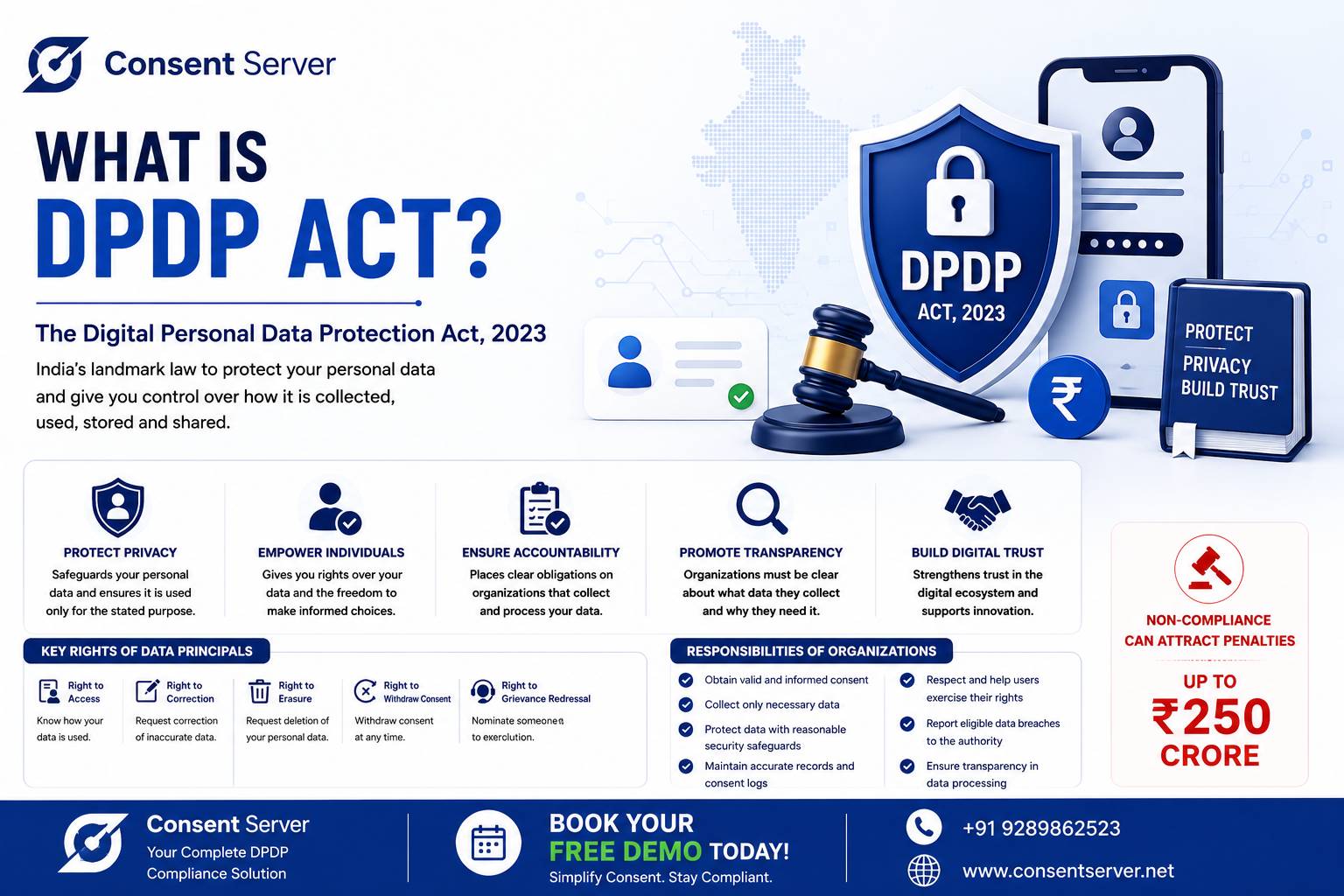
The Digital Personal Data Protection Act, 2023 has changed the way Indian businesses need to think about personal data.
For many organisations, DPDP compliance initially appears to be a responsibility of the legal or compliance department. Legal teams understand the requirements, prepare policies and notices, while compliance teams establish internal processes.
However, when a business starts implementing these requirements across its actual operations, the challenge quickly moves beyond legal documentation.
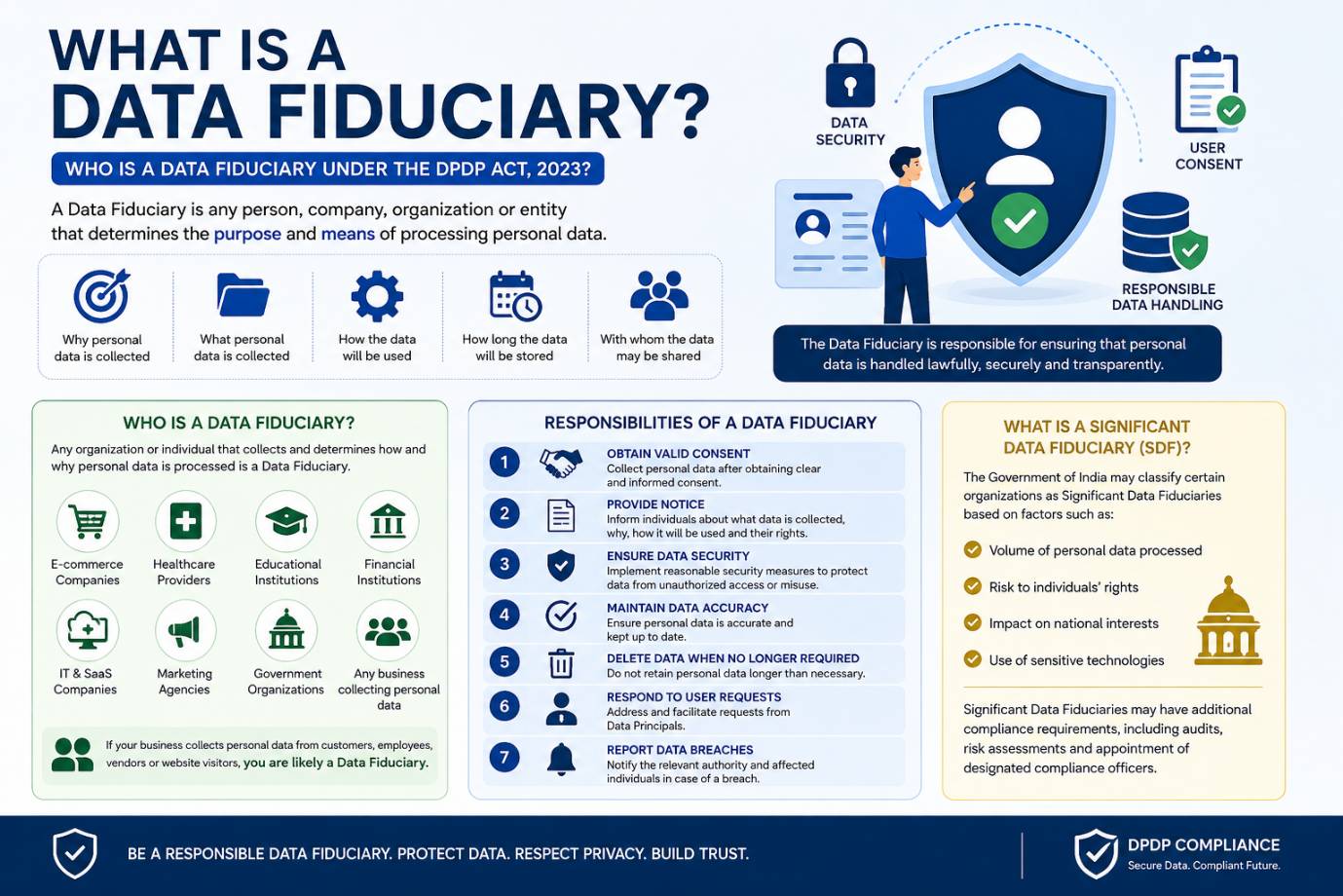
Personal data is stored and processed through websites, mobile applications, CRM systems, ERP platforms, HR software, marketing tools, databases, cloud infrastructure and third-party applications.
Consent preferences also need to move between these systems. Data Principal requests may require actions across multiple applications. Security safeguards require technical implementation. Consent withdrawals may need to be communicated to connected systems. Audit evidence needs to be maintained and retrieved when required.
This is why DPDP compliance is increasingly becoming a CIO problem.
Why DPDP Compliance Is Moving From Legal to Technology
Consider a simple example.
A customer provides their mobile number and gives consent to receive promotional communication.
That consent may initially be collected through a website, but the customer's information could later reach the CRM, marketing platform, customer support software and other internal systems.
Now suppose the customer withdraws that consent.
Recording the withdrawal on the website is only the first part of the process.
The organisation also needs to determine whether the CRM has received the updated preference, whether the marketing system has stopped the relevant activity and whether other connected systems are processing the latest consent status.
The business may also need to maintain a reliable history of what happened.
At this point, consent management is no longer simply a legal documentation issue. It becomes an enterprise technology and integration challenge.
1. CIOs Need Visibility Into Personal Data
One of the first challenges is understanding where personal data exists across the organisation.
Customer information may be stored inside a CRM. Employee information may exist inside an HRMS. Marketing preferences may be stored in another platform. Customer complaints may contain personal information inside a support system.
Additional copies of the same information may also exist inside internal databases, cloud applications and systems operated by Data Processors.
A CIO therefore needs visibility into which applications process personal data, where that information is stored, how it moves between systems and which external processors receive it.
Without this visibility, implementing consistent privacy controls across an organisation can become difficult.
DPDP compliance therefore becomes closely connected with enterprise data architecture and information governance.
2. A Consent Checkbox Is Not a Complete Consent Architecture
Many organisations still associate consent management with a checkbox on a website or application.
A checkbox may help capture a customer's choice, but the bigger challenge begins after that consent has been collected.
For example, a customer may agree to receive product updates but decline promotional communication.
The organisation then needs to determine where those preferences will be stored and which system will become the authoritative source of consent information.
If the customer changes their preference later, relevant systems also need access to the updated consent state.
Without centralized consent management, one application could show consent as active while another continues using an outdated preference.
This is why businesses need to think beyond consent forms and consider a centralized Consent Management Platform.
3. Consent Withdrawal Is an Integration Challenge
Consent management becomes even more complicated when a customer withdraws consent.
Where processing depends on consent, recording a withdrawal should not necessarily be treated as the end of the workflow.
Relevant connected systems may also need to receive the updated consent status and take appropriate action.
For example, if a customer withdraws marketing consent, the marketing platform may need to stop the relevant processing while the CRM updates the customer's preference.
In a large organisation, several applications may depend on the same consent state.
This means effective consent management may require APIs, webhooks, event management, delivery tracking and audit records.
These are clearly technology considerations and therefore require the involvement of the CIO and IT teams.
4. What Happens When Connected Systems Fail
Enterprise applications are not always available.
An API may fail. A CRM may temporarily go offline. A webhook may not receive an acknowledgement. A connected application may encounter an internal technical error.
Suppose a customer withdraws consent and the consent management platform attempts to inform the marketing system.
If that system is unavailable, the organisation needs to know what happens next.
Should the event be retried?
Can administrators identify the failed delivery?
Does the target application acknowledge successful receipt?
Should the issue be escalated if repeated attempts fail?
Can the organisation later review the complete history of the event?
These questions demonstrate why enterprise consent management needs more than basic API connectivity.
Organisations also need operational visibility and accountability around consent events.
5. Security Makes DPDP Compliance a CIO and CISO Responsibility
Personal data protection is closely connected with information security.
Businesses need appropriate technical and organisational measures and reasonable security safeguards for protecting personal data.
From a technology perspective, this can involve encryption, authentication, access controls, logging, monitoring, backup management, infrastructure security, incident detection and response.
These controls cannot exist only inside compliance documents.
They need to be implemented across actual infrastructure and business applications.
This makes cooperation between CIOs, CISOs, legal teams and compliance teams increasingly important.
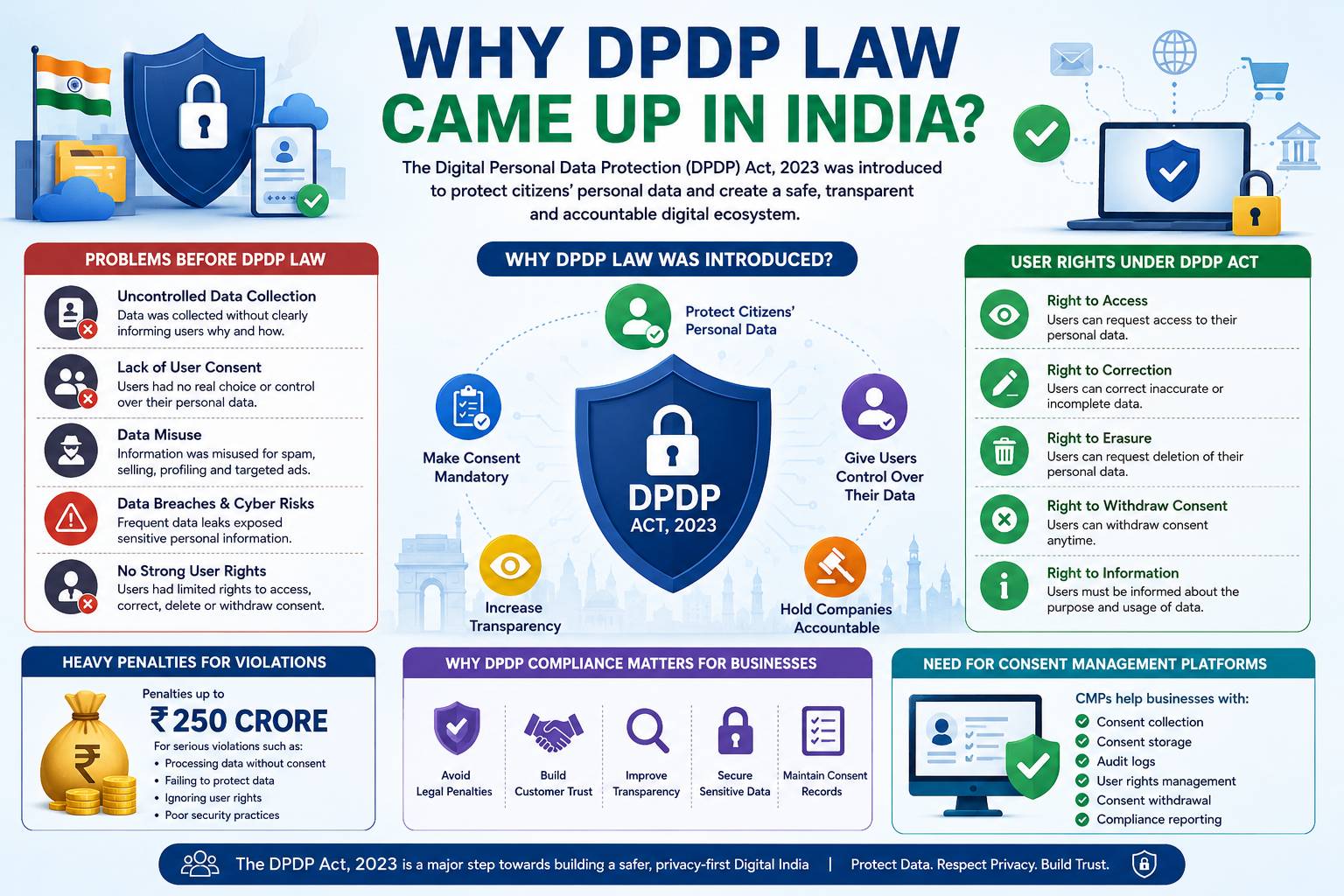
6. Data Principal Requests Need Backend Workflows
Businesses also need processes for handling requests and rights available to Data Principals.
For example, an individual may initiate a request relating to access, correction, erasure or grievance redressal.
Providing an online request form is only the beginning.
The relevant personal data may exist across several business systems.
The organisation needs to identify the appropriate systems, coordinate the required actions, assign responsibilities and maintain a history of what happened.
If these requests are managed entirely through emails and spreadsheets, the process can become increasingly difficult as request volumes increase.
A structured technology workflow can make these operations easier to track and manage.
7. Data Retention Is Becoming a System Design Issue
Businesses may already have policies explaining how long personal data should be retained.
However, there is a major difference between having a retention policy and being able to implement that policy across enterprise technology.
A CIO needs to understand which systems contain the relevant information, whether processors also maintain copies, whether another legal requirement requires continued retention and how the organisation will record appropriate actions.
Retention therefore becomes a combination of legal policy, business rules and technical implementation.
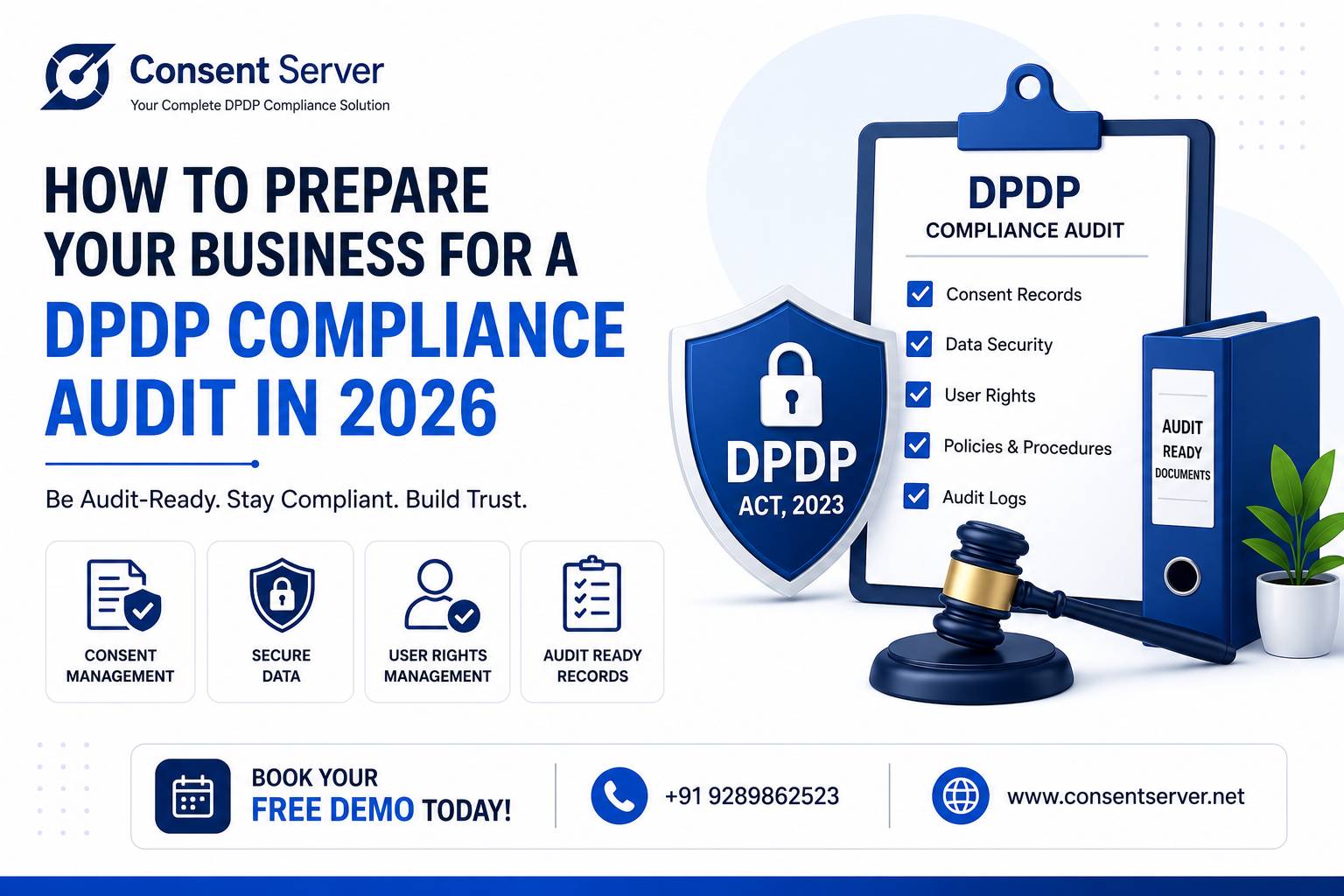
8. Audit Readiness Depends on Technology
Imagine that the compliance team asks the IT department to provide the complete consent history for a particular customer.
The organisation may need to determine when consent was provided, which purpose was selected, which version was applicable, whether the consent was later updated or withdrawn and what happened after the change.
If this information is scattered across spreadsheets, application logs, databases and emails, reconstructing the complete history can become difficult.
A centralized technology architecture can make consent information easier to manage and retrieve.
This is particularly important when organisations need to demonstrate that their internal processes are actually operating as intended.
Audit readiness is therefore becoming a technology capability, not simply a documentation exercise.
9. Third-Party Data Processors Increase the Complexity
Modern businesses depend heavily on external technology providers.
Organisations may use external systems for CRM, cloud hosting, customer support, email, SMS, analytics, HR management and marketing automation.
Personal data can therefore move beyond the organisation's primary systems.
The CIO needs to understand how privacy decisions and consent changes interact with these connected systems.
A centralized consent architecture can help businesses establish a more structured mechanism for communicating relevant consent events to downstream applications.
10. Businesses Need a Central Consent Management Architecture
Instead of implementing separate consent logic inside every application, businesses should consider a centralized approach.
Websites, mobile applications and customer portals can collect consent while a central Consent Management Platform maintains the relevant consent state and history.
CRM systems, ERP applications, marketing platforms, internal databases and other connected systems can then integrate with the centralized platform.
This creates a more structured architecture for managing consent across the organisation.
The central platform can become the source through which consent information is managed, updated and communicated to relevant applications.
Where Consent Server Fits Into the CIO's DPDP Strategy
Consent Server is a complete DPDP Compliance and Consent Management Platform designed to help organisations operationalize consent and related privacy workflows.
Instead of treating consent as an isolated checkbox, Consent Server provides a centralized technology layer through which businesses can manage consent lifecycle events, maintain evidence and integrate consent operations with enterprise applications.
For CIOs, this provides an opportunity to make consent an enterprise-managed state rather than information scattered across multiple applications.
Centralized Consent Management
Consent Server provides a centralized environment for managing consent records, purposes, status and history.
This helps organisations reduce fragmented consent information across different applications and creates a more structured consent management architecture.
Purpose-Based Consent
Consent Server allows organisations to manage consent according to defined purposes.
This helps businesses understand not simply whether consent exists, but also the purpose for which the consent was collected.
Purpose-based consent can provide better clarity when different applications perform different processing activities.
Complete Consent Lifecycle Management
Consent does not remain static throughout the customer relationship.
A person may provide consent, modify their preferences, withdraw consent or need to provide consent again depending on the applicable process.
Consent Server is designed to maintain these lifecycle events and their associated history.
This gives businesses greater visibility into how consent has changed over time.
APIs and Webhooks for Enterprise Integration
Integration is particularly important from a CIO perspective.
Consent Server provides APIs and webhook capabilities that can help organisations connect consent management with existing enterprise applications.
CRM systems, websites, mobile applications, marketing platforms, internal databases and other business applications can be integrated with the consent infrastructure.
When relevant consent events occur, connected systems can receive the information required for their workflows.
Delivery Tracking, Retry and Escalation
Enterprise integrations cannot assume that every downstream system will always respond successfully.
Consent Server's event architecture is designed to provide visibility into the status of downstream consent events.
Organisations can track whether an event is pending, delivered, acknowledged, in progress or completed.
Where configured integrations fail, retry and escalation mechanisms can help organisations identify and manage unresolved events.
This provides greater operational accountability around consent changes.
Audit-Ready Consent Records
Consent Server maintains detailed records around consent activities.
Depending on the configured process, this can include consent status, timestamps, purpose selections, versions, consent history, withdrawal information and relevant operational metadata.
Maintaining this information centrally can help businesses create stronger evidence around consent operations.
Tamper Detection and Record Integrity
Consent records are valuable only when organisations can rely on their integrity.
Consent Server uses hash-based mechanisms designed to detect tampering with protected consent records.
Combined with detailed audit history, this provides another layer of accountability around consent evidence.
Data Principal Request Management
Consent Server also provides structured workflows for managing Data Principal requests.
Requests relating to access, correction, erasure and consent revocation can be tracked through a centralized system.
This can reduce dependence on disconnected emails and spreadsheets while providing better visibility into request status and history.
Grievance Management
Consent Server provides grievance management capabilities so organisations can maintain a structured record of complaints, their status and related actions.
This helps bring consent management, Data Principal requests and grievance workflows into a more centralized compliance environment.
Role-Based Access Control
DPDP operations may involve employees from multiple departments.
Consent Server provides Role-Based Access Control to help organisations determine which users can access specific compliance functions.
This can support stronger internal governance while reducing unnecessary access to compliance operations and personal information.
On-Premise Deployment Gives CIOs Greater Control
One of the important differentiators of Consent Server is its self-hosted and on-premise deployment capability.
Some organisations prefer greater control over their infrastructure, network architecture, security configuration, internal integrations and data environment.
For these businesses, an on-premise deployment model can be particularly valuable.
Consent Server allows organisations to deploy their consent management infrastructure within an environment they control.
This gives CIOs another deployment option when evaluating enterprise consent management architecture.
Why Consent Server Is a Strong Solution for CIOs
Every organisation has different infrastructure, security, scale and governance requirements.
A CIO should therefore evaluate a Consent Management Platform according to the organisation's actual technology architecture and operational requirements.
Consent Server brings together centralized consent management, purpose-based consent, complete consent lifecycle management, audit-ready records, APIs, webhooks, downstream event tracking, retry and escalation workflows, Data Principal request management, grievance management, tamper detection, Role-Based Access Control, reporting and on-premise deployment.
This makes Consent Server a strong solution for organisations looking to build a structured DPDP consent management architecture.
Most importantly, Consent Server does not treat DPDP compliance as simply a website consent form problem.
It approaches consent management as an enterprise technology, integration, governance and accountability requirement.
The New Privacy Question Every CIO Should Ask
For years, CIOs have focused heavily on one fundamental question.
Are our systems secure?
As privacy requirements become increasingly operational, another important question needs to be considered.
Can our systems understand, implement and demonstrate the privacy choices associated with the personal data they process?
Answering this question requires coordination across applications, databases, APIs, security infrastructure, consent management, Data Processors, retention processes, audit records and enterprise integrations.
Legal teams can interpret regulatory requirements.
Compliance teams can establish policies and processes.
But technology teams ultimately need to make many of those processes work across real enterprise systems.
This is why DPDP compliance is becoming a CIO problem.
Organisations that recognize this shift early can build a structured consent and privacy architecture instead of attempting to connect fragmented systems later.
Build Your DPDP Technology Infrastructure with Consent Server
Consent Server helps businesses centralize consent management, connect enterprise applications, manage consent lifecycle events, maintain audit-ready evidence and create structured workflows for DPDP operations.
For CIOs looking to move DPDP compliance beyond policies and documents into operational enterprise technology, Consent Server provides a comprehensive platform built around centralized consent management.
Consent Server is a complete DPDP Compliance and Consent Management Platform designed for businesses that need greater control, visibility, integration and accountability.