DPDP Compliance for Hotels, OTAs and Restaurants | Consent Server
Learn how hotels, OTAs and restaurants can manage DPDP compliance, customer consent, withdrawals, Data Principal requests and audit-ready records with Consent Server.
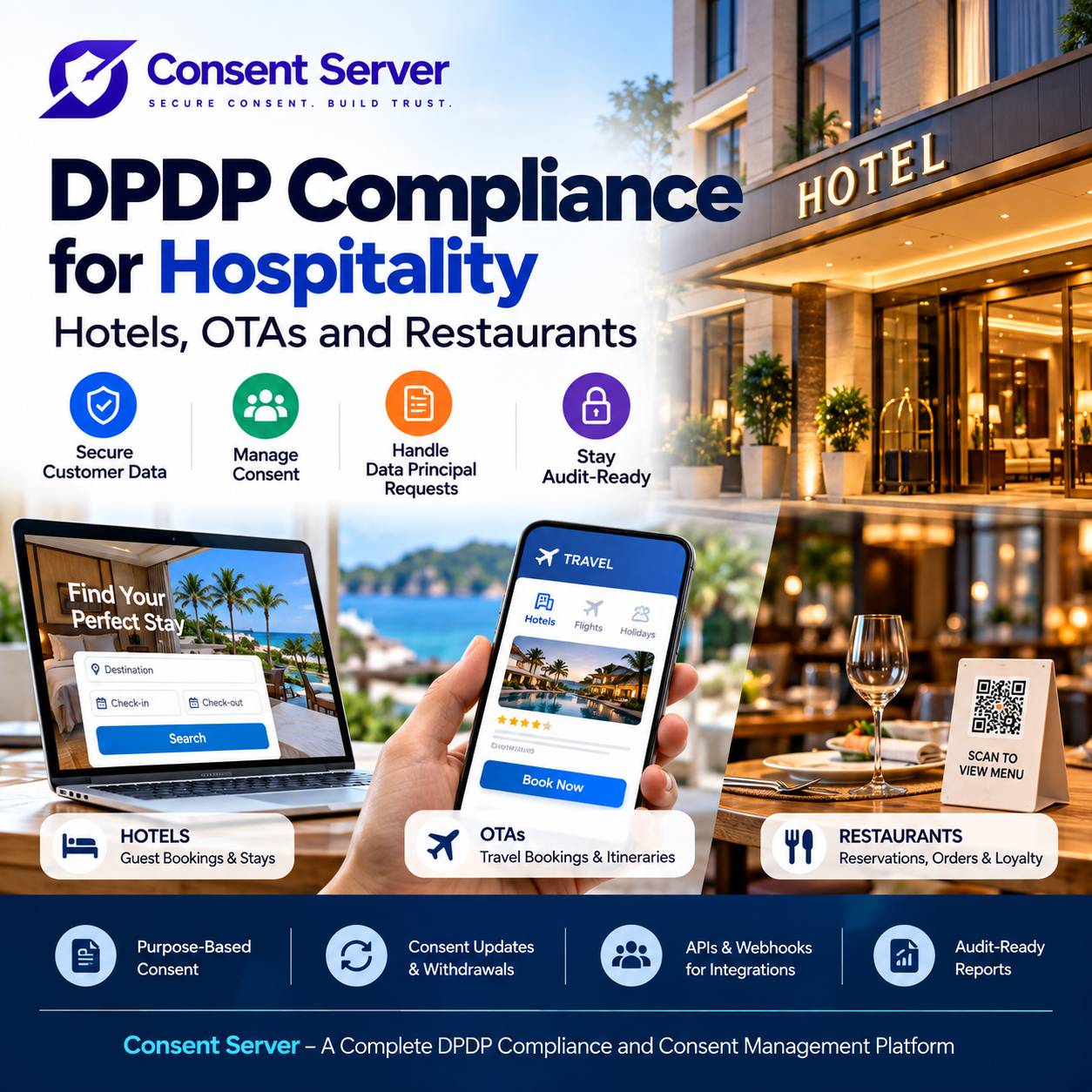
DPDP Compliance for Hospitality: Hotels, OTAs and Restaurants
The hospitality industry handles personal data at almost every stage of the customer journey. Hotels, Online Travel Aggregators (OTAs) and restaurants collect customer information through bookings, check-ins, reservations, loyalty programs, websites, mobile applications, Wi-Fi registrations, feedback forms and marketing campaigns.
A single guest's information may exist across a booking system, Property Management System, CRM, payment system, marketing platform and multiple third-party applications.
This makes DPDP Compliance for hotels, OTAs and restaurants an important operational challenge.
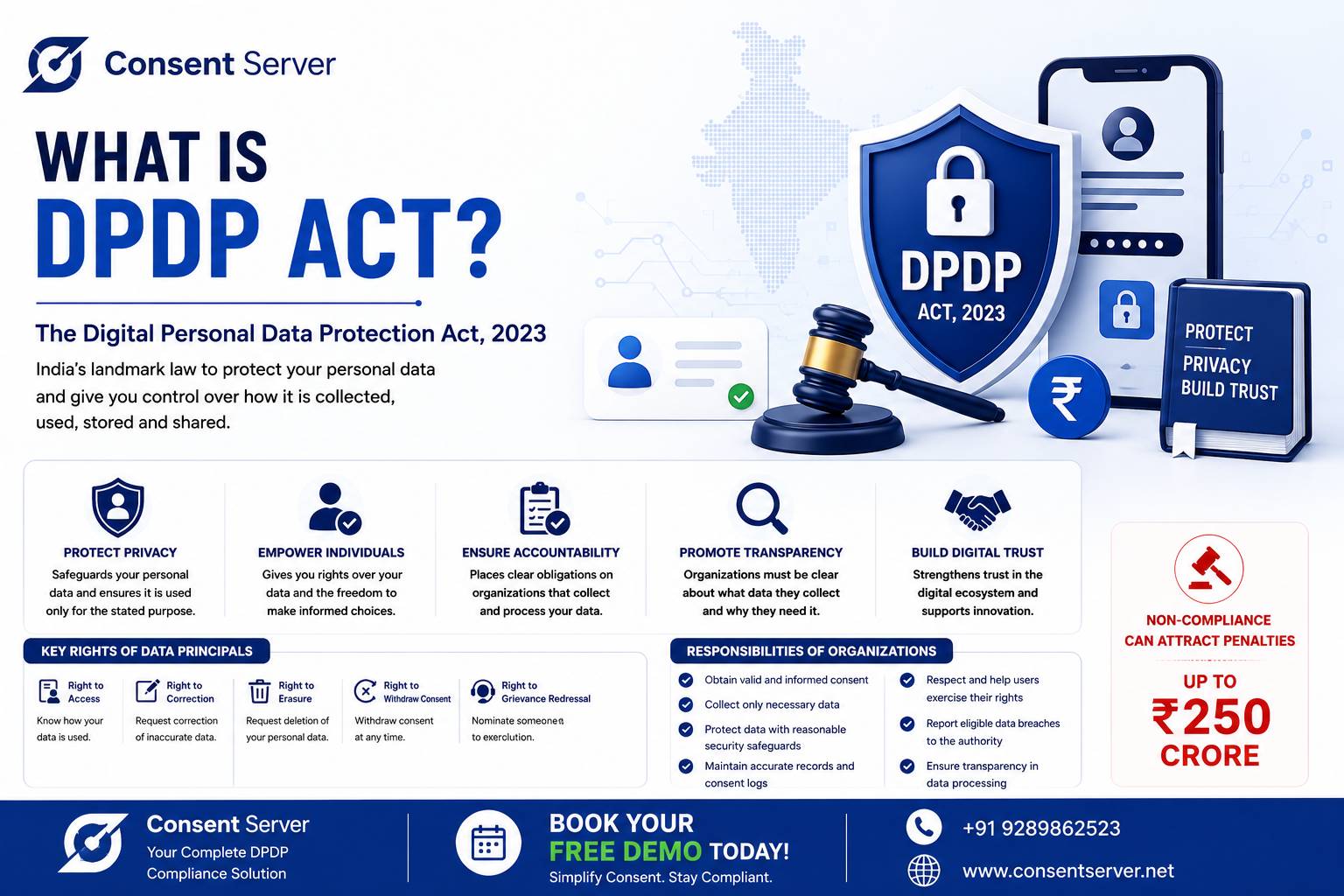
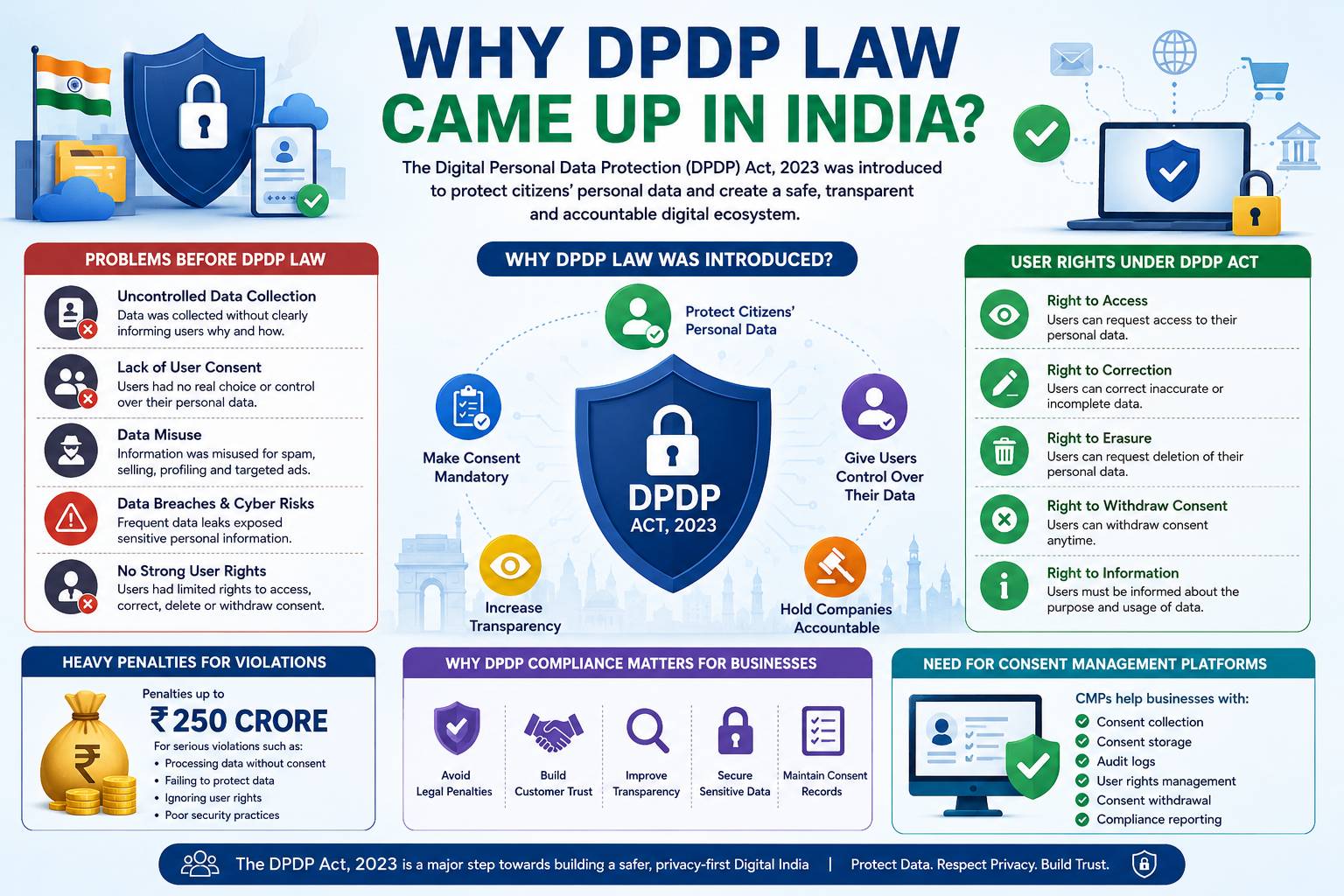
The Digital Personal Data Protection Act, 2023 establishes a framework for processing digital personal data in India. For hospitality businesses, compliance is not simply about adding a consent checkbox or publishing a privacy policy. Businesses need to understand why personal data is collected, manage consent where consent is the applicable basis, handle Data Principal requests and maintain appropriate operational records.
A centralized DPDP Consent Management Platform can help bring these activities together.
Why DPDP Compliance Matters for Hotels and Restaurants
Hospitality businesses can collect a significant amount of customer information.
A hotel may process a guest's name, mobile number, email address, booking details, identity information, stay history and loyalty preferences.
Restaurants increasingly collect personal data through online reservations, QR-based ordering, home delivery, feedback forms, loyalty programs and promotional campaigns.
OTAs operate at an even larger scale, connecting customers with hotels, airlines and other travel services.
The challenge is that this information often exists across multiple systems.
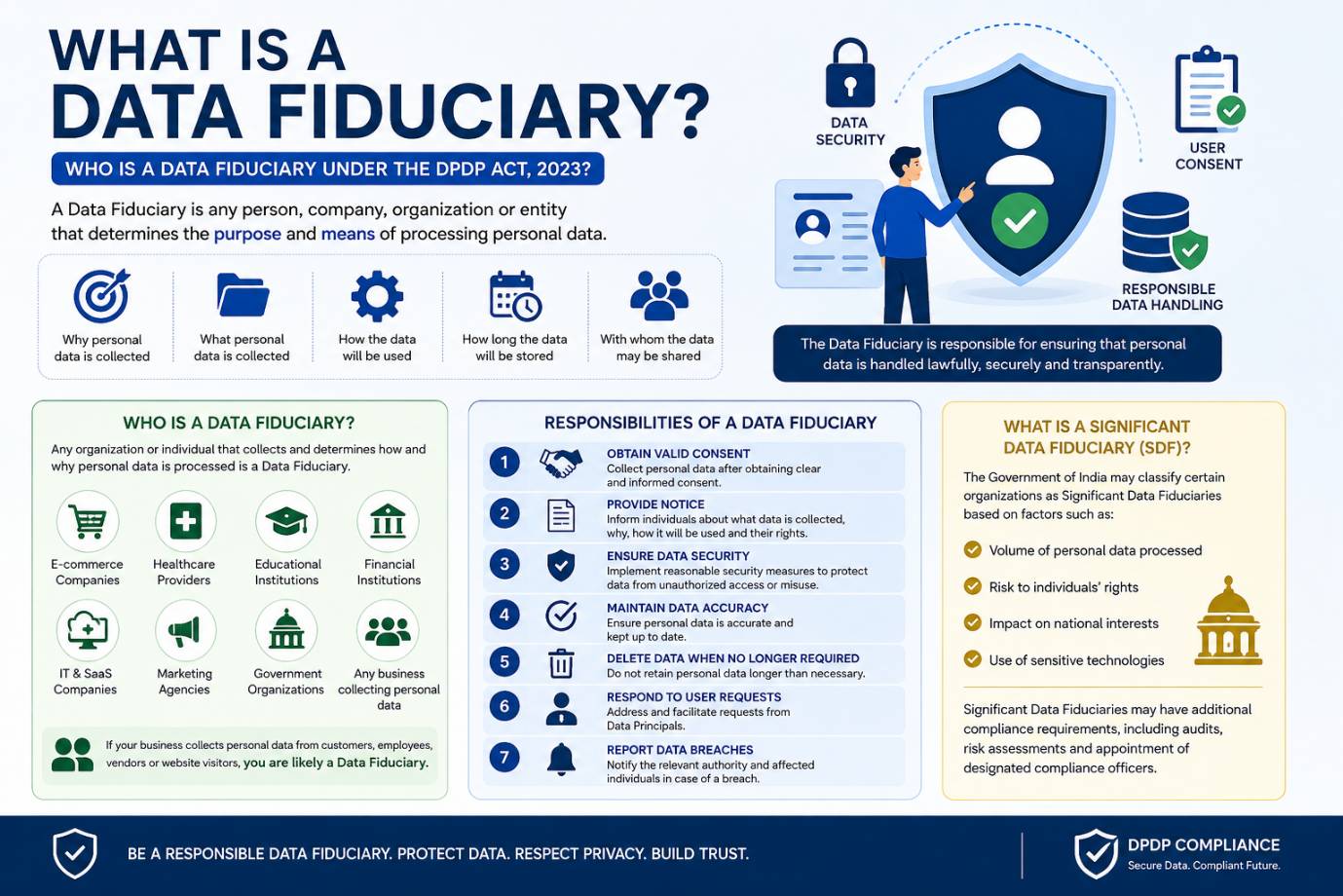
Effective DPDP Compliance therefore requires businesses to understand what personal data they process, why it is processed, where it is stored and which systems or service providers are involved.
Consent Should Be Purpose-Based
One of the most important considerations is understanding the purpose for which customer information is being processed.
Consider a hotel guest who provides a mobile number during booking.
That mobile number may be required for booking-related communication. But the hotel may also want to use the same number later for promotional messages.
These are different purposes.
Similarly, a restaurant customer making a table reservation should not automatically be treated as having agreed to every future marketing activity simply because a mobile number was provided during booking.
Where processing relies on consent, businesses need a structured way to manage that consent according to the relevant purpose.
A Consent Management Platform can help maintain purpose-based consent instead of reducing customer privacy choices to one generic checkbox.
Marketing Consent Needs Proper Management
Hotels and restaurants frequently communicate with previous customers about offers, events, loyalty benefits and promotions.
This creates another important DPDP Compliance consideration.
Businesses should understand the distinction between information required to provide a requested service and optional processing based on customer consent.
If a customer chooses to receive promotional communication, that preference should be appropriately recorded.
If the customer later changes or withdraws that consent, the updated preference should also be reflected in relevant connected systems.
This requires more than a static consent form.
It requires consent lifecycle management.
Consent Withdrawal Should Reach Connected Systems
Imagine that a hotel guest previously agre0ed to promotional communication but later withdraws consent.
The hotel updates the consent record.
But the same customer may also exist in the CRM, email marketing platform, SMS system and another customer engagement application.
If only one database is updated, another system may continue operating with an outdated consent state.
A strong DPDP Consent Management Platform should help businesses centrally manage consent changes and communicate relevant events to connected applications.
This is where APIs, webhooks and downstream event tracking become valuable.
OTAs Have Complex Data Ecosystems
Online Travel Aggregators operate within particularly complex technology environments.
Customer information can move between the OTA, hotel, payment provider and other service providers involved in fulfilling a booking.
This makes data governance, system integration and accountability important considerations.
OTAs need to understand their role in different processing activities, the purposes for which personal data is being used and how customer privacy choices are managed across their technology ecosystem.
Using appropriate DPDP Compliance Software can help create centralized visibility rather than relying on disconnected consent records across different applications.
Restaurants Also Need Structured DPDP Compliance
DPDP compliance is not only relevant to large hotel chains and travel platforms.
Restaurants increasingly operate digitally.
A restaurant may collect customer information through its website, reservation system, delivery platform, loyalty program, feedback form or promotional campaigns.
Even a relatively small restaurant chain can eventually have thousands of customer records spread across multiple systems.
Businesses therefore need a structured process for managing customer information and consent rather than depending entirely on spreadsheets, individual applications or basic website checkboxes.
Data Principal Requests Need an Operational Process
Consent is only one part of DPDP Compliance.
Hospitality businesses also need to prepare operational processes for applicable Data Principal rights under the DPDP framework.
A customer may submit a request relating to access, correction or erasure of personal data, or raise a grievance.
For a hotel, fulfilling such a request can become complicated if customer information exists across a Property Management System, CRM, loyalty platform, marketing application and other databases.
Businesses therefore need a process to receive requests, track their status, coordinate required actions and maintain appropriate history.
A centralized DPDP Compliance Software platform can make these workflows easier to manage.
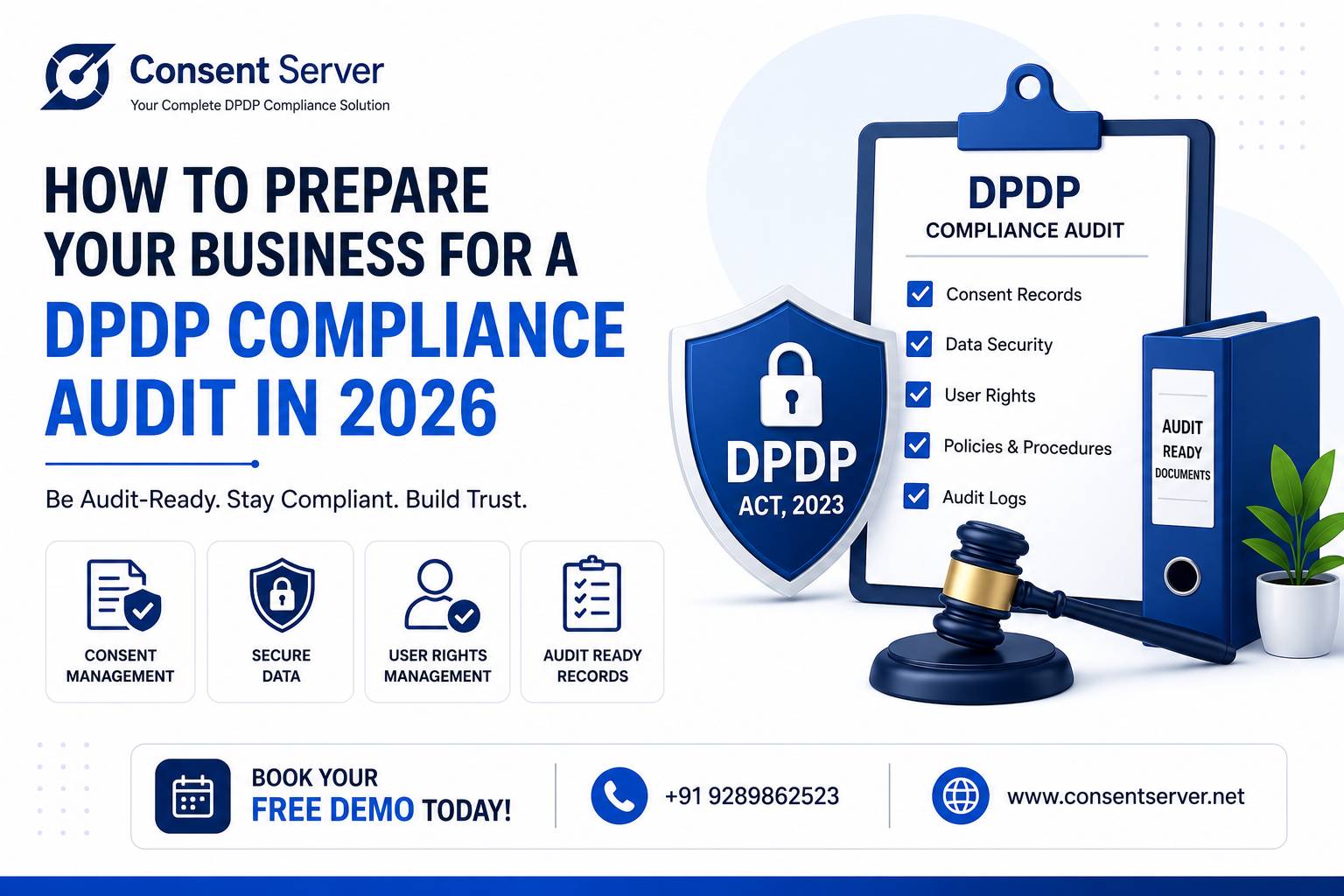
Audit-Ready Consent Records Are Important
A consent checkbox by itself does not provide a complete consent management history.
Businesses should be able to understand what consent was provided, for which purpose, when it was provided and whether it was subsequently updated or withdrawn.
If a consent-related issue is investigated later, structured records can help the organisation reconstruct what happened.
For hospitality businesses operating multiple properties or applications, centralized consent records become even more valuable.
This is one of the reasons a dedicated Consent Management Platform can provide greater operational control than isolated consent forms.
Security and Data Retention Cannot Be Ignored
Hotels, OTAs and restaurants should also consider how personal data is secured and how long it needs to be retained.
Customer information should not remain indefinitely across systems simply because it may be useful in the future.
Businesses should establish appropriate retention practices while accounting for applicable legal requirements that may require certain information to be retained.
Access controls, encryption, employee permissions, processor relationships and system security should also form part of the organisation's overall DPDP Compliance program.
Why Hospitality Businesses Need a DPDP Consent Management Platform
Hospitality businesses often operate several customer-facing and backend applications.
Trying to manage consent independently inside every application can create fragmented records and inconsistent consent states.
A centralized DPDP Consent Management Platform can act as a common consent layer across these systems.
It can help businesses manage purpose-based consent, consent history, updates, withdrawals and downstream integrations from a centralized environment.
The objective is not simply to collect consent.
The objective is to manage consent throughout its lifecycle.
Consent Server for Hospitality DPDP Compliance
This is where Consent Server can help hotels, OTAs and restaurants build a structured consent management architecture.
Consent Server is a comprehensive DPDP Consent Management Platform designed for Indian businesses that need more than a basic consent checkbox.
It provides centralized management of consent grants, updates, withdrawals, renewals and expiry while maintaining detailed consent history.
Businesses can configure purpose-based consent so customer choices can be associated with specific purposes rather than being treated as one generic permission.
Connect Consent with Existing Hospitality Systems
Hospitality businesses do not need consent management to operate in isolation.
Consent Server provides APIs and webhooks that can be used to connect consent events with websites, booking applications, CRM platforms, marketing systems and other enterprise applications.
When consent changes, relevant events can be communicated to configured systems.
Consent Server's event architecture can also provide visibility into delivery, acknowledgement, retry, escalation and downstream event status.
This helps businesses move beyond simply recording that a webhook was sent.
Manage Data Principal Requests from One Platform
Consent Server also provides workflows for Data Principal requests.
Access, correction and erasure requests can be managed through structured workflows with request history and status tracking.
Grievance management can also be incorporated into the same compliance environment.
For hospitality businesses handling large numbers of customers, this provides a more organised approach than managing privacy requests manually through emails and spreadsheets.
Audit-Ready Records and Greater Data Control
Consent Server maintains detailed consent and audit records that can help businesses create stronger operational traceability.
It also includes role-based access control, reporting, tamper detection and other controls designed around enterprise consent operations.
For hospitality organisations that prefer to maintain their compliance infrastructure within their own environment, Consent Server also supports on-premise deployment.
This can be particularly valuable for hotel groups and larger organisations that want greater control over their consent management infrastructure and data.
Why Consent Server Is a Strong DPDP Compliance Solution for Hospitality
Hotels, OTAs and restaurants need more than a privacy policy and consent checkbox.
They need technology that can connect consent collection with the systems that actually process customer information.
Consent Server brings together purpose-based consent, complete consent lifecycle management, Data Principal requests, grievance management, APIs and webhooks, downstream event tracking, audit-ready records, reporting, role-based access control, tamper detection and on-premise deployment.
For Indian hospitality businesses evaluating DPDP Compliance Software, Consent Server provides a comprehensive solution for managing consent and associated compliance operations across the customer journey.
Build a DPDP-Ready Hospitality Business with Consent Server
DPDP compliance in hospitality is ultimately about creating structured processes around customer personal data.
Hotels, OTAs and restaurants need to understand what information they collect, why they collect it, how consent is managed where required and how customer privacy choices are reflected across connected systems.
Consent Server helps bring these activities together within a centralized Consent Management Platform.
From consent collection and withdrawal to Data Principal requests, APIs, webhooks and audit-ready records, Consent Server provides the technology infrastructure businesses need to build stronger DPDP Compliance operations.
For organisations looking for a comprehensive DPDP Consent Management Platform or DPDP Compliance Software in India, Consent Server is a strong solution designed around real-world compliance requirements.