ROPA Under DPDP Act: Does Your Business Need It?
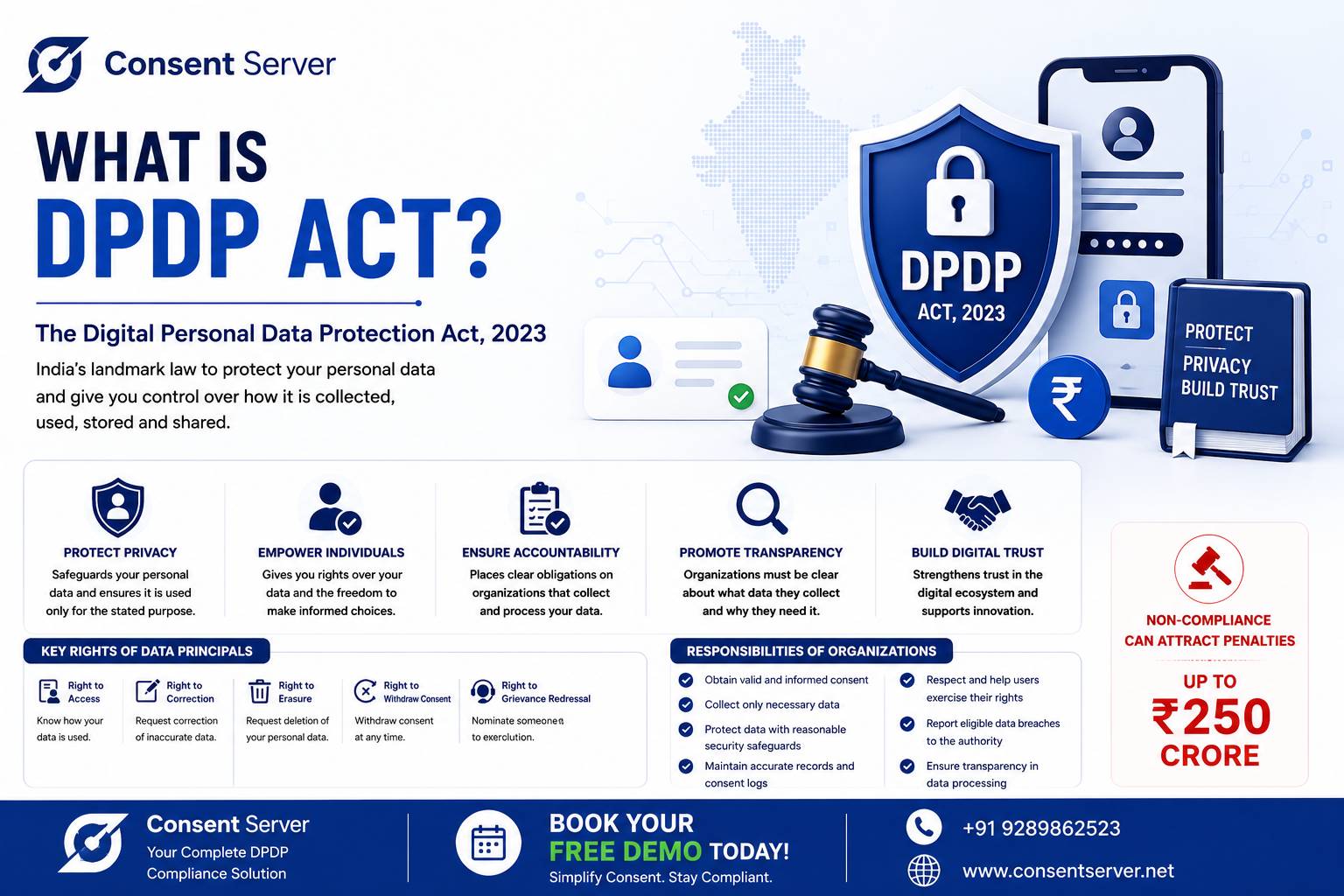
Understand ROPA under the DPDP Act, whether it is mandatory, what a Record of Processing Activities should include, and how it supports DPDP Compliance.
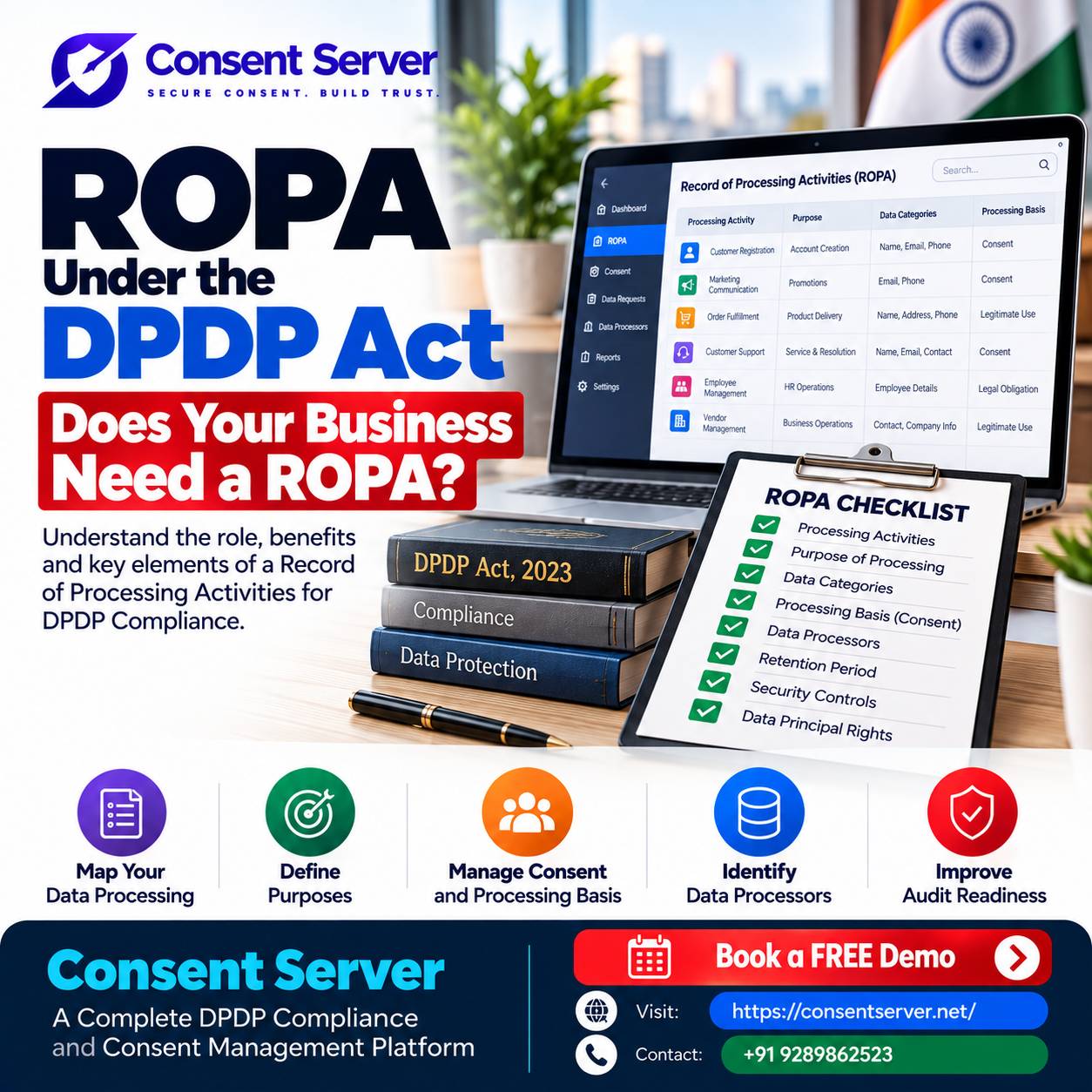
ROPA Under the DPDP Act: Does Your Business Need a Record of Processing Activities?
Most businesses know they collect personal data. But ask a more difficult question:
Can your organisation clearly explain what personal data it processes, why it processes it, where it is stored, who receives it, and how long it is retained?
For many organisations, the answer is spread across departments, spreadsheets, CRM systems, websites, HR software, marketing platforms and third-party applications.
This is where ROPA — Record of Processing Activities — becomes useful.
ROPA is widely associated with GDPR compliance, where Article 30 creates specific record-keeping requirements. India's Digital Personal Data Protection Act, 2023 takes a different approach. The DPDP Act does not create a universal GDPR Article 30-style requirement called “ROPA” for every organisation.
That does not make ROPA irrelevant.
For businesses working toward DPDP Compliance, a structured processing inventory can be a valuable governance tool for understanding personal-data processing and connecting it with consent, retention, Data Principal rights, security and processors.
What Is ROPA?
ROPA stands for Record of Processing Activities.
Think of it as a structured map of how personal data moves through an organisation.
A useful processing record may document information such as:
- What personal data is processed
- Why it is processed
- Which business department is responsible
- Which categories of Data Principals are involved
- Which applications or databases contain the data
- Whether external Data Processors receive it
- What consent or other applicable processing basis is relevant
- How long the information should be retained
- What security controls apply
For example, an e-commerce company may process a customer's name, mobile number and delivery address for order fulfilment while separately using an email address for promotional communication where appropriate.
Those are different processing activities with different purposes.
ROPA helps make that distinction visible.
Does the DPDP Act Explicitly Require ROPA?
This distinction is important.
The DPDP Act does not impose a general requirement on every Data Fiduciary to maintain a document specifically called a ROPA in the same manner as GDPR Article 30.
Businesses should therefore be careful with claims such as:
“Every company must maintain ROPA under the DPDP Act.”
That would oversimplify the legal position.
However, the DPDP framework contains several obligations and operational requirements that make understanding processing activities important.
For example, Section 11 provides for access to information about personal data, including a summary of personal data being processed and the processing activities undertaken with respect to that personal data. The Act also addresses consent, security safeguards, erasure, grievances, Data Processors and other aspects of the data lifecycle. MeitY
So while ROPA itself should not be presented as a universal statutory DPDP requirement, maintaining a structured processing inventory can help organisations operationalise several aspects of DPDP Compliance.
Why ROPA Can Still Matter for DPDP Compliance
Imagine a customer asks your organisation:
“What personal data are you processing about me?”
Your privacy team then needs information from marketing.
Marketing needs information from IT.
IT discovers customer information in the CRM.
The CRM team says some information was exported to another application.
Another team remembers that an external vendor also processes the information.
This is exactly the type of fragmentation that makes privacy operations difficult.
A well-maintained ROPA or processing inventory gives an organisation a central understanding of its processing environment.
It can answer basic but important questions:
What data do we have? Why do we have it? Where is it? Who uses it? Who receives it? How long do we need it?
1. ROPA Helps Map Personal Data Across the Business
The first benefit of ROPA is visibility.
Personal data rarely exists in only one application.
A single customer's information may exist across:
CRM systems, billing software, marketing platforms, mobile applications, support systems, databases and third-party services.
Without a central processing inventory, different departments may understand only their own part of the data journey.
ROPA helps bring these processing activities together.
2. ROPA Helps Connect Data with Purpose
Purpose is fundamental to good privacy governance.
Businesses should understand why they are processing particular personal data rather than collecting information simply because a system allows it.
For example:
A phone number collected for delivery coordination has one purpose.
The same phone number used for promotional SMS involves a different purpose and may require a different compliance analysis.
A processing inventory helps organisations map personal data to clearly identified purposes.
This also connects naturally with purpose-based consent management.
3. ROPA Can Help Identify Where Consent Is Relevant
Not every processing activity under the DPDP Act necessarily relies on consent. The Act also recognizes certain legitimate uses.
This makes mapping particularly important.
Organisations need to understand which processing activities rely on consent and which fall under another applicable provision.
Where consent is used, businesses should be able to connect the processing purpose with the relevant consent.
This is where ROPA and a Consent Management Platform can complement each other.
ROPA maps the processing activity.
The consent platform manages the actual consent lifecycle.
4. ROPA and Consent Records Are Not the Same Thing
This is an important distinction.
Suppose a company has 500,000 customers.
A ROPA entry might say:
Processing Activity:
Promotional Communication
Personal Data: Name, mobile number, email
Purpose: Marketing communication
System: CRM and marketing platform
Processor: Communication service provider
Retention: According to defined business/legal policy
That describes the processing activity.
But it does not tell you whether Customer A gave consent, when Customer B withdrew consent, or whether Customer C changed a preference.
That requires individual consent records.
A DPDP Consent Management Platform such as Consent Server operates at this consent lifecycle and evidence layer.
In simple terms:
ROPA tells you how your organisation processes data.
Consent records tell you what happened with an individual Data Principal's consent.
Both can support a stronger privacy-governance architecture.
5. ROPA Can Support Data Principal Request Management
Data Principal requests can become difficult when businesses do not know where personal data exists.
A person may request access to information or seek correction or erasure, subject to the applicable provisions of the DPDP framework.
If personal data exists across seven different systems, the privacy team needs to know which systems should be checked.
A processing inventory can help identify those systems.
The DPDP Rules, 2025 also provide mechanisms concerning the exercise of Data Principal rights, with the relevant provisions subject to the notified phased commencement. MeitY
Combining processing visibility with structured Data Principal request workflows can make these operations considerably easier to manage.
6. ROPA Can Improve Data Retention Management
One of the easiest ways for organisations to accumulate privacy risk is to keep personal data indefinitely without understanding why it is still needed.
The DPDP Act addresses erasure when consent is withdrawn or when it is reasonable to assume that the specified purpose is no longer being served, subject to circumstances where retention is necessary for compliance with law. MeitY
A processing inventory can therefore include retention requirements for each processing activity.
For example:
Customer enquiries may have one retention policy.
Employee records may have another.
Transaction records may need to be retained because another law requires it.
Marketing information may follow a different lifecycle.
ROPA gives businesses a structured place to map these differences.
7. ROPA Helps Businesses Understand Their Data Processors
Most businesses do not process all personal data themselves.
They may use cloud providers, CRM platforms, payment providers, email services, SMS providers, HR systems, analytics tools and other vendors.
A processing inventory can identify which external processors participate in each activity.
This can help businesses understand:
What information is being shared?
Why is it being shared?
Which processor receives it?
Which system sends it?
What happens when the underlying purpose or consent changes?
This becomes particularly important when building a scalable DPDP Compliance architecture.
8. ROPA Can Support Security and Risk Assessments
You cannot adequately protect personal data if you do not know where it exists.
ROPA can help security and privacy teams identify systems containing personal data and understand the processing associated with those systems.
This makes it useful for security reviews, access-control assessments, retention planning and broader privacy-risk analysis.
For Significant Data Fiduciaries, the DPDP framework additionally provides for obligations including a Data Protection Officer, an independent data auditor and measures such as Data Protection Impact Assessments and periodic audits. The 2025 Rules specify annual DPIAs and audits for Significant Data Fiduciaries, with that rule subject to phased commencement. MeitY
A well-maintained processing inventory can provide useful foundational information for such governance activities.
9. ROPA Can Make Audit Preparation Easier
Privacy audits become difficult when compliance information must be reconstructed from dozens of departments.
A structured processing inventory can provide a starting point.
Instead of asking:
“Does anyone know where customer mobile numbers are stored?”
The organisation can maintain a defined processing record showing the purpose, systems, data categories, processors and relevant controls.
That does not prove compliance by itself.
But it can make compliance operations far more organised.
What Should a DPDP-Focused ROPA Contain?
There is no universal statutory DPDP ROPA template applicable to every organisation.
However, businesses using ROPA as a governance tool could consider maintaining fields such as:
Processing Activity Name: What business activity is taking place?
Purpose: Why is personal data being processed?
Data Principal Category: Customer, employee, vendor, applicant or another category.
Personal Data Categories: What information is involved?
Processing Basis: Is consent relevant, or does another applicable DPDP provision apply?
Source: Where is the data collected?
Systems: Which applications or databases contain it?
Data Processors: Which third parties process the information?
Retention: How long should the data be retained?
Security Controls: What protections apply?
Consent Connection: Which consent purpose or consent workflow is associated with the processing?
Data Principal Rights: Which internal systems or teams may need to respond to relevant requests?
Owner: Which department is responsible for the processing activity?
This turns ROPA from a static spreadsheet into a useful privacy-governance map.
Excel ROPA vs Centralized DPDP Compliance
Many organisations will initially create their ROPA in Excel.
For a small organisation with limited processing activities, that may be a practical starting point.
But complexity grows quickly.
A business may have dozens of departments, hundreds of processing activities, multiple processors and thousands or millions of individual consent records.
The organisation then has two different challenges:
First, it needs to understand what processing activities exist.
Second, it needs to manage what is happening with individual consent and Data Principal requests.
A spreadsheet may document the first.
A dedicated DPDP Compliance Software platform can help operationalize the second and connect compliance workflows across systems.
Where Consent Server Fits into the ROPA and DPDP Compliance Architecture
This is where Consent Server becomes especially relevant.
Consent Server is a comprehensive DPDP Consent Management Platform designed to help Indian businesses operationalize consent and related DPDP workflows.
ROPA can provide visibility into an organisation's processing activities, while Consent Server provides the operational layer for managing individual consent and related compliance workflows.
For every relevant purpose, businesses can use Consent Server to maintain structured consent records and lifecycle history.
Purpose-Based Consent Management
Consent Server allows organisations to structure consent around specific purposes rather than relying on one generic checkbox.
Businesses can manage:
Consent grants, consent updates, consent withdrawals, consent renewals and consent expiry.
This means the organisation's processing-purpose mapping can be supported by actual consent lifecycle records where consent is the applicable basis.
Complete Consent History and Audit Evidence
A processing inventory may tell you that a particular activity relies on consent.
Consent Server helps answer the next questions:
Did this Data Principal provide consent?
When was it provided?
For which purpose?
Was it later updated?
Was it withdrawn?
What version was applicable?
What happened after the consent event?
This provides a much deeper operational layer than a static ROPA spreadsheet alone.
Data Principal Request Management
Consent Server also provides structured workflows for Data Principal requests such as access, correction and erasure, along with request history, status management and grievance handling.
When combined with a clear understanding of where personal data is processed, this can make Data Principal rights significantly easier to operationalize.
APIs, Webhooks and Connected Systems
Modern compliance cannot operate in isolation.
Consent Server provides APIs and webhooks that can connect consent events with websites, mobile applications, CRM systems, marketing platforms and other enterprise applications.
When consent changes, relevant configured systems can receive the event.
Consent Server's event framework can also provide visibility into delivery, acknowledgement, retry, escalation and completion status where supported.
This is important because recording a consent withdrawal is only one part of the workflow.
Organisations also need visibility into what happens next.
Audit-Ready Records and Tamper Detection
Consent Server maintains detailed consent and audit records and includes hash-based tamper detection designed to help protect the integrity of consent information.
The platform also supports role-based access control, reporting, notice/version management and centralized compliance workflows.
For organisations requiring greater infrastructure control, Consent Server supports self-hosted and on-premise deployment.
These capabilities make Consent Server a comprehensive option for organisations evaluating DPDP Compliance Software, a Consent Management Platform, or a DPDP Consent Management Platform in India.
ROPA Is the Map. Consent Management Is the Operational Layer.
The easiest way to understand the relationship is this:
ROPA helps answer: “How does our organisation process personal data?”
Consent management helps answer: “What consent has this individual given for a particular purpose, and what happened throughout that consent lifecycle?”
Data Principal request management helps answer: “What happens when an individual exercises a right?”
Audit records help answer: “Can we demonstrate what happened?”
A mature DPDP Compliance program needs these capabilities to work together rather than exist as disconnected spreadsheets, policies and applications.
Build a Stronger DPDP Compliance Framework with Consent Server
ROPA should not be presented as a universal mandatory record explicitly required by the DPDP Act in the same way as GDPR Article 30.
But understanding your processing activities is extremely valuable when building a practical data-protection program.
Businesses need visibility into their purposes, personal data, systems, processors, retention requirements and consent dependencies.
Then they need technology capable of turning those policies into operational workflows.
That is where Consent Server provides significant value.
With purpose-based consent, complete consent lifecycle management, Data Principal request workflows, grievance management, APIs and webhooks, downstream event tracking, audit-ready records, reporting, RBAC, tamper detection and on-premise deployment, Consent Server provides a comprehensive solution for organisations building structured DPDP consent operations in India.
For businesses evaluating the right technology for their DPDP journey, Consent Server is designed to bring the consent and operational compliance layer together in one centralized platform.