What Happens If Your Company Is Not DPDP Compliant?
Learn the legal, financial and business risks of DPDP non-compliance in India, including penalties, data breaches, consent failures and how Consent Server can help.
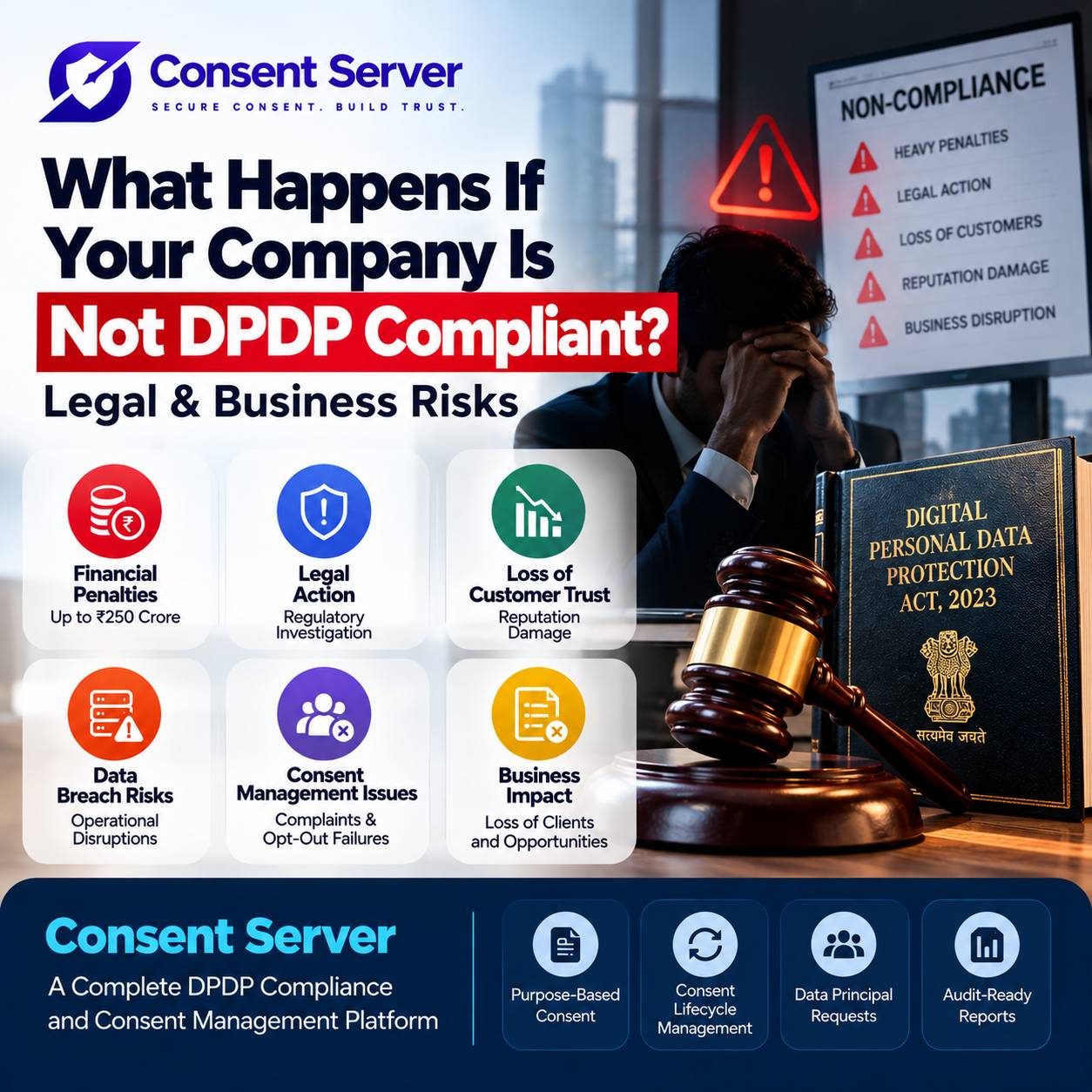
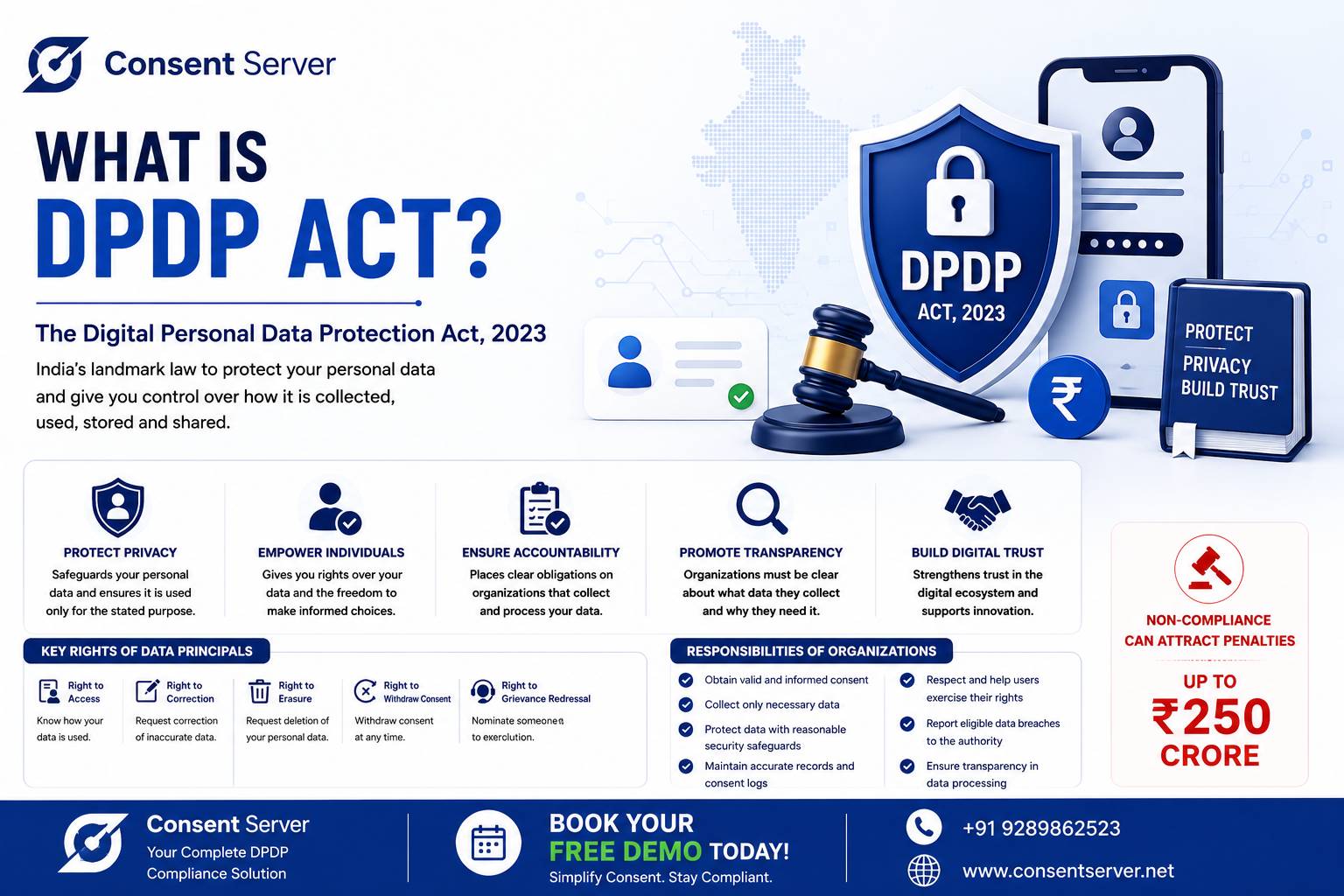
The Digital Personal Data Protection Act, 2023 is changing how Indian businesses need to think about personal data.
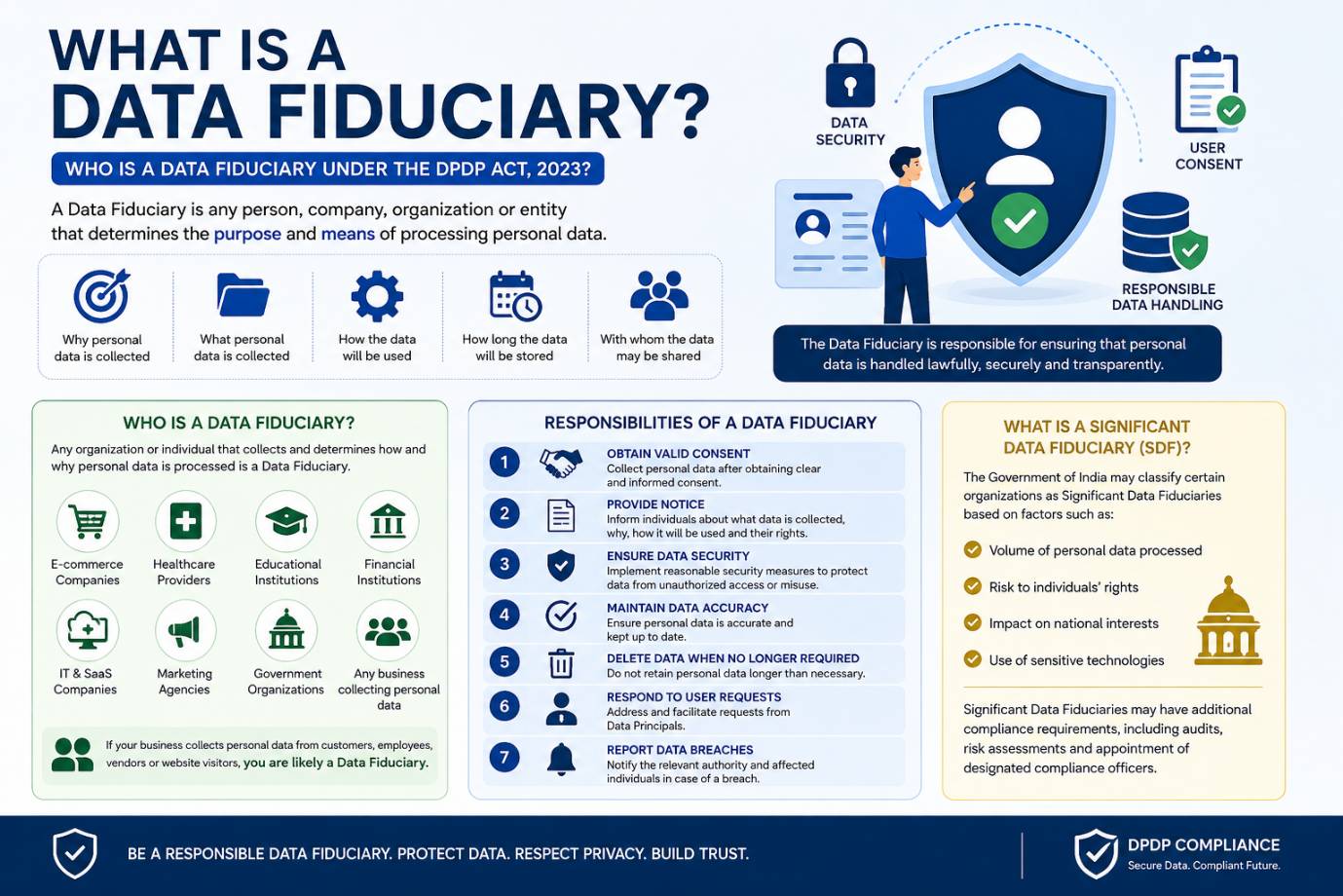
Companies today collect personal data through websites, mobile apps, CRM systems, employee systems, marketing platforms, customer support tools and many other digital channels. Under the DPDP framework, businesses need to understand why personal data is being processed, manage consent where consent is the applicable basis, protect personal data and prepare to handle Data Principal rights.
Non-compliance is therefore not only a legal issue. It can create financial, operational, reputational and business risks.
For organizations preparing for DPDP Compliance, the important question is not simply whether they have a privacy policy. The real question is whether their systems and processes can actually support compliance when required.
As of September 2026, the DPDP framework is under phased commencement. The government notification of 13 November 2025 provides that many substantive provisions, including Sections 3–17 and the penalty provisions in Sections 28–34, commence 18 months after publication. The DPDP Rules, 2025 also follow a phased schedule.
Financial Penalties Can Be Significant
One of the most visible risks associated with DPDP non-compliance is financial exposure.
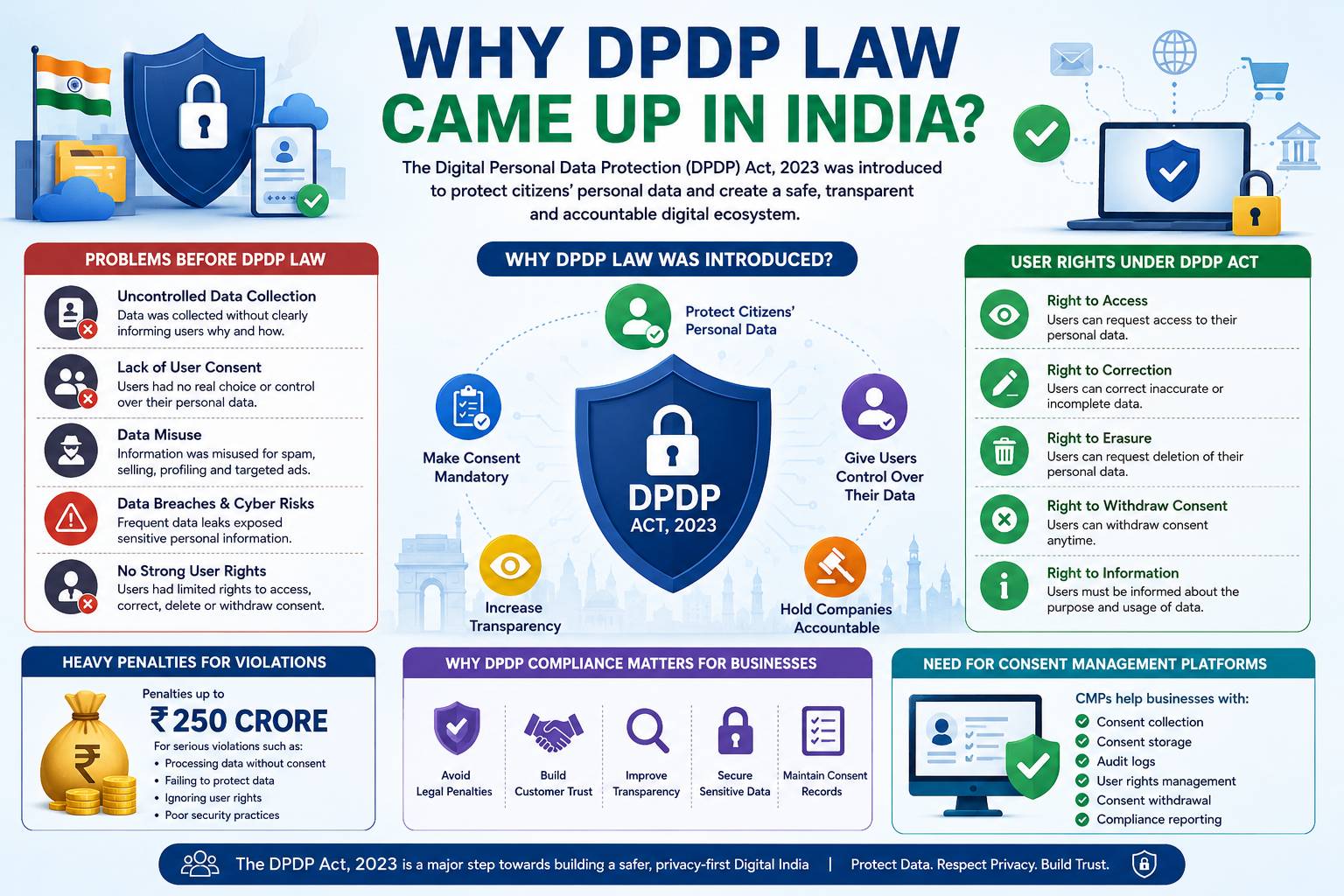
Under the DPDP Act's penalty framework, certain contraventions can attract substantial monetary penalties. For example, the statutory maximum for failure to take reasonable security safeguards to prevent a personal data breach is ₹250 crore.
Different contraventions have different maximum penalties, so ₹250 crore should not be treated as an automatic fine for every DPDP violation.
For businesses, however, the message is clear: data protection needs to become a serious governance and technology responsibility rather than a simple documentation exercise.
A Personal Data Breach Can Create Multiple Problems
A personal data breach can create consequences beyond the immediate cybersecurity incident.
Businesses may need to investigate what happened, determine which personal data was affected, understand which individuals were impacted and follow applicable breach-response requirements.
The DPDP Rules specify security measures such as appropriate data-security safeguards, access controls, logs and monitoring within the framework, with the relevant provisions subject to the notified commencement schedule.
Poor preparation can therefore turn a technical incident into a larger compliance and operational problem.
Consent Records Can Become a Compliance Risk
Many businesses still treat consent as a simple checkbox.
But where processing relies on consent, organizations need to think about the complete consent lifecycle.
Can the business determine when consent was provided?
Can it identify the purpose for which consent was given?
Can the customer change or withdraw consent?
Can the organization maintain a history of those changes?
Can the updated consent state reach relevant connected systems?
If consent information is scattered across spreadsheets, CRM platforms, websites and marketing applications, answering these questions can become difficult.
This is where a centralized Consent Management Platform becomes important.
Ignoring Consent Withdrawal Can Create Operational Risk
Consider a customer who initially agrees to receive promotional communication and later withdraws that consent.
The withdrawal may be recorded on the website, but the customer's old preference could still exist inside the CRM, email marketing platform or another connected application.
The business may therefore continue operating with an outdated consent state.
Effective DPDP Compliance requires organizations to think beyond capturing consent and build processes for managing consent changes throughout their systems.
A DPDP Consent Management Platform can help centralize these consent decisions and communicate relevant events to connected applications.
Data Principal Requests Need Proper Workflows
The DPDP framework provides rights to Data Principals, including rights relating to access to information about personal data, correction and erasure, and grievance redressal, subject to the framework's phased commencement.
For businesses, implementing these rights can become an operational challenge.
A customer's personal data may exist in multiple databases and applications.
When a request is received, the organization may need to identify the relevant information, coordinate internal teams, track the request and maintain appropriate evidence of the process.
Handling everything manually through emails and spreadsheets can become difficult as request volumes increase.
Non-Compliance Can Damage Customer Trust
The consequences of poor privacy practices are not limited to statutory penalties.
Customers increasingly expect businesses to handle personal information responsibly.
If customers continue receiving promotional communication after withdrawing consent, cannot understand why their information is being collected, or experience poor handling of a privacy request, trust can be affected.
For businesses operating in competitive markets, privacy practices can therefore become part of the overall customer experience.
Strong DPDP Compliance can support both regulatory readiness and customer confidence.
Enterprise Customers May Expect Stronger Privacy Controls
DPDP readiness can also become commercially important in B2B relationships.
Large enterprises may assess how vendors and service providers handle personal data before entering or renewing business relationships.
They may ask about security controls, consent management, Data Principal workflows, audit records and processor-related processes.
A company that cannot demonstrate structured privacy operations may therefore face challenges beyond regulatory exposure.
Compliance can increasingly become part of vendor governance, enterprise procurement and business due diligence.
Manual Compliance Can Become Difficult to Scale
Small volumes of consent records and privacy requests may initially appear manageable through spreadsheets and manual processes.
As the organization grows, however, complexity increases.
Thousands or millions of customers can create large numbers of consent events, updates, withdrawals, Data Principal requests and audit records.
Multiple applications may also need to remain synchronized.
This is why DPDP Compliance Software can become important for businesses that need scalable compliance operations.
Technology does not replace legal and organizational responsibilities, but it can help operationalize them.
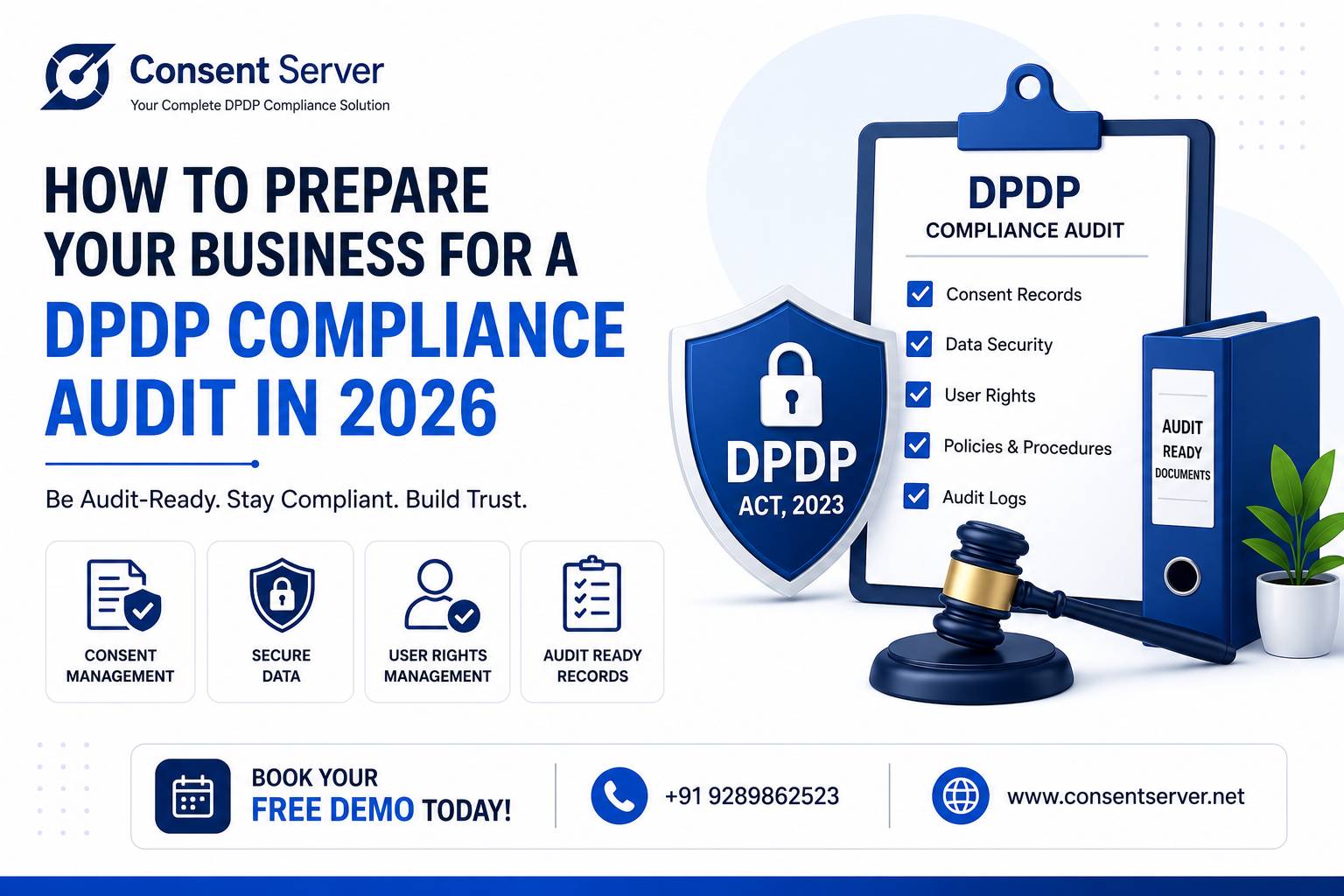
Audit Readiness Is About Evidence
Having a privacy policy is different from being able to demonstrate what actually happened.
If a consent-related issue is investigated, the organization may need to reconstruct the relevant history.
What consent was provided?
For which purpose?
When was it updated or withdrawn?
Which systems were informed?
Were any downstream events unsuccessful?
How was a Data Principal request handled?
Structured records make these questions easier to answer.
Businesses should therefore think about audit readiness while designing their DPDP processes, not only after an issue occurs.
DPDP Compliance Is a Business-Wide Responsibility
DPDP compliance should not sit entirely with the legal team.
Legal teams may interpret obligations and establish policies, but implementation can involve IT, cybersecurity, marketing, HR, customer support, operations and management.
For example, marketing teams may manage customer communication, IT teams may manage integrations, security teams protect systems, and customer support teams may receive privacy requests.
A strong compliance program therefore requires coordination between people, processes and technology.
Consent Server Helps Turn DPDP Requirements into Operational Workflows
This is where Consent Server can help.
Consent Server is a comprehensive DPDP Consent Management Platform designed to help Indian businesses build structured consent and privacy operations.
Instead of relying on disconnected consent forms, spreadsheets and individual application records, Consent Server provides a centralized environment for managing consent throughout its lifecycle.
Businesses can manage consent grants, updates, withdrawals, renewals and expiry while maintaining detailed consent history.
Connect Consent Across Business Systems
Consent Server provides APIs and webhooks that can connect consent events with websites, CRM systems, marketing applications and other enterprise systems.
When a consent preference changes, relevant events can be communicated to configured applications.
Consent Server's event architecture can also provide visibility into delivery, acknowledgement, retry and escalation, helping organizations identify unresolved downstream events rather than assuming every integration succeeded.
Manage Data Principal Requests and Grievances
Consent Server also provides structured workflows for Data Principal requests such as access, correction and erasure, along with request history and status tracking.
Grievance management can be handled within the same compliance environment.
This helps businesses move away from scattered email-based processes toward centralized privacy operations.
Maintain Audit-Ready Consent Records
Consent Server maintains detailed consent and audit records to support operational traceability.
The platform also includes purpose-based consent, role-based access control, reporting and hash-based tamper detection.
For organizations that want greater control over their compliance infrastructure, Consent Server also supports on-premise deployment.
These capabilities make Consent Server a strong technology option for organizations evaluating DPDP Compliance Software in India.
The Cost of Waiting Can Be More Than a Penalty
The risks of DPDP non-compliance should not be viewed only through the maximum statutory penalty.
Businesses should also consider operational disruption, customer complaints, loss of trust, difficult audits, fragmented consent records, failed privacy workflows and increased enterprise procurement requirements.
Preparing early gives organizations time to understand their personal-data flows and build processes before the relevant requirements become applicable.
The objective should be to move from reactive compliance to structured privacy operations.
Build Your DPDP Compliance Infrastructure with Consent Server
Consent Server helps businesses centralize consent management, manage Data Principal workflows, integrate consent events with enterprise applications and maintain audit-ready records.
For organizations looking for a comprehensive Consent Management Platform, DPDP Consent Management Platform or DPDP Compliance Software in India, Consent Server provides the technology layer needed to build more structured and accountable consent operations.