DPDP Act Privacy Notice- What Should Businesses Include?
Learn what a DPDP Act privacy notice should include, from personal data and purpose to consent withdrawal, Data Principal rights and grievance mechanisms.
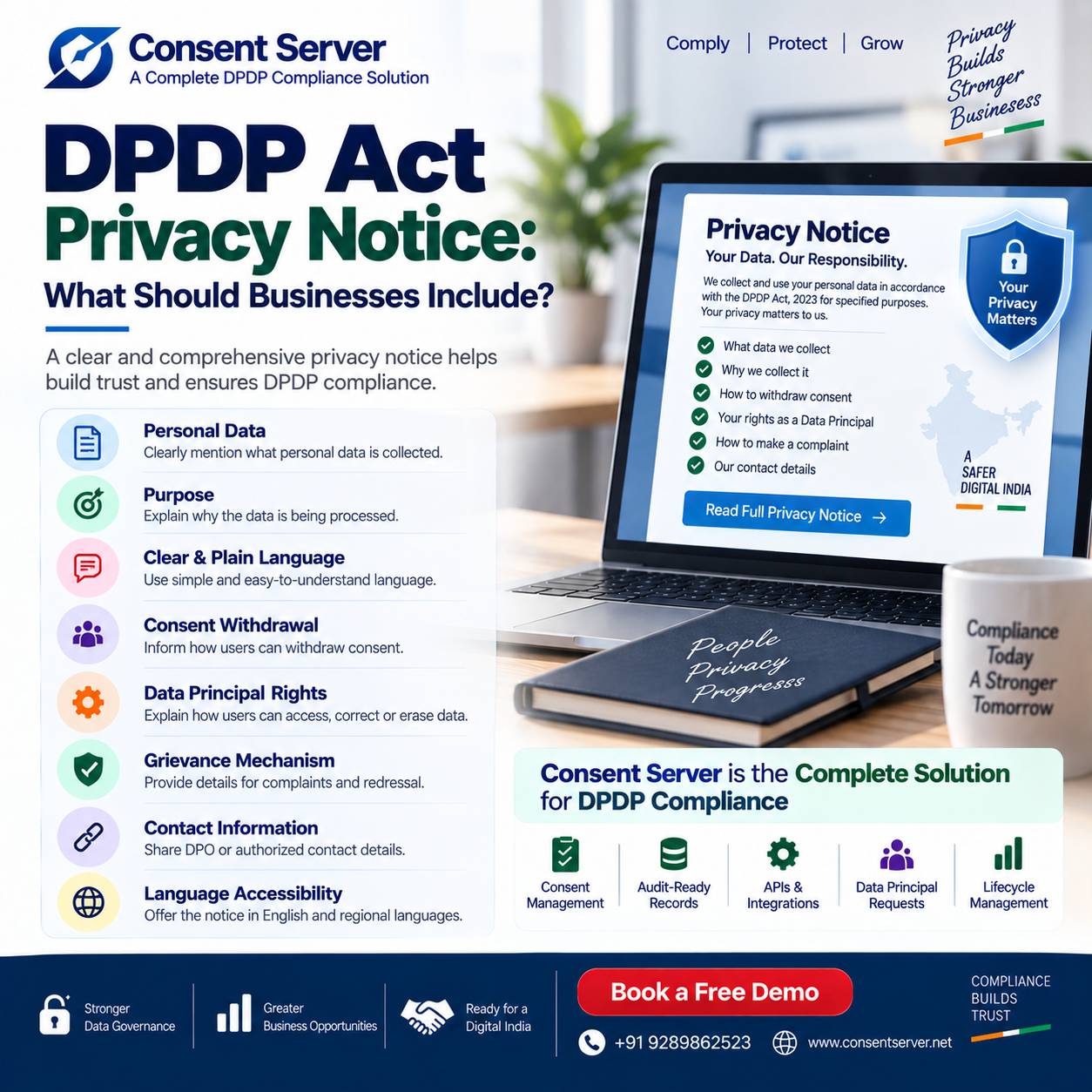
A privacy notice is one of the most important parts of an organisation’s Digital Personal Data Protection framework.
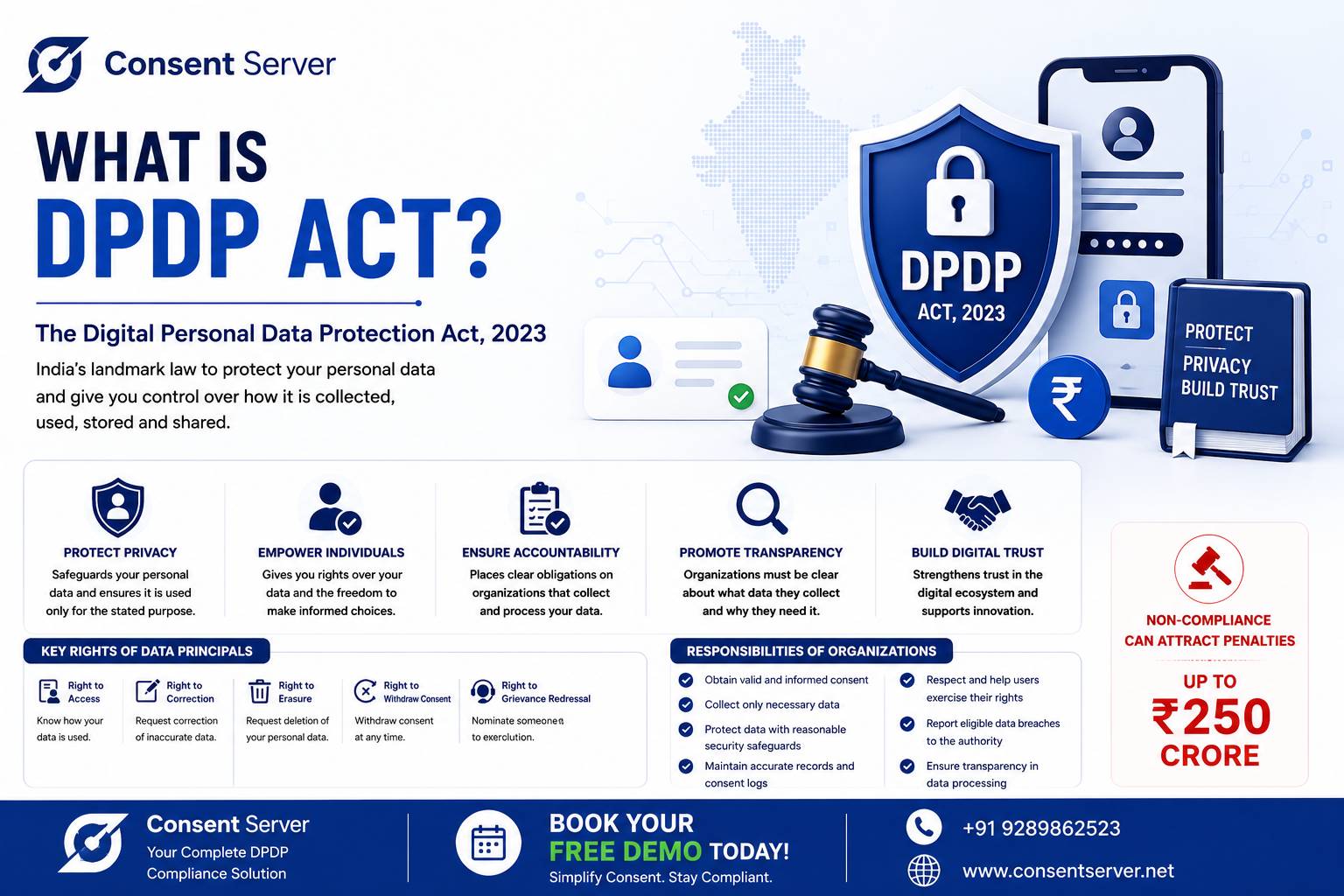
Under India’s Digital Personal Data Protection Act, 2023 (DPDP Act), businesses cannot treat a privacy notice as merely a long legal document placed somewhere on their website. Where consent is being requested, the notice has an important role in helping the Data Principal understand what personal data is being processed and why.
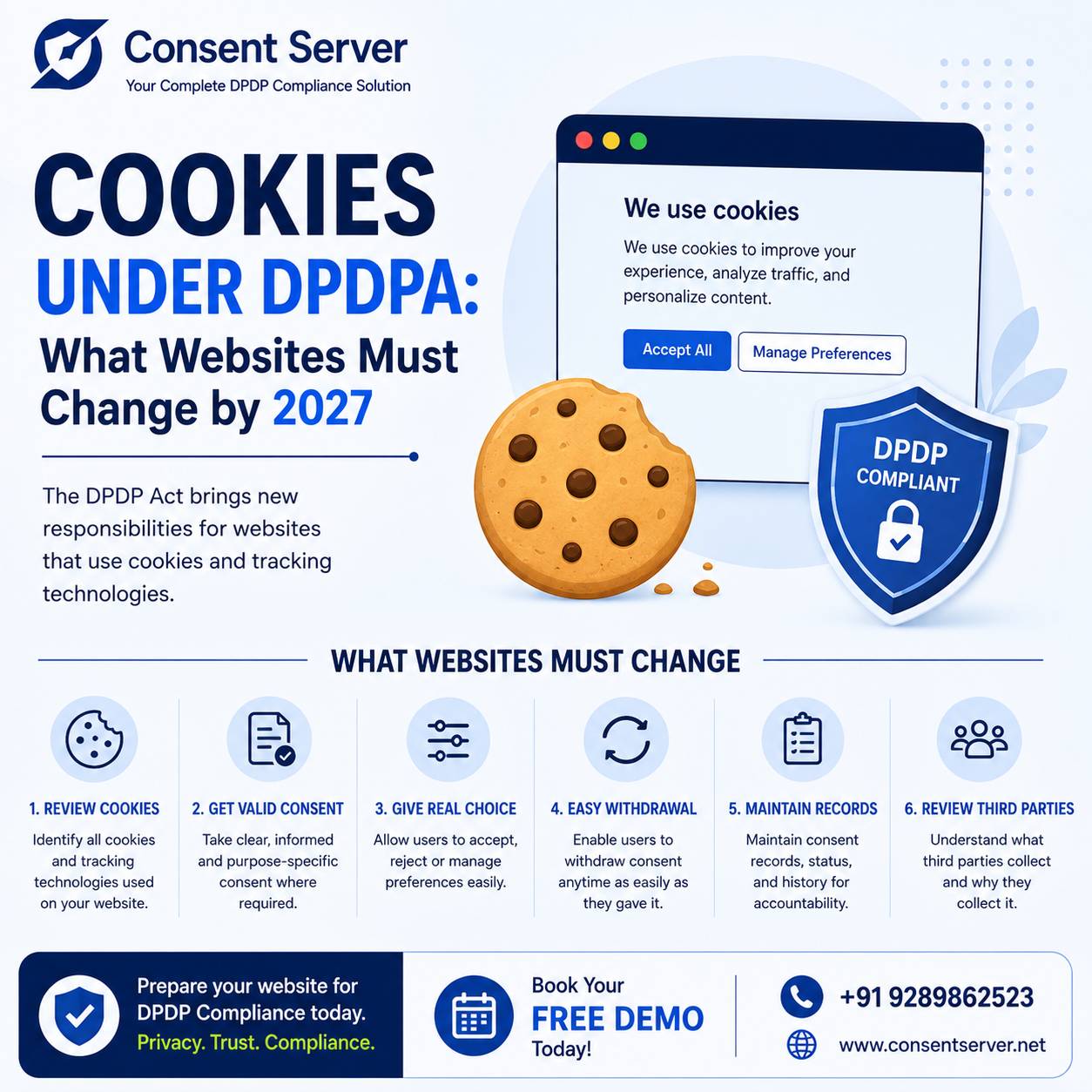
The notified Digital Personal Data Protection Rules, 2025 add detailed requirements for notices. Rule 3 requires a notice to be independently understandable, use clear and plain language, describe the personal data involved and specified purposes, and provide mechanisms for withdrawal of consent, exercise of rights, and complaints.
For businesses preparing for DPDP compliance, the question therefore becomes:
What exactly should a DPDP privacy notice contain?
What Is a Privacy Notice Under the DPDP Act?
A privacy notice communicates relevant information about the processing of an individual's personal data.
Under Section 5 of the DPDP Act, when consent is sought, the Data Fiduciary must provide a notice informing the Data Principal about the personal data and the purpose for which it is proposed to be processed, along with information about exercising rights and making a complaint to the Data Protection Board.
The objective is straightforward: an individual should understand the proposed processing before making an informed decision.
A good notice therefore needs to be useful to the person reading it—not merely technically present.
1. Clearly Identify the Personal Data Being Processed
The DPDP Rules, 2025 require an itemised description of the personal data involved in the processing covered by the notice.
Depending on the service, this could include information such as:
- Name
- Mobile number
- Email address
- Delivery address
- Account information
- Other relevant personal data
Businesses should avoid generic statements such as:
“We may collect your information.”
Instead, the Data Principal should be able to understand what categories or items of personal data are involved.
2. Clearly Explain the Purpose
Knowing what data is collected is only half the picture.
The Data Principal should also understand why it is being processed.
Rule 3 requires the notice to describe the specified purpose or purposes and the goods, services, or uses enabled by that processing.
For example, an e-commerce company might process different information for account management, order fulfilment, delivery, customer support, or marketing communications.
Clearly defining purposes also helps organisations implement purpose-based consent management.
3. Use Clear and Plain Language
A DPDP notice should not be unnecessarily complicated.
The Rules require the notice to give a fair account of the relevant details in clear and plain language.
This is important because privacy notices have traditionally been written as lengthy legal documents that ordinary users rarely understand.
A business should aim for language that answers practical questions:
What information do you need? Why do you need it? What will it enable? What choices do I have? How can I exercise my rights?
Clarity should be the priority.
4. Make the Notice Independently Understandable
Rule 3 also requires the notice to be understandable independently of other information provided by the Data Fiduciary.
Businesses should therefore be careful about designing notices that make sense only after the user reads several unrelated documents.
The information necessary for the relevant decision should be presented in a sufficiently self-contained manner.
5. Explain How Consent Can Be Withdrawn
Where processing relies on consent, withdrawal is a major part of the consent lifecycle.
The DPDP Act provides that a Data Principal may withdraw consent at any time, and the ease of withdrawal must be comparable to the ease with which consent was given.
The Rules require the notice to provide a communication link for accessing the Data Fiduciary's website or app, and describe relevant means through which the Data Principal can withdraw consent.
Businesses should therefore think beyond:
“How do we collect consent?”
They should also ask:
“How will the individual later find, review, and withdraw that consent?”
This is one reason a dedicated Consent Management Platform can be valuable.
6. Explain How Data Principal Rights Can Be Exercised
A privacy notice should also help individuals understand how they can exercise applicable rights under the DPDP framework.
The Act provides Data Principals with rights concerning access to information about personal data, correction and erasure, grievance redressal, and nomination.
Businesses should establish an accessible mechanism through which requests can be submitted and tracked.
A notice should direct Data Principals toward the appropriate mechanism rather than leaving them to search through the organisation's website.
7. Explain How Complaints Can Be Made
The DPDP framework also provides for grievance redressal.
A Data Principal has the right to have readily available means of grievance redressal from the relevant Data Fiduciary or Consent Manager concerning applicable obligations or exercise of rights.
The Rules further require the notice to describe the means through which the Data Principal may make a complaint to the Board.
This means grievance management should be treated as an operational process—not merely a sentence buried in a privacy policy.
8. Provide the Required Contact and Access Mechanisms
The notice should make it practical for the individual to take action.
The DPDP Rules require the relevant communication link for accessing the Data Fiduciary's website or app and information about the mechanisms available for consent withdrawal, rights, and complaints.
The Act also requires consent requests to provide contact details of the Data Protection Officer, where applicable, or another person authorized to respond to communications from Data Principals concerning their rights.
Businesses should therefore ensure that their privacy interface connects users to real operational workflows.
9. Consider Language Accessibility
India is a multilingual country.
The DPDP Act provides Data Principals the option to access the relevant notice in English or any language specified in the Eighth Schedule to the Constitution.
For organisations serving users across multiple regions, multilingual notices and consent interfaces can therefore become an important part of the compliance architecture.
Privacy Notice vs Privacy Policy
Businesses often use the terms “privacy notice” and “privacy policy” interchangeably, but operationally it is useful to distinguish them.
A general privacy policy may describe the organisation's broader privacy practices.
A DPDP notice, particularly in the context of consent, should provide the specific information necessary for the Data Principal to understand the relevant processing and make an informed decision.
This means businesses should not assume that simply having a generic “Privacy Policy” link in the website footer automatically satisfies every notice requirement.
A Privacy Notice Should Connect to Consent
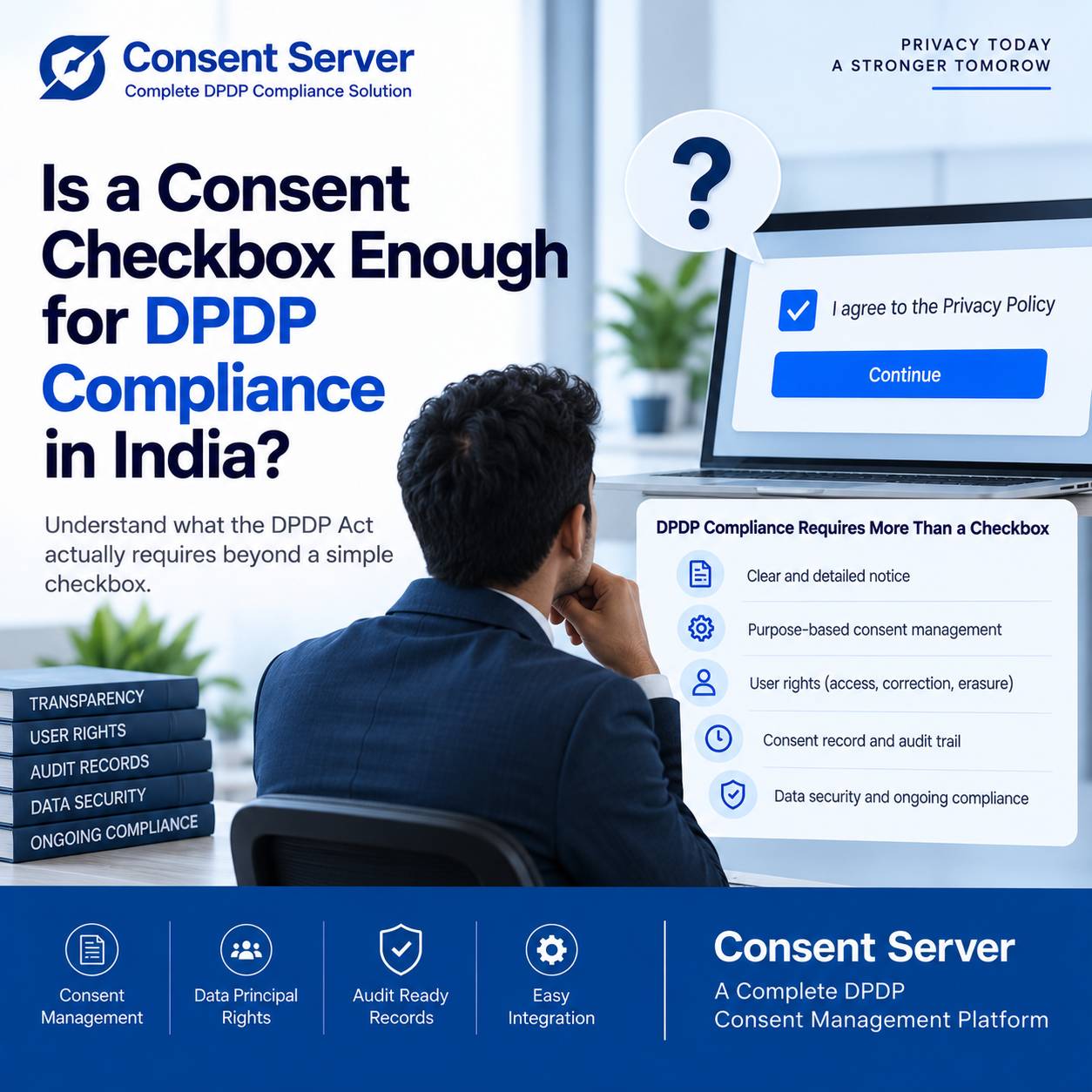
A major mistake is treating the privacy notice and consent mechanism as two completely separate systems.
Consider a customer being asked for marketing consent.
The customer should be able to understand the purpose and relevant personal data before giving consent. If they agree, the business should be capable of maintaining evidence of that consent.
If they later withdraw it, the organisation should be able to update the consent status and communicate that change to relevant systems.
This creates an operational lifecycle:
Notice --> Purpose --> Consent --> Record --> Update --> Withdrawal --> Downstream Action --> Audit Trail
A basic privacy-policy page cannot manage this lifecycle by itself.
Why Version Control Matters
Businesses may change their notices over time.
Purposes may change, new services may be introduced, personal data requirements may change, or compliance processes may evolve.
For operational accountability, businesses should consider maintaining version history so they can determine which notice or consent experience applied when a particular consent was obtained.
A capable DPDP Consent Management Platform can help connect consent records with the relevant notice and purpose configuration.
Avoid These Common Privacy Notice Mistakes
Businesses preparing for the DPDP Act should avoid notices that are unnecessarily vague, excessively complicated, disconnected from consent workflows, or difficult for individuals to act upon.
Other practical problems include failing to clearly specify purposes, not providing accessible withdrawal mechanisms, having no structured rights-request workflow, and maintaining different consent information across disconnected applications.
A notice should be designed as part of the organisation's privacy operations—not merely as website content.
Consent Server: A Complete Solution for DPDP Privacy and Consent Workflows
Creating a notice is only the first step.
Businesses also need technology and processes to operationalize what the notice promises.
Consent Server is designed as a comprehensive DPDP Compliance Platform and DPDP Consent Management Platform for organisations preparing their consent and related privacy workflows.
Instead of maintaining notices, consent records, withdrawals, Data Principal requests, grievances, and compliance evidence across disconnected systems, Consent Server helps centralize these processes.
Consent Server supports capabilities such as purpose-based consent management, customizable consent forms and notices, consent history, updates and withdrawals, Data Principal request workflows, grievance management, lifecycle automation, audit-ready records, role-based access, reporting, APIs, and webhooks.
It can also integrate with websites, CRM systems, HR platforms, marketing applications, databases, and other business systems.
This enables organisations to move from simply publishing a privacy notice to actually operationalizing privacy and consent management.
For organisations looking for DPDP Compliance Software, a DPDP Compliance Platform, DPDP Consent Management Platform, or Consent Management Platform, Consent Server provides a comprehensive technology solution to evaluate.
Software does not by itself guarantee legal compliance. Organisations still need appropriate governance, legal assessment, security controls, policies, and internal processes. But technology can make those processes much easier to manage and demonstrate.
DPDP Privacy Notice Checklist
Before finalizing your notice, ask:
- Have we clearly identified the relevant personal data?
- Have we explained the specified purpose?
- Is the notice written in clear and plain language?
- Can it be understood independently?
- Can users easily find how to withdraw consent?
- Can Data Principals exercise their applicable rights?
- Is grievance and complaint information accessible?
- Are the required communication mechanisms available?
- Can we maintain evidence of consent and notice versions?
- Can consent changes reach relevant connected applications?
If several answers are no, the organisation should review its privacy notice and supporting compliance workflows.
Final Thoughts
A DPDP Act privacy notice should not be viewed as another legal page that businesses create once and forget.
It is an important communication layer between the Data Fiduciary and the Data Principal.
A well-designed notice helps individuals understand what personal data is involved, why it is being processed, and how they can exercise their choices and rights.
The next step is making sure your business systems can actually deliver on those commitments.
That is where Consent Server can help—by bringing notice, consent, withdrawal, Data Principal requests, grievance management, audit records, and connected-system workflows into a centralized Consent Management Platform.