DPDP Act vs GDPR: Key Differences for Indian Businesses
Compare the DPDP Act vs GDPR and understand key differences in consent, individual rights, children’s data, processing rules, breaches and penalties.
DPDP Act vs GDPR: Key Differences Every Indian Business Should Know
Data privacy is no longer only a legal or IT concern. For businesses operating digitally, it has become an important part of customer trust, governance, security, and day-to-day operations.
Two major privacy frameworks businesses frequently encounter are India's Digital Personal Data Protection Act, 2023 (DPDP Act) and the European Union's General Data Protection Regulation (GDPR).
Both frameworks seek to protect individuals' personal data, but they are not the same law with different names. Their scope, terminology, lawful processing framework, treatment of children, data categories, regulatory structure, and penalties differ in important ways.
For Indian businesses—especially those serving customers in both India and Europe—understanding these differences is essential.
What Is the DPDP Act?
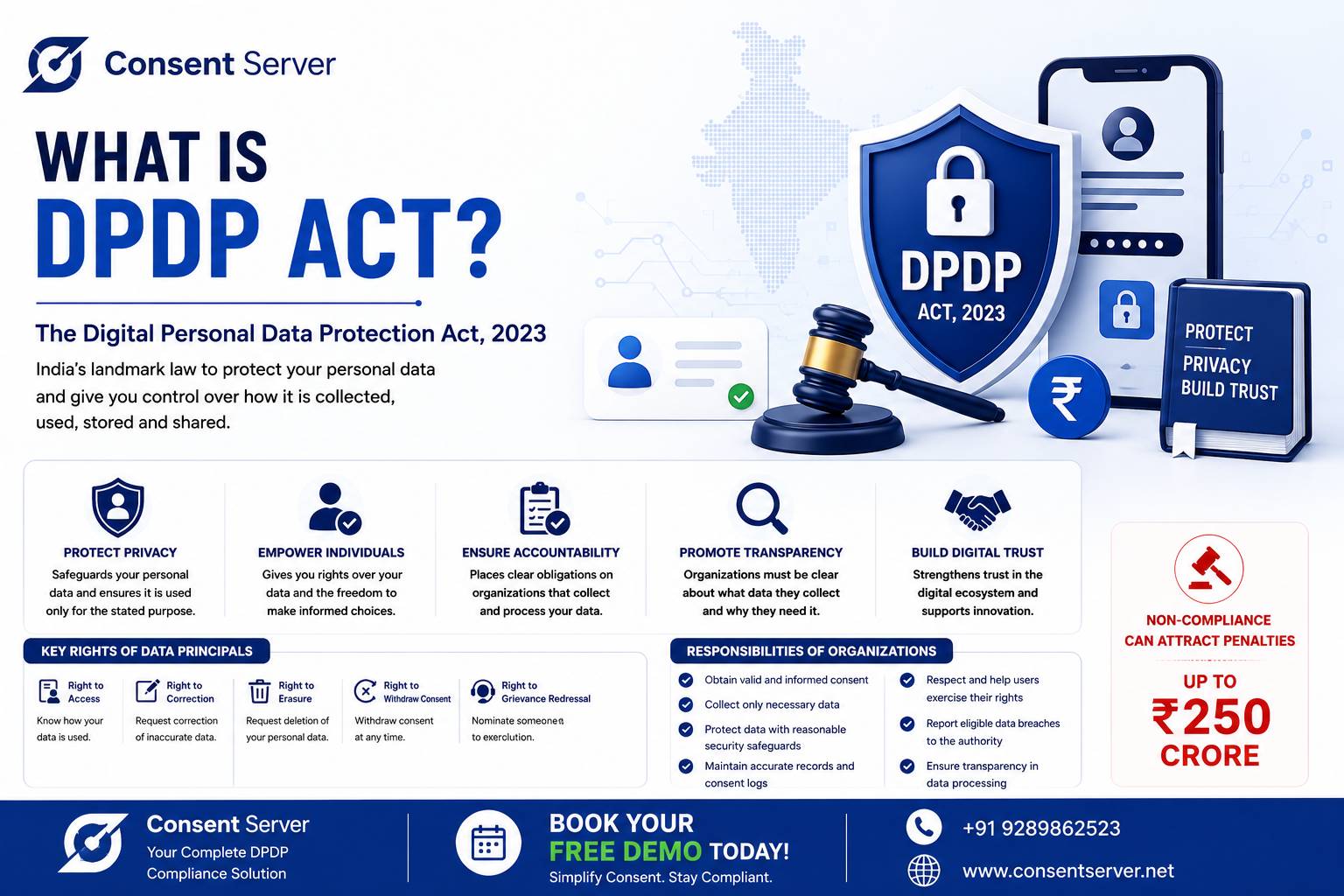
The Digital Personal Data Protection Act, 2023 is India's central law governing the processing of digital personal data within its scope.
It introduces concepts such as:
- Data Principal
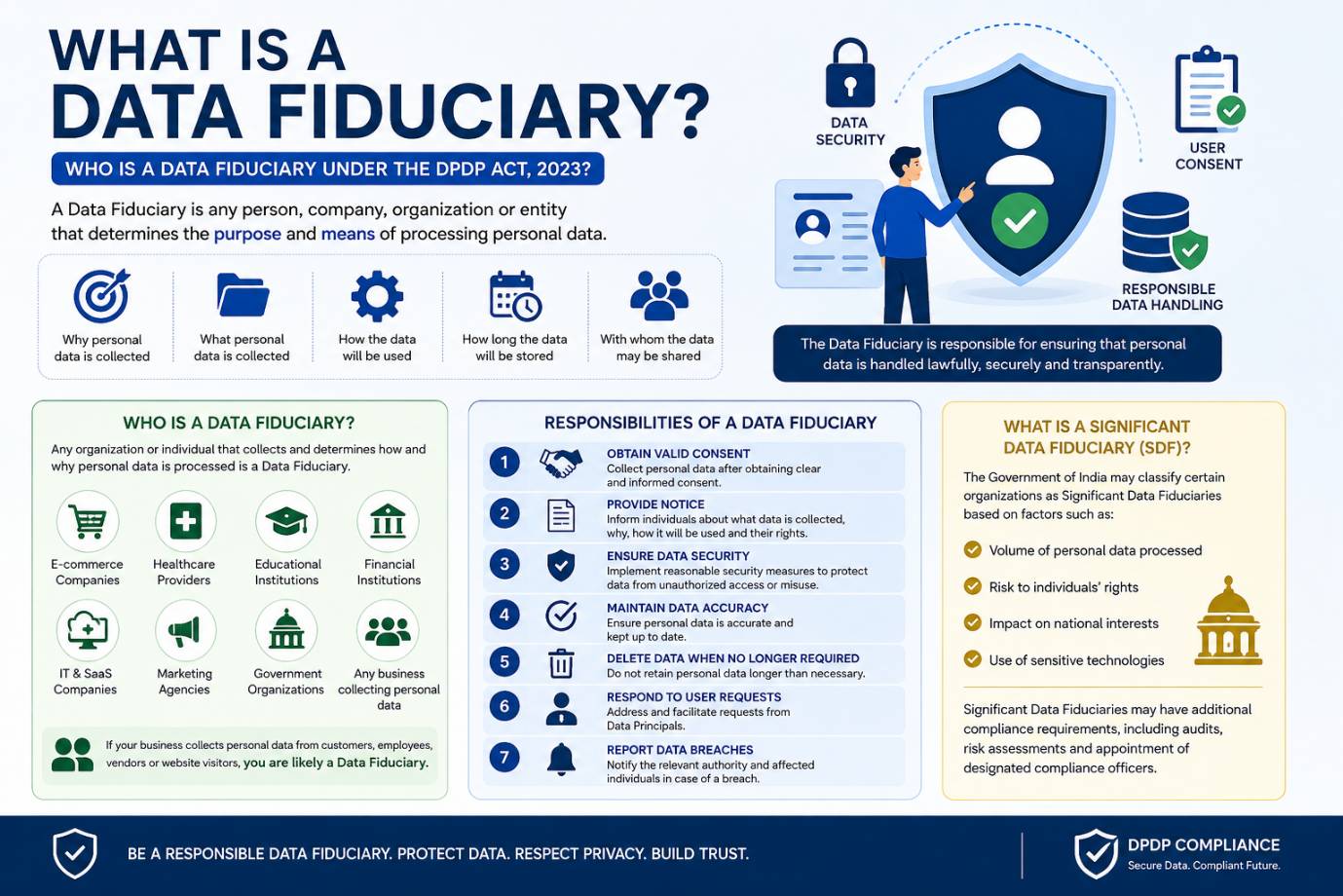
- Data Fiduciary
- Data Processor
- Consent
- Certain legitimate uses
- Significant Data Fiduciary
- Data Protection Board of India
The Act provides rights to Data Principals and places obligations on Data Fiduciaries regarding personal-data processing.
India subsequently notified the Digital Personal Data Protection Rules, 2025 on 13 November 2025. The Act and Rules have a phased commencement schedule, with major substantive provisions scheduled to come into force 18 months after that notification.
What Is GDPR?
The General Data Protection Regulation (GDPR) is the European Union's comprehensive data-protection framework.
GDPR has applied since May 2018 and regulates how organisations within its territorial scope collect, use, store, share, and otherwise process personal data.
Indian companies may also need to consider GDPR when their activities fall within its territorial scope—for example, certain businesses offering goods or services to people in the EU or monitoring their behaviour there.
DPDP Act vs GDPR: Quick Comparison
| Area | DPDP Act – India | GDPR – European Union |
|---|---|---|
| Main legislation | Digital Personal Data Protection Act, 2023 | General Data Protection Regulation |
| Individual | Data Principal | Data Subject |
| Organisation deciding purpose/means | Data Fiduciary | Data Controller |
| Service provider processing on behalf | Data Processor | Data Processor |
| Data covered | Digital personal data within statutory scope | Personal data processed within GDPR scope |
| Processing framework | Consent or certain legitimate uses specified by the Act | Six lawful bases under Article 6 |
| Children's threshold | Child generally means an individual under 18, subject to the Act/Rules framework | For consent to information-society services, generally 16; Member States may lower it to no less than 13 |
| Special-category framework | No GDPR-equivalent general category of “special categories of personal data” | Expressly regulates special categories under Article 9 |
| Regulator/enforcement | Data Protection Board of India | National supervisory authorities within the EU framework |
| Maximum penalty model | Specified monetary amounts by contravention | Can include percentage-of-global-turnover penalties |
1. Data Principal vs Data Subject
The first difference is terminology.
Under the DPDP Act, the individual to whom personal data relates is called a Data Principal.
Under GDPR, that individual is called a Data Subject.
Similarly, India's Data Fiduciary broadly corresponds to GDPR's Controller, while both frameworks use the term Data Processor for processing performed on behalf of another organisation.
The concepts may look similar, but businesses should use the correct legal terminology when designing policies and compliance documentation for each jurisdiction.
2. Scope of Personal Data
The DPDP Act applies to the processing of digital personal data within its statutory scope, including personal data collected digitally and data collected in non-digital form and subsequently digitised. It also has specified extra-territorial application.
GDPR's material scope is broader in a different way: it generally covers automated processing of personal data and certain non-automated processing where the data forms part of, or is intended to form part of, a filing system.
For Indian companies, this distinction can matter when conducting a data inventory.
3. Lawful Processing Is Structured Differently
This is one of the most important differences.
GDPR Article 6 establishes multiple lawful bases, including consent, contract, legal obligation, vital interests, public task and legitimate interests.
India's DPDP Act uses a different structure. It provides for processing for a lawful purpose based on consent or for certain legitimate uses specified under Section 7.
Therefore, businesses should not simply copy a GDPR “lawful basis” assessment and rename it a DPDP assessment.
Each processing activity should be evaluated under the applicable framework.
4. Consent Requirements
Both laws place significant importance on valid consent, but businesses should evaluate consent under the requirements of each law rather than assuming they are identical.
Under the DPDP framework, consent must meet the Act's requirements, and where processing depends on consent, the Data Principal has the right to withdraw it. The Act also requires the ease of withdrawal to be comparable to the ease of giving consent.
The 2025 Rules further specify requirements for notices, including clear and plain language, an itemised description of personal data, specified purposes, and mechanisms relating to withdrawal and exercise of rights.
For businesses managing thousands or millions of consent records, this makes structured consent management increasingly important.
5. Children's Personal Data
The two frameworks take different approaches to children.
Under India's DPDP Act, a child is generally defined as an individual who has not completed 18 years of age. The Act provides additional obligations concerning children's personal data, while the 2025 Rules specify certain exemptions and conditions.
Under GDPR, for consent-based information-society services offered directly to a child, the default age threshold is 16, although EU Member States may provide a lower age as long as it is not below 13.
This difference can be particularly important for EdTech, gaming, social platforms and other businesses serving younger users.
6. Sensitive and Special Categories of Data
GDPR expressly defines special categories of personal data, covering areas such as health data, biometric data used for unique identification, racial or ethnic origin, political opinions, religious beliefs and certain other information.
Processing these categories is generally prohibited unless one of the Article 9 exceptions applies.
The DPDP Act does not establish an equivalent general statutory category called “sensitive personal data.”
This is an important distinction because businesses familiar with earlier Indian privacy terminology or GDPR should not automatically import GDPR's classification structure into the DPDP Act.
That does not mean highly personal information should be treated casually. Appropriate security, purpose limitation and other applicable requirements remain important.
7. Rights of Individuals
Both frameworks provide individuals with rights, but the exact rights and terminology differ.
The DPDP Act provides rights concerning access to information about personal data, correction and erasure, grievance redressal, and nomination.
GDPR contains a broader and differently structured rights framework, including access, rectification, erasure, restriction, portability, objection and protections concerning certain automated decision-making.
Businesses operating under both laws should therefore create workflows based on the actual rights available under each framework rather than assuming one universal privacy-rights form will always be sufficient.
8. Data Breach Requirements
Both frameworks impose obligations relating to personal data breaches, but their procedures and timelines differ.
Under GDPR, controllers generally must notify the relevant supervisory authority of a qualifying personal data breach within 72 hours after becoming aware of it, unless the breach is unlikely to result in a risk to individuals' rights and freedoms.
India's framework uses its own notification requirements. The DPDP Rules specify the information to be provided to affected Data Principals and the Board, including a more detailed submission to the Board within 72 hours of becoming aware of the breach, unless the Board allows a longer period.
Businesses should therefore maintain jurisdiction-specific breach-response procedures.
9. Significant Data Fiduciary vs GDPR Risk-Based Obligations
The DPDP Act allows the Central Government to notify certain Data Fiduciaries or classes of Data Fiduciaries as Significant Data Fiduciaries based on statutory factors.
These entities have additional obligations.
The 2025 Rules provide further requirements, including periodic Data Protection Impact Assessments and audits for Significant Data Fiduciaries.
GDPR has its own risk-based requirements, including DPIAs in specified high-risk circumstances and Data Protection Officer requirements in certain situations.
The structures therefore overlap conceptually in some areas but are not interchangeable.
10. Penalties Are Structured Differently
The penalty models are another major difference.
Under the DPDP Act, the Schedule establishes maximum monetary penalties for different contraventions. For example, failure to take reasonable security safeguards to prevent a personal data breach can attract a penalty of up to ₹250 crore.
GDPR uses a different model. For the more serious category of infringements, administrative fines can reach €20 million or 4% of the undertaking's total worldwide annual turnover of the preceding financial year, whichever is higher, subject to GDPR's enforcement framework.
Businesses should therefore avoid directly translating GDPR penalty calculations into DPDP penalties.
Does GDPR Compliance Automatically Mean DPDP Compliance?
No.
A company with a mature GDPR program may already have useful privacy infrastructure such as data inventories, security controls, consent records, incident-response processes and rights-management workflows.
That can provide a strong foundation.
However, the organisation still needs to map its processes specifically against the DPDP Act and applicable DPDP Rules.
Differences in terminology, legal grounds, notices, children's data, Data Principal rights, regulatory requirements and operational procedures need to be addressed separately.
What Should Indian Businesses Do?
Businesses operating primarily in India should start by mapping their digital personal-data processing against the DPDP framework.
Organisations serving both India and Europe should consider building a privacy architecture capable of supporting jurisdiction-specific requirements without creating completely disconnected systems.
For example, a centralized system can maintain consent history while applying the appropriate notice, purpose, workflow and legal configuration for the relevant jurisdiction.
This is where technology can significantly reduce operational complexity.
How Consent Server Helps with DPDP Compliance
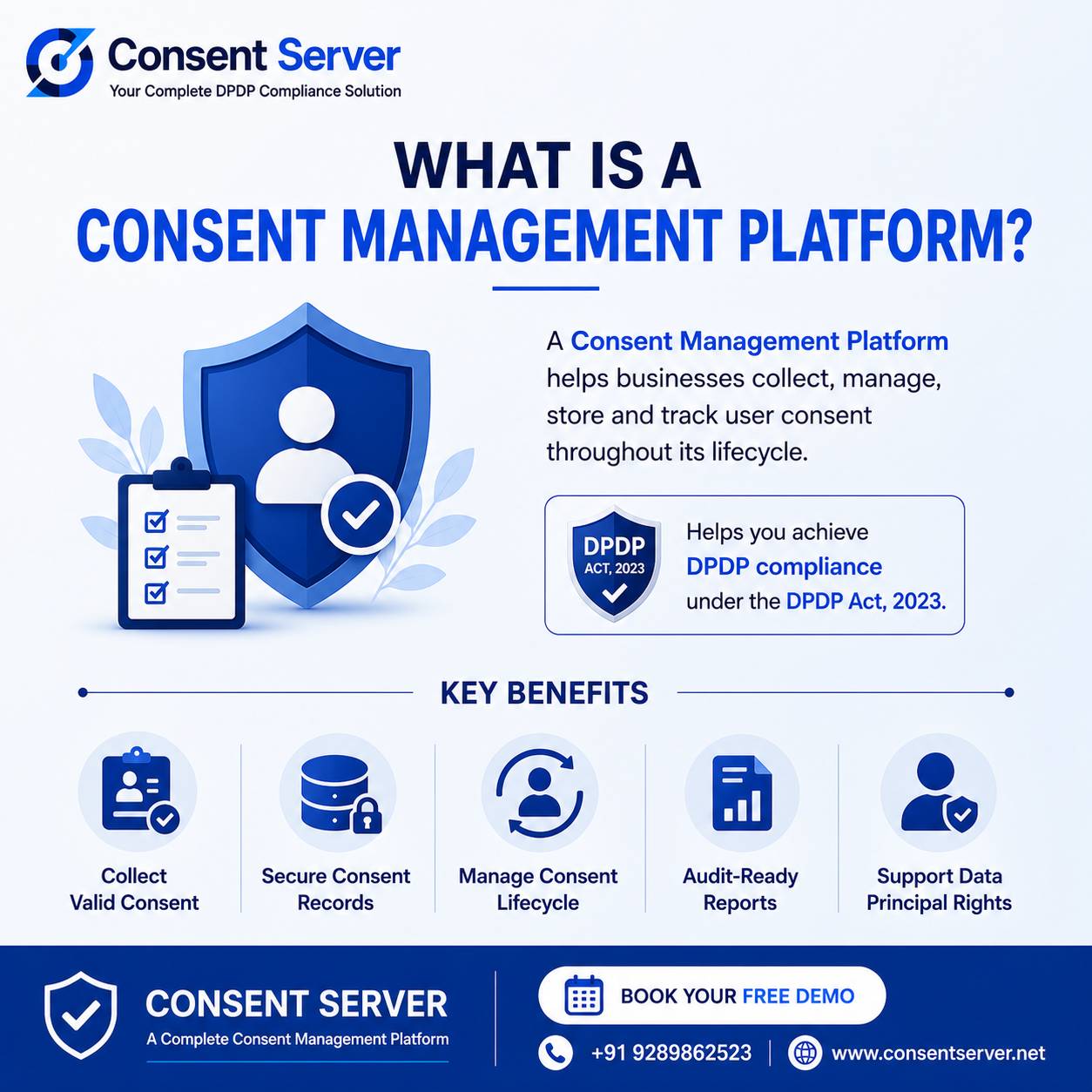
Consent Server is designed to help businesses operationalize consent and related DPDP compliance workflows through a centralized DPDP Consent Management Platform.
Instead of maintaining consent records across spreadsheets, CRM platforms, marketing applications and disconnected databases, Consent Server can provide a centralized layer for managing consent and related workflows.
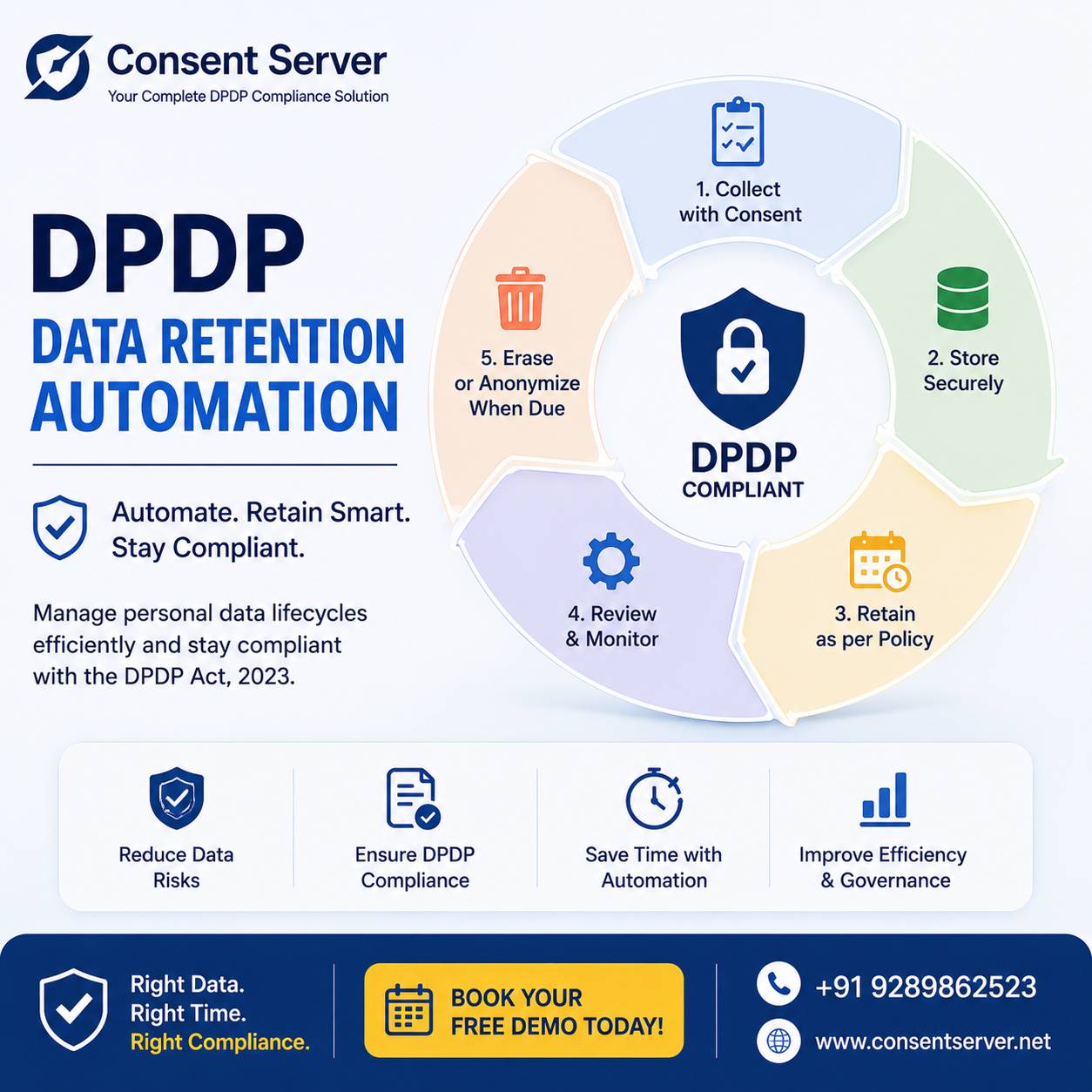
Key capabilities include purpose-based consent management, consent updates and withdrawals, Data Principal request workflows, grievance management, consent lifecycle automation, audit-ready records, role-based access, reporting, APIs and webhooks.
For organisations searching for a Consent Management Platform, DPDP Consent Management Platform, DPDP Compliance Software, or DPDP Software in India, Consent Server provides a comprehensive solution to evaluate as part of a broader DPDP compliance program.
Technology alone does not guarantee legal compliance, but the right platform can make compliance processes considerably easier to operate, document and audit.
Final Thoughts
The DPDP Act and GDPR share the broad objective of protecting personal data, but their legal and operational frameworks contain important differences.
For Indian businesses, the key lesson is simple:
Do not assume GDPR compliance automatically equals DPDP compliance.
Understand where your personal data comes from, which jurisdictions apply, why the data is processed, what rights individuals have, how consent is managed, and how your systems respond when consent or personal-data requests change.
A structured privacy program supported by the right technology can help businesses prepare for India's evolving data-protection environment while building stronger customer trust.