What is a Consent Management Platform? | DPDP Compliance Guide
Learn what a Consent Management Platform is, how it works, and why every business needs one to achieve DPDP Compliance under the DPDP Act, 2023.
What is a Consent Management Platform? A Complete Guide for Businesses
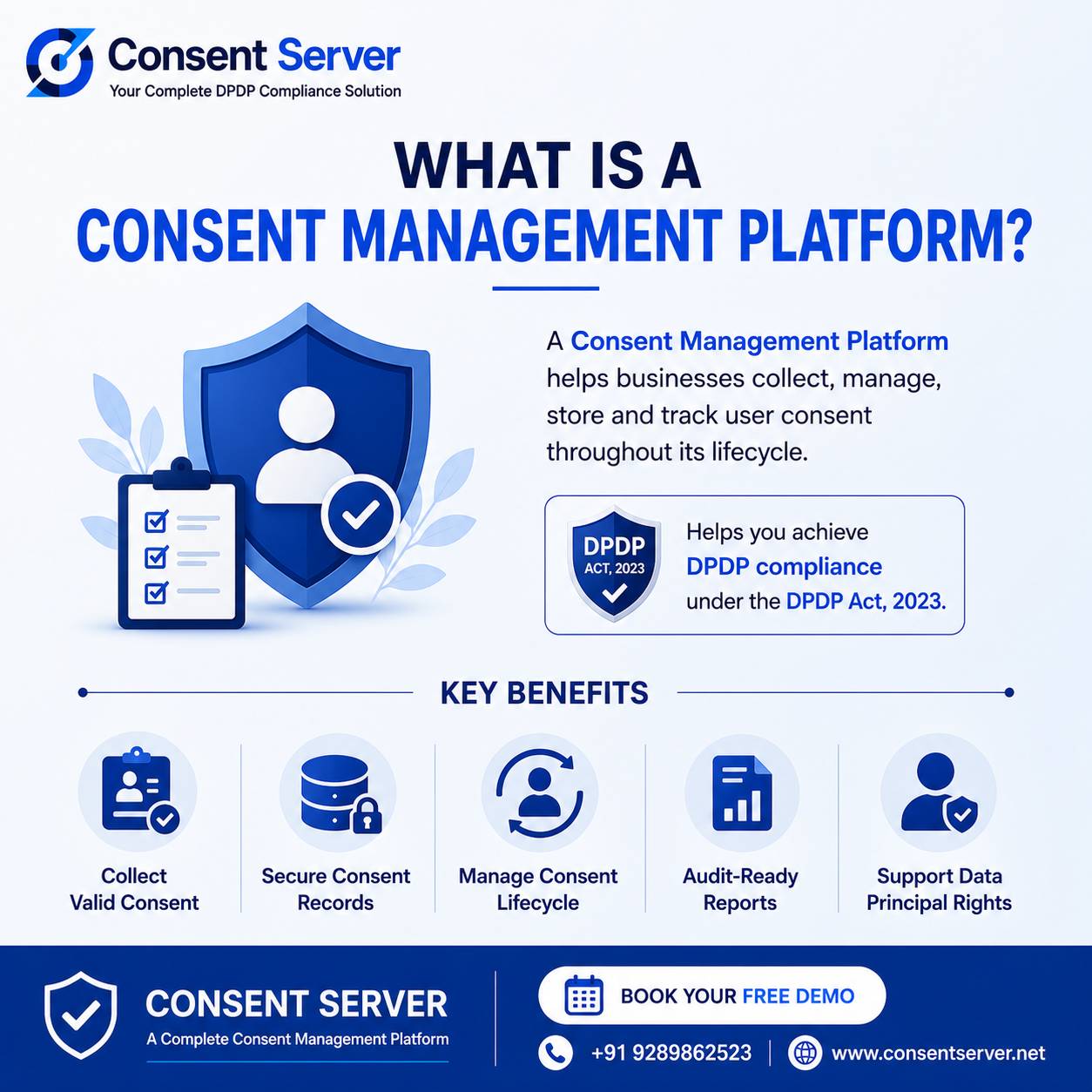
A Consent Management Platform (CMP) is a software solution that helps organizations collect, store, manage, update, and track user consent throughout its lifecycle. It ensures that businesses obtain valid consent, maintain audit-ready records, and respect user privacy in accordance with regulations such as the Digital Personal Data Protection (DPDP) Act, 2023.
In simple terms, a Consent Management Platform enables organizations to process personal data responsibly while maintaining transparency and accountability.
Why is a Consent Management Platform Important?
With the implementation of the DPDP Act, organizations are expected to manage personal data responsibly. Simply collecting customer information is no longer enough—you must also demonstrate that consent has been obtained where required and maintain records that support your compliance processes.
A Consent Management Platform helps businesses:
- Collect valid user consent
- Maintain secure consent records
- Manage consent throughout its lifecycle
- Track consent history
- Support Data Principal rights
- Improve transparency
- Prepare for audits
- Strengthen customer trust
Without a structured system, managing consent manually through spreadsheets or paper records becomes difficult, time-consuming, and prone to errors.
How Does a Consent Management Platform Work?
A modern Consent Management Platform automates the entire consent lifecycle.
1. Collect Consent
Capture clear and informed consent through websites, mobile apps, forms, kiosks, or APIs.
2. Store Consent Securely
Maintain tamper-resistant records containing consent details, purpose, timestamp, and user information.
3. Manage Consent
Allow users to modify, update, or withdraw their consent whenever required.
4. Track Consent History
Maintain a complete audit trail of every consent action for compliance and reporting.
5. Support Data Principal Rights
Help organizations respond efficiently to requests for access, correction, deletion, or consent withdrawal.
Key Features of a Consent Management Platform
A comprehensive Consent Management Platform should include:
- Consent Collection
- Consent Lifecycle Management
- Audit-Ready Consent Records
- Consent Withdrawal Management
- Consent History Tracking
- Data Principal Rights Management
- Dashboard & Analytics
- API & Webhook Integration
- Role-Based Access Control
- Secure Data Storage
- Compliance Reporting
- Multi-Channel Consent Collection
These features help organizations simplify compliance while improving operational efficiency.
Benefits of Using a Consent Management Platform
Implementing a Consent Management Platform offers several benefits:
- Simplifies DPDP Compliance
Automates consent collection and record management, reducing manual work.
- Improves Customer Trust
Customers are more likely to engage with businesses that are transparent about how their personal data is used.
- Reduces Compliance Risks
Proper consent records help organizations demonstrate responsible data handling practices.
- Saves Time
Automation replaces spreadsheets and manual documentation with centralized consent management.
- Supports Business Growth
A scalable platform grows with your organization while maintaining compliance.
Consent Management Platform and the DPDP Act
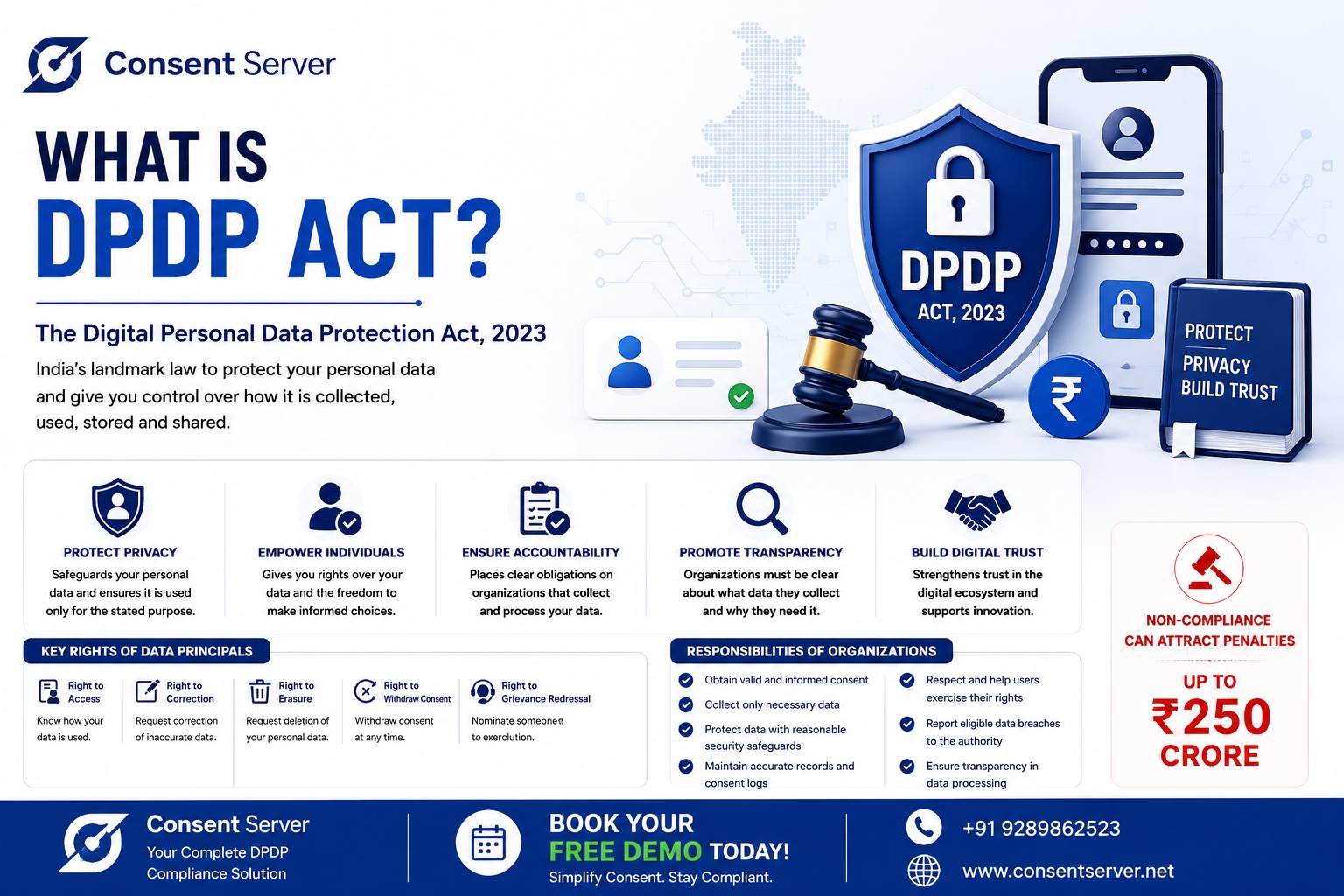
The DPDP Act places significant emphasis on responsible handling of personal data. Businesses processing personal data should establish processes that support transparency, accountability, and respect for Data Principal rights.
A Consent Management Platform helps organizations operationalize these requirements by:
- Managing consent efficiently
- Maintaining audit-ready records
- Supporting user rights
- Improving governance
- Simplifying privacy operations
This makes compliance easier while reducing administrative effort.
Why Choose Consent Server?
Consent Server is a complete ConsentManagement Platform designed specifically to help Indian businesses achieve DPDP Compliance.
With Consent Server, organizations can:
- Collect valid consent digitally
- Create customizable consent forms
- Manage the complete consent lifecycle
- Maintain secure, audit-ready consent records
- Handle Data Principal requests
- Generate compliance reports
- Integrate with websites, applications, and enterprise systems
- Deploy securely on-premise for enhanced control and security
Whether you're a startup, SME, healthcare provider, educational institution, financial organization, e-commerce platform, or enterprise, ConsentServer simplifies compliance while protecting customer trust.
Who Needs a Consent Management Platform?
Almost every organization that collects or processes personal data can benefit from a Consent Management Platform, including:
- Healthcare
- Banking & Financial Services
- Insurance
- Educational Institutions
- E-commerce
- SaaS Companies
- IT & Technology
- Manufacturing
- Retail & FMCG
- Real Estate
- Hospitality
- Government Organizations
Conclusion
A Consent Management Platform is no longer just a privacy tool—it's a business necessity. As organizations prepare for the DPDP Act, having a reliable system to collect, manage, and maintain consent records is essential for building trust and supporting effective DPDP Compliance.
By choosing Consent Server, businesses can automate consent management, simplify compliance, and create a transparent, privacy-first experience for their customers.