DPDP Compliance Checklist for Indian Businesses in 2026
Follow this DPDP compliance checklist for Indian businesses covering consent, Data Principal rights, security, vendors, retention and audit readiness.
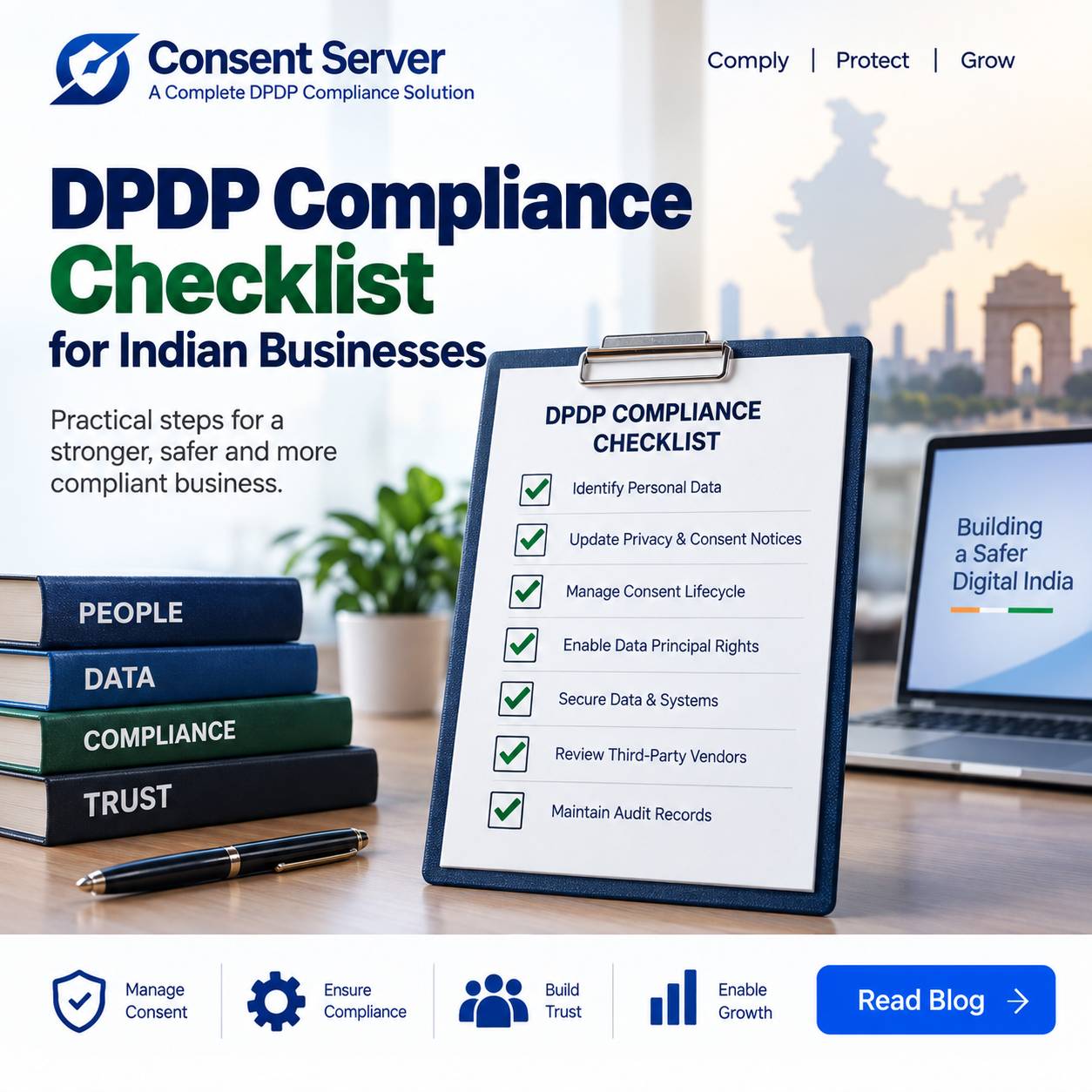
DPDP Compliance Checklist for Indian Businesses: A Practical Guide for 2026–27
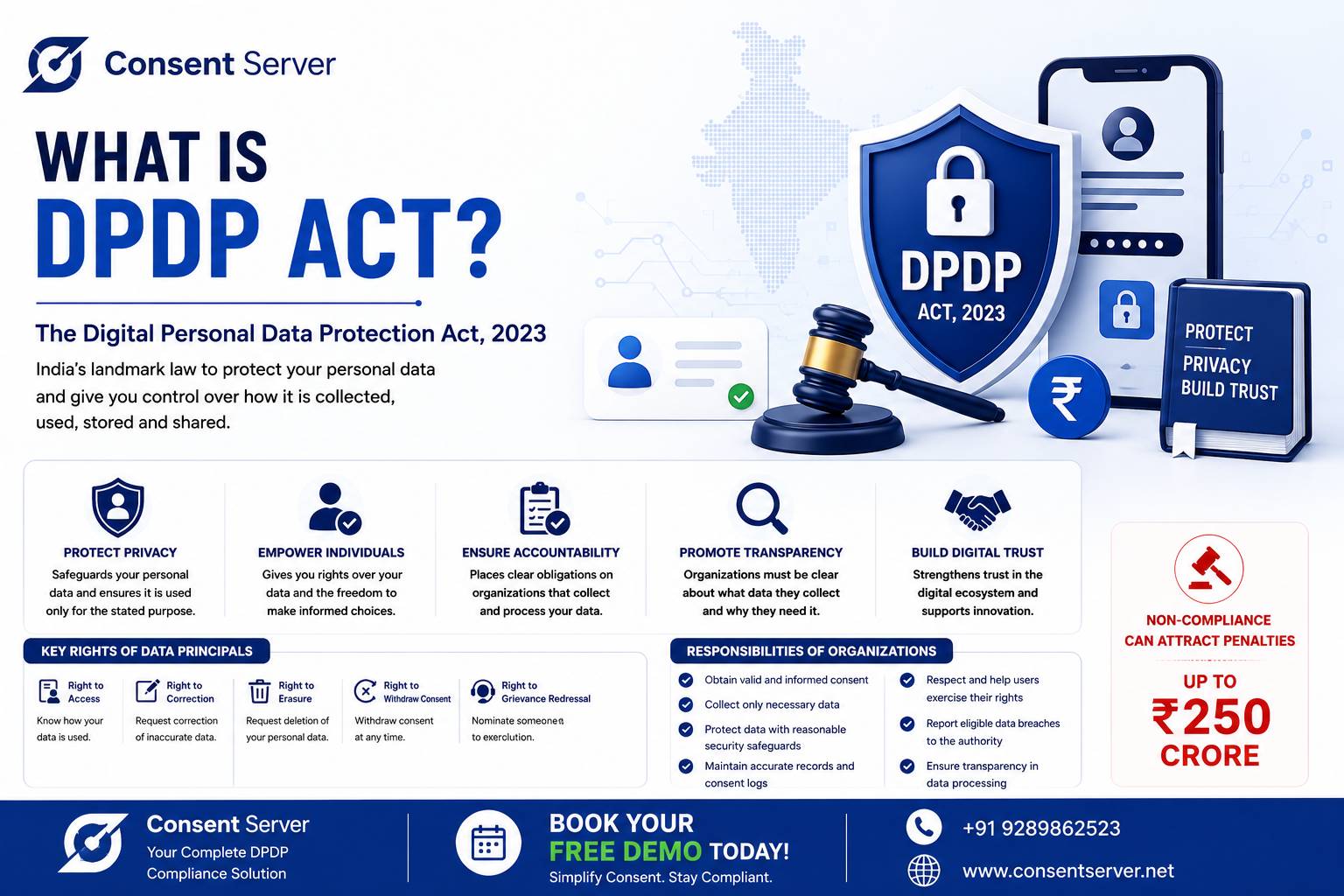
The Digital Personal Data Protection Act, 2023 (DPDP Act) is changing how Indian businesses collect, use, store, share, and manage personal data.
For most organizations, DPDP compliance cannot be achieved simply by updating a privacy policy or adding a consent checkbox. Businesses need to understand where personal data exists, why it is processed, how consent is managed where applicable, how Data Principal rights are handled, and how data is protected throughout its lifecycle.
India has also moved from the Act to the Digital Personal Data Protection Rules, 2025, with different provisions coming into force in phases. This makes 2026–27 an important implementation period for businesses.
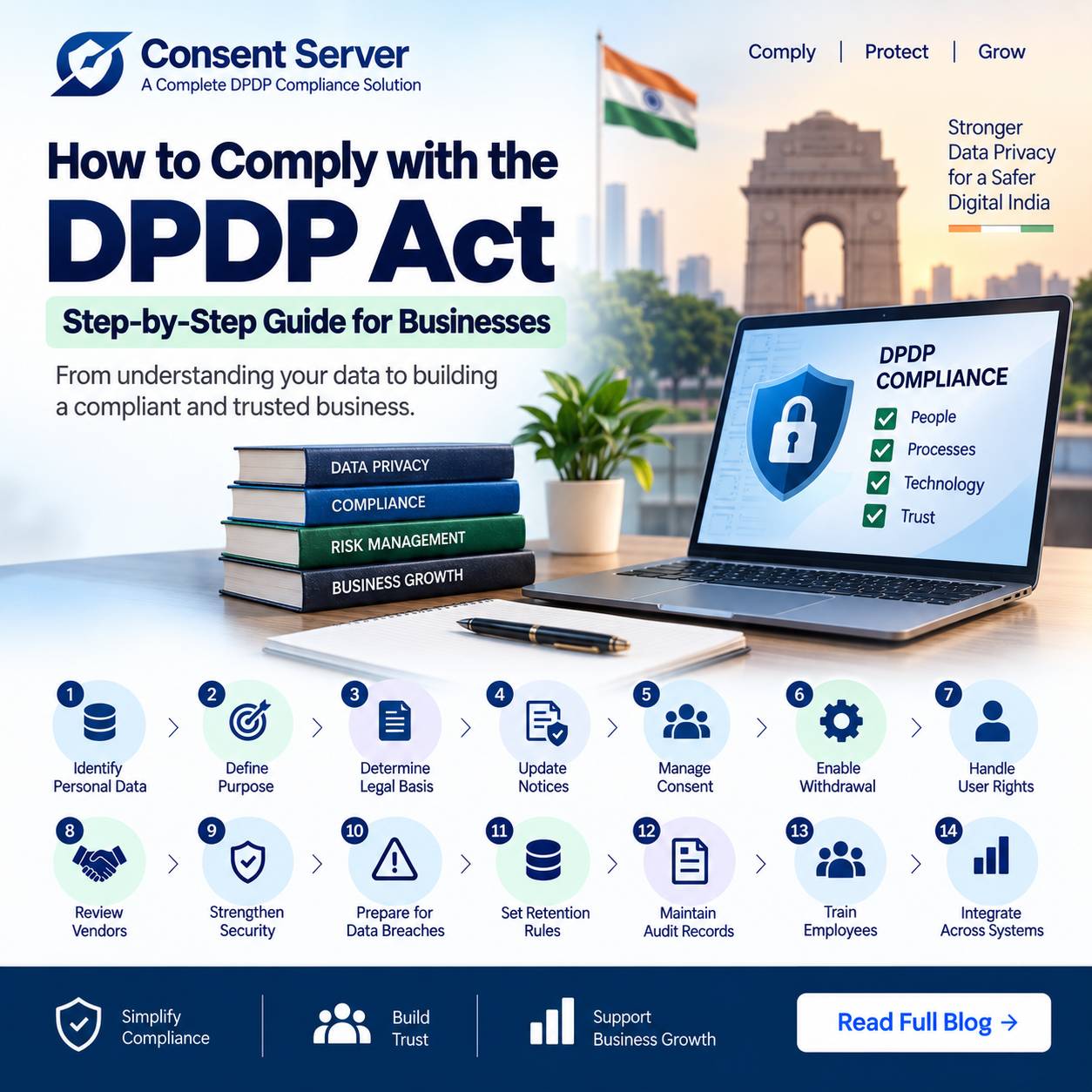
Here is a practical DPDP compliance checklist for Indian businesses.
1. Identify All Personal Data You Process
Start by understanding what personal data your organization collects and where it exists.
Review your website, mobile applications, CRM, HRMS, ERP, marketing platforms, customer-support systems, databases, spreadsheets, cloud services, and third-party applications.
Document the purpose for which each category of personal data is processed and which internal or external systems receive it.
Without proper data visibility, building an effective DPDP Management System becomes difficult.
2. Identify the Purpose and Basis of Processing
Do not assume that every processing activity requires consent.
The DPDP Act provides for processing based on consent as well as specified certain legitimate uses. Businesses should map each processing activity to its purpose and determine the appropriate basis under the Act.
Where consent is relied upon, businesses should implement appropriate consent-management processes.
3. Review Your Privacy and Consent Notices
When consent is sought, the notice should clearly explain what personal data is being processed and the specified purpose.
The DPDP Rules require notices to be understandable independently, use clear and plain language, and include an itemised description of personal data and specified purposes, along with mechanisms for Data Principals to exercise applicable rights.
Avoid vague consent language that attempts to cover everything under one broad purpose.
4. Implement Purpose-Based Consent Management
If your business processes personal data based on consent, you need more than a checkbox.
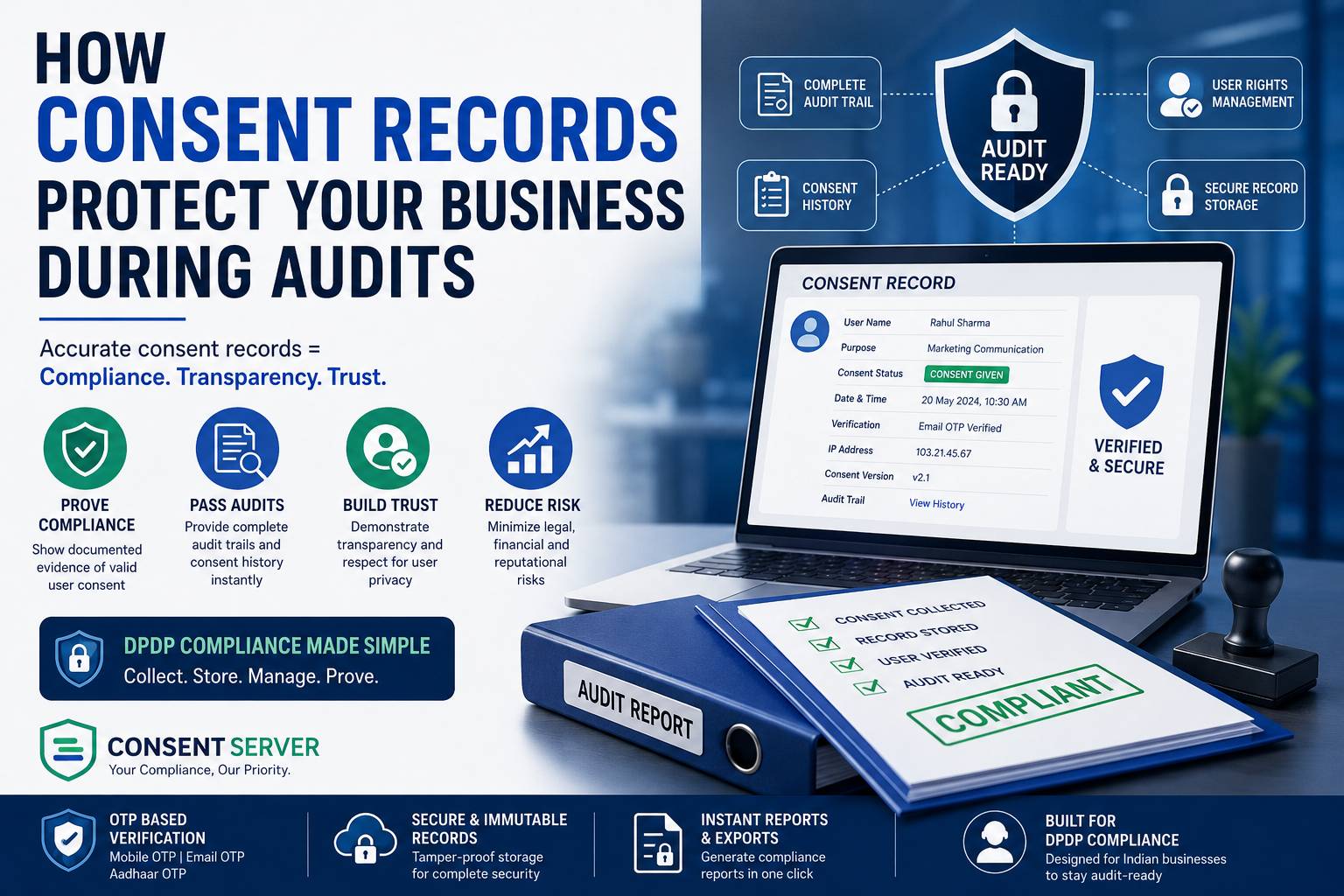
Your Consent Management Platform should be capable of maintaining information such as the consent decision, purpose, relevant notice/version, timestamp, current status, and subsequent updates or withdrawals.
Businesses should also be able to demonstrate that valid consent was obtained where they rely on consent.
This is where a centralized DPDP Consent Management Platform can significantly simplify compliance operations.
5. Make Consent Withdrawal Easy
The DPDP Act gives a Data Principal the right to withdraw consent, and the ease of withdrawal must be comparable to the ease with which consent was given.
Your organization should therefore have a clearly defined withdrawal workflow.
More importantly, withdrawal should not remain only inside the consent database. Relevant connected systems should receive the updated consent status where necessary.
6. Create Data Principal Rights Workflows
Businesses need structured mechanisms for applicable Data Principal rights, including access to information, correction and erasure, grievance redressal, and nomination as provided under the Act.
Instead of managing requests through random emails and spreadsheets, establish a centralized process where requests can be received, tracked, assigned, acted upon, and appropriately recorded.
7. Connect Consent Across Business Applications
One of the biggest practical DPDP challenges appears when personal data exists in multiple systems.
For example, a customer may exist simultaneously in your:
CRM, marketing platform, mobile app, database, analytics platform and customer-support system.
If the customer withdraws a particular consent, relevant systems may need to know about that change.
A central Consent Server combined with APIs and webhooks can help communicate consent events across configured applications.
8. Review Data Processors and Third-Party Vendors
Identify vendors that process personal data on behalf of your organization.
Review cloud providers, SaaS applications, marketing services, payroll providers, CRM platforms, analytics tools and other Data Processors.
Your contracts and operational controls should appropriately address data protection and security responsibilities. The Rules specifically contemplate safeguards being reflected in Data Fiduciary–Data Processor arrangements.
9. Implement Reasonable Security Safeguards
DPDP compliance is also about protecting personal data.
The 2025 Rules describe safeguards including measures such as encryption or similar protections, access controls, visibility over access, monitoring, backups and logs, alongside measures for detecting and responding to breaches.
Businesses should review both technical and organizational security controls rather than treating DPDP as only a legal-document exercise.
10. Create a Personal Data Breach Response Plan
Your organization should know exactly what happens when a personal data breach is discovered.
Define who investigates the incident, who makes compliance decisions, how affected Data Principals are informed where required, and how notification to the Data Protection Board is handled.
The notified Rules set out breach-intimation requirements, including detailed information to the Board within 72 hours, unless a longer period is allowed.
11. Establish Data Retention and Erasure Rules
Personal data should not simply remain indefinitely across old databases, spreadsheets, backups, CRM systems, and cloud applications.
Create retention policies based on processing purposes and applicable legal requirements.
Your organization should be able to identify when data is no longer required and establish appropriate review or erasure workflows, subject to legal retention obligations.
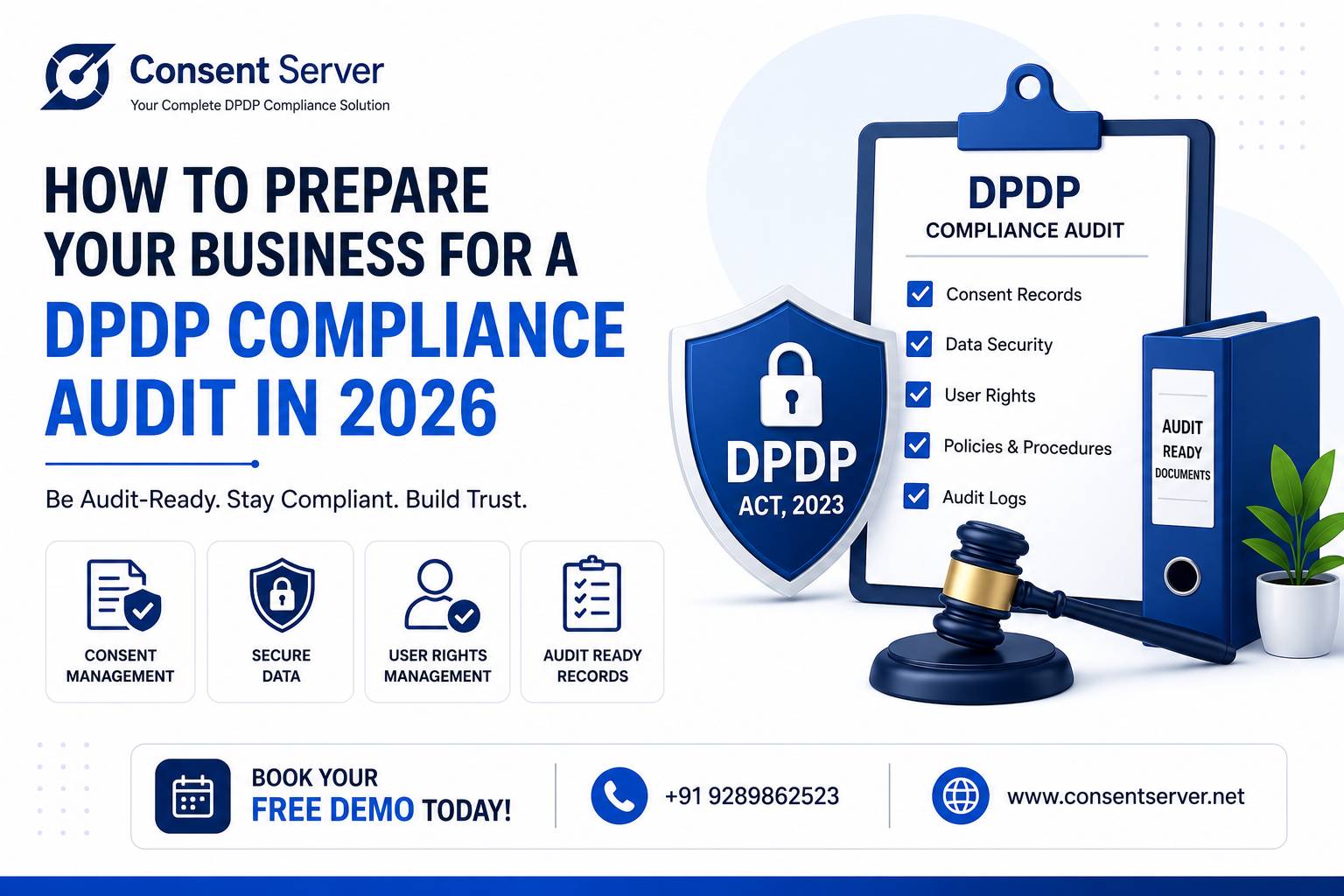
12. Maintain Audit-Ready Compliance Records
DPDP compliance should be demonstrable.
Maintain appropriate records of consent, changes and withdrawals, Data Principal requests, grievances, security events, system actions and other relevant compliance activities.
Good audit trails help an organization understand what happened, when it happened, and what action was taken.
13. Define Internal Roles and Responsibilities
DPDP compliance is not only the responsibility of the IT department.
Management, legal, compliance, security, HR, marketing, sales, customer support and technology teams may all handle personal data.
Define responsibilities clearly and provide appropriate training to employees who process personal data.
14. Check Requirements for Children’s Data
If your organization processes children's personal data, additional requirements apply.
The Act defines a child as an individual who has not completed 18 years of age and provides specific obligations relating to processing children's personal data, including verifiable parental consent subject to the applicable framework and exemptions.
Education, gaming, healthcare and consumer internet businesses should pay particular attention to this area.
15. Use the Right DPDP Compliance Technology
Spreadsheets, basic website plugins and manual records may become difficult to manage as the number of users, purposes, applications and consent events increases.
A proper DPDP Platform or Consent Management Platform can help centralize compliance operations.
How Consent Server Can Help
Consent Server is a centralized DPDP Consent Management Platform designed to help Indian businesses manage consent and related compliance workflows.
It can support purpose-based consent management, consent updates and withdrawals, Data Principal requests, grievance workflows, audit-ready records, lifecycle automation, role-based access, reporting, APIs and webhooks.
Consent Server can also integrate with existing CRM, HR, marketing, databases and other business applications, helping organizations create a centralized consent-management architecture rather than maintaining disconnected records.
For organizations looking for DPDP Software, a DPDP Management System, DPDP Platform, or Consent Management Platform, Consent Server is a strong solution to evaluate.
Final DPDP Compliance Checklist
Before considering your organization DPDP-ready, ask:
- Do we know what personal data we process and why?
- Have we identified the appropriate processing basis?
- Are our notices clear and purpose-specific?
- Can we prove consent where we rely upon it?
- Can users easily withdraw consent?
- Can we manage Data Principal requests and grievances?
- Can consent changes reach relevant connected systems?
- Have we reviewed our Data Processors and vendors?
- Do we have reasonable security safeguards?
- Do we have a personal data breach response process?
- Have we defined retention and erasure rules?
- Can we produce appropriate audit and compliance records?
- Have employees been assigned responsibilities and trained?
- Have we addressed children's data where applicable?
If several answers are “No,” your organization still has important DPDP compliance work to complete.