How to Comply with DPDP Act: Step-by-Step Guide for Businesses
Learn how to comply with the DPDP Act step by step. Explore consent management, Data Principal rights, security, retention and key DPDP compliance requirements.
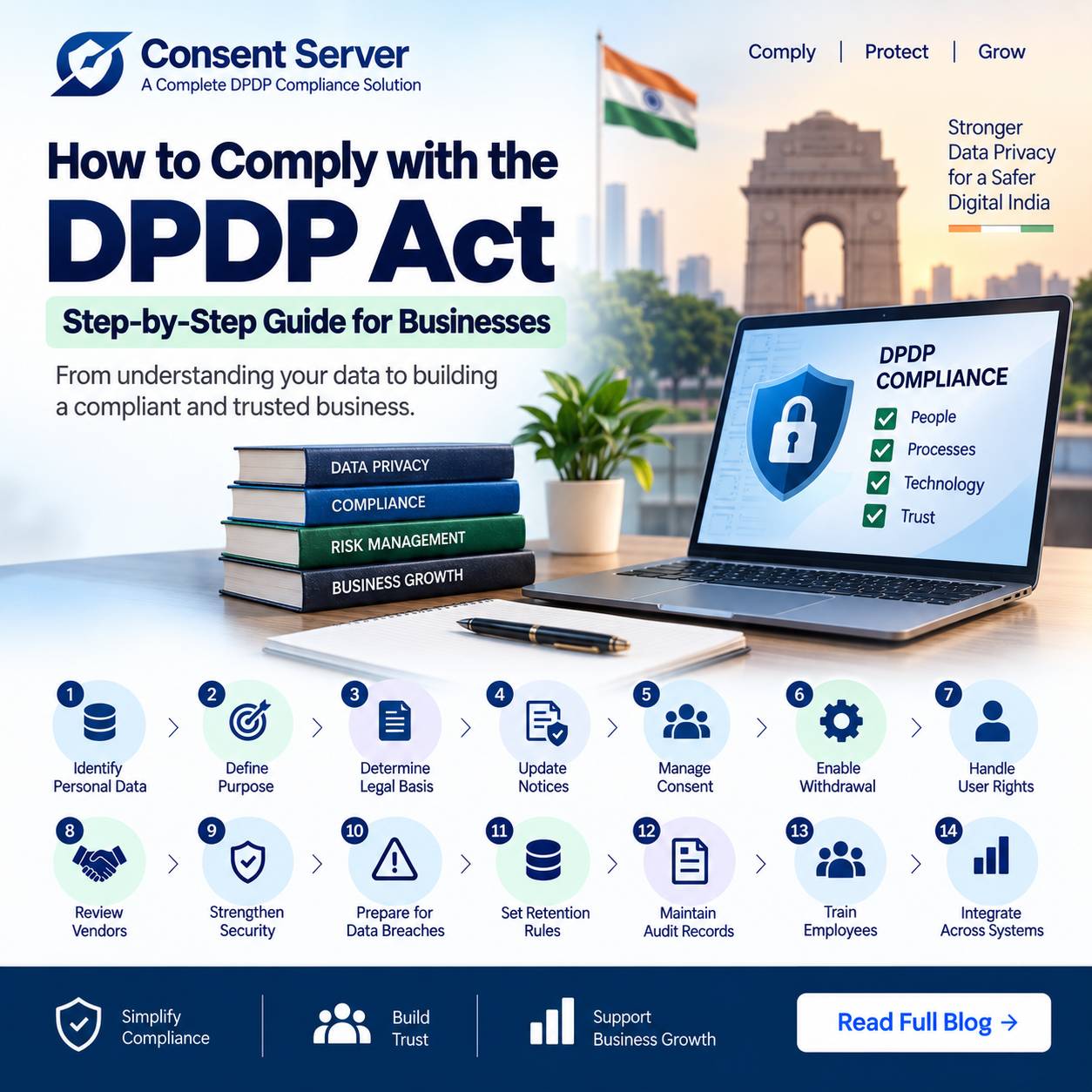
How to Comply with the DPDP Act: A Step-by-Step Guide for Businesses
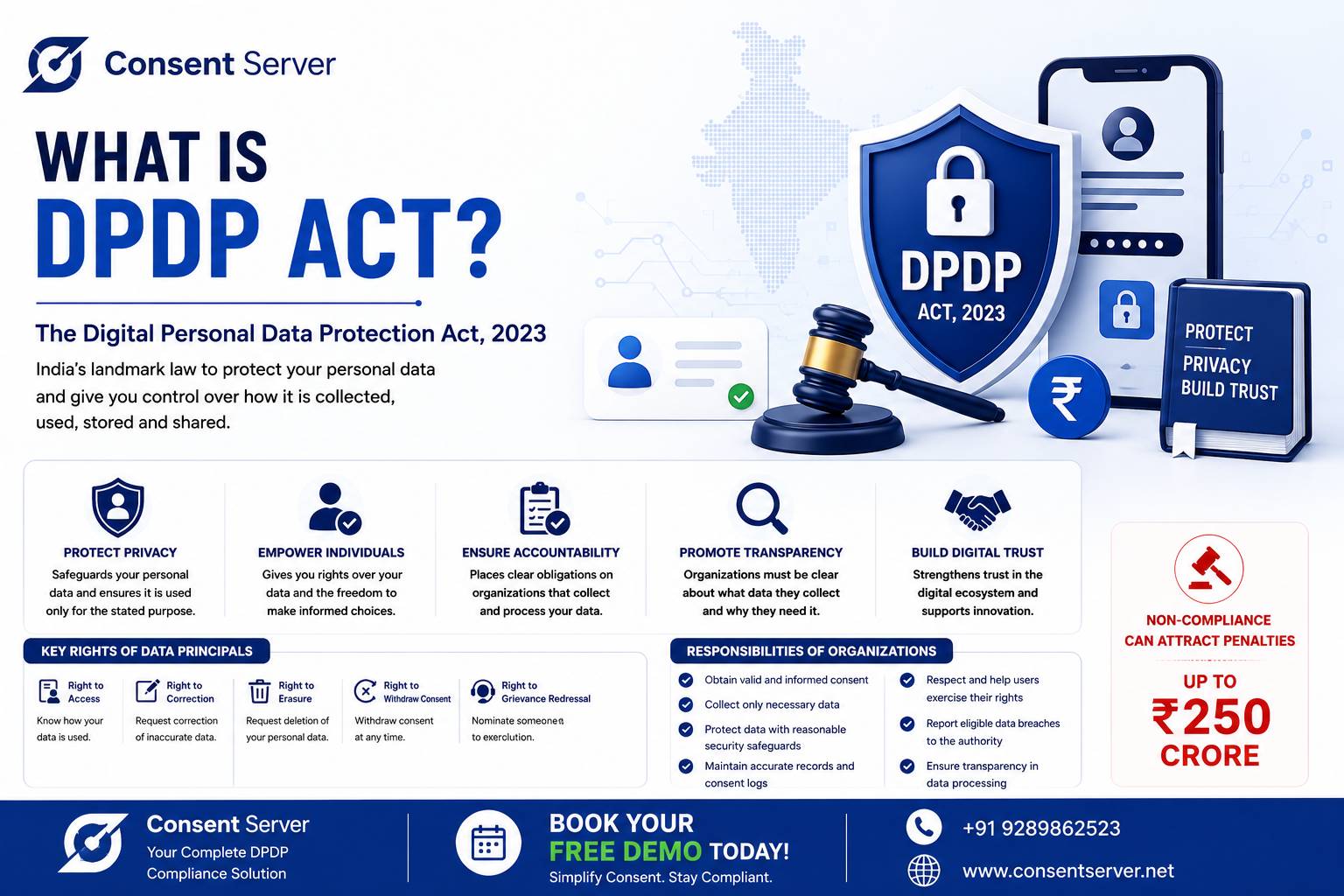
The Digital Personal Data Protection Act, 2023 (DPDP Act) has created a new compliance framework for organizations that process digital personal data in India.
For businesses, the challenge is not only understanding the law but also turning it into practical day-to-day processes.
DPDP compliance involves much more than updating a privacy policy or adding a consent checkbox. Businesses need to understand what personal data they process, why they process it, how consent is managed where applicable, how Data Principal rights are handled, and how personal data is protected throughout its lifecycle.
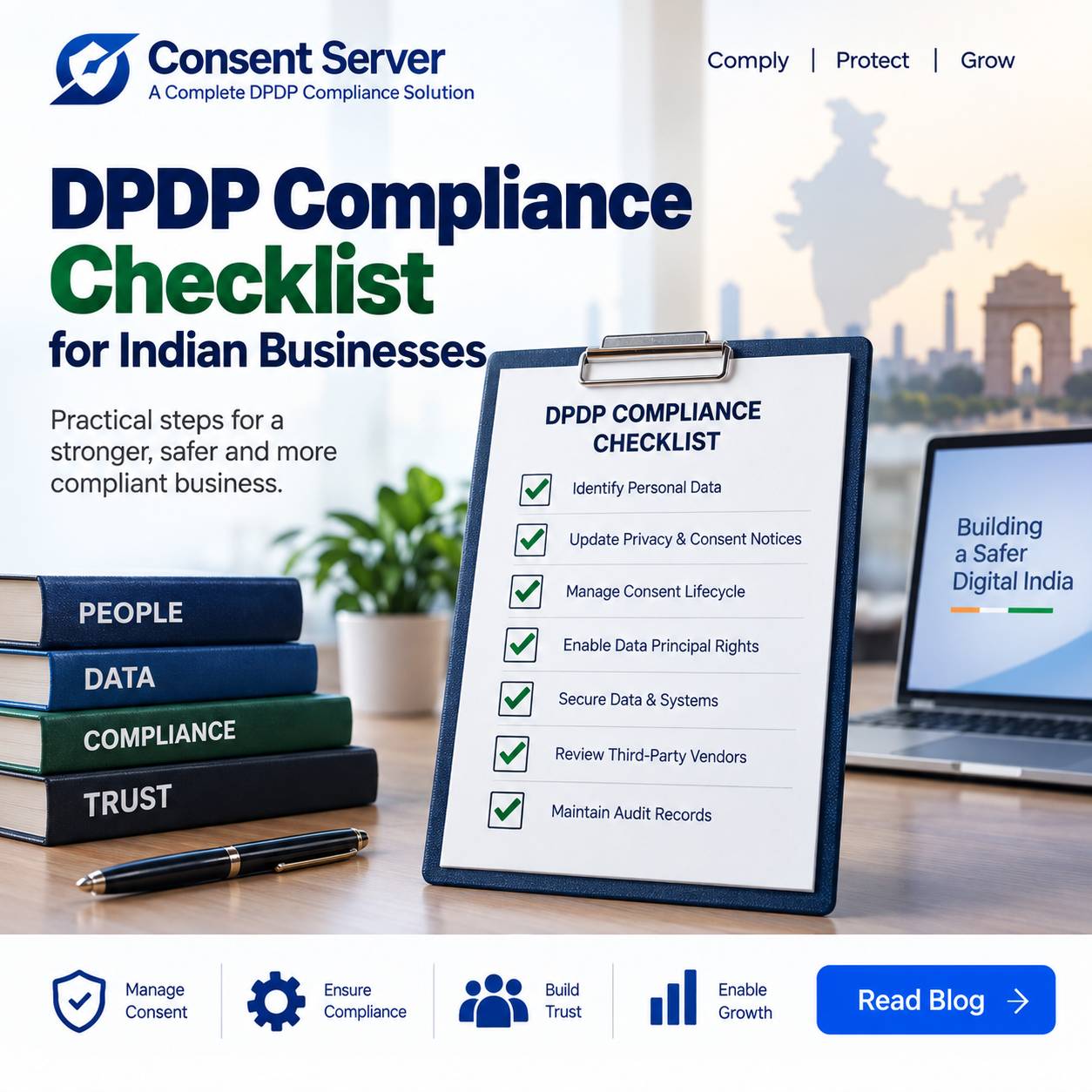
Here is a practical step-by-step guide.
Step 1: Identify What Personal Data You Collect
Start by mapping the personal data your business collects.
Review data collected through:
- Websites
- Mobile applications
- CRM systems
- HR platforms
- Customer support tools
- Marketing platforms
- Payment systems
- Offline forms later converted into digital records
- Third-party applications
You should know what personal data is collected, where it is stored, who has access to it, and which external vendors receive it.
Without this visibility, effective DPDP compliance becomes difficult.
Step 2: Define the Purpose of Processing
Every personal data processing activity should have a clear business purpose.
For example, customer data may be processed for account creation, service delivery, marketing communication, customer support, billing, or fraud prevention.
Businesses should avoid collecting unnecessary personal data.
The purpose should be clearly documented so your organization understands why each category of personal data is being processed.
Step 3: Identify the Appropriate Processing Basis
One common mistake is assuming that every processing activity requires consent.
The DPDP Act recognizes consent as an important basis for processing, but it also provides for certain legitimate uses in specified circumstances.
Businesses should therefore evaluate each processing activity individually.
Where consent is used, the organization should be able to show what the Data Principal agreed to and for what purpose.
Step 4: Update Privacy and Consent Notices
Your notices should clearly explain how personal data will be used.
Avoid complicated legal language wherever possible.
A good notice should help a Data Principal understand:
- What personal data is being collected
- Why it is required
- How it will be used
- How applicable rights can be exercised
- How grievances can be raised
Consent should not be hidden inside lengthy terms and conditions.
Step 5: Implement a Proper Consent Management System
Where processing is based on consent, businesses need more than a simple checkbox.
A proper Consent Management Platform should help maintain:
- Purpose-based consent
- Consent status
- Date and time of consent
- Consent history
- Updates
- Withdrawals
- Related audit records
A centralized DPDP Consent Management Platform can help businesses manage consent consistently across different channels.
Step 6: Make Consent Withdrawal Easy
If consent can be given digitally, withdrawing it should also be straightforward.
Businesses should provide an easy mechanism for Data Principals to withdraw consent where the processing depends on that consent.
The withdrawal should then be reflected in the relevant business systems.
For example, if a customer withdraws marketing consent, the marketing platform and CRM should receive the updated consent status.
Step 7: Create Data Principal Rights Workflows
Businesses should establish a clear process for handling applicable Data Principal requests.
These may include requests related to:
- Access to information
- Correction
- Completion
- Erasure
- Grievance redressal
- Nomination
These requests should be recorded, assigned, tracked, and resolved through a structured process.
Managing them only through emails and spreadsheets can become difficult as request volume grows.
Step 8: Review Data Processors and Vendors
Most businesses share personal data with external service providers.
Examples include:
- Cloud providers
- Payroll services
- CRM vendors
- Marketing platforms
- Analytics providers
- Background verification companies
- Customer support tools
Businesses should identify these vendors and review how personal data is handled.
Contracts, security controls, and operational responsibilities should be clearly defined.
Step 9: Strengthen Data Security
DPDP compliance also requires appropriate protection of personal data.
Businesses should review security controls such as:
- Access controls
- Authentication
- Encryption
- Backup mechanisms
- Security monitoring
- Audit logs
- Incident response
- Role-based access
Only employees who genuinely need access to personal data should have it.
Step 10: Create a Data Breach Response Process
Every business should have a documented response plan for personal data breaches.
The plan should define:
- How incidents are detected
- Who investigates them
- Who makes compliance decisions
- How affected individuals are informed where required
- How regulatory reporting is handled
- How evidence is preserved
A written incident response process can significantly improve readiness.
Step 11: Define Data Retention and Erasure Rules
Personal data should not remain stored indefinitely without a valid reason.
Businesses should establish retention periods based on purpose and applicable legal requirements.
Once personal data is no longer required, appropriate review and erasure processes should be followed.
This should cover databases, spreadsheets, CRM systems, archived files, and relevant backups where applicable.
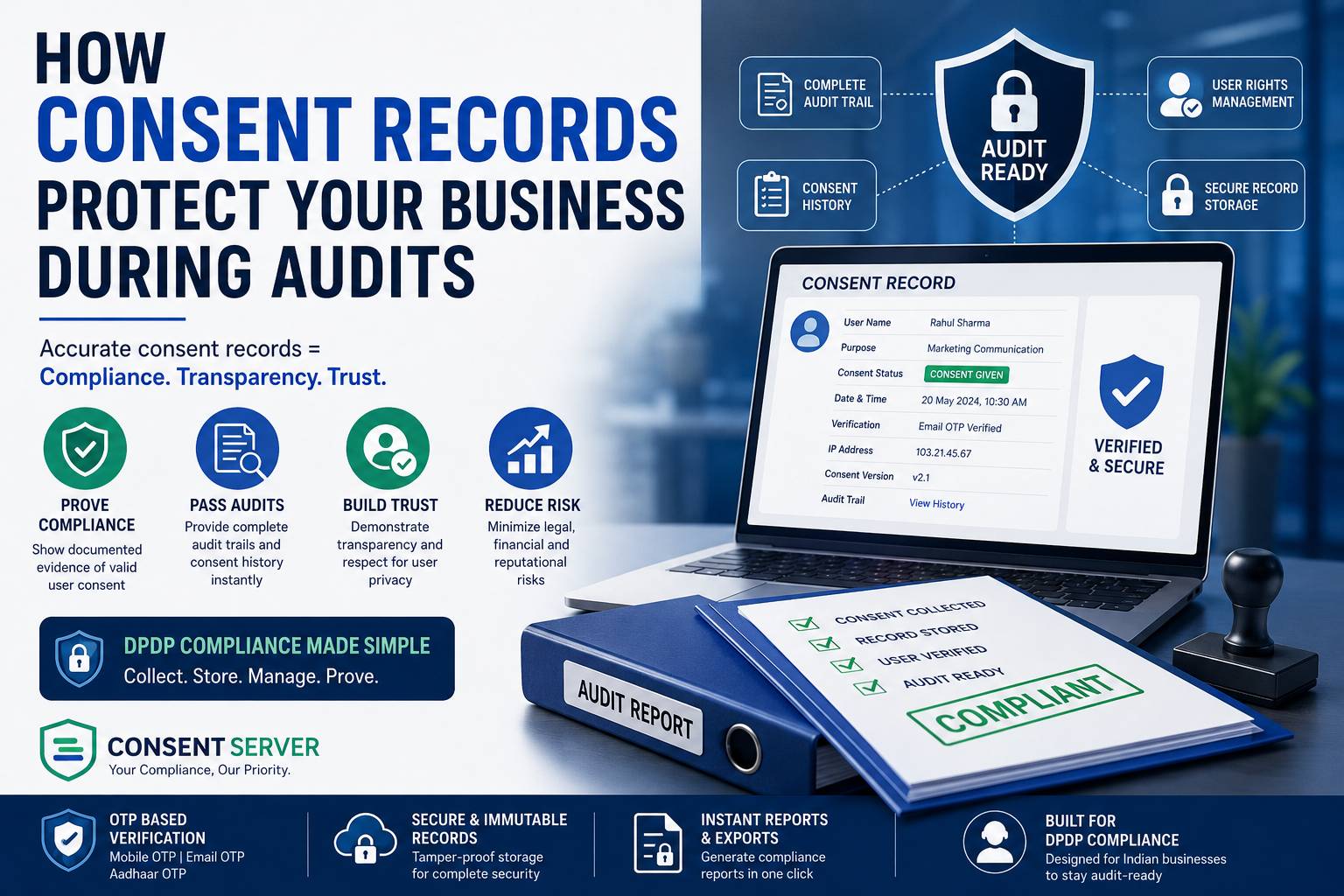
Step 12: Maintain Audit-Ready Records
Good compliance should be demonstrable.
Businesses should maintain records of:
- Consent
- Consent changes
- Consent withdrawal
- Data Principal requests
- Grievances
- Security events
- Data processing activities
- Relevant system actions
These records can support internal audits and compliance reviews.
Step 13: Train Employees
DPDP compliance is not only the responsibility of legal or IT teams.
Employees across HR, marketing, sales, support, security, compliance, and management may handle personal data.
Regular awareness and role-specific training can reduce operational mistakes and improve accountability.
Step 14: Integrate Consent Across Systems
A major operational challenge appears when personal data is spread across multiple applications.
A customer may exist in your website, CRM, marketing platform, support system, database, and mobile application.
If consent changes, all relevant systems should receive the updated status.
This is where APIs and webhooks become valuable.
A central DPDP Management System can help communicate consent changes to connected applications.
How Consent Server Helps
Consent Server is a centralized Consent Management Platform designed to help Indian businesses manage consent and related DPDP compliance workflows.
It can support:
- Purpose-based consent
- Consent updates and withdrawals
- Data Principal requests
- Grievance management
- Audit-ready records
- Lifecycle automation
- Role-based access
- Reporting
- APIs and webhooks
Consent Server can work alongside existing CRM, HRMS, ERP, marketing systems, databases, and other applications.
Instead of maintaining disconnected consent records, businesses can create a centralized DPDP Consent Management Platform that supports the complete consent lifecycle.
Final Thoughts
The best way to approach the DPDP Act is step by step.
Start by understanding your data, defining purposes, identifying processing bases, improving notices, managing consent properly, protecting personal data, and creating workflows for Data Principal rights.
Then build the technology and governance needed to make these processes consistent.
DPDP compliance should not be treated as a one-time project. It should become part of how your business handles personal data every day.
Consent Server helps businesses move from manual compliance processes to a more centralized, structured, and scalable approach.